PROLOGUEA State Built Where There Was No Land
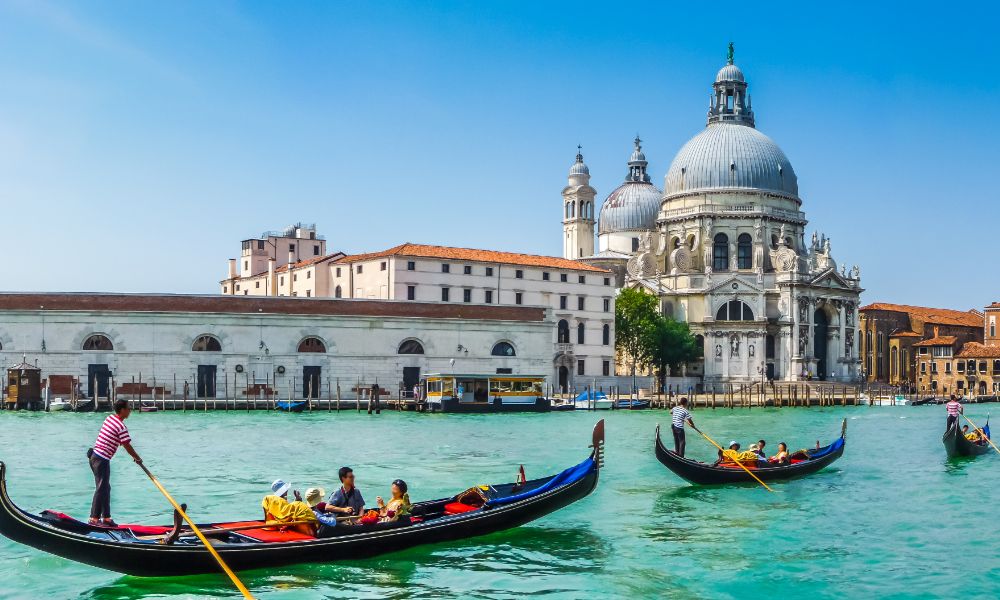
Venice is a city that defies common sense. It has no walls, no fields, no fresh water; its houses stand on wooden piles, its streets are water, its squares flood, and its cemetery is on another island. A state grown in such a place ought to have been short-lived and poor. Instead it lived for a thousand years and became one of the richest maritime powers of the Middle Ages and the Renaissance. Its merchant ships reached Constantinople, Alexandria, Beirut and London; its gold coin circulated on both shores of the Mediterranean; its shipyard could fit out a war galley in a day in a crisis; its parliamentary system has been studied ever since. In the end it was not conquered by an enemy storming its walls, but voted itself out of existence.
The story of Venice is worth reading not because it is romantic, but because it answers a practical question: how does a group with no resources, no hinterland and no natural advantage survive on institutions, technology and trade — and survive longer than the empires around it? The answer lies not in heroes, but in a design: a design that kept power from being seized by one person, that persuaded merchants to entrust their money to the state, and that turned a lagoon into both a moat and a highway.
CHAPTER ONERefugees and the Lagoon
The origins of Venice are not recorded with certainty; only legend and later chronicles remain. Tradition dates the founding of the city to 25 March 421, the Feast of the Annunciation, when officials from Padua established a trading post at Rialto and laid the foundation of the church of St James. But that date belongs to legend, and the remains of the church itself are much later. A more credible picture is gradual: from the fifth century, as the Western Roman Empire declined, Goths, Huns and Lombards invaded north-eastern Italy in turn, and the inhabitants of Roman cities such as Padua, Aquileia, Treviso, Altinum and Concordia fled the wars for the Venetian Lagoon at the head of the Adriatic. The lagoon was shallow and muddy; armies on land could hardly enter it, but boats could pass, and so a temporary refuge slowly became a permanent home.
The lagoon dwellers built houses on wooden piles, laid stone platforms over them, and linked island to island by boat and wooden bridge. They fished, made salt and built ships, gradually learning to live with the water. Early in the eighth century, the lagoon communities elected their first leader, traditionally called Paolo Lucio Anafesto, said to have been elected in 697; but on the evidence, the more credible first doge is Orso Ipato, early in the eighth century, who received from Byzantium the titles of hypatus and dux. Whichever name is true, the point is the same: the lagoon dwellers no longer governed themselves separately, but elected a lifelong leader, called the doge, from the Latin dux.
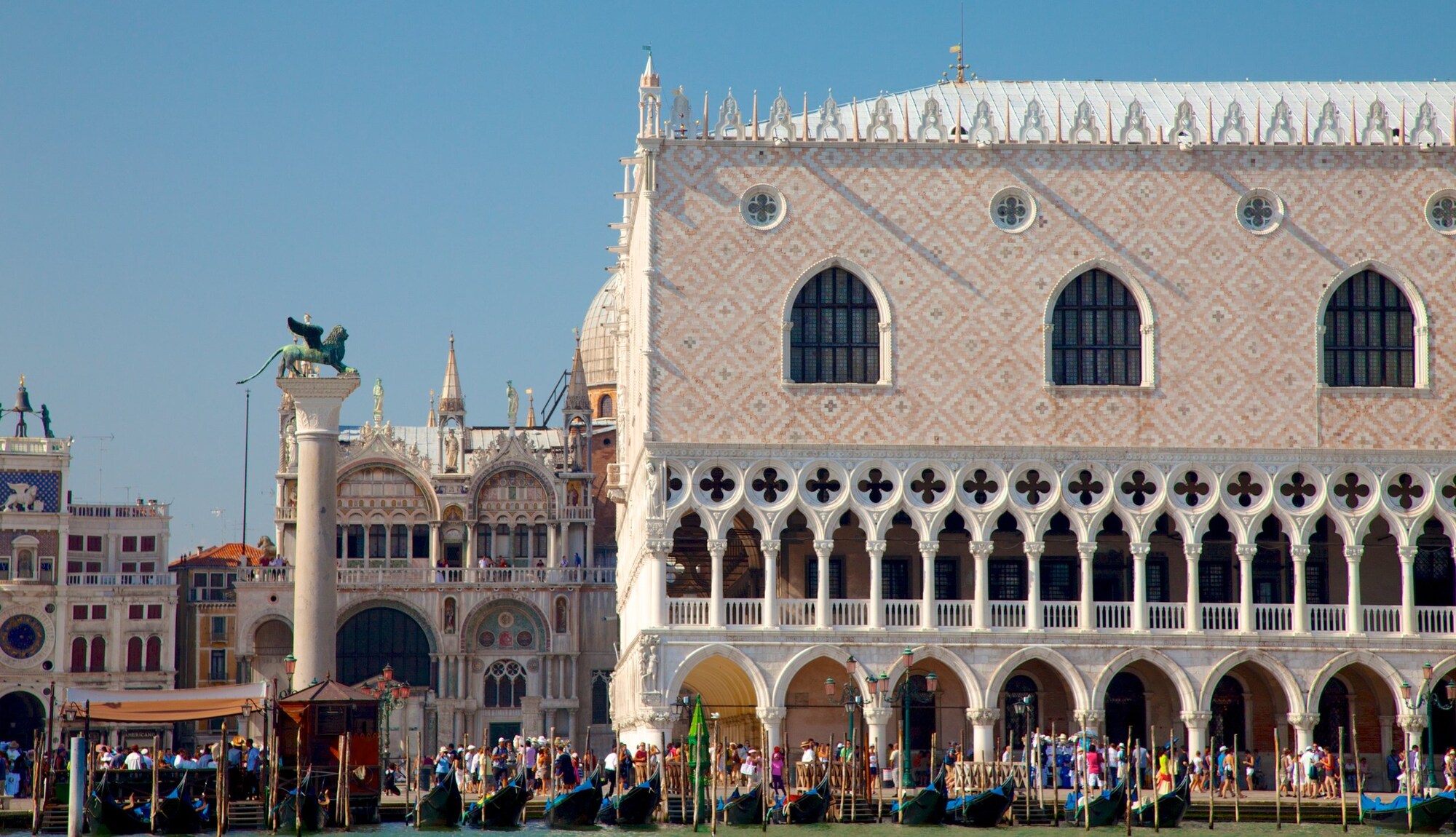
The ninth century was the decisive moment in the making of Venetian identity. Around 810, Doge Agnello Participazio moved the seat of government to the Rialto islands, the heart of Venice today. In 828, two Venetian merchants smuggled the relics of St Mark out of Alexandria, reportedly hidden under pork to evade inspection. Venice thus acquired a patron saint of apostolic rank, and the winged lion became the emblem of the republic. A city with no Roman past created a past for itself with a sacred relic. The story sounds like legend, yet it reveals Venetian political wisdom: identity can be designed, symbols can be managed, and the soul of a city is sometimes more important than its walls.
CHAPTER TWOCaging the Doge in Institutions
The most instructive thing about Venice is not its wealth, but its institutions. The doge held office for life, which sounds like a monarchy, yet his power was constrained from the start, layer upon layer. In 1032 hereditary dogeship effectively ended, and the doge could no longer pass the office to his son. In 1172 the Great Council became the ultimate source of political legitimacy. From 1268, the election of the doge followed an extraordinarily elaborate procedure: ten alternating rounds of lottery and ballot, beginning with thirty men drawn by lot from the Great Council, reduced to nine, who nominated forty, reduced by lot to twelve, who nominated twenty-five, and so on, until finally forty-one men voted to elect the doge. The purpose of the procedure was one alone: to make bribery, faction and family manipulation almost impossible.
The Serrata of 1297 turned the Great Council further into a closed patrician body, with seats limited to families that had held them, gradually becoming hereditary until the list was fully closed in 1323. On the surface this was an aristocratic monopoly of power; from another angle, it made the ruling class stable and predictable: some 1,200 to 2,000 adult male nobles, from about 150 to 180 families, took turns serving in the councils and committees, and the doge was only one among them, not a king above them. The Council of Ten, created in 1310 in response to a noble rebellion, was responsible for state security, wielding great power but for short terms and acting collectively. The design philosophy of Venice is clear: trust no single person and no single faction, only procedure, rotation and mutual checks.
The economic foundations of this system are equally instructive. In 1284 Venice began minting the gold ducat, weighing about 3.5 grams of fine gold, and maintained its standard unchanged for centuries, becoming the standard coin of the Mediterranean, accepted by merchants from Bruges to Cairo. Merchants commonly used partnership contracts, in which a stay-at-home investor supplied most of the capital and a travelling merchant carried the goods, sharing profits and risks. The state organised regular armed merchant convoys, known as the mude, sailing fixed routes to Constantinople, Alexandria, Beirut, the Black Sea, Flanders and England, with merchants bidding for cargo space. The state did not trade directly, but provided order and security for trade.
CHAPTER THREEThe Fourth Crusade: How a Debt Became an Empire
The turning point for Venice was a war that originally had nothing to do with it. In 1202 the Fourth Crusade contracted with Venice, which was to provide ships to carry the Crusaders to Egypt, but the Crusaders could not pay the agreed fare. The aged and blind Doge Enrico Dandolo turned the debt into political leverage, first diverting the Crusade to Zara on the Adriatic, taken in 1202, and then in 1204 to Constantinople. The combined Crusader and Venetian army stormed the Byzantine capital and sacked it; the four bronze horses of the Hippodrome were carried back to Venice, where they still adorn St Mark's Basilica. In the division of the spoils Venice obtained three-eighths of the Byzantine Empire, together with Crete, Euboea and many Aegean possessions, becoming at a stroke a colonial empire in the eastern Mediterranean.
The affair is hard to defend morally, but from the standpoint of institutions it reveals the essence of Venice: a state ruled by merchants, whose logic of decision was the logic of commerce, and which would not let a religious scruple stand in the way of an opportunity. Venice was never a believer in the Crusade; it was the Crusade's shipowner. When the shipowner found that his passengers could not pay the fare, and took ports and territory instead, the account book of the merchant said it was reasonable, while the account book of history said it was a disaster. The Byzantine Empire never recovered, while Venice used the empire it had seized to sustain two hundred years of prosperity.
What sustained all this was the shipyard. The Venetian Arsenal, founded around 1104, grew into the largest pre-industrial manufacturing centre in Europe, covering about 45 to 60 hectares and employing up to 16,000 workers at its height. Using standardised parts and a division of labour, hulls were towed down a canal while workshops along the way fitted rigging, oars and weapons in turn. A war galley normally took about twelve to fifteen days to complete, but in a crisis, as in the preparations for war in 1570, the Arsenal delivered one fully armed war galley a day for several weeks in succession. Such a capacity was unique in Europe at the time; it let Venice rebuild its fleet in a short time and gave its maritime supremacy an industrial foundation.
CHAPTER FOURSpices, Plague and the Other End of the Sea
The wealth of Venice came from its position as a middleman. Pepper, cinnamon, cloves, nutmeg and silk travelled from the Indian Ocean through Arab and Egyptian merchants to Alexandria and Beirut, then by Venetian ships to Europe, and on through German merchants to markets everywhere. Venice produced no spices, yet monopolised the channel by which spices entered Europe. In 1423 Doge Tommaso Mocenigo estimated that Venetians owned more than 3,300 ships. By the middle of the fifteenth century, the population of Venice itself was about 100,000 to 150,000, and with overseas possessions spread across the eastern Mediterranean it had become a state spanning sea and land.
But the same shipping lanes also brought plague. The Black Death reached Venice in 1348, sharply reducing the city's population and disrupting commerce and shipbuilding, and plague returned again and again, most severely in 1575–1577 and 1630–1631. The Venetian response was institutional: first thirty days of isolation, then forty, quaranta giorni in Italian, from which the English word quarantine derives. In 1423 Venice established the world's first permanent plague hospital, and incoming ships had to wait on quarantine islands in the lagoon before being allowed into port. Plague was not eliminated, but it was managed. This was the Venetian way throughout: faced with a risk that could not be controlled, do not pray for a miracle, but design a procedure, and turn the loss into a calculable cost.
The true decline came from two directions. In the east, the Ottoman Empire rose, Constantinople fell in 1453, and Venice lost Negroponte, Cyprus and Crete in turn. In the west, the Portuguese opened a sea route around the Cape of Good Hope to India in 1498, so that spices could bypass Venice and go directly to Lisbon. On 7 October 1571, the Holy League fleet defeated the Ottoman navy at Lepanto, and Venice supplied more than half of the allied ships, but Cyprus was not recovered, and Venice made peace in 1573, formally acknowledging its loss. Candia, the capital of Crete, held out for twenty-one years and fell in 1669; the Morea was confirmed as Ottoman by the Treaty of Passarowitz in 1718. The economic centre of Europe shifted to the Atlantic; Venetian ships grew fewer, revenues thinner, and institutions more rigid.
CHAPTER FIVE1797: Voting to Dissolve Itself
The end of Venice had no siege and no last doge dying on the walls. On 12 May 1797, facing the French army of Napoleon, the Great Council voted to dissolve the republic, and the last doge, Ludovico Manin, abdicated, ending a polity that had lasted about 1,100 years. The bronze horses of St Mark were carried to Paris, and did not return until 1815. A city never taken by an enemy opened its own gates in the end.
Why did a republic so carefully designed end in this way? The reason lay not in a single defeat, but in the ageing of the institutions themselves. The Serrata made the ruling class stable, but also closed; the electoral procedure prevented dictatorship, but also made decisions slow; commercial logic brought wealth, but when faced with the Ottoman Empire and the new Atlantic order, the state could only calculate costs and would not risk reform. Eighteenth-century Venice was still the playground and cultural capital of Europe, but its fleet had dwindled to a handful of ships, and the workforce of the Arsenal had fallen from 16,000 to a few hundred.
EPILOGUEWhat Venice Left Behind
Venice left behind more than palaces and canals. It left several words still in use today: arsenal, quarantine, ghetto, gazette, casino, and even the Venetian farewell behind the word ciao. More important still are the lessons of its institutions. The design of power matters more than the holder of power: Venice used lottery, rotation and term limits to turn a lifelong doge into a prisoner of institutions, and that was more reliable than any wise king. A state can be a partner of business without being its master: Venice did not monopolise trade, it monopolised order — shipbuilding, convoy protection, coinage and arbitration — so that merchants dared to put to sea. And success itself can become a trap: when a system succeeds greatly in one age, the hardest thing for it is to admit that the age has changed.
For today's reader, the most memorable scene in Venice is not its moment of greatest glory, but its last meeting. A group of noblemen in black robes, in a hall they had built themselves, voted that they would no longer exist. The scene is unsettling, because it reminds us that institutions will not forever protect a community that is no longer willing to defend itself. Venice taught us how to build a republic, and it also taught us how a republic can die quietly. The water still flows and the boats still pass; only the state that once commanded both water and boats is gone.
Questions That Remain Open
In honesty, the following two things have no settled answer, and this essay does not pretend otherwise:
- When was Venice actually founded? Tradition dates the founding to 25 March 421, but that date belongs to legend, and the church itself is much later; the more credible picture is a gradual settlement from the fifth century onward.
- Who was the first doge? Tradition names Pauluccio Anafesto, elected in 697, but the sources make Orso Ipato, in the early eighth century, the more credible first doge.