Prologue14 October 1962
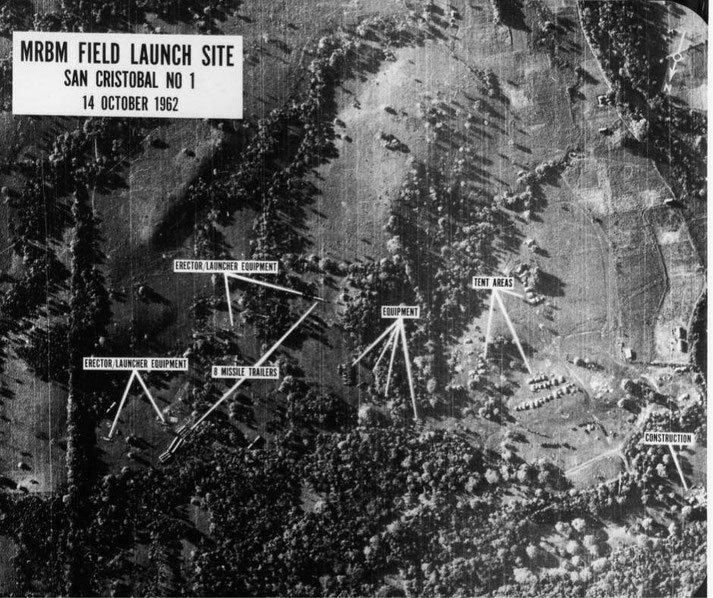
A U-2 spy plane flew over western Cuba at dawn and came home with 928 photographs. The analysts in the CIA's photo-interpretation centre stared at them and saw what nobody in Washington had been able to imagine: launch sites for nuclear missiles, under construction, 145 kilometres from the American coast. In Washington, one analyst later recalled, the room went silent. That photograph started the thirteen days in which the world came closer to nuclear war than it ever has since.
What made the Cuban Missile Crisis so dangerous was not that two leaders wanted war. It was that neither of them did — and still they almost got there, because of secrets, misread intentions, and the machinery of two military establishments that ran faster than diplomacy. Thirteen days of letters, secret meetings and a naval quarantine decided whether the world would survive the month. The crisis was settled by two deals: one public, one secret. The public deal was the one announced. The secret deal was the one that worked.
Chapter OneWhy Cuba
Nothing in October 1962 began in October. It began in 1959, when Fidel Castro took power in Cuba, 145 kilometres off Florida. The United States cut diplomatic ties, armed exiles and in April 1961 sponsored the Bay of Pigs invasion — a landing of 1,400 Cuban exiles that collapsed within three days. In Moscow, Nikita Khrushchev read the failure as evidence that John F. Kennedy, the young president elected in 1960, was inexperienced and weak.
There was also a second reason, harder for Americans to see. In 1961 the United States had placed Jupiter nuclear missiles in Turkey and Italy — missiles that could reach Soviet cities in about 15 minutes. From Moscow's window, the Americans had already done exactly what the Soviets were about to do. Khrushchev called it evening the score: if the Americans could station missiles on the Soviet doorstep, the Soviets could do the same in Cuba.
In July 1962, Khrushchev reached a secret agreement with Castro: Soviet nuclear missiles would be shipped to Cuba. The first shipments crossed the Atlantic in disguise — missile tubes disguised as irrigation pipes, crates marked as farm machinery. By October the island held 42 missiles and, secretly, about 40,000 Soviet soldiers, plus a handful of tactical nuclear weapons whose existence Washington never knew about during the crisis.[1]
Chapter TwoThe Photograph
On 15 October, the U-2 photographs reached Kennedy. The next morning he convened the Executive Committee of the National Security Council — ExComm — a group of senior officials and generals who would meet in secret for the next thirteen days, with the tape recorders running. Their job was to choose between options that all looked terrible.
An airstrike against the missile sites might destroy some of them, but it could not guarantee destroying them all — and if even a few survived, they could fire on American cities. A full invasion of Cuba would take days, during which the missiles could be launched. A diplomatic protest would look like weakness and solve nothing. The military chiefs pressed for airstrikes followed by invasion. Kennedy's brother Robert, the attorney general, warned that a surprise airstrike would be morally indistinguishable from Pearl Harbor — and would poison everything the United States claimed to stand for.
Kennedy chose the middle option: a naval "quarantine" — a blockade, but called by a name that avoided declaring war. On 22 October, he went on television and told the American public what he had known for a week: Soviet missiles in Cuba, a quarantine of the island, and a warning that any missile launched from Cuba against any nation in the Western Hemisphere would be treated as an attack by the Soviet Union on the United States, requiring full retaliation.
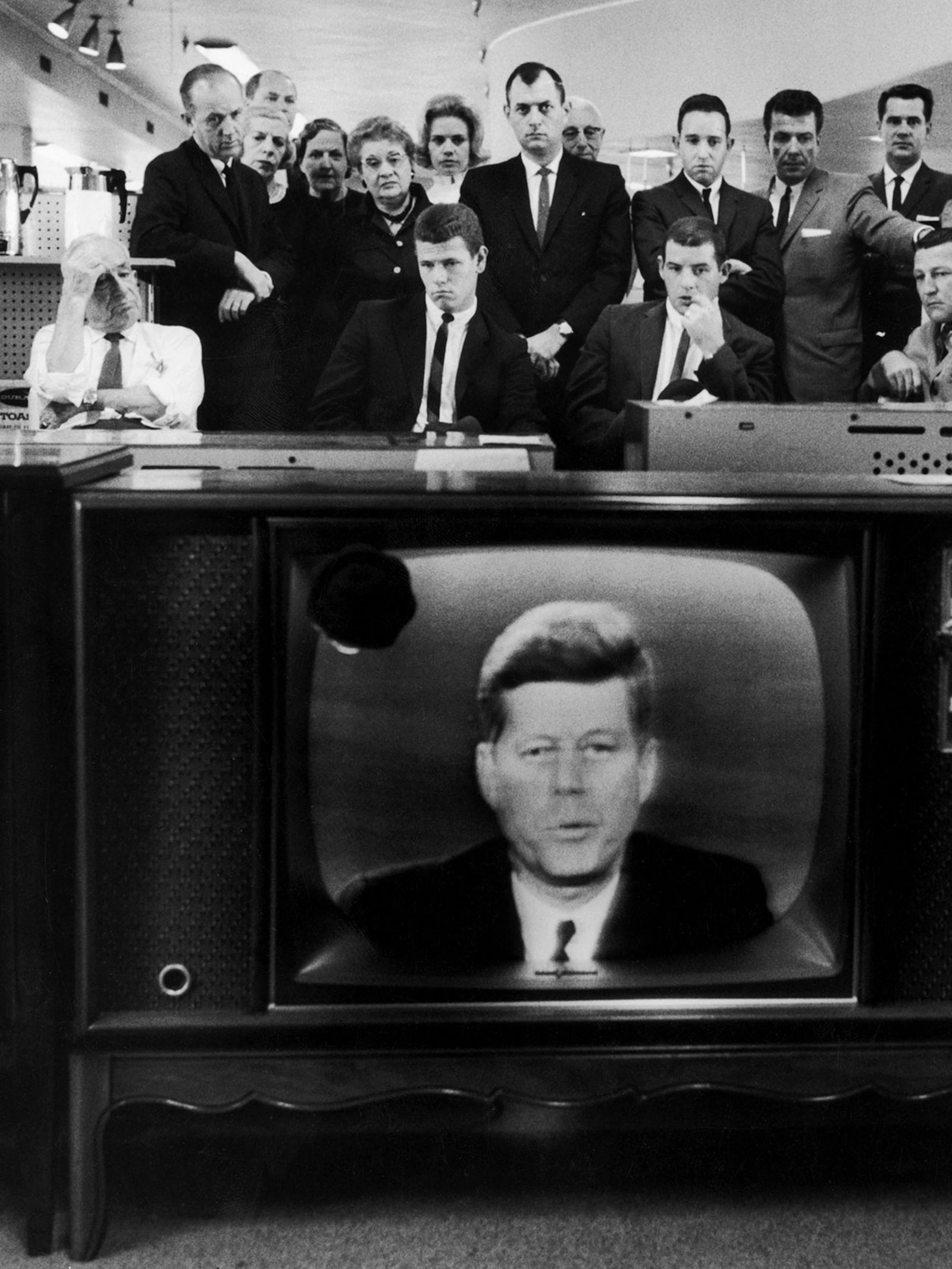
For the first time in the nuclear age, ordinary people understood the arithmetic of the situation. The president had told them the world might end within days. There was no shelter to hide in and nothing to buy. The only thing to do was wait.
Chapter ThreeThe Quarantine and the Standoff
On 24 October, the quarantine took effect. Soviet ships carrying missile parts steamed toward the line of American warships. On that morning, Secretary of Defense Robert McNamara ordered the navy to hold its fire and let the ships come close enough to see. At the last moment, the Soviet ships stopped and turned around. It was the first time in the crisis that something went right — and it went right only because someone chose to slow down.
On 25 October, the American ambassador to the United Nations, Adlai Stevenson, confronted his Soviet counterpart in a televised session of the Security Council, holding up aerial photographs and demanding an answer. "Do you, Ambassador Zorin, deny that the USSR has placed and is placing medium- and intermediate-range missiles and sites in Cuba?" When Zorin refused to answer directly, Stevenson replied: "I am prepared to wait for my answer until hell freezes over." The photographs, displayed to the world, destroyed the Soviet claim that the missiles did not exist. For the first time, public opinion in every country became part of the negotiation.
Behind the public drama, the military machines on both sides were running on their own logic. A Soviet submarine, B-59, forced to the surface by American depth charges, came close to firing a nuclear torpedo. The three officers aboard had to agree; two said yes, and the third — Vasili Arkhipov — said no. The world's survival that day rested on one officer refusing an order his own procedures had almost made automatic.
Chapter FourBlack Saturday
On 27 October, the crisis nearly slipped out of control. That day became known as Black Saturday.
First, a U-2 spy plane was shot down over Cuba by a Soviet surface-to-air missile. Its pilot, Major Rudolf Anderson, was killed — the only American casualty of the crisis. The military chiefs pressed Kennedy to retaliate by bombing the missile site. Kennedy refused. The U-2 had been shot down on a Soviet officer's own authority, without orders from Moscow — a fact that terrified Khrushchev as much as it terrified Kennedy. Both leaders were discovering that they could not fully control their own armies.
Then a second letter arrived from Khrushchev. The first letter, sent the day before, had offered a straightforward deal: if the United States promised not to invade Cuba, the missiles would be removed. The second letter added a new demand: the American Jupiter missiles in Turkey must also be removed. Kennedy's advisors saw the two letters as contradictory — one reasonable, one impossible. But they noticed something: the two letters came from different hands. The first was Khrushchev's own voice; the second sounded like his generals. Kennedy made a decision that required courage of a specific kind: he would answer the first letter, and pretend the second did not exist.
That evening, Robert Kennedy met the Soviet ambassador, Anatoly Dobrynin, in secret. He carried a message his brother had authorised: the United States would remove the Jupiter missiles from Turkey within a few months, quietly, but the arrangement must never be admitted publicly. The next morning, Khrushchev announced on Radio Moscow that the Soviet Union would dismantle and remove its missiles from Cuba. The thirteen days were over.
Chapter FiveTwo Letters, One Deal
The public settlement was simple: the Soviets removed 42 missiles and their bombers from Cuba, under United Nations verification, in exchange for a public American pledge never to invade Cuba. The secret settlement was the one that made the public one possible: the Jupiter missiles left Turkey by April 1963, with no public link to the Cuban crisis. The secret stayed secret for more than 25 years.[1]
Both sides claimed victory, and both were right. Kennedy could say he had forced the missiles out. Khrushchev could say he had saved Cuba from invasion and removed American missiles from Turkey. The deal worked because it let both leaders go home able to claim they had won — the most underrated condition in any negotiation.
But the crisis also revealed a terrifying truth: both leaders had nearly lost control of their own forces. The U-2 was shot down without Moscow's order; the submarine nearly fired without Moscow's knowledge; the American military chiefs pressed for airstrikes the president had rejected. The machinery of nuclear war had its own momentum, and twice in thirteen days it came within one decision of moving by itself.
EpilogueWhat the Crisis Taught the World
The most durable product of the crisis was not a treaty but a telephone. In 1963 the United States and the Soviet Union established the Moscow–Washington hotline, a direct communication link between the two leaders, so that the next crisis would not have to be conducted through letters that took hours to translate. In the same year, the two sides signed the Partial Nuclear Test Ban Treaty, banning nuclear tests in the atmosphere, in space and under water.
The deeper lesson was about the nature of deterrence. Nuclear weapons did not make war impossible; they made it unthinkable at the top and uncontrollable at the bottom. The men at the top — Kennedy and Khrushchev — understood that; the machinery beneath them did not. Every safeguard built since then — hotlines, treaties, inspection regimes — exists because of what thirteen days in October showed: that in a nuclear crisis, the most dangerous moments are not the decisions leaders make, but the decisions made for them by systems that move faster than diplomacy.
Thirteen days is short. It is also the longest time the world has ever held its breath. The photographs that started it are still in the archives — black and white, labelled by hand, an island seen from 20 kilometres up. The question they raised has not gone away: when two powers can destroy each other in minutes, how do you make sure that the people who decide are the ones who understand what destruction means?