PROLOGUEHow Much Is a Piece of Paper Worth?
In the winter of 1719, one street in Paris was packed beyond passage. Rue Quincampoix had been an unremarkable alley; now it was the busiest place in all of France. Noblemen's carriages, servants' wooden shoes, nuns' habits, farmers' straw sandals — all crowded into the same narrow street for the same thing: a piece of paper.
The paper was a share in a company, with a face value of five hundred livres. Eighteen months earlier, no one had wanted it; now it was worth ten thousand. Some had grown rich on it overnight; others had staked everything they owned, hoping it would climb a little further. The people in the street were not buying a company's future. They were buying a belief: that paper could be worth more than gold.
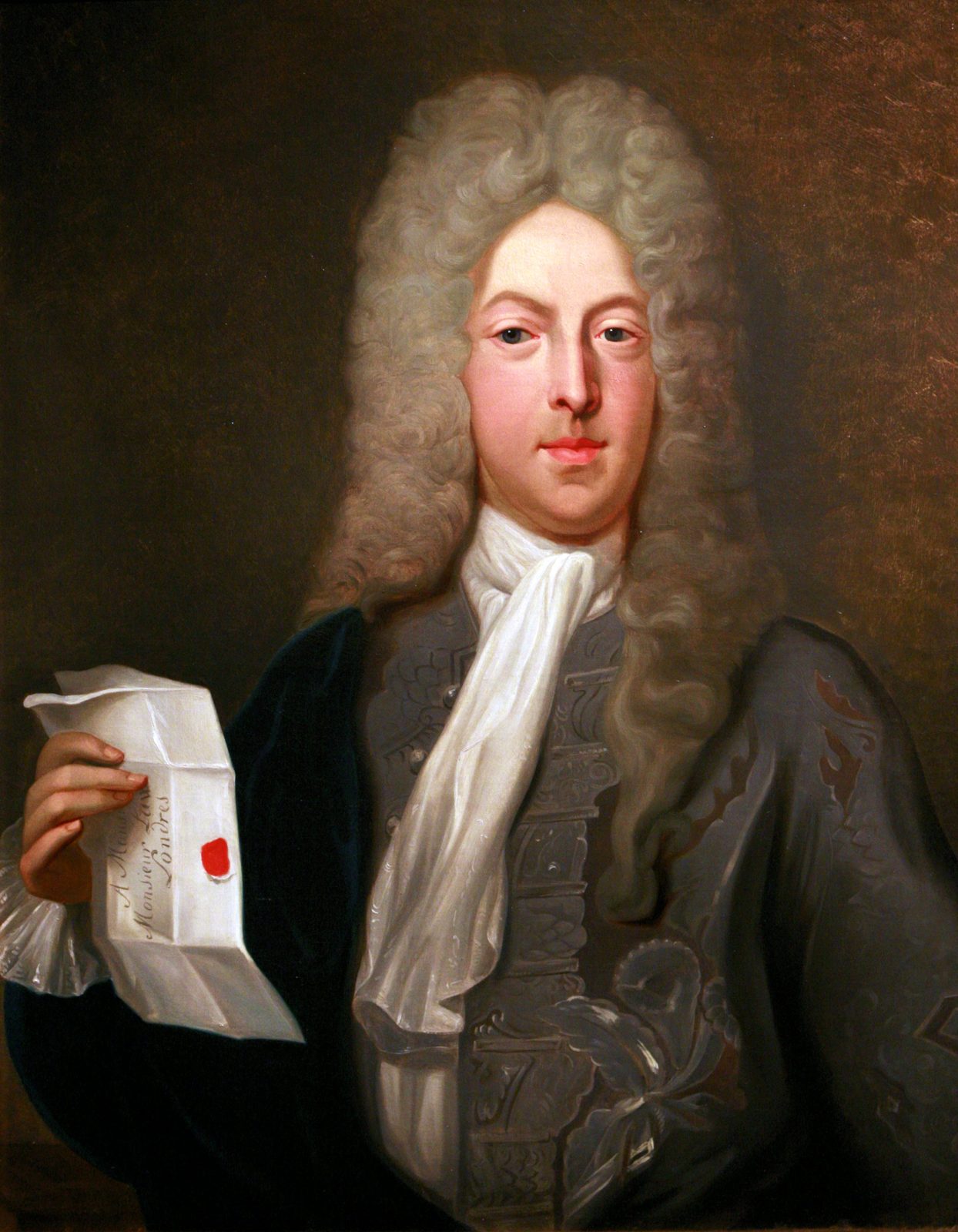
The man who proposed that belief was called John Law. A Scottish gambler, a fugitive who had killed a man, a dreamer who had written a treatise on economics. In the space of eighteen months, he went from being a guest in Paris to being the effective ruler of French finance, in charge of the bank, the taxes, the mint and the colonial trade of half the globe. Then, in just as short a time, it all turned to nothing.
This essay tells the story of those eighteen months. It was the first nationwide bubble in history driven by paper money, and a rehearsal for the modern financial world: a central bank, fiat currency, a stock market, the securitisation of government debt — almost everything we now take for granted appeared together, for the first time, in this one experiment. Law moved too fast, faster even than he could follow himself. But the question he left behind is still with us: when money is only a piece of paper, what makes us believe in it?
CHAPTER ONEThe Gambler from Edinburgh
John Law was born in Edinburgh on 21 April 1671. His father was a goldsmith and banker who had bought the Lauriston estate near Cramond, and the family was prosperous. At fourteen, Law joined the family business, learning to judge the fineness of a gold coin and to calculate the spread on an exchange. When his father died in 1688, he soon abandoned the inheritance, ran off to London, and fell in love with the gaming table.
Gambling was Law's first school. He mastered probability, could calculate odds in his head, and won and lost large sums at the tables. More importantly, at the tables he learned one thing: value is a consensus. A card, a chip, is worth nothing in itself; it is worth what everyone agrees it is worth.
On 9 April 1694, that lesson was paid for in blood. Law fought a duel with Edward "Beau" Wilson in Bloomsbury Square, London, over the affections of a woman. One thrust of the sword, and Wilson was dead on the spot. Law was tried at the Old Bailey, found guilty of murder and sentenced to death; the sentence was later reduced to manslaughter and a fine. Wilson's brother appealed, Law was imprisoned again, and then he escaped — to Amsterdam.
For the next ten years he lived in exile across Europe, studying money and banking. He arrived at a simple but subversive idea: what a country usually lacks is not gold, but the credit that sets gold in motion. Gold and silver sitting in a vault are dead; only in circulation do they become trade, factories and taxes. If a state could issue trustworthy paper money, the economy could escape the shackles of metal currency. In 1705 he set the idea down in Money and Trade Considered. The Scottish Parliament rejected him. France, ten years later, opened its doors.
CHAPTER TWOA Bankrupt Kingdom
In September 1715, Louis XIV died, leaving a five-year-old king, Louis XV, and an empty treasury. The Sun King's late wars had exhausted the country; the national debt towered, and the taxes were skimmed layer by layer by tax farmers, so that only a fraction ever reached the treasury. The Regent, Philippe, Duke of Orléans, faced a state that might default at any moment.
It was then that Law arrived with his plan. His proposal was simple: let France issue paper money. A bank would issue the notes, backed by gold and silver, redeemable on demand. At first they circulated only in Paris, and merchants quickly found paper far easier than heavy coin: no need to test its fineness, no wear, and large sums could be carried lightly. Commerce revived, and tax revenue followed.
In May 1716, the Banque Générale was founded — France's first bank to issue paper money, and one of the earliest central banks in the world. In December 1718, the Regent took it over as a state institution and renamed it the Banque Royale. Law's experiment now carried the backing of the state. The next step was to extend the experiment to the whole of France — and the instrument for that would be a company.
CHAPTER THREEThe Mississippi Company
In August 1717, the Company of the West was founded — the company later known as the Mississippi Company. It received a twenty-five-year monopoly on trade in French Louisiana, and its shares, with a face value of five hundred livres, could be subscribed for with depreciated government bonds taken at par. For holders of government debt, it was a tempting bargain: exchange a bond that was nearly waste paper for a share that supposedly represented the wealth of a new continent.
The question was what Louisiana actually held. In 1682, La Salle had claimed the whole Mississippi basin for France, a territory spanning half a North American continent. But by 1717, the French colonists there numbered only about five hundred. New Orleans did not yet exist; swamp, mosquitoes and rumoured gold mines were all the place had. Law's publicity painted Louisiana as a land paved with gold; in practice, the company's ships carried more convicts and recruited German immigrants than prospectors.
In the spring of 1718, the colonial governor Bienville founded New Orleans at the mouth of the Mississippi, named for the Regent. That same year, eight hundred new settlers arrived, doubling the colonial population. The company began to develop the colony in earnest — but its real business was never in America. It was in Paris: the shares.
In May 1719, the Mississippi Company absorbed the bankrupt French East India Company and the China Company and renamed itself the Company of the Indies. In the months that followed, it acquired the tobacco monopoly, the right to run the royal mints, the tax farms, and finally the power to collect all direct taxes. A listed company had taken over the finances of a kingdom. Its privileges were extended to 1770 — a full half-century.
CHAPTER FOURRue Quincampoix
The shares were traded in an open-air market on a stretch of Rue Quincampoix in Paris. The climb in price was dizzying: 750 livres on 17 June 1719; 1,000 on 21 July; 2,000 the following week; 3,000 on 17 August. By the end of the year, the price had reached 10,000 livres — twenty times its face value.
The company kept issuing new shares. One issue offered fifty thousand shares at five hundred livres each, with only seventy-five livres down and the rest payable in nineteen monthly instalments of twenty-five livres. By the middle of 1719, the company had issued more than six hundred thousand shares, with a total face value of three hundred million livres. Anyone who could afford the first payment could have a share of the dream.
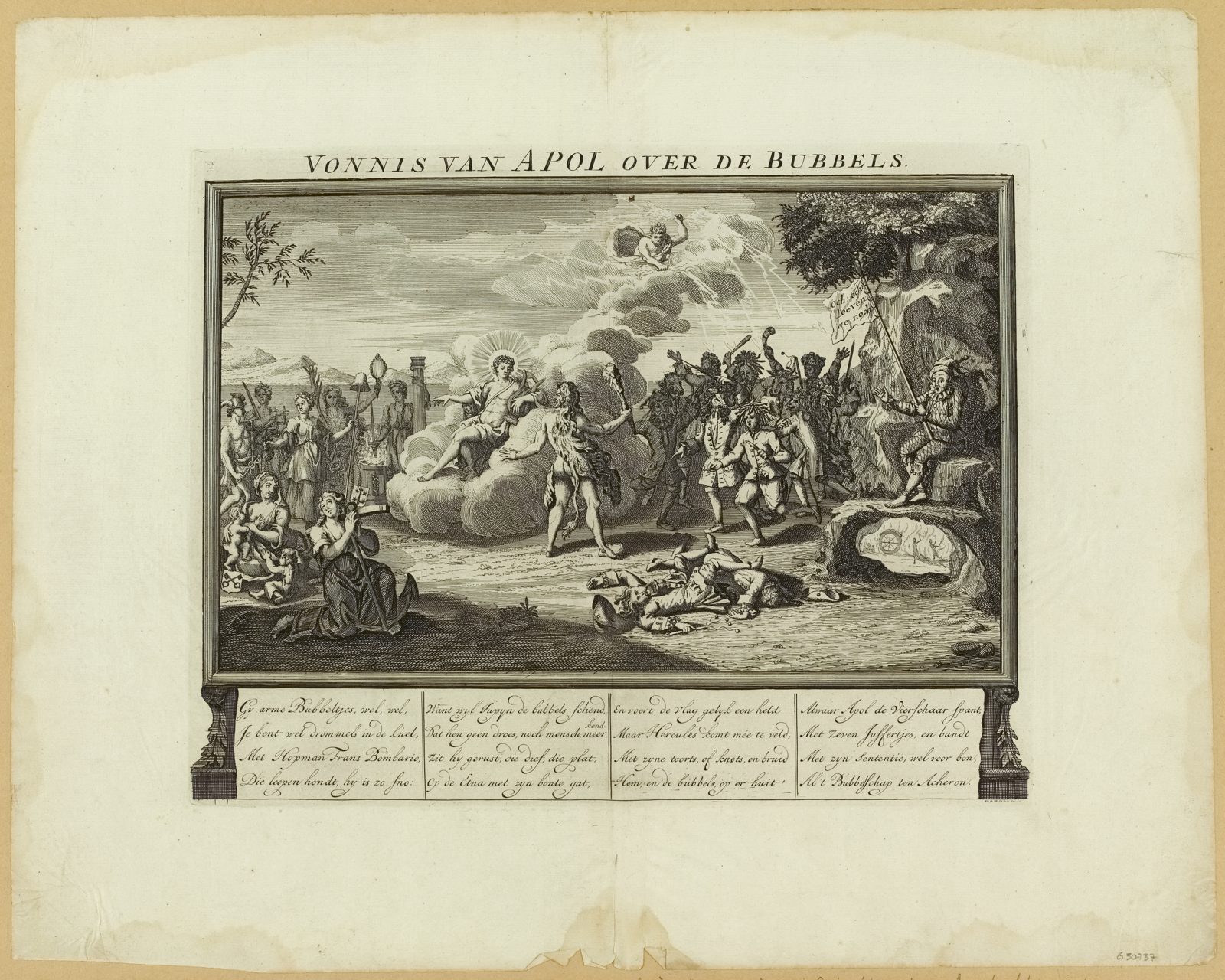
All Paris went mad. Noblemen sold their estates to buy shares; servants put up their savings; nuns and farmers rode into the city. The new word on everyone's lips was millionnaire — millionaire — a word that entered the French language in those very months. Houses on Rue Quincampoix were rented out as exchanges, windows were smashed open to pass buy and sell orders through, and some people climbed in over the rooftops because they could not push through the street.
Law's own standing rose with the share price. On 17 September 1719 he converted to Catholicism; on 2 December he was elected an honorary member of the Royal Academy of Sciences; on 5 January 1720 the Regent appointed him Controller-General of Finances. The bank, the company, the taxes, the mint, the colonial trade — every thread of French finance now ran through a single pair of hands.
In fairness, those eighteen months were not all bubble. Paper money genuinely revived the French economy for a time: within two years, industrial output grew by sixty percent, and the number of French ships engaged in export trade rose from sixteen to three hundred. Law's system was not a fraud. It was an idea ahead of its time, running far faster than reality could follow.
CHAPTER FIVEThe Weight of Paper
Paper money has one fatal weakness: it is only worth something while everyone believes in it. In January 1720, prices in France began to run out of control, with inflation reaching a monthly rate of twenty-three percent. The shrewd quietly began converting their shares back into gold coin and hiding the coin away. Law tried to hold the line: in March, he pegged the share price at nine thousand livres, with the Banque Royale buying back shares with banknotes. But every share bought back meant another banknote printed; and the more notes printed, the less gold there was to redeem them.
On 21 May, Law played his last card: an edict announcing that banknotes and shares would be devalued by half, in seven stages, to be completed by the end of the year. The announcement set off panic at once. Six days later the edict was withdrawn, but trust was already broken. Crowds rushed to the bank demanding gold; the bank was forced to close for ten days, and when it reopened, the size of each transaction was limited. Food prices rose by sixty percent within a few months, and there were food riots in the streets of Paris.
The fall in the share price was as swift as the rise: two thousand livres in September 1720, one thousand by the end of the year, and back to the starting point of five hundred by September 1721. On 29 May, Law was dismissed as Controller-General; by the end of the year he had fled France in disguise, travelling through Brussels and settling at last in Venice, where he lived by gambling. He died in Venice on 21 March 1729 and was buried in the church of San Moisè, aged fifty-seven. All that remained of his fortune was a few pieces of furniture and unfinished manuscripts.
CHAPTER SIXThe Aftermath
After the bubble burst, the Mississippi Company and the Banque Royale were placed under government receivership in April 1721. After restructuring, the company emerged in 1723 as the French Indies Company, devoted to overseas trade, and survived until its liquidation in 1770. The colony remained: New Orleans grew into a real city, and the French of Louisiana left behind a language and place names that endure to this day.
But the French fear of paper money and shares lasted for nearly a century. The word "bank" became a dirty word in France, and it was not until 1800, when Napoleon founded the Banque de France, that the country again had a national bank. The irony is that Napoleon's bank did exactly what Law had wanted to do: issue paper money for the whole nation, backed by the credit of the state.
Law's ideas did not die with him. That the value of paper money comes from credit and circulation, that a central bank regulates the money supply, that government debt can be securitised — these ideas, which seem obvious today, are the legacy of Law's experiment. He was wrong not in direction, but in speed and scale. When the printing of money outruns the growth of trust, when a company's market value swells beyond a nation's entire gold reserve, paper is only paper.
In that same year, London suffered its own South Sea Bubble. Paris and London, the two largest financial centres in Europe, learned the same lesson in the same year: the market can push anything up to the sky, but nothing can stay in the sky forever.
EPILOGUEPaper Does Not Lie, but People Do
Law was still writing treatises on economics when he died, convinced that his system had been correct in principle and merely misapplied in practice. Economists have argued about it for three hundred years: some call him a fraud, others a genius born too soon. The truth is probably somewhere in between. His theory worked on paper — but in the real world, a theory has to face human nature, and human nature, confronted with a share price that doubles in ten days, is never calm.
The Mississippi Bubble leaves us three reminders. First, trust is the most expensive public good: it takes decades to build and only months to destroy. Second, any trick that turns debt into assets must be paid for by someone in the end; a printing press can postpone the bill, but it cannot cancel it. Third, innovation itself is not a crime; the real danger is treating innovation as magic that carries no cost.
Today, paper money has given way to numbers, and share trading no longer requires crowding into a street — it takes a second. But the crowd on Rue Quincampoix and the people staring at screens today are not essentially different: we are all paying for a certificate, behind the certificate is someone else's promise, and the value of that promise depends on whether we still believe.
Law's story is not a joke about a gambler. It is a mirror. It reflects every age that believes paper can turn into gold — including our own. The Mississippi still flows, and New Orleans is still on the map. The bubble burst; the city remained. And that piece of paper is still in every one of our pockets.
Questions That Remain Open
In honesty, the following question has no settled answer, and this essay does not pretend otherwise:
- Was John Law a fraud, or a genius born ahead of his time? Economists have argued over this for three hundred years, and the question remains unsettled; Law himself died believing his system was sound in principle and had only failed in execution, and that claim, too, is still debated.