PrologueThe Man Who Never Lost Money
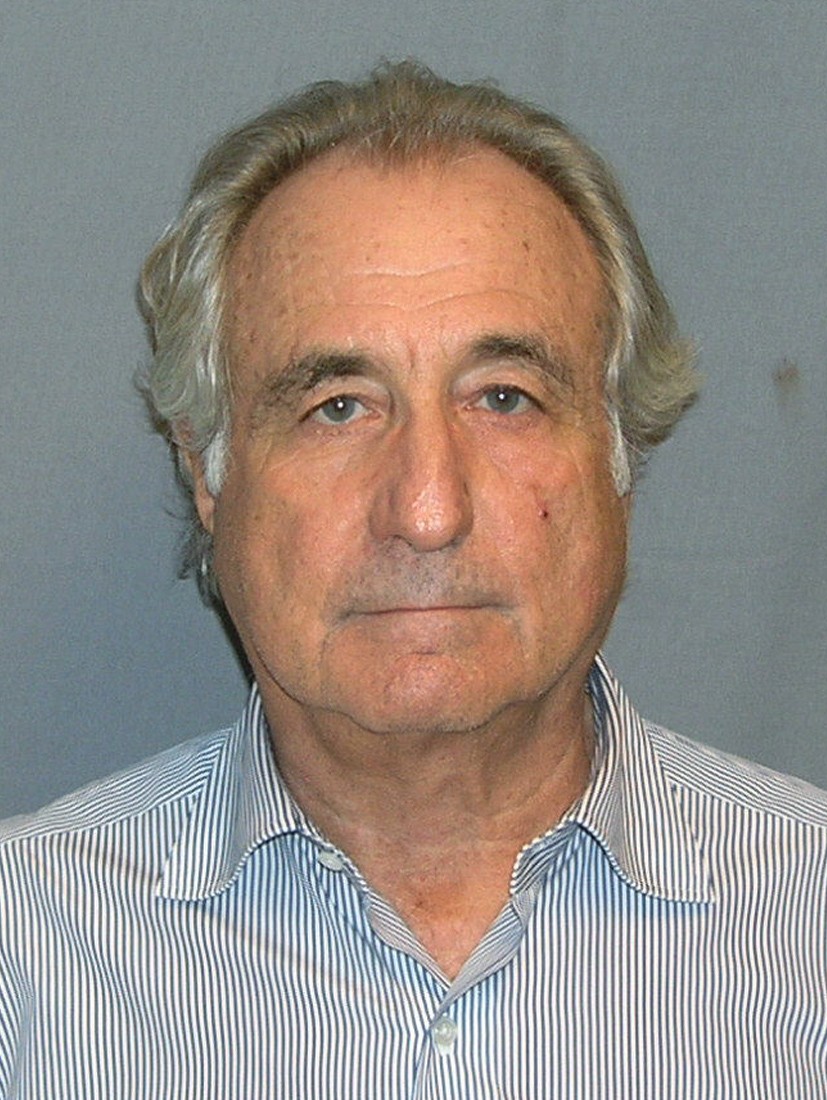
On the morning of December 11, 2008, agents of the Federal Bureau of Investigation walked into a Manhattan penthouse and arrested 70-year-old Bernard Madoff. The night before, he had confessed to his two sons that the asset-management business he ran was “all just one big lie.”[4]
Until that moment, Madoff had been one of the most respected names on Wall Street: a former chairman of Nasdaq, founder of a brokerage established in 1960, and on paper the manager of $64.8 billion belonging to 4,800 clients.[11][12] His client list read like a society register: charitable foundations, university endowments, pension funds, European aristocrats, and ordinary families who had entrusted him with their life savings.
Yet the truth could be stated in a single sentence: the money was never invested at all. There were no stocks, no options, no trades — only beautifully printed fake account statements and a firm that paid old clients with new clients’ money. The question this story most deserves is not how he did it, but why so many people were willing to believe him for so long.
Chapter OneTrust Is the Real Currency
The currency of a Ponzi scheme is not the dollar. It is trust. Madoff understood this intimately. His firm was real, and half of it was entirely legitimate: a market-making business that bought and sold securities for real every day, with hundreds of employees in a Midtown Manhattan office tower. The legitimate half was the perfect cover for the illegitimate half.
More importantly, he knew how to make trust reproduce itself. You could not simply walk in with your money; you had to be introduced. And he turned clients away, saying there was no room. The people he rejected only wanted in more, because in the world of finance, exclusivity is itself an endorsement: if so many people are clamouring to get in, there must be something good inside.
And so trust flowed along networks of acquaintances: friends introduced friends, foundations introduced foundations, and a hedge fund called Fairfield Sentry channelled billions of dollars into Madoff’s accounts, collecting fees while never seriously examining how those returns were produced. Once trust begins to copy itself, it no longer needs evidence — every new arrival becomes a guarantee for the one before.
Chapter TwoThe Magic of Making Money Every Month
Madoff’s stated strategy had an awkward name: the split-strike conversion. He said he bought 30 to 35 stocks from the S&P 100 index while buying put options to hedge and selling call options to collect premiums, using the combination to lock returns inside a narrow band. It sounded professional, conservative, and entirely reasonable.
The numbers matched the story perfectly. According to monthly return records from December 1990 to October 2008, the Fairfield Sentry fund averaged a monthly return of 0.84 percent, an annualised return of about 10.59 percent, and an annualised volatility of only 2.45 percent.[3] An annual return of around 10 percent — not too much, not too little: high enough to satisfy, low enough to raise no suspicion.[8] About 1 percent a month sounded like steadiness, sounded like expertise, sounded like a reason to hand over your retirement savings.
But to a trained eye, that number was itself a confession. The mathematician Edward O. Thorp saw the problem as early as the 1990s: in theory, this strategy could only earn something close to the risk-free rate, yet Madoff was reporting almost three times that; more suspicious still, in months when the market fell, his accounts never fell with it, and losing months were magically “smoothed away.”[7]
Markets rise and markets fall. That is the one certainty in finance. A strategy can beat the market; it cannot abolish the market. What Madoff was selling was not returns but an illusion: that volatility could be tamed and risk could be cancelled. Far more people were willing to pay for that illusion than you might think.
Chapter ThreeThe Postage Stamps of 1920
The Ponzi scheme takes its name from a man who preceded Madoff by 88 years. In late 1919, an Italian immigrant named Charles Ponzi set up the Securities Exchange Company in Boston, promising investors a 50 percent profit in 45 days and a doubling in 90, on the supposed arbitrage of international reply coupons.[9] Within months he had taken in about $15 million.
The story had a fatal arithmetic problem: to support the profits he promised, some 160 million reply coupons would have had to be in circulation around the world. In reality there were only about 27,000.[10] On July 26, 1920, the Boston Post laid out that arithmetic for the whole city to see; on August 12 of the same year, Ponzi was arrested.[9][10] From fame to collapse took less than a year.
The contrast between Ponzi and Madoff shows how the fraud evolved. Ponzi promised windfalls and collapsed within a year; Madoff promised moderation and lasted 17 years. Greed gets people through the door, but what keeps a fraud alive is plausibility. Everyone knows a 50 percent return is fake; an annual return of 10 percent is something everyone is willing to believe. Madoff’s real invention was not the fraud itself, but calibrating it to sit just below the threshold of suspicion.
There is one more difference: Ponzi’s victims were mostly ordinary immigrants and working people in Boston, while Madoff’s included some of the richest and best-educated people on earth. That fact is worth more reflection than any number in this story.
Chapter FourSix Alarms, Five Misses
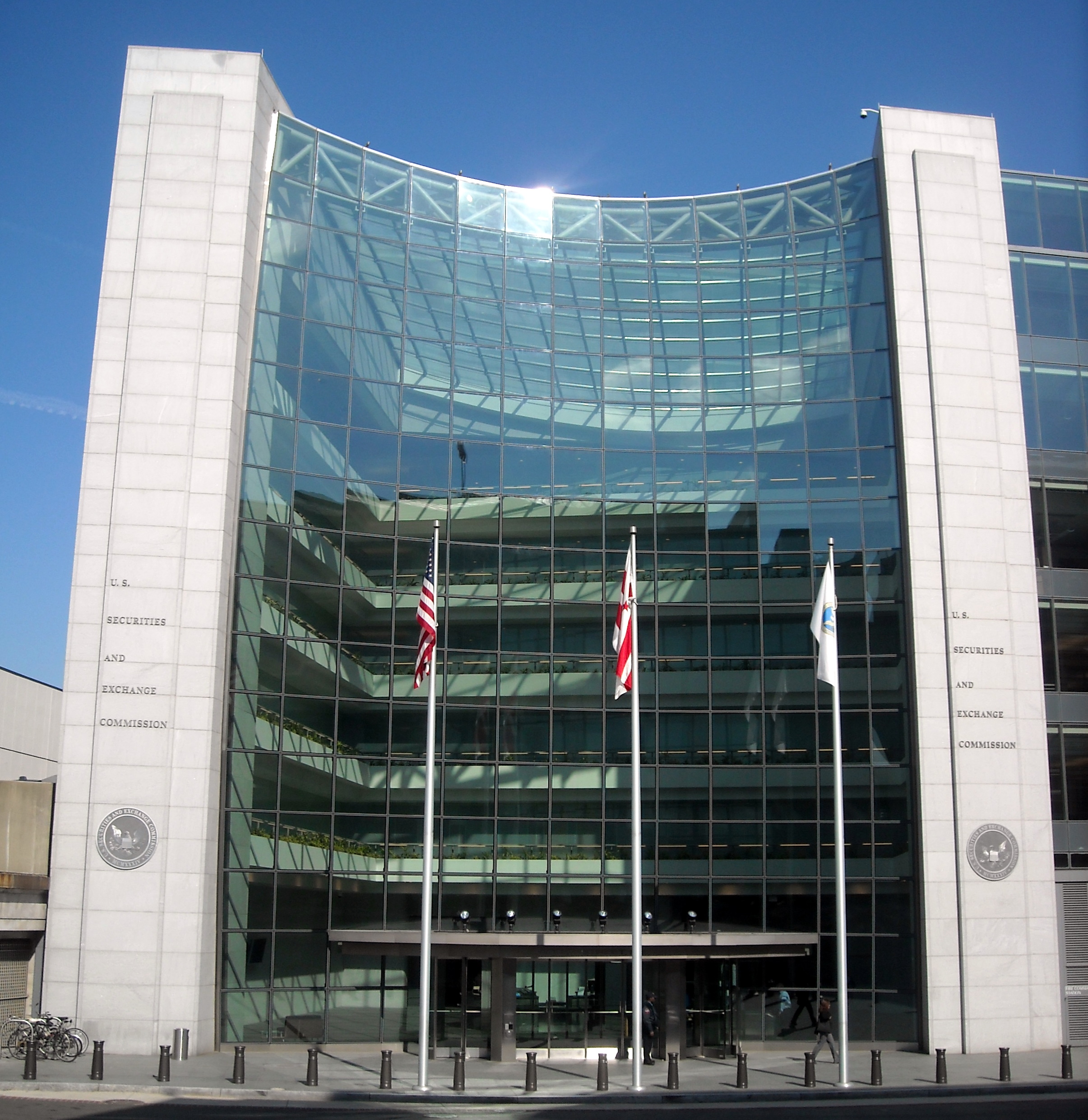
If the victims were blinded by trust, the regulators were blinded by their own procedures. The report published by the SEC’s Office of Inspector General on August 31, 2009, put it bluntly: between June 1992 and December 2008, the SEC received six substantive complaints, each of which warranted a thorough investigation; in that period it conducted three examinations and two investigations of Madoff, yet never performed one that was genuinely thorough and competent.[1][2]
The whistleblowers were no cranks. Harry Markopolos, a derivatives analyst, submitted his analysis to the SEC three times — in May 2000, March 2001, and October 2005. The 2005 submission was titled, without ambiguity, “The World’s Largest Hedge Fund Is a Fraud,” and listed about 30 red flags.[1][2] The 2001 submission reached the SEC’s New York office and was declined for investigation the very next day.[1]
The most damning part is not that nobody warned them. Warnings arrived, investigations arrived, and still the truth did not. Examiners never independently verified Madoff’s trades with an exchange or a clearing house, and never asked him to produce records of his actual trading counterparties — the one step that would have exposed a Ponzi scheme.[1] A regulator can hold every power in the book and still choose, at each decisive moment, the easiest path: read the statements, not the trades; ask the man himself, not a third party; treat a completed procedure as a completed inquiry.
There was no conspiracy here, only ordinary bureaucracy. Examiners lacked expertise in derivatives, offices did not talk to one another, and the halo over Madoff’s head — former Nasdaq chairman, a moderniser of the markets — made every doubt seem impolite. Regulatory failure rarely looks like corruption. It looks like politeness.
Chapter FiveThe Contagion of Trust
Madoff’s client list reads like a sociology experiment. Jewish charitable foundations gave him their money because he was “one of us”; European aristocrats and bankers gave him theirs because American Jewish charities had given him theirs; even the foundation of Nobel Peace Prize laureate Elie Wiesel handed over nearly all of its assets.[11]
This is the logic of affinity fraud: trust does not need verification, only transmission. A person believes not because they have checked, but because someone they trust believes. With each link in the chain, doubt is diluted a little further, until the chain is so long that nobody remembers what the original trust was founded on.
Psychologists would call it social proof and herd behaviour conspiring together; economists would call it rational laziness under information asymmetry. Both are right, and neither is complete. The fuller truth is that modern finance has grown too large for anyone to verify everything first-hand, so we can only choose whom to trust. And once we have chosen, our brains begin defending the choice — explaining away every doubt and treating every question as ignorance.
Madoff never needed to convince everyone. He only needed to convince the first group. The first group convinced the second, the second convinced the third. By the time the fraud was exposed, the victims discovered they had not been deceived by one man, but by an entire chain of trust.
Chapter SixThe Tide Goes Out
A Ponzi scheme has one fatal weakness: it only survives while the tide is rising. In the autumn of 2008, as the financial crisis swept the globe, Madoff’s clients rushed to redeem their money — about $7 billion in total — while he had only a few hundred million dollars in cash left.[12] For the first time in decades, the money coming in was not enough to pay the money going out.
On December 10, 2008, Madoff confessed everything to his two sons; the next day, the FBI arrested him at his apartment.[4] On March 12, 2009, he pleaded guilty in court to 11 federal felonies, admitting that he had not genuinely traded securities since the 1990s; on June 29 of the same year, a judge sentenced him to 150 years in prison, the maximum the law allowed.[4]
Only then did the ledger come fully into view. Prosecutors estimated that client accounts held $64.8 billion as of November 30, 2008, but about $47 billion of that was fictitious profit that had never existed; the principal that clients had actually invested — and actually lost — was about $17.5 billion.[11][5] Irving Picard, the court-appointed trustee, then began the largest recovery effort in history, recouping about $13.3 billion by 2018 and distributing about $11.28 billion to victims; the Justice Department’s victim fund held a further roughly $4 billion for compensation.[5][6]
Madoff died in prison on April 14, 2021, at the age of 82.[12] He left behind not a company, but a question.
EpilogueThe Lie Is Dead. Is Trust?
A sentence of 150 years is a full stop in law, but only a comma in history. After Madoff, the rules changed, due-diligence checklists grew longer, and fund managers were required to place assets with independent custodians. All of that was right, and all of it was insufficient.
Because the real lesson of this fraud is not financial but human. The very smoothness of the returns was itself information: an investment that never loses money is either too good or too false. The object of scrutiny should never have been the statements, but the trades themselves — where the money went, with whom it was traded, and whether an independent third party saw it. Trust is not the mistake. The mistake is using trust as a substitute for verification.
Madoff is dead, but the Ponzi scheme is not. It has only changed its name, its packaging, and its promise. The next Madoff will not offer 50 percent in 45 days; he will offer a steady 1 percent a month, with a strategy, with risk controls, with a fine reputation. The way to tell him apart has not changed since 1920, and it has not changed today.