PROLOGUEA Lamp in a Tent
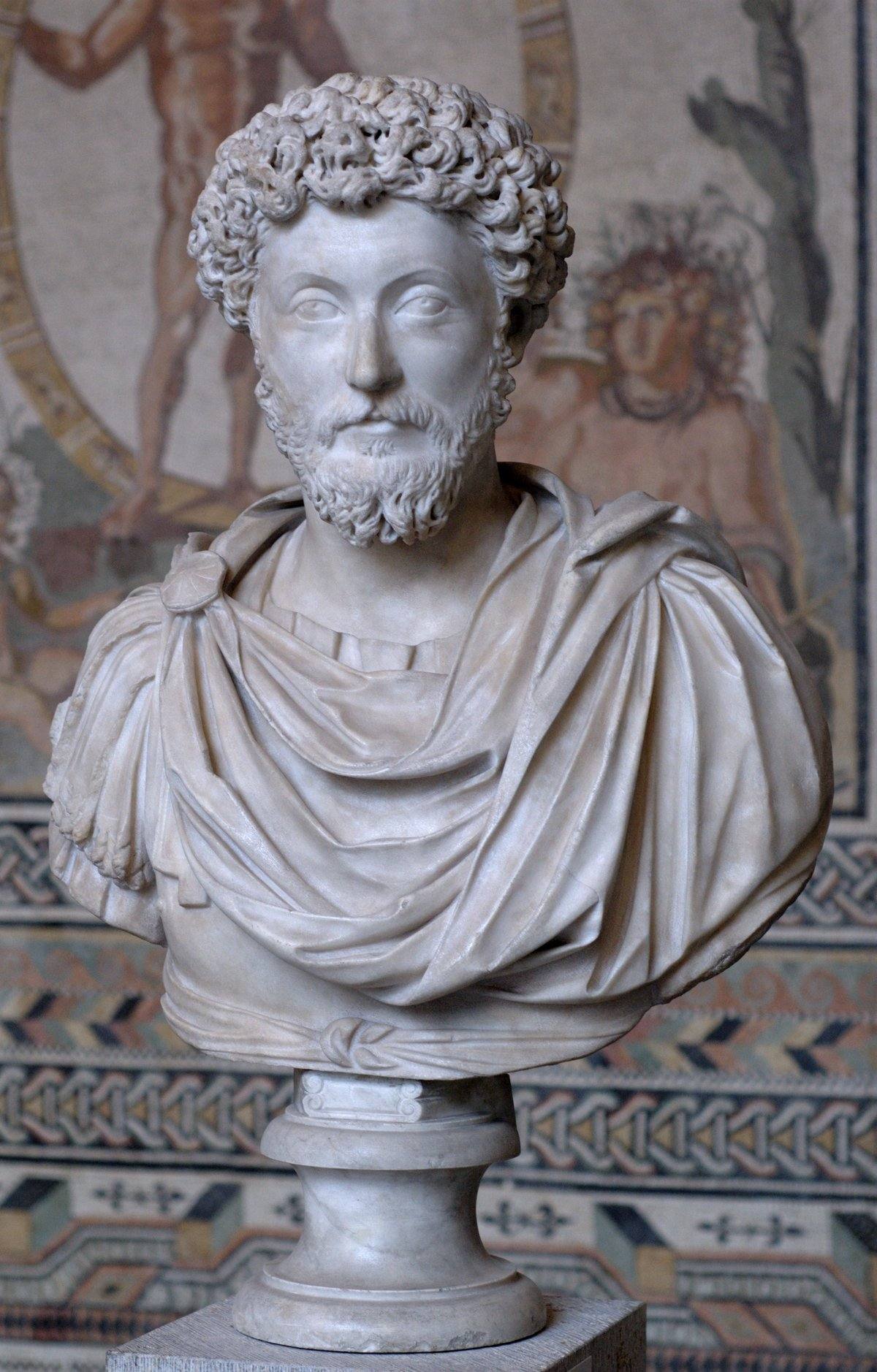
Late in the second century, in a military camp on the Danube, a man in his fifties sat writing by lamplight. Outside the tent were the forests of Germania and the cold wind; inside was the emperor of Rome, commander of dozens of legions, ruler of a realm that stretched from Britain to the Euphrates. But what he wrote had nothing to do with empire: who had angered him that day, and how he had held his tongue; what kind of man he hoped to be if he died tomorrow; why fame was not worth chasing; why anger was a way of wounding himself.
He wrote for his own eyes, with no intention that anyone else would ever read it. No title, no chapters, no readers. The notebook later acquired a title, Meditations; in Greek it is Ta eis heauton, "To Himself". More than eighteen centuries later, it has become one of the most printed works of philosophy in the world.
This essay tells how that book came to be: how a man who did not want to be emperor was raised to the greatest throne on earth; how an empire in his hands met plague, war and rebellion all at once; and why, in the middle of it all, he chose to write a few lines every night to remind himself not to become a bad man.
CHAPTER ONEA Boy Who Did Not Want to Be Emperor
Marcus Aurelius was born on 26 April 121. His father died while he was young, and his mother raised him alone. He was not born to be emperor; he was chosen. The emperor Hadrian saw something in him and ordered his successor, Antoninus Pius, to adopt him. In 138, at seventeen, Marcus became heir to the throne; around 146 he married Pius's daughter, Faustina the Younger. They had thirteen children, of whom the only son to reach adulthood was Commodus.
Young Marcus received the best education Rome could offer. His teachers of rhetoric were Fronto and Herodes Atticus, the most celebrated of the day; his teacher of law was the distinguished jurist Maecianus. At eleven he put on the coarse dress of a philosopher and took up a hard, abstemious life, studying so intensely that it damaged his health. Later he gave up poetry and rhetoric for philosophy, joining the Stoic school founded by Zeno in Athens.
His favourite teacher was Quintus Junius Rusticus, a philosopher and a practical statesman. In the first book of the Meditations Marcus thanks his teachers one by one, like a list of debts of gratitude: his grandfather taught him good morals and the government of his temper; his adoptive father taught him temperance and justice; and Rusticus gave him the most important gift of his life — the Discourses of Epictetus. Epictetus had been a slave; freed, he taught in Greece, and his words were written down by his pupil Arrian. The words of a slave became the emperor's bedside book. That alone tells you the character of this book: it does not care who is speaking, only whether what is said is true.
There is a note at the end of the first book: it was written on campaign against the Quadi, on the river Granova. That is one of the most moving details in the whole work — a list of thanks, written on a battlefield.
CHAPTER TWOThe Empire Fell Apart All at Once
In March 161, Pius died and Marcus took the throne. He insisted on ruling jointly with his adoptive brother, Lucius Verus; Rome had two emperors for the first time. The peace he wanted never came. Disaster arrived one thing after another.
First came war in the East. Parthia invaded; Verus took nominal command, the generals won the war, and in 165 it ended — but the returning legions brought plague home with them. The Antonine Plague broke out in 165 or 166 and spread through the whole empire, killing an estimated five to ten million people. Men died in Rome every day; legions were hollowed out. Verus himself died on the journey home in 169, very likely of the plague.
Then came the north. The Marcomanni, Quadi, Vandals and Sarmatians joined together, crossed the Danube and threatened Italy itself. Marcus went to the front in person and stayed three years at Carnuntum; the wars dragged on, on and off, for more than a decade. War and plague had emptied the treasury, and rather than lay extraordinary taxes on the provinces, he held a public auction in the Forum of Trajan and sold the treasures of the palace: gold and crystal goblets, flagons made for kings, his wife's silk robes embroidered with gold, jewels from Hadrian's own cabinet, statues and paintings by great masters. The sale lasted two months. When the war was over, he announced that any buyer who wished could return his purchase and recover his money. Both the Historia Augusta and Eutropius record it — a scene with no parallel among Roman emperors.
In 175, Avidius Cassius, the commander in the East, revolted and declared himself emperor. The rebellion was soon over; Cassius was assassinated by his own officers. Marcus did not punish the man's family or partisans. He wrote to the Senate recommending mercy, and the letter survives.
In the same year, Christians were executed at Lyon. The emperor's rescript was that those who denied their faith should be released, and those who held to it punished. It is a shadow over Marcus's reign that cannot be avoided: a man who wrote of forgiveness was also the ruler of an empire, and the laws and traditions of that empire pressed on him, and he did not break free of them.
CHAPTER THREENotes from the Front
The Meditations was written in those years. Twelve books, all in Greek — in the second century, Greek was still the language of philosophy, and every educated Roman could read and write it. Book One was written in the country of the Quadi, on the Granova — the river Hron in modern Slovakia; Book Two at Carnuntum; most of the rest at Sirmium between 170 and 180, his headquarters for the Danube wars. In other words, most of this book was written in military camps, between war and plague.
It has no title, no structure; sentences repeat, and one passage often has nothing to do with the next. It was not written to be read by anyone — it was a notebook for his own use. Every morning Marcus reminded himself: "Begin the morning by saying to thyself, I shall meet with the busybody, the ungrateful, arrogant, deceitful, envious, unsocial." And then he reminded himself why they were so: because they did not know what is good and what is evil. He knew, so he should not answer them in kind.
Book Four opens with another famous passage: "Men seek retreats for themselves, houses in the country, sea-shores, and mountains." But Marcus says the quietest retreat is not out there at all; it is inside oneself, and one can retire into it whenever one chooses. For a man who slept in a military camp, that was not rhetoric. It was a way of surviving.
CHAPTER FOURThree Exercises
The Meditations has no system, but three exercises recur through it, and they hold the whole book together.
The first is to separate what is in your control from what is not. Other people's opinions, the outcome of a war, the coming and going of plague, the hour of your own death — none of these is in your control. What is in your control is your own judgement and your own action. To spend your strength on the first is waste; to draw it back to the second is freedom. Book Eight puts it plainly: external things are not the problem; your assessment of them is the problem, and an assessment can be erased right now.
The second is to treat the obstacle as material. Book Five, section 20, is the most famous passage in the book. In George Long's nineteenth-century translation, "the mind converts and changes every hindrance to its activity into an aid... that which is an obstacle on the road helps us on this road." A modern translator, Gregory Hays, renders the same passage more sharply: "The impediment to action advances action. What stands in the way becomes the way." Marcus's meaning is that the mind can turn any hindrance to its own purposes. An unpleasant man can block your work, but he cannot block your intention; illness can interrupt your plans, but it cannot interrupt the way you meet illness. The obstacle does not vanish — but it can change its place, from standing in front of you to lying under your feet.
The third exercise is about dealing with people. Every day Marcus faced courtiers, generals, informers, flatterers and enemies. His method was not endurance but dissection: "The best way of avenging thyself is not to become like [the wrong-doer]" (Book Six). And if anyone could convince him that he thought or acted wrongly, he would gladly change, "for I seek the truth, by which no man was ever injured" (Book Six). Anger, in his view, was not strength but loss of control; forgiveness was not weakness but the recognition that the other person, too, was only being pushed along by his own ignorance.
CHAPTER FIVEDo Not Be Made into a Caesar
The most startling sentence in the Meditations is in Book Six, section 30: "Take care that thou art not made into a Caesar."
Marcus knew what a throne does to a man. It accustoms him to flattery, to giving orders, to treating his own wishes as law. In the same passage he sets his adoptive father, Antoninus Pius, against that danger as a model: acting in conformity to reason, evenness in all things, piety, serenity of countenance, disregard of empty fame, examining everything carefully before judging, tolerating plain speech, living with little. He writes: "Reverence the gods, and help men. Short is life. There is only one fruit of this terrene life — a pious disposition and social acts."
He also drew himself a line of extreme simplicity, in Book Twelve: "If it is not right, do not do it: if it is not true, do not say it."
This is not an emperor lecturing his subjects; it is a man making rules for himself. He knew better than anyone that once the rules slipped, no one around him would remind him — everyone would go along with him. So every night, he reminded himself.
CHAPTER SIXNine Hundred Years Adrift
On 17 March 180, Marcus died on campaign, aged fifty-eight. The cause is unknown — perhaps the plague, perhaps exhaustion. His son Commodus succeeded him. The heir Marcus had so carefully chosen became one of the most notorious emperors in Roman history, and was murdered in 192. Gibbon would later say that if a man were asked to fix the period in the history of the world during which the condition of the human race was most happy and prosperous, he would name the years from the death of Domitian to the accession of Commodus. Marcus's death was the full stop of that age.
The Meditations nearly vanished. It was never published, and no record of its circulation survives. The first person known to mention it is Arethas of Caesarea, around the ninth or tenth century, who had a copy that was falling apart and ordered it recopied. After that it circulated in the Byzantine world, but never beyond a small circle. The text we have today rests almost entirely on two manuscripts: the Codex Palatinus, used for the first printed edition in the sixteenth century and then lost, and a fourteenth-century Vatican manuscript, corrupt and missing more than forty lines.
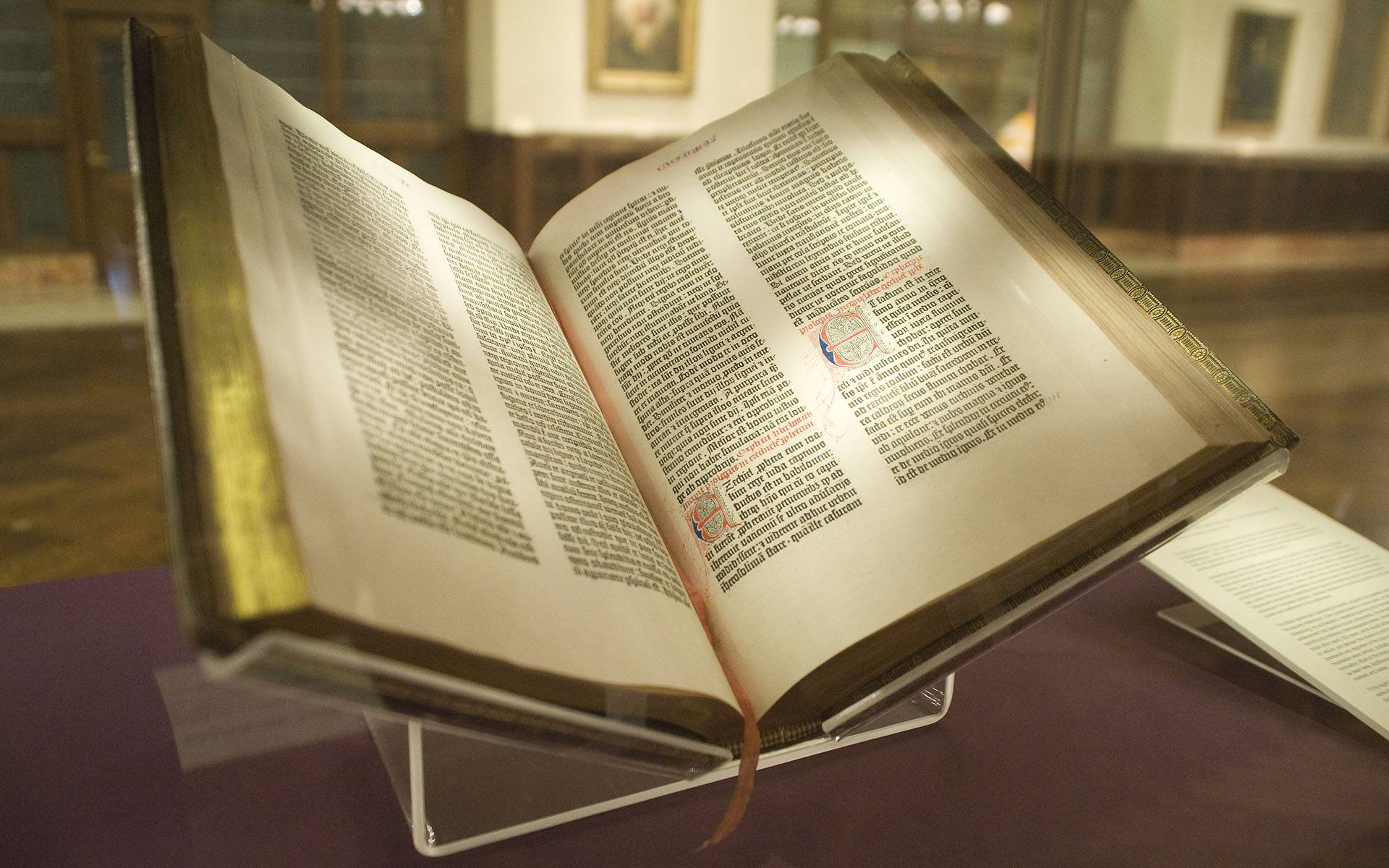
It was not until 1558 or 1559 that the scholar Wilhelm Xylander had it printed for the first time, at Zurich, under the title To Himself. In 1634, Meric Casaubon produced the first English translation. Since then it has been translated into every language, and has found its way into bookshops, barracks, prisons, sickrooms and offices, becoming one of the most printed works of philosophy of the last two thousand years. A notebook written for a reader who would never exist became a notebook for all readers — an ending Marcus himself could never have imagined.
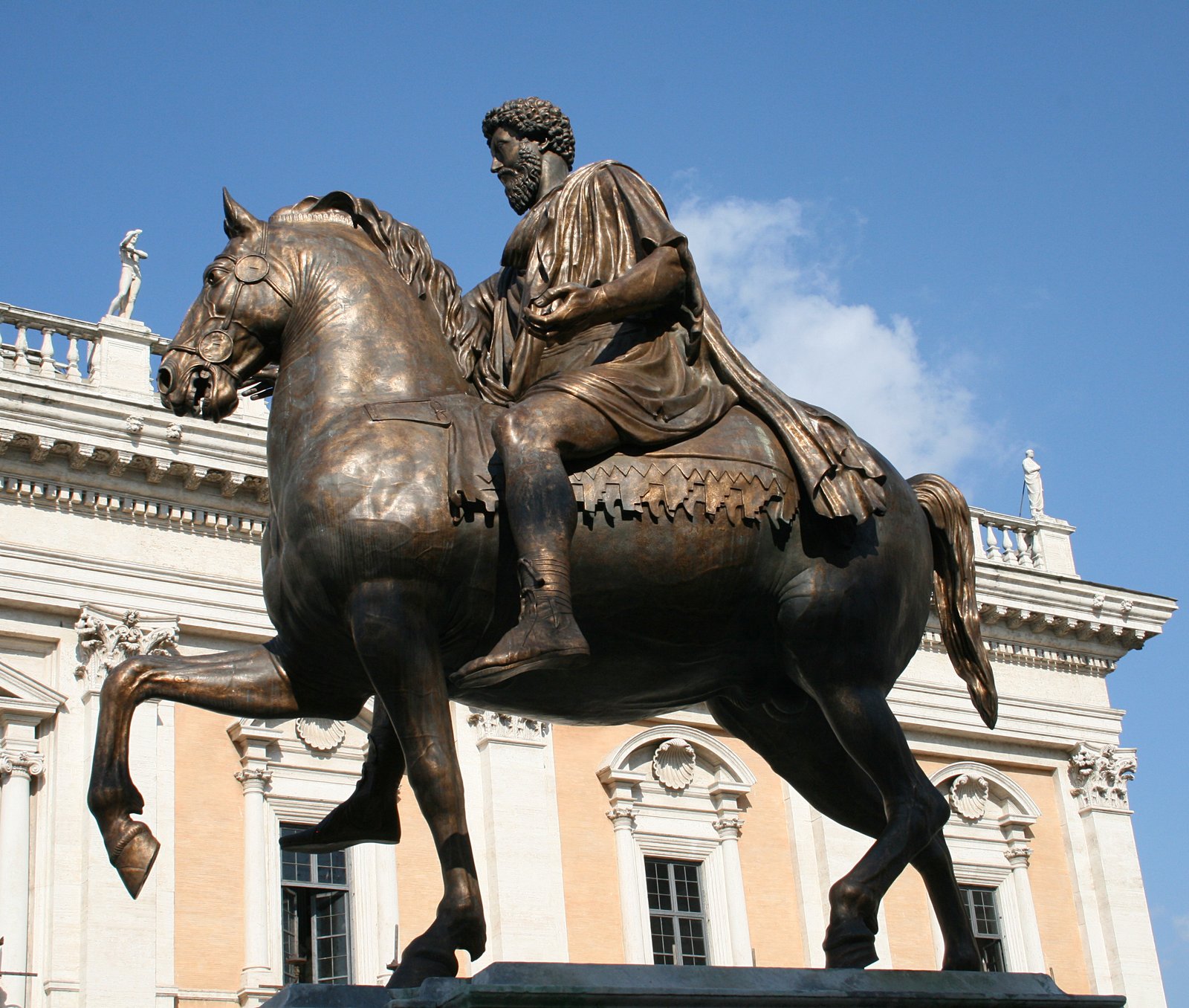
A statue shares the same kind of fate. The equestrian statue of Marcus Aurelius on Rome's Capitoline Hill, cast around 175, is gilded bronze, 4.24 metres tall, the only complete ancient bronze equestrian statue of an emperor to survive. It survived because of a mistake: in the Middle Ages people believed it portrayed Constantine, the first Christian emperor, and so did not melt it down. In 1538 Pope Paul III moved it to the centre of the Piazza del Campidoglio, redesigned by Michelangelo. The original is now in the Capitoline Museums; the statue in the square is a replica. A mistake preserved the statue, and time preserved the book — history sometimes fights forgetting with accidents.
EPILOGUEWritten to Himself, and to Everyone
What makes the Meditations worth reading is not that it offers answers, but that it shows a posture: a man holding the greatest power on earth, reminding himself daily not to misuse it; a man facing plague and war, reminding himself daily not to be carried away by fear; a man surrounded by flattery, reminding himself daily to listen to the truth.
In Book Ten Marcus writes: "No longer talk at all about the kind of man that a good man ought to be, but be such." In the same book he reminds himself that the court of Hadrian, the court of Antoninus, the courts of Alexander and Croesus were all the same drama, only with different actors. Power, wealth and fame all pass; when they have passed, all that remains is how a person lived.
This book does not ask you to become an emperor, or a philosopher. It asks only for one small thing: a few minutes a day, a few lines written to yourself — what did I do right today, what did I do wrong, what kind of person do I want to be tomorrow? Marcus wrote twelve books in a tent on the Danube, for a reader who would never exist. The readers came anyway, and they have been coming for eighteen hundred years.
If you wrote a few lines to yourself tonight, what would they say?
Questions That Remain Open
In honesty, the following three things have no settled answer, and this essay does not pretend otherwise:
- How did Marcus Aurelius actually die? He fell ill and died at the front on 17 March 180, aged fifty-eight; the cause of death is unknown — it may have been plague, or exhaustion.
- How many people did the Antonine Plague actually kill? It broke out in 165 or 166 and spread across the empire, and the death toll is estimated only as a range, from five to ten million.
- In which year was the Meditations first printed? The Zurich scholar Xylander first put it into print in 1558 or 1559, and the year remains unsettled.