PROLOGUEA Question in a Tower
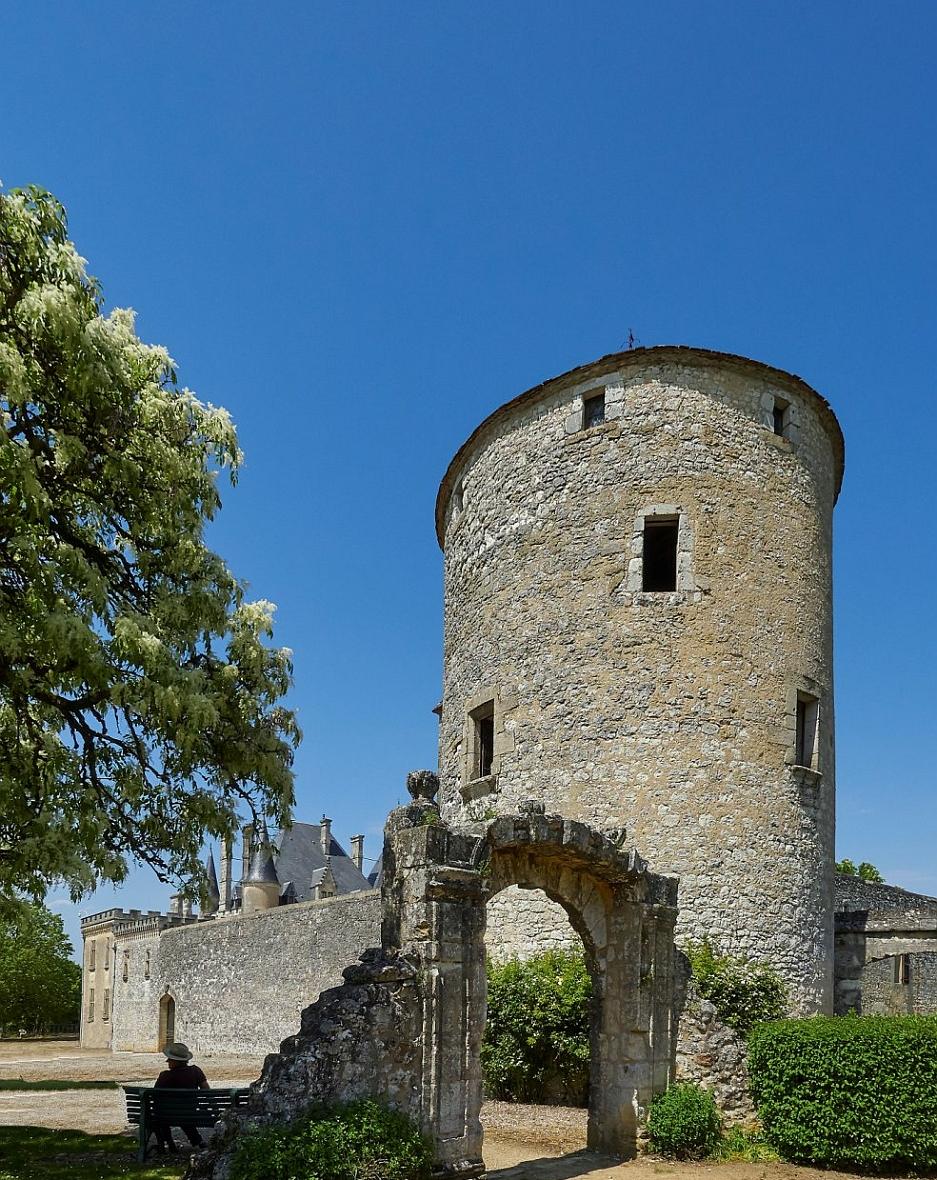
In the southwest of France, not far east of Bordeaux, there stands an unremarkable castle. Its tower has three floors: a chapel on the first, a bedroom on the second, and a round study on the third. Sayings of Greek and Roman sages are carved into the beams of the study, like a silent jury gathered around one man, watching how he will plead his own case. That man was Michel de Montaigne, born in 1533 and dead in 1592. At thirty-eight he resigned from public office and returned to this tower, saying he would give the rest of his life to reading and reflection. No one could have guessed that what he wrote there would change the fate of the essay, and change the way we know ourselves.
Before Montaigne, European writing usually had a clear object: God, a king, an ancient authority, some universal truth. The author spoke from above, as if he were merely the mouthpiece of truth. Montaigne turned that order upside down. At the start of his book he confessed plainly: reader, I myself am the matter of my book. He was not being modest. He was serious: if you want to know what a human being is like, rather than leafing through grand systems, look closely at one particular person — how he falls ill, how he fears, how he loves, how he changes his mind in a single afternoon. That particular person was himself. His book is called the Essais, a word meaning attempts, trials. The title itself is the method: each chapter is an attempt, a question pressed against the self, with no guarantee of an answer and no promise of a conclusion.
CHAPTER ONEBefore the Tower: A Boy Raised in Latin
Montaigne was born at the Château de Montaigne in Périgord, into a wealthy family; his father was a notable local figure. His childhood had one odd feature: his father hired a German tutor who spoke no French, so Latin became the first language he knew well, and French came later. A child who first thinks in Latin grows up with a natural distance from language itself: he knows that words can be said another way, and that the meaning moves with them.
The young Montaigne did not become a writer at once. He served in the courts of Périgueux and Bordeaux, entering the Parlement of Bordeaux in 1557, where he spent more than ten years in public office. In 1565 he married Françoise de La Chassaigne; in 1568 his father died, and he inherited the estate and the name of Montaigne. In 1571, at thirty-eight, he resigned from office and returned to the castle, carving a Latin inscription on the tower wall. It said, in essence, that he had long grown weary of the servitude of the courts and public offices, and meant to spend his remaining days in the embrace of the learned Muses, in peace and calm. The tower mattered not because it shut out the world, but because it gave him a place to return to.
CHAPTER TWORetirement Is Not Escape, but Another Way of Being Present
In 1572 Montaigne began to write. The earliest pieces were short, mostly reading notes mixed with ancient anecdotes and scattered reflections. His way of writing was unlike that of the scholars of his day: no systematic argument, no piled-up system, no hurry to judge. He was more like a man out walking, thinking wherever his steps took him. That looseness was not a lack of discipline, but a deeper discipline: never let a ready-made conclusion stand in for real experience.
The first two books of the Essais were published at Bordeaux in 1580, more than ninety chapters between them. After publication, instead of stopping, Montaigne set out travelling. Tormented by kidney stones, he went to Switzerland and Italy in search of treatment, was received by the Pope in Rome, and learned on the road that he had been elected mayor of Bordeaux. On his return he served as mayor until 1585, in the midst of the Wars of Religion and the spread of plague. That episode punctures a romantic misunderstanding: Montaigne was no hermit hiding in an ivory tower. His retirement was not escape, but a rhythm of advance and return. He went out into the world to take responsibility, to negotiate, to mediate; he came back to the tower to digest, to doubt, to rewrite. In 1588 the third book appeared in Paris, bringing the whole to one hundred and seven chapters — fifty-seven in Book One, thirty-seven in Book Two, thirteen in Book Three. He kept adding and revising until, still correcting, he died. His papers were gathered by friends and his adopted daughter and published at Paris in 1595, the edition on which later printings rest.
CHAPTER THREEI Study Myself
Montaigne's most famous sentence stands at the opening of the Essais: I myself am the matter of my book. Another goes further: I study myself more than any other subject; this is my metaphysics, this is my physics. Read together, the two sentences show his whole method. Metaphysics and physics were then the study of the universe and nature; Montaigne moved them indoors. The universe is vast and nature is deep, he says, but the thing nearest to me, the thing I can observe most closely, is myself. If a person cannot see his own fears, desires and prejudices clearly, what confidence can he have when he talks about the universe?
His method has three movements. The first is observation, and observation at close range. He wrote about his body: the pain of kidney stones, the depth of his sleep, his likes and dislikes in food and weather. He wrote about his moods: why he suddenly grew angry, why yesterday's certainty looked doubtful today. He did not treat these as trivia, because he believed that character is not made of abstract principles, but of these concrete responses. The second is trial. Essai itself means a trial. Montaigne did not start with a theory and then look for examples to prove it; he first placed himself inside a question and watched what happened. That trial has no laboratory, only a desk and an honest heart, but it forbids the writer to cheat, to cover ignorance with fine phrases. The third is allowing contradiction. His book is full of self-correction: what one chapter says, a later chapter may overturn. A person is contradictory by nature; the self of today is not the self of ten years ago. An honest recorder should record that change, not smooth it into a straight line. A reader who expects a consistently correct Montaigne will be disappointed; a reader willing to move with him will find a rare freedom: a person need not pretend to be consistent in order to be whole.
CHAPTER FOURWhat Do I Know? Doubt as a Form of Gentleness
Carved on the beams of Montaigne's study was a sentence that became his emblem: Que sçay-je? — What do I know? It is often misread as a bleak scepticism, as if he believed nothing and cared about nothing. The opposite is true. It was the gentlest question of his life. It was not meant to destroy everything, but to loosen hands that grip too tightly. A person convinced he knows everything cannot hear anyone else speak, and cannot see his own blind spots. Montaigne's doubt was a way of opening his ears again.
That doubt is concentrated in the longest chapter of Book Two, the Apology for Raymond Sebond. Ostensibly a defence of a theologian, it becomes a thorough interrogation of human reason: are our senses reliable? Can our language grasp what is real? By what right do we take our own customs for the order of nature? Montaigne did not set out to prove that human beings know nothing, but to show that much of what we call knowledge is a mixture of habit and pride. Admitting that does not make a person weak; it makes him careful. Someone who knows he may be wrong is less likely to injure others in the name of truth. That care was especially precious in his time. Sixteenth-century France was torn by the Wars of Religion, with violence committed in the name of faith. Montaigne lived in the middle of it, served as mayor, mediated between sides, and refused to replace one fanaticism with another. A society that has lost the capacity to doubt is left with nothing but shouting at each other. His reflections on death extend the same doubt: to learn how to die is to learn not to waste life on anxiety. If we can admit that life is finite, we can live more attentively in the present — eat a meal well, read a book properly, speak honestly with a friend.
CHAPTER FIVEBecause It Was He, Because It Was I
If one chapter of the Essais moves readers most, many would name Chapter Twenty-eight of Book One, Of Friendship. It is about Montaigne's friendship with Étienne de La Boétie. La Boétie was three years older, a young nobleman and writer who had written the Discourse on Voluntary Servitude at eighteen; the two men met in the Parlement of Bordeaux and took to each other at once. The friendship lasted only four years. In 1563 La Boétie fell ill in an epidemic of plague and died, barely into his thirties. Montaigne stayed with him until the end and watched his friend die. Afterwards he often said that only half of himself remained, the other half having gone with his friend.
Trying to explain why he loved this friend so much, Montaigne wrote a sentence that has become the most famous confession of friendship in literature: if you press me to say why I loved him, I feel it cannot be expressed except by answering: because it was he, because it was I. There is nothing else to say. The beauty of the sentence lies in its refusal to explain. The reasons for friendship can usually be listed: shared tastes, mutual help, hardships endured together. Montaigne says that all such reasons added together still do not equal friendship itself. True friendship is not a bargain, but an encounter that cannot be taken apart: this person here, myself here, two people who happened to recognise each other. That recognition has no reason to give, yet it is stronger than any reason. The chapter also reveals a secret of Montaigne's writing: when he wrote about himself, he was never writing only about himself. To write about his own body was to write about every body; to write about his own fear was to write about every fear; to write about his own friendship was to write about the shape of friendship itself. A reader who opens the book takes La Boétie's place and becomes Montaigne's new interlocutor. That is why, more than four hundred years later, reading Montaigne still feels like listening to a living person: he is not lecturing us, he is talking to us, waiting for an answer.
EPILOGUEThe First Author of the Modern Self
After Montaigne's death his book was not forgotten; it travelled ever further. Francis Bacon in England was deeply influenced by him and wrote his own essays; echoes of Montaigne's thought can be heard in Shakespeare; later, Rousseau, Nietzsche, Emerson and Woolf, whether they praised him or argued with him, could none of them pass him by. Montaigne founded more than a literary form; he founded a way of seeing the person. Before him, the self was something to be tamed by doctrine; after him, it became something worth observing closely and recording honestly.
But the most precious thing Montaigne leaves us may not be his place in literary history. It is a practice we can carry back into ordinary life: set aside a little time each day and ask yourself a small question. Why was I angry today? Do I really understand this? If I looked at it from another angle, would I still hold my judgement? There is no need to write it down or tell anyone; it is enough to answer honestly. Montaigne spent twenty years proving that a person willing to ask such questions will not easily be carried away by fashionable opinion, nor easily trapped by his own prejudice. He will slowly grow a capacity: to stay clear-headed in an uncertain world without becoming bitter, and to love life while admitting ignorance. Return to that tower. A man of thirty-eight sits there and decides not to hurry into becoming what others expect, but first to find out who he is. The decision looks small, yet it changed the course of literature. From that moment, writing was no longer only a way of proving something outwardly; it could also be a way of asking something inwardly. Each of us, at some moment, asks the same question: can I face myself honestly? Montaigne's answer, written on pages more than four hundred years old, still holds: yes, if you are willing to begin the attempt. Attempt — that is the title of his book, and the method he leaves us.