PROLOGUEThe Weight of a Handful of Salt
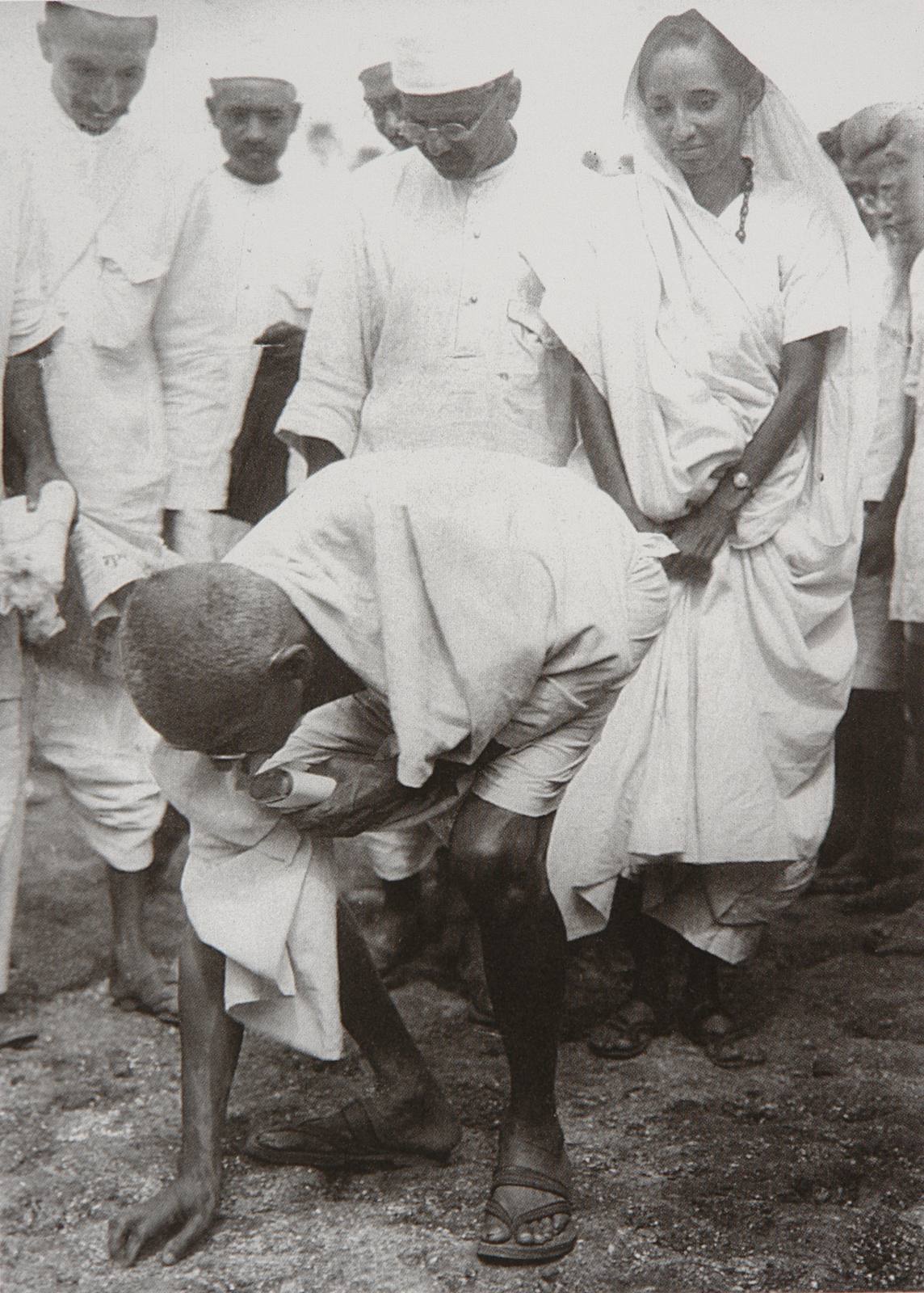
On the morning of 6 April 1930, on the beach at Dandi, a small fishing village in Gujarat, a sixty-year-old man in white homespun cloth walked barefoot to the sea, bent down, and picked up a small lump of salt from the mud. The salt was dirty, mixed with sand, worth almost nothing. But under British law, that one gesture was a crime: Indians were not allowed to make their own salt, not allowed to pick up salt crystallised naturally on the shore; salt could only be bought from the government. The old man knew he was breaking the law. That was why he had come. Behind him stood seventy-eight people. Twenty-four days earlier, they had set out on foot from Sabarmati Ashram, 387 kilometres away. On the beach were journalists, policemen, and the eyes of the whole world. When the salt went into the pot and the water came to the boil, a movement that would sweep across India had begun.
This is the story of that handful of salt: why it could not be made by the people who needed it, why an old man walked 387 kilometres for it, and how an act of disobedience that looked trivial shook the foundations of an empire.
CHAPTER ONEWhose Salt?
Salt is something a living body cannot do without. Sweat carries it away, and it must be replaced every day. In India, salt was never scarce: a long coastline, a hot sun, and seawater turned to salt on its own. For centuries, coastal villages made their own salt and ate it, and no one thought that needed anyone's permission.
What changed that was business. In the eighteenth century, the British East India Company set its eyes on the salt trade of Bengal: first it monopolised the sale, then it took production under its own control. In 1772, Governor-General Warren Hastings brought the salt trade under the Company's control; by 1780, the buying and selling of salt was entirely in government hands. Salt had turned from a daily necessity into an instrument of taxation.
In 1858, the British Crown took over India from the East India Company, and the tax stayed. By then, the salt monopoly accounted for about a tenth of British India's revenues. To stop smuggling, the British built a customs barrier some 2,300 miles long across the interior of India, famous for its hedge of thorns — the Great Hedge — manned day and night. The hedge was abolished only in 1879.
In 1882, the Indian Salt Act wrote the whole system into law: salt could be made only at official government salt works, and for an Indian to make, keep, or sell salt was a crime. The duty was one rupee and four annas on every maund of salt — about thirty-seven kilograms. Rich or poor, everyone paid the empire every day for something their own coastline gave them for free.
In 1885, at the very first session of the Indian National Congress, someone stood up and raised the question of the salt tax. But forty-five years of talk moved it not at all. Then, in 1930, a sixty-year-old man decided to stop talking and start walking.
CHAPTER TWOEleven Demands
In December 1929, the Indian National Congress met at Lahore and declared that it would seek complete independence — Purna Swaraj — and fixed 26 January 1930 as Independence Day. On that day, flags of independence went up across India and a declaration of independence was read aloud. But after the declaration, what? The Viceroy, Lord Irwin, did not move, and neither did London. Congress needed an action, something that would turn a declaration into reality.
Gandhi thought for a long time and chose salt. Salt had three advantages no other issue could match. First, everyone eats salt — rich and poor, Hindu and Muslim, city and village — no one could stand aside. Second, the injustice of the salt tax could be understood at a glance: there was salt on the beach, and the law said you could not pick it up. Third, the risk of breaking the salt law was small: a farm woman boiling a pot of seawater at her own door was already an act of resistance.
On 31 January 1930, Gandhi wrote to Lord Irwin with eleven demands: abolish the salt tax, cut the land tax, release political prisoners, protect Indian cloth, and more. The letter ended politely and firmly: if there was no reply by 11 March, Congress would launch a campaign of civil disobedience. Irwin sent back a short letter, refusing.
In early March, Gandhi wrote again, telling Irwin what he intended to do: he would walk to the sea and make salt with his own hands. Irwin did not stop him. Officials in London said privately that an old man going to the beach to pick up salt could not amount to much. They soon learned how wrong they were.
CHAPTER THREEThree Hundred and Eighty-Seven Kilometres
On the morning of 12 March 1930, Gandhi walked out of Sabarmati Ashram. Behind him were seventy-eight people, all chosen by him from the ashram, from every region of India, of different castes and faiths — all men. They carried no weapons and no vehicles, only a bamboo staff, a pair of sandals, and a sheet of paper with the route on it. Each day they walked about sixteen kilometres, through forty-eight villages.
The scene grew livelier by the day. Villagers came out to meet them, bringing water and food and clearing the road; village officials resigned their posts in public and joined the column; journalists walked along and sent the day's march back to London, New York, and Tokyo. British officials were at first unconcerned, then began to worry: the column shouted no slogans and smashed nothing; it only kept walking, and walking, while the whole world watched.
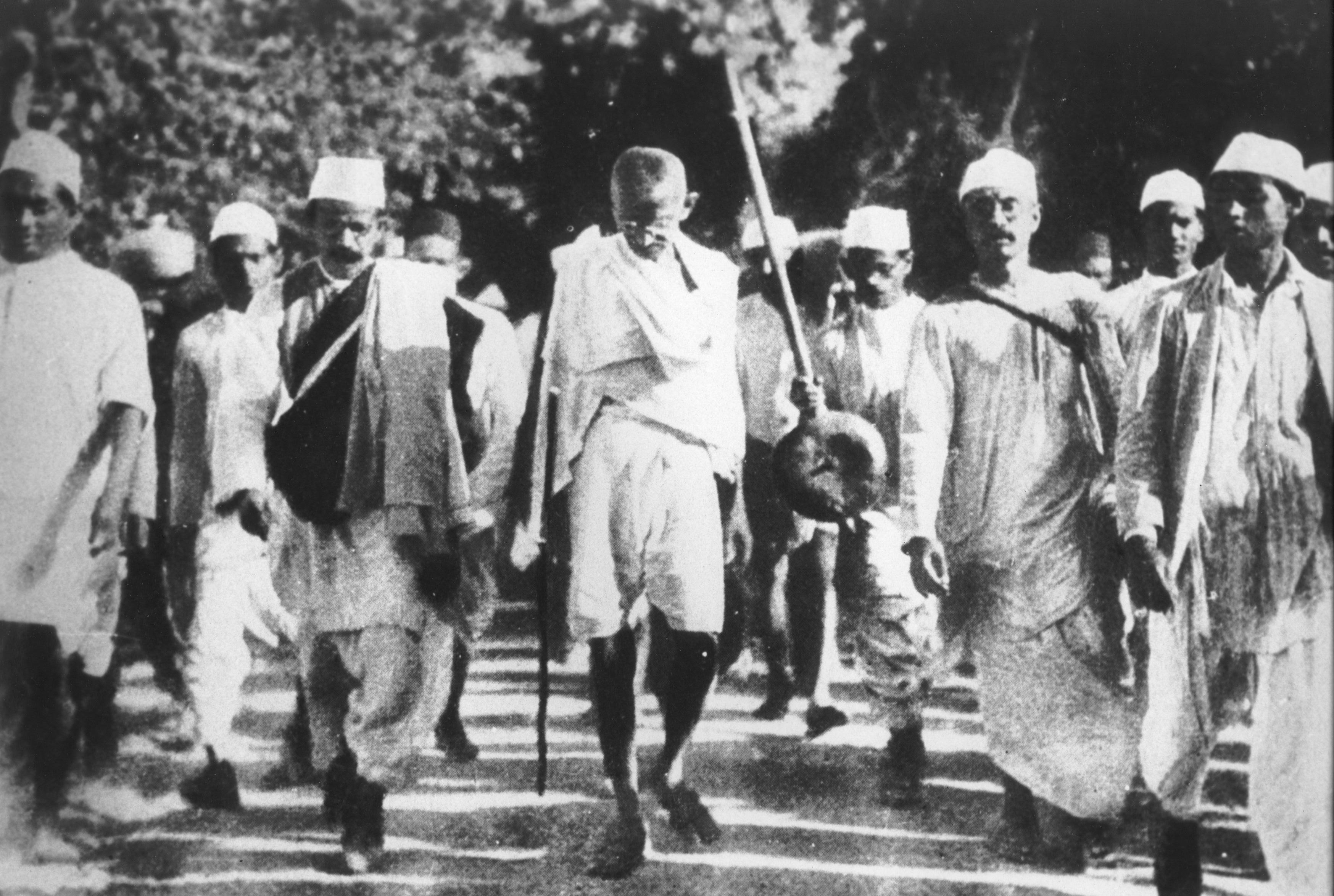
On 5 April they reached Dandi, a small fishing village by the sea. The next morning, Gandhi bathed in the sea, prayed, and walked to the beach, where he bent down and picked up a lump of salt. It was half past eight in the morning. He put the salt in a pot and boiled the first illegal salt in seawater. Reporters on the spot sent the news around the world, and people across India began to do the same: coastal villages boiled seawater, inland villages boycotted foreign cloth and refused to pay taxes, students walked out of school, merchants shut their shops. A handful of salt had lit a movement.
CHAPTER FOURDharasana: The Day No One Fought Back
The British government finally acted. On the night of 4–5 May, police arrested Gandhi in the village of Karadi and took him to Yerwada Jail. Before his arrest, Gandhi had already written to Irwin to tell him what would come next: a raid on the Dharasana Salt Works.
The column was first led by Abbas Tyabji, a retired judge of seventy-six, with Gandhi's wife Kasturba at his side. Both were arrested before they set out and sentenced to three months. The poet Sarojini Naidu took over — a former president of Congress and one of the people Gandhi trusted most.
On the morning of 21 May, about 2,500 volunteers gathered outside the Dharasana Salt Works. Around the works ran ditches and barbed wire, and inside stood about four hundred policemen with steel-tipped lathis. Naidu first had everyone kneel in prayer, then told them: you will be beaten; do not fight back; do not even raise a hand to ward off the blows.
Then they walked forward, rank by rank. Webb Miller of the United Press watched from a few yards away: the police rushed out and rained blows on the volunteers' heads; the front rank went down, the next rank stepped forward, and went down too. Not one of them raised a hand. In his first dispatch Miller wrote that 260 were injured; in his memoir he wrote that he counted 320 wounded in the hospital, two of them dead. British telegraph officials held up his report until Miller threatened to expose the censorship, and only then let it through. In the end, the report appeared in 1,350 newspapers, and Senator John J. Blaine read it into the record of the United States Senate.
Dharasana won not a grain of salt. But the whole world had seen it: one side unarmed, the other side swinging clubs. The violence of an empire, carried out in plain sight, had lost its respectability for the first time.
CHAPTER FIVEFrom Prison to the Negotiating Table
After Dharasana, the movement spread across India. By the end of 1930, official figures counted more than 60,000 people arrested; Congress's own count was close to 90,000. The prisons could not hold them all, and the government, arresting people with one hand, began looking for a way out with the other. Nehru was arrested, Naidu was arrested, and Gandhi sat in prison reading and spinning, waiting for the other side to bend first.
In January 1931, Gandhi was released. Lord Irwin invited him to Delhi to talk. From 17 February, the two men negotiated for several rounds. Irwin was a courteous man who admitted privately that Gandhi was an honest opponent. On 5 March, they signed the Gandhi–Irwin Pact, also called the Delhi Pact: the government would release political prisoners, withdraw repressive ordinances, and allow coastal villagers to make salt for their own households; Congress would suspend the Civil Disobedience Movement and send a representative to the Second Round Table Conference.
The pact was signed, but the salt tax remained. Coastal villagers could make salt for their own use, but not sell it; the government salt works stayed open and the tax kept being collected. The salt tax survived until the eve of Indian independence, when it was finally abolished. By that measure, the Salt March did not win what it had set out to win.
But it won something else: it showed the world that an empire could use the law to monopolise a handful of salt, and still fail to convince anyone that this was right. At the negotiating table, a viceroy treated a man in homespun cloth as an equal for the first time. The road to independence still had seventeen years to run, but from the day at Dandi, the British could no longer pretend that Indians were willing subjects.
EPILOGUEThe Politics of Walking
Why salt? Because salt is something everyone understands. Gandhi could have chosen the land tax, or tariffs, or any larger issue, but he chose the smallest one of all: a handful of salt that every person eats every day. The smaller the issue, the wider the resonance; the lighter the crime, the broader the participation. A farm woman boiling a pot of seawater was an act of resistance; a child picking up salt on the beach was civil disobedience. An empire can crush a riot, but it cannot crush millions of people boiling a pot of water at the same time.
Why walking? Because walking is the slowest form of protest, and the hardest to ignore. Twenty-four days was long enough for journalists to catch up, for village after village to join, and for the whole world to slowly understand what was happening. Gandhi did not deliver speeches to persuade London; he let London's newspapers write the story themselves. Non-violence is not the absence of resistance; it is leaving the entire cost of resistance to the other side: when you beat a person who will not fight back, it is you who loses face.
The Salt March overthrew nothing. It did not abolish the salt tax, it did not drive out the British, and it did not even hold Dharasana. But it did something harder: it made the rule of an empire look unreasonable for the first time. And unreasonable rule cannot last. Seventeen years later, India was independent. The handful of salt on the beach at Dandi is still remembered in India today — not because it was worth anything, but because it proved one thing: change does not have to begin with guns. Sometimes it begins with a man bending down to pick up a handful of salt.
Questions That Remain Open
In honesty, the following two things have no settled answer, and this essay does not pretend otherwise:
- How many people were actually hurt at Dharasana? The reporter Webb Miller wrote in his first dispatch that 260 were injured, but in his memoir he wrote that he counted 320 wounded in the hospital, two of whom died; the two figures still stand side by side.
- How many people were actually arrested in the Salt March movement? By the end of 1930 the official count was over 60,000 arrests, while the Congress put the figure near 90,000; the two figures still stand side by side.