PROLOGUEThe Day of Freedom
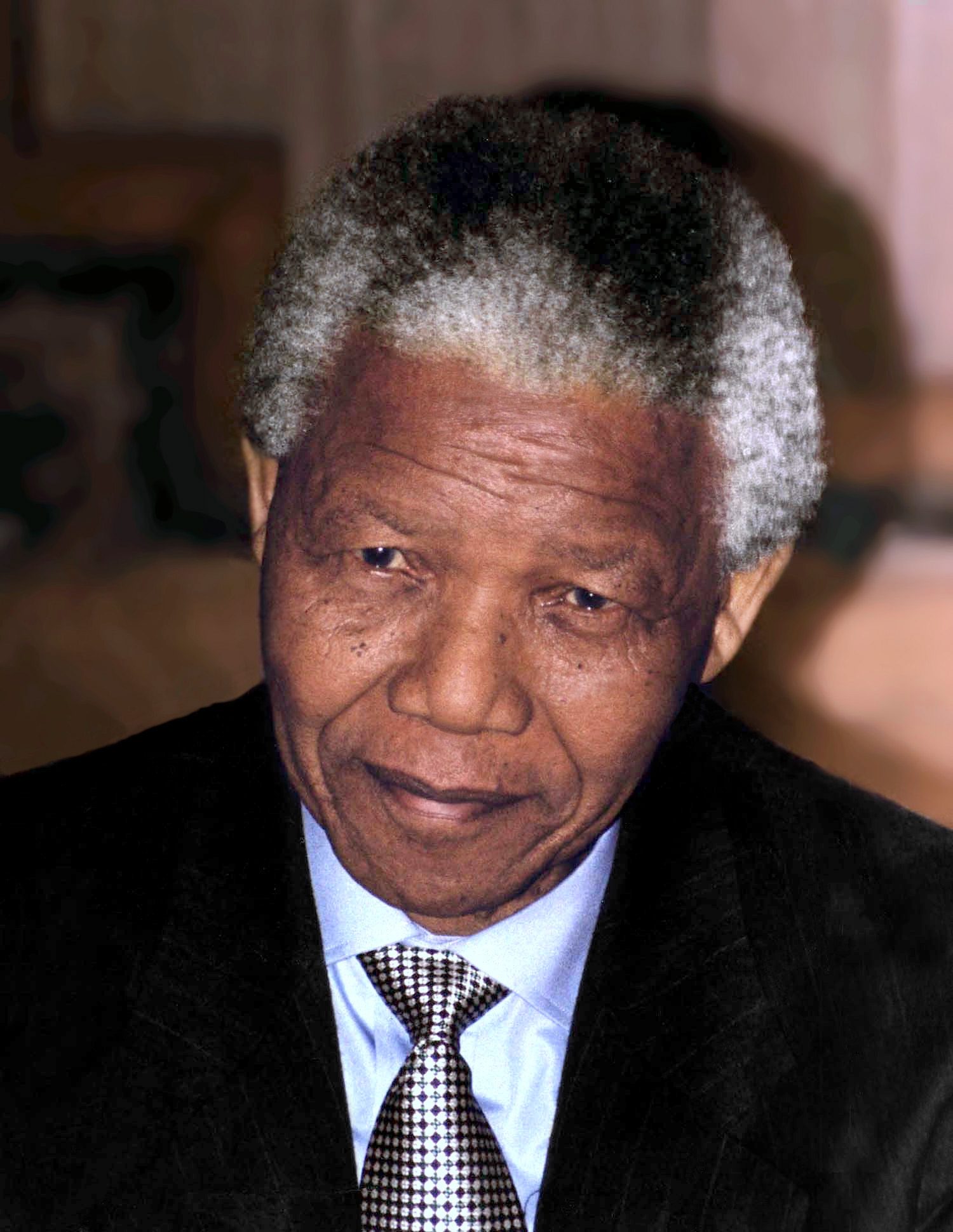
Just after four o'clock in the afternoon on 11 February 1990, an iron gate opened at Victor Verster Prison outside Cape Town, South Africa. Out walked a seventy-one-year-old man with greying hair, wearing a dark suit, holding his wife's hand, raising a clenched fist to the crowd. Television carried the picture around the world. For many people, it was the first time they had really seen him — not the young lawyer in the photographs, not the silhouette on the posters, but a living man walking out of prison, free.
His name was Nelson Mandela. From his arrest on 5 August 1962 to that moment, he had been without freedom for twenty-seven and a half years. He went in at forty-four and came out at seventy-one. The best years of his life had been spent behind bars. And when he walked out, he did not call for revenge or curse his jailers. His first words were about reconciliation.
This essay tells the story of those twenty-seven years, and of what came after: how a man was put in a cell, how a country was locked inside a system, and how they walked out together.
CHAPTER ONEThe Boy from Mvezo
Nelson Mandela was born on 18 July 1918 in the village of Mvezo in the Eastern Cape, into the Thembu royal family of the Xhosa people. His father, Gadla Henry Mphakanyiswa, was a chief; his mother was Nosekeni. His Xhosa name was Rolihlahla, meaning "pulling the branch of a tree" — or, more loosely, "troublemaker". On his first day at school, his teacher gave every child an English name. His was Nelson, after the British admiral Lord Nelson.
When he was nine, his father died, and the regent Jongintaba Dalindyebo took him into the royal household and raised him as his own son. There he first saw how power worked: the chiefs sat in a circle, everyone spoke, and no meeting ended until agreement was reached. That way of deciding things stayed with him for life — leadership was not giving orders, but letting everyone finish speaking.
In 1939 he entered the University College of Fort Hare, where he met Oliver Tambo, who would be his comrade for life. A year later he was expelled for leading a boycott of the Students' Representative Council elections. He moved to Johannesburg, worked as an articled clerk in a law firm, and completed a Bachelor of Arts degree by correspondence through the University of South Africa, graduating in 1942. He then studied law at the University of the Witwatersrand, becoming one of the few Black lawyers in South Africa. In 1952 he and Tambo opened a law practice together, offering free legal help to Black clients who could not pay; queues often formed outside the door.
In 1943 he joined the African National Congress. The following year he helped found the ANC Youth League with Tambo and Walter Sisulu, calling for more militant resistance. For Mandela, politics was not an abstraction but daily life: Black people could not live in white areas, could not enter certain restaurants, and had to carry a pass book wherever they went. In 1948 the National Party came to power and made apartheid the law of the land — Black South Africans were graded by law into different categories, and where they lived, whom they married and where their children went to school were all decided by the colour of their skin.
CHAPTER TWOFrom Non-violence to Arms
Mandela began as a believer in non-violence. In 1952 he helped organise the Defiance Campaign, leading people to break the apartheid laws peacefully, and was arrested for the first time. In 1956 he was charged with treason, along with 155 other anti-apartheid activists; the trial dragged on for four and a half years until all the accused were acquitted in 1961.
But the situation was worsening. On 21 March 1960, in the township of Sharpeville, thousands of Black protesters gathered outside the police station to protest against the pass laws. Police opened fire; the official record counted 69 dead and 180 wounded, many of them shot in the back as they fled. On 30 March the government declared a state of emergency and arrested more than 18,000 people; on 8 April the ANC and the Pan Africanist Congress were declared illegal. The road of peaceful protest was closed.
Mandela later wrote that after Sharpeville he understood one thing: when a government answers peaceful demands only with violence, peaceful demands cease to have meaning. In December 1961 he led the founding of Umkhonto we Sizwe — "Spear of the Nation" — the ANC's armed wing, which attacked government installations but not civilians. He insisted it was not a declaration of war, but a way of telling the government that Black South Africans would not be silent forever.
On 5 August 1962 he was arrested in Natal, and on 7 November he was sentenced to five years' imprisonment for inciting a strike and leaving the country illegally. For a forty-four-year-old man, five years was already a long time. He did not know that the real trial was still to come.
CHAPTER THREEThe Trial and the Cell
On 11 July 1963 police raided a farm at Liliesleaf in Rivonia, outside Johannesburg, arresting most of the ANC's underground leadership and seizing a large cache of documents. That October, Mandela and nine co-accused were charged with sabotage and conspiracy to overthrow the state. The Rivonia Trial began. The prosecution sought the death penalty.
On 20 April 1964 Mandela addressed the court in a speech that became known as "I Am Prepared to Die". He said: "I have cherished the ideal of a democratic and free society in which all persons live together in harmony and with equal opportunities. It is an ideal which I hope to live for and to achieve. But if needs be, it is an ideal for which I am prepared to die." It is still counted among the great courtroom speeches of the twentieth century.
On 12 June the judge passed sentence: life imprisonment for Mandela and seven of his co-accused. Death had been avoided; freedom had not returned. He was given the number 466/64 — prisoner 466 of 1964. It would become the most famous prisoner number in the world.
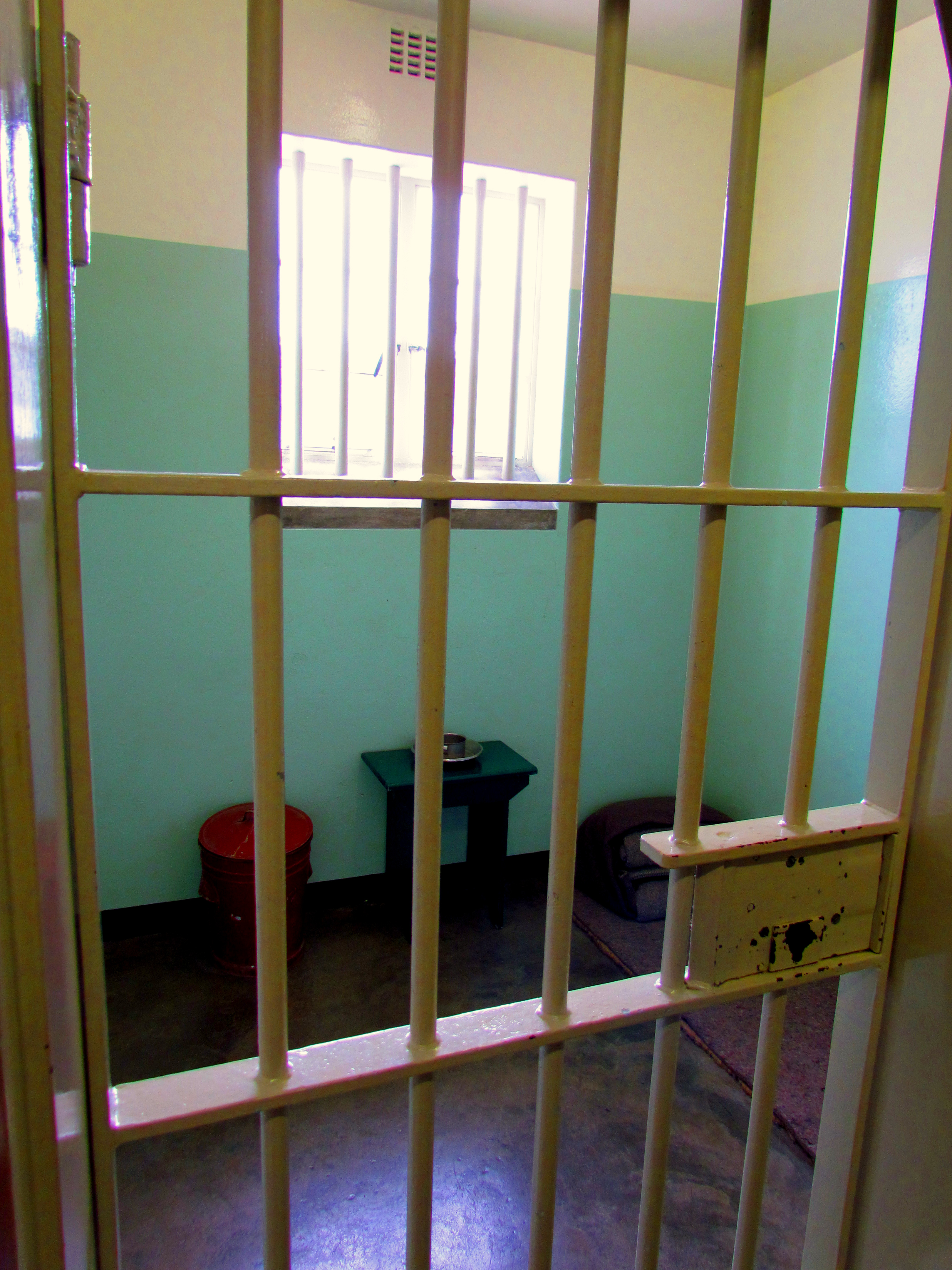
For the next eighteen years he lived on Robben Island, seven kilometres off Cape Town. His cell held a straw mat, a bucket and a small table. By day he broke rock in the limestone quarry, his eyes damaged by the glare and the lime dust. By night he continued his law studies by correspondence, wrote his autobiography, read and gardened. The prisoners debated politics in the quarry and taught one another in secret, turning the prison into a university without walls — they called it the University of Robben Island.
In 1982 he was moved to Pollsmoor Prison, and in 1988 to Victor Verster Prison. The government offered him conditional release several times, if he would renounce the armed struggle. He refused every time. In a statement read out in 1985 he said: "Only free men can negotiate. Prisoners cannot enter into contracts." He would rather stay in prison than trade his dignity for freedom.
CHAPTER FOURAt the Negotiating Table
By the late 1980s the world had changed. Under international sanctions the South African economy was suffocating, resistance at home was unrelenting, and apartheid could no longer be sustained. In July 1989 President P. W. Botha received Mandela at his official residence; that December the new president, F. W. de Klerk, met him as well. On 2 February 1990 de Klerk announced in Parliament that the ban on the ANC and other organisations was lifted and political prisoners would be freed. Nine days later, Mandela walked out of prison.
Freedom had arrived, but the country had not yet. The next four years were the most dangerous in South African history. At the negotiating table the ANC and the National Party haggled over the future; outside it, violence continued, and there were those who tried to stop democracy with assassination and massacre. In April 1993 the ANC leader Chris Hani was murdered, and the country stood on the edge of civil war; it was Mandela's televised appeal for calm that pulled it back. In October that year he and de Klerk were jointly awarded the Nobel Peace Prize — the prisoner of apartheid and the president of apartheid, honoured together for ending it.
On 27 April 1994 South Africa held its first election in which all races could vote. Queues stretched for kilometres; many people voted for the first time in their lives, standing for hours without complaint. The ANC won 62.65 percent of the vote. On 10 May Mandela was sworn in as president — South Africa's first Black president, and the first chosen by all its people. De Klerk became a deputy president. A country torn apart by apartheid had, for the first time, a government that belonged to everyone.
CHAPTER FIVEPresident and Reconciler
Once in office, Mandela's first act was not revenge but reconciliation. He formed a Government of National Unity and kept white officials in their posts. He kept the old national anthem, and he kept the Springboks, the rugby team that had symbolised the old regime. In 1995 South Africa hosted the Rugby World Cup, and he walked onto the field in the green Springbok jersey to cheer on a team that was still mostly white; the whole stadium chanted his name. For the first time, Black and white South Africans cheered for the same team.
In 1995 he established the Truth and Reconciliation Commission, chaired by Archbishop Desmond Tutu. Its method was without precedent anywhere in the world: perpetrators who told the whole truth could receive amnesty, while victims were given the chance to tell their stories in public and receive formal recognition from the state. The Commission delivered its final report in 1998. The approach was controversial — some said justice had been sacrificed, others that it was the only way to keep the country from splitting apart. Mandela's choice was clear: he wanted the truth, and he wanted the future even more.
During the same term he launched the Reconstruction and Development Programme, building homes and bringing running water and electricity to poor communities. On 10 December 1996, at Sharpeville, he signed the new Constitution, which guaranteed equality for all regardless of race, sex or belief; it came into force on 4 February 1997. On 14 June 1999 he stepped down after a single term, handing power to his deputy, Thabo Mbeki. He used to say that the hardest thing for a leader is not taking office, but leaving it.
He did not stop after retirement, campaigning for AIDS treatment and children's education. On 5 December 2013 he died at his home in Johannesburg, aged ninety-five. South Africa gave him a state funeral, and leaders from around the world gathered in Johannesburg to say goodbye. He received more than 250 honours in his lifetime, including the Nobel Peace Prize in 1993 — but to South Africans his most important title was always the same one: Madiba, the clan name his people called him, meaning "father".
EPILOGUEFreedom Is Not a Gift
Mandela's story is often told as an inspirational tale: a man spends twenty-seven years in prison and comes out to become president. Told that way, the most important part is missing. During those twenty-seven years the world did not wait for him; after his release the country nearly fell into civil war; and during his five years as president he had to choose between revenge and reconciliation every day. Freedom was not a gift he received on the day he walked out of prison. It was something he negotiated, endured and compromised for, piece by piece, over a lifetime.
He leaves the reader two reminders. The first is about anger. Anger is legitimate — Mandela felt it himself. But anger spent only on revenge turns the victim into the next perpetrator. He chose to turn anger into a bargaining chip at the negotiating table rather than a bullet in the street. The second is about time. Twenty-seven years sounds like a waste, but what Mandela learned in prison — patience, listening, seeing his opponent's fear — was exactly what he needed most after his release. Prison did not destroy him, because he refused to let prison define him.
The cell on Robben Island is still there. Its iron door stands open, and visitors can walk in, stand where the straw mat lay, and look out at the sea through the bars. The cell is so small that a man can barely turn around in it. But Mandela worked out one thing there, and later put it into a single sentence: "No one is born hating another person because of the colour of his skin, or his background, or his religion. People must learn to hate, and if they can learn to hate, they can be taught to love." It was not a slogan. It was a conclusion verified over twenty-seven years.
Freedom is never given by others, and it never arrives all at once. It is something a person — and a country — must choose again every day. Mandela chose for twenty-seven years, and by the end even his jailers had come to respect him. That is perhaps the most practical lesson he leaves the world: you cannot control where others lock you up, but you can control what kind of person you are when you walk out.
Questions That Remain Open
In honesty, the following question has no settled answer, and this essay does not pretend otherwise:
- Did the Truth and Reconciliation Commission's bargain — full disclosure in exchange for amnesty — sacrifice justice, or was it the only way to keep the country from splitting apart? The approach remains controversial, and the question is still open.