PROLOGUEA Book, and a Man
More than two thousand years ago, a court historian sentenced to death chose to stay alive in a way more humiliating than death, for one reason only: to finish a book. When the book was done, it was not published. It had no readers. Its author hid it away, leaving it for posterity that might never come. The book survived anyway — and outlived the empire that produced it, becoming the model for every official history written in China for the next two thousand years.
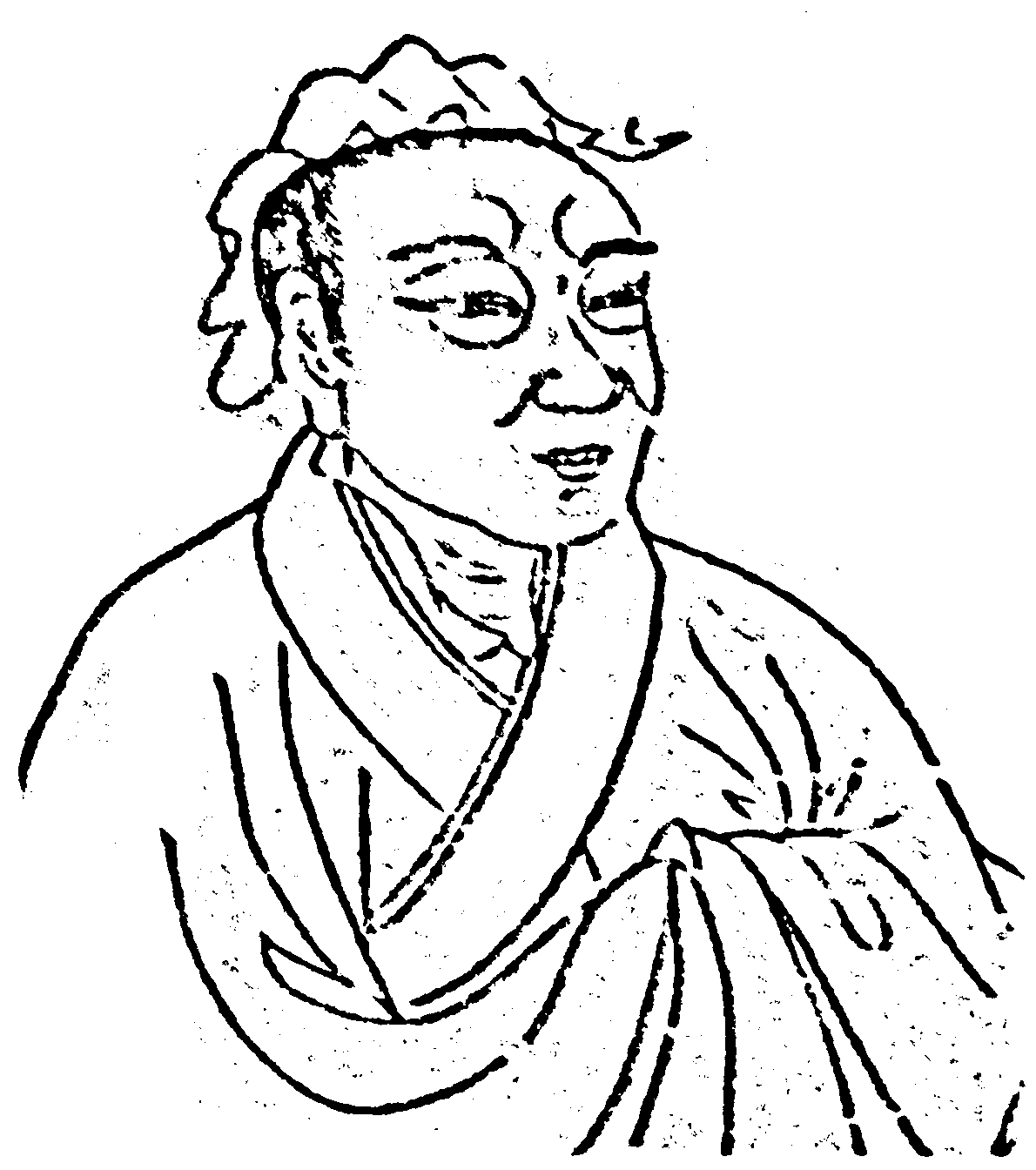
The book is the Shiji, the Records of the Grand Historian. The man is Sima Qian. His story is worth reading not because it is tragic, but because it answers a practical question: after the whole world has turned against you, what way is left to preserve what you have to say? Sima Qian's answer was to write history — a book so good, so true and so large that no one could ignore it, and that time could do nothing against.
CHAPTER ONEA Father's Dying Charge
Sima Qian was born around 145 BC at Longmen, on the Yellow River, in what is now Hancheng, Shaanxi. His father, Sima Tan, was Grand Historian under Emperor Wu, in charge of astronomy, the calendar and the records of court affairs. The Sima family had served as historians for generations; in Sima Tan's hands the post had become more than a job — it was a family enterprise. Sima Qian later wrote that by the age of ten he could recite ancient texts, and at twenty he left Chang'an to travel south through the Jiang and Huai regions, climbing Mount Kuaiji, seeking the cave of Yu, and travelling north to Qi and Lu to see for himself the places where Confucius had lived. Before he had read ten thousand books, he had walked the land he would one day write about.
In 110 BC, Emperor Wu travelled to Mount Tai to perform the feng and shan sacrifices, the supreme imperial rite. Sima Tan, ill, was left behind at Zhounan — for a historian who had spent his career preparing to record that ceremony, a bitter humiliation. He died near Luoyang, and on his deathbed he took his son's hand and wept, charging him never to forget the history their family meant to write. Sima Qian remembered those words for the rest of his life. Two years later, in 108 BC, he succeeded his father as Grand Historian, inheriting both the post and the unfinished book.
In 104 BC, Sima Qian took part in the reform of the calendar, giving the Han dynasty a new Taichu calendar; in the same year he began writing the general history that would run from the legendary Yellow Emperor down to Emperor Wu's own reign. He was about forty, a trusted court official, his future secure. He did not know that five years later, a few words would destroy all of it.
CHAPTER TWOThe Li Ling Affair: The Price of a Few Words
In 99 BC, the Han was at war with the Xiongnu. The general Li Ling led five thousand foot soldiers deep into the steppe and met the chanyu's thirty thousand horsemen near Mount Junji; the Xiongnu then sent eighty thousand more. Li Ling's men fought for days, until their arrows were spent and their supplies gone. In the end Li Ling surrendered; only some four hundred of his men made it back to the frontier, and the rest were lost.
When the news reached Chang'an, every minister at court said Li Ling was guilty. Emperor Wu asked Sima Qian's opinion, and Sima Qian said a few fair words: Li Ling had always been dutiful to his parents and true to his word; with five thousand men he had fought his way deep into enemy territory for a thousand li, and when his arrows ran out and his road was blocked, he had still fought on. He did not say surrender was right; he only said that such a man should not be erased with a single stroke.
The emperor heard something else. Li Ling's defeat touched Li Guangli, the emperor's brother-in-law and commander of the campaign, and Sima Qian's words sounded like a defence of a traitor and a veiled attack on the commander. Emperor Wu flew into a rage and had Sima Qian imprisoned and sentenced to death for "deception". Under the law of the time, a death sentence could be redeemed with money, but Sima Qian's family was too poor to pay. The sentence was therefore commuted to castration — a punishment more shameful than death. In Han eyes, a castrated man could no longer hold his head up among men.
Around 96 BC, Sima Qian was released from prison and appointed Palace Secretary, a post reserved for eunuchs. He did not kill himself. He did not retire into hiding. He did not seek revenge. He went back to his desk and went on writing the book. Years later, in a letter to his friend Ren An, he explained why: a man must die, but one death may be weightier than Mount Tai, and another lighter than a goose feather. He had endured humiliation and stayed alive because there was something in his heart still unfinished — he feared dying with his private purpose unfulfilled, and his writings unknown to posterity. What he feared was not death, but dying before what he had to say was ever heard.
CHAPTER THREEThe Architecture of 130 Chapters
When the Shiji was completed, around 91 BC, it ran to 130 chapters and some 526,500 characters. Sima Qian's own title for it was not Shiji but Taishigongshu, the Records of the Grand Historian, taking the title from his own office. Its structure had never been used before, and afterwards it became the standard for Chinese historiography: twelve Annals, recording emperors; ten Tables, setting the great events of the states side by side in chronological order; eight Treatises, on rites and music, the calendar, the economy, waterworks and other institutions; thirty Hereditary Houses, on feudal lords and great families; and seventy Biographies, on men and women of every kind. From the Yellow Emperor to Emperor Wu, it spanned more than two thousand five hundred years — a whole civilisation's memory fitted into a single book.
The structure itself was a view of history. Earlier histories recorded events year by year, and people were only names inside the events. Sima Qian put people back at the centre: emperors had their Annals, lords their Hereditary Houses, and even assassins, merchants and knights-errant had their Biographies. History was no longer just the court's chronicle; it was the choices real people made in their own circumstances. In his postface he said he wrote the book to "examine the relationship between Heaven and man, to penetrate the changes of past and present, and to complete the work as one family". The line later became the motto of Chinese historiography.
His materials came partly from court archives, partly from what he had seen on his travels as a young man, and partly from legend and oral tradition. He knew which parts could be trusted and which were doubtful, and he often set different accounts side by side, leaving the reader to judge. That was new at the time: a historian need not pretend to know everything. Admitting what you do not know is also a kind of honesty.
CHAPTER FOURThe People He Wrote About
The most moving part of the Shiji is the way it writes about people. Sima Qian gave Xiang Yu an Annals chapter. Xiang Yu never became emperor, and by the rules he did not belong among the Annals, but Sima Qian believed a man who had seized the empire by force of arms, and who kept the bearing of a king even in defeat, deserved to be written about as a king. He gave Confucius a Hereditary House. Confucius was a commoner, with no fief and no army, yet Sima Qian wrote that from the Son of Heaven down, no one in China who spoke of learning and morality could get around him. He gave Chen Sheng a Hereditary House. Chen Sheng was a peasant who rose in revolt and held a throne for only a few months, yet Sima Qian recorded his rising in full, because a peasant daring to say "are kings and generals born to their stations?" was itself history.
The Biographies hold even more people, and more kinds of people. The assassins Jing Ke and Yu Rang, the merchants Bai Gui and Yi Dun, the knights-errant Guo Jie and Zhu Jia, Zhang Qian, who opened the road to the Western Regions, Han Xin, who endured humiliation and rose to command armies, Xiao He, who knew how to judge men. Sima Qian wrote them not as saints' lives, but as records of what a person does when cornered. Han Xin once crawled between a bully's legs in the marketplace, and later became a great general; Sima Qian wrote every step of that journey, neither defending him nor covering for him. Zhang Qian set out for the Western Regions in 138 BC and did not return until 126 BC — thirteen years of captivity among the Xiongnu, escape, and a second mission — and Sima Qian put him in the "Biography of Dayuan", turning a diplomatic mission into an adventure story.
Ban Gu, who later wrote the History of the Former Han, summed up Sima Qian's way of writing in eight characters: "his writing is direct, his facts are verified; he neither praises falsely nor conceals faults". Those eight characters were almost the rule Sima Qian set for himself. He wrote of Emperor Wu's genius and ambition, and also of his superstition, his trust in magicians, and his ruinous wars; he wrote of Li Guang's hundred battles, and also of how he never received a noble title and died by his own hand in despair. A historian's greatest courage is not daring to scold an emperor, but daring to write a person whole.
CHAPTER FIVEHow the Book Survived
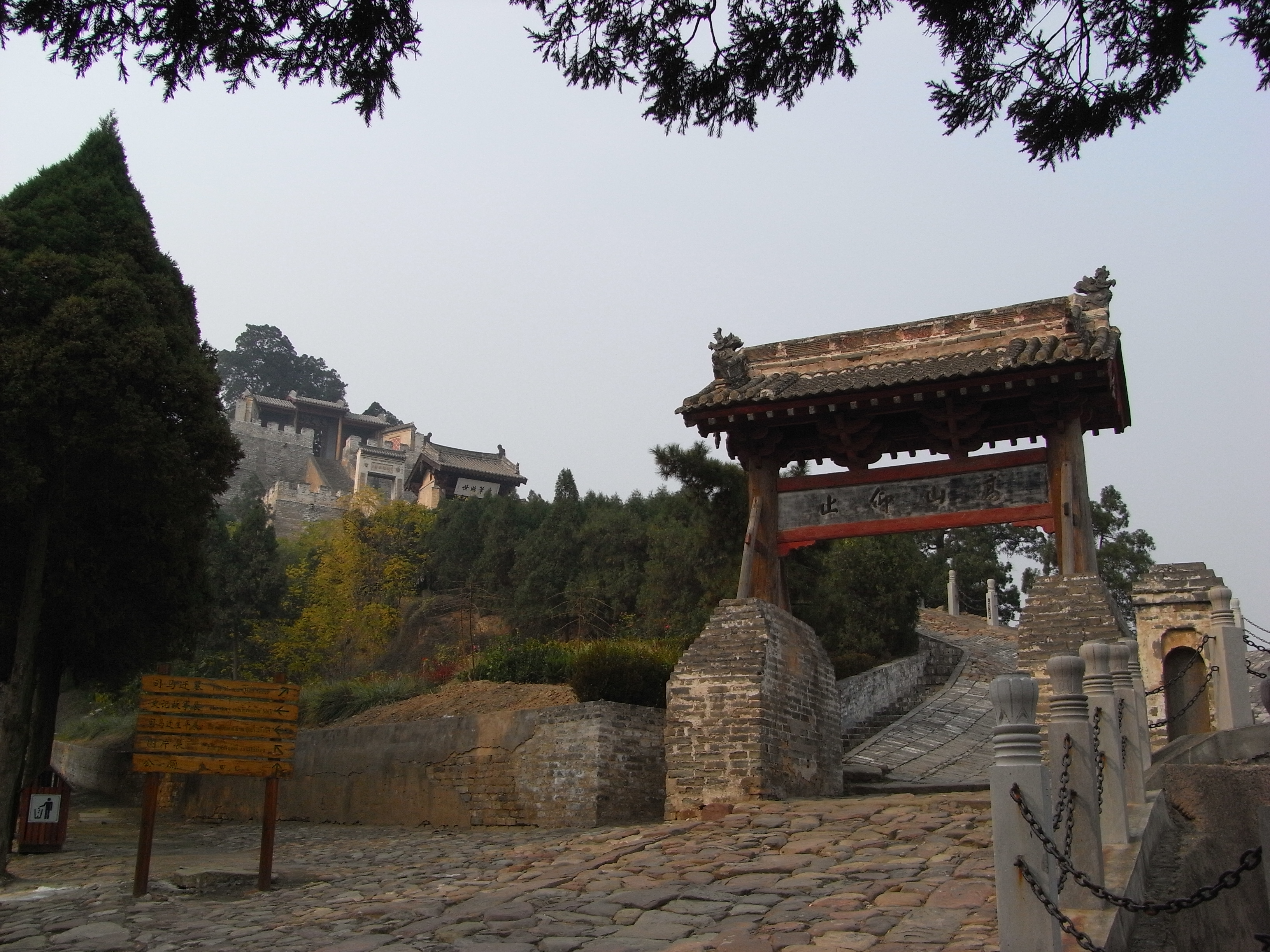
When the Shiji was finished, Sima Qian did not publish it. In his letter he said that once complete, he would "deposit it in a famous mountain, with a copy in the capital", to await the sages and gentlemen of later ages. Only after his death did the book begin to circulate, little by little. Its survival was not smooth: in the Eastern Han period, ten chapters were lost, and later scholars reconstructed them, among them supplements by the Western Han scholar Chu Shaosun that survive to this day. The Shiji we read now still carries those traces of repair, like an ancient vessel that has been mended — the cracks are themselves part of its history.
But the book's fate did not betray its author in the end. Ban Gu's History of the Former Han followed its annals-biography form, and for the next two thousand years nearly every official history of China was written in that form; together they are the Twenty-Four Histories, and the Shiji is the first of them. Lu Xun later called it "the supreme achievement of historians, a Li Sao without rhyme" — unsurpassed as history, and as literature a Li Sao with no metre. One sentence affirmed its double standing as both history and literature.
EPILOGUEFor Whom Is History Written?
When Sima Qian wrote the Shiji, he had no readers, no payment, no one to stand up for him. He wrote for someone who did not yet exist: the reader of the future. He believed time would testify for him, that if the book was good enough, someone would one day open it. That belief looked almost naive at the time. What right did a castrated historian have to believe posterity would read his book? He had only one thing to rely on: writing it well.
Two thousand years have passed, and he was proved right. Emperor Wu's empire is long gone. Li Ling's name survives only as a disputed case, and the laws that sentenced Sima Qian have long been repealed. But the Shiji is still here. Everyone who studies Chinese will sooner or later meet one of its people, one of its lines: Xiang Yu's last stand at the Wu River, Lin Xiangru returning the jade disc intact, Lian Po carrying thorns on his back to apologise, Han Xin crawling between a bully's legs. Those stories live because Sima Qian first wrote them alive.
The most important lesson Sima Qian left to posterity is not about historiography, but about being human. A person can lose reputation, position, even bodily integrity, and still not lose the right to speak. As long as you can still write, you can still leave behind what you have to say. History does not remember every humiliated person, but it remembers the one who, after humiliation, still finished the book. With a single book, Sima Qian proved one thing: the strongest way for one person to stand against an age is not to resist, and not to forget, but to write it down — truly enough, and long enough, until time comes over to your side.
Questions That Remain Open
In honesty, the following three things have no settled answer, and this essay does not pretend otherwise:
- In which year was Sima Qian actually born? The essay says only that he was born "around 145 BC"; the exact year remains unsettled.
- In which year was the Records of the Grand Historian actually completed? The essay says only that it was finished "around 91 BC"; the exact date remains unsettled.
- Which parts of the Shiji we read today are later additions? Ten chapters were lost in the Eastern Han, and later scholars filled the gaps, including Chu Shaosun, whose additions survive to this day; the Shiji we read still bears the marks of that patching, and telling original text from later additions is still a matter of judgement.