PrologueA Fence on the Sand
On Saturday, 3 December 1966, on a patch of newly reclaimed land beside Kaohsiung Harbor — sand still smelling of the sea — a fence went up. Premier Yen Chia-kan stood before it to open a new industrial park. No one there knew that the 68.36 hectares inside that fence would become the world's first export processing zone.[2][4]
On the other side of the fence stood an island that had almost nothing. No oil, no iron ore, not even enough farmland to feed itself. In the 1950s, rice and sugar made up 80% of its exports, and foreign exchange was so short that the island lived on American aid.[8][13] A place that could not feed itself on its own — what business did it have talking about industry? About exports?
The answer was not inside the fence. It was in the idea of the fence. Taiwan's officials had come up with a notion that looked like a trick and was in fact a bold one: inside their own territory, carve out a piece of land that sat outside the customs border. Raw materials came in duty-free, finished goods went out duty-free, factories only had to make things, and the government only had to do one thing — make foreigners willing to put their money and their orders here. This book is about what happened inside and outside that fence over the next twenty years.
Chapter 1Opening the Door First
Before the miracle began, Taiwan did something undignified: it admitted it was poor, and poor enough to need others.
In the 1950s, Taiwan's economy was a walled city. High tariffs kept foreign goods out, a maze of multiple exchange rates left even businessmen unsure what the New Taiwan dollar was worth, and factories made fertilizer, textiles and daily goods for the domestic market. Rice and sugar made up 80% of exports, and the foreign exchange they earned was not enough to buy machinery; American aid filled the gap. The aid began in 1950 and ended in 1965.[8][13] For fifteen years, the Americans gave money while pressing Taiwan to reform: one exchange rate, open trade, room for private business to live.
Between 1958 and 1960, the government did three big things at once: it merged the tangled multiple exchange rates into a single rate, devalued the New Taiwan dollar from 24 to 40 to the US dollar, and passed the Statute for the Encouragement of Investment, cutting business income tax from a frightening level to a reasonable one.[8] In January 1960, the Executive Yuan added the Nineteen-Point Financial and Economic Reform Program, putting the reforms on a timetable.[13] The direction was single: from looking inward to looking outward.
The results came fast. Textile exports took off in 1961; electronics began to be exported in 1964.[13] One factory won a foreign order and the next door wanted a second one; one worker learned to assemble a radio and the whole street started asking where else they were hiring. Exports were not a phrase in a policy paper. They were a contagious kind of confidence.
But confidence needed somewhere to land. Foreign firms wanted to build factories and feared the hassle: customs clearance meant running between several agencies, raw materials were taxed coming in, finished goods taxed going out. Taiwan's answer was the fence in the next chapter.
Chapter 2The World Inside the Fence
In January 1965, Taiwan passed the Statute for the Establishment and Administration of Export Processing Zones; on 3 December 1966, the Kaohsiung Export Processing Zone opened under Premier Yen Chia-kan.[3][2] The whole idea fit in one phrase: inside the territory, outside the customs border.
"Inside the territory, outside the customs border" meant that this land, though plainly in Taiwan, was treated as outside the customs area. Raw materials entered without duty, finished goods left without duty, and the zone ran a single window — one agency for each firm. For a foreign investor, that put all of Taiwan's complications outside the fence and left only the simplest thing: come in, make things, ship them out.[5]
Inside the territory,
outside the customs border —
a piece of the nation's own soil,
set apart from its tariffs.
The effect was immediate. In its first year, the zone attracted US$15 million in foreign investment; in its second year, the 68.36 hectares were already full.[5][4] The government hurried to mark out two more plots: Nanzih in 1970 and Tanzi in Taichung in 1971.[3] By August 1972, the Kaohsiung zone alone held 161 factories — 37 making electronics, 23 textiles, 21 handicrafts and 14 garments.[9]
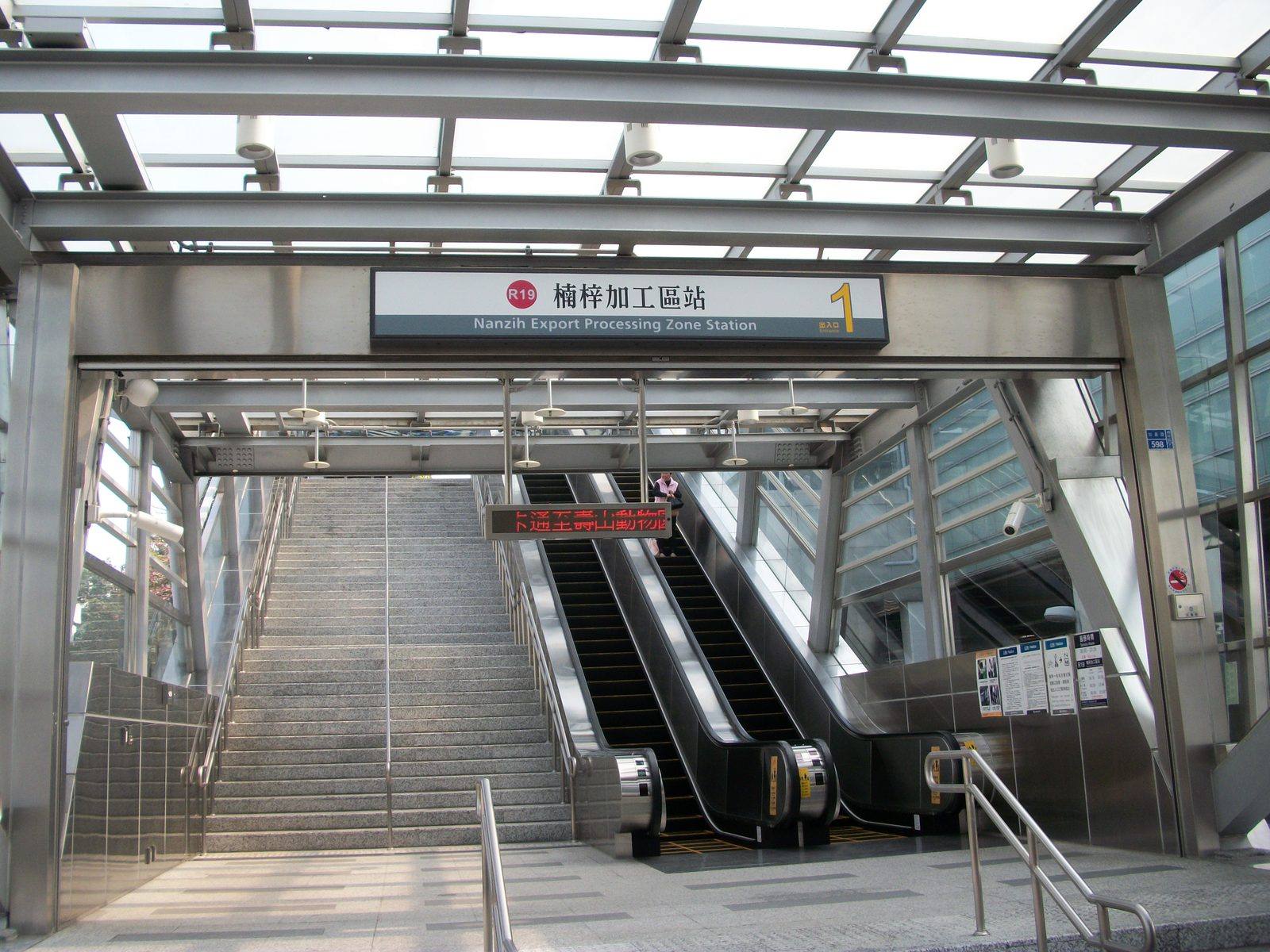
People arrived faster than factories. When the zone began, the Kaohsiung park employed only 4,600 people; within two years, it employed more than 20,000.[4][2] Between 1967 and 1976, employment across the three zones grew 13-fold.[9] Every morning, thousands of young people rode bicycles through the zone's gates, and rode out again in the evening. For them, the zone was not an economics term. It was the first place in their lives that paid a steady wage, the first place where they did not have to live at the mercy of the weather.
One detail is often left out. The credit for the zones later came to rest on one man's name — K. T. Li. But scholars Wu Tsong-min and Tsai Wan-hua argue that this simplifies too much: Li was only one of the promoters, the idea had been raised as early as 1956, and the name "export processing zone" did not appear until May 1963.[3] Miracles are rarely made by one person. Usually a group of people spends a long time pushing the same thing in the right direction.
Chapter 3What the Numbers Say
Numbers are cold. But Taiwan's numbers in the 1960s were cold enough to make anyone sit up.
In 1960, Taiwan's GDP per person was only US$156; by 1970 it was US$393; by 1980, about US$2,394.[1] Fifteen times in twenty years. From 1960 to 1980, Taiwan's economy grew on average 9.5% a year.[8] On an island with no oil, no iron ore and a population of just over 10 million, few countries in the world could match those figures.
The zones' own books looked just as good. By June 1976, the three export processing zones held 292 export enterprises, and cumulative exports since the first zone opened had reached US$2,283,570,000.[10] That money did not become a line in an official's record. It became foreign exchange reserves, machines for the next round of factories, and school fees for the next generation's children.
But numbers lie, or at least they lie by half. The same figures that read as profit from a factory owner's chair read as working hours from the assembly line. The zones' success rested on cheap and diligent labor, and on the day-after-day work of countless young workers. On the other side of the miracle, someone paid with their youth. Anyone writing about a miracle should not pretend not to see that.
Chapter 4The Year Oil Quadrupled
In October 1973, the Fourth Middle East War broke out. The Organization of Petroleum Exporting Countries embargoed the nations that supported Israel, and the world oil price jumped from US$3 a barrel to US$12.[7]
For an island that imported almost all of its primary energy, this was not news. It was an earthquake. In 1973, Taiwan's economy had still grown 12.8%; in 1974, growth fell to 1.1%. The same year, the consumer price index rose 47.5%, and the wholesale price index rose 40.6%.[6] Overnight, everything cost more and nothing could be bought.
Panic is the most honest economic indicator. When prices soar, people discover how deep their dependence on imports runs: oil had to be imported, raw materials had to be imported, even food had to be imported. An island that lived on exports suddenly found that even its rice bowl was borrowed.
The 1.1% of 1974 was the ugliest year since Taiwan's takeoff began. It was also the most important. Because in that very year, Taiwan made a decision that looked close to madness at the time: not to tighten its belt and wait for the crisis to pass, but to borrow money, build things, and build the crisis into construction.
Chapter 5Building a Crisis into Concrete
In 1973, Premier Chiang Ching-kuo proposed the Ten Major Construction Projects. Work began in 1974, with completion planned for 1979, at an estimated total cost of NT$200 billion to NT$300 billion.[11]
The ten projects fell into three groups: six in transport, three in heavy industry, one in energy. Transport meant the Sun Yat-sen Freeway, electrification of the railway, the North-Link Line, Chiang Kai-shek International Airport, Taichung Harbor and Su-ao Harbor; heavy industry meant the integrated steel mill, the large shipyard and the petrochemical industry; energy meant nuclear power plants.[11] Every one of them was expensive, every one was hard, and every one had its opponents at the time.
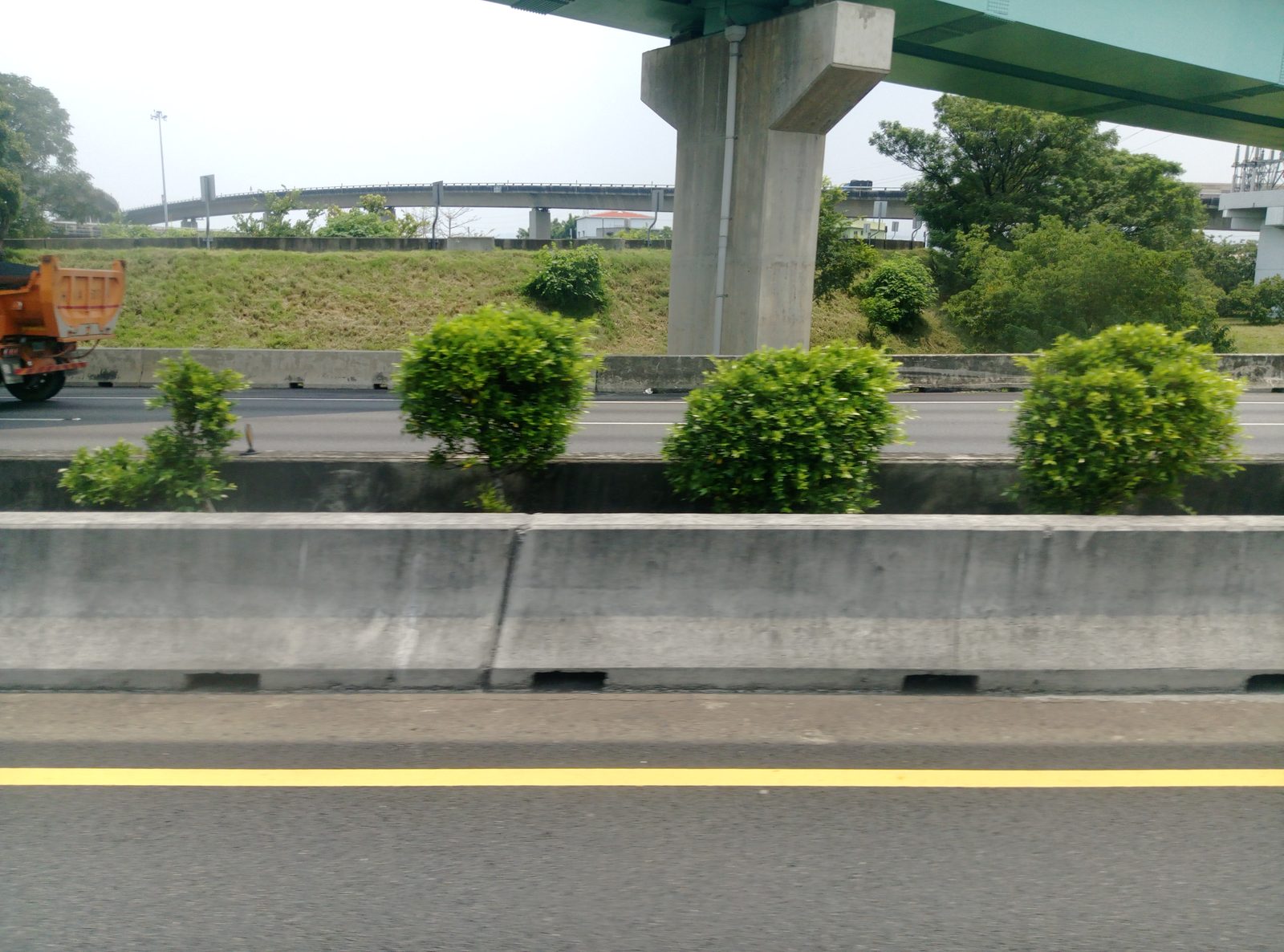
The most expensive and most famous was the Sun Yat-sen Freeway. Construction began on 14 August 1971; the first section, 30.1 kilometres from Sanchong to Chungli, opened on 29 July 1974; the whole line opened on 31 October 1978, running from Keelung in the north to Kaohsiung in the south, about 373 kilometres long.[11] One road, seven years to build. In those days, Taiwan had no experience building a modern freeway at all: American consultants had to help with design and supervision, and construction was split among Korean, Japanese and Taiwanese firms. The total budget was about NT$42.9 billion, of which NT$8.1 billion came from international loans.[11]
The other nine projects did not stand still either. The first phase of Taichung Harbor was completed in October 1976; the first phase of China Steel was completed in December 1977, with an annual crude steel capacity of 1.5 million tonnes — Taiwan's first integrated steel mill; and electrification of the western trunk railway opened in full on 1 July 1979.[11][12]
The objections are easy to imagine: at the worst moment for the economy, borrow the most money and build the most expensive things — was that madness? But the decision-makers were betting on a simple logic: crises pass, construction does not. When the good years returned, what would a Taiwan with no roads, no harbors and no power use to take orders? The bet, as it turned out, paid off.
Chapter 6From Making Others' Goods to a Name of One's Own
By the time the Ten Major Projects were finished, Taiwan was no longer the island of sand and fences of 1966.
The clearest change was in what the factories made. In 1972, electronics firms — 37 of them — were the largest group among the Kaohsiung zone's 161 factories.[9] Electronics had begun to be exported in 1964, and by the 1970s it was no longer a sideshow.[13] Television sets, radios and calculator parts rolled out of Kaohsiung's factory buildings in batch after batch, wearing other companies' brands, bound for the world.
"The living room is the factory" was a Taiwanese saying of the time. People who worked in the zones by day went home at night to a small machine still turning in the living room, making parts for the big factories. The whole island was like a factory without walls, every household a workshop. No policy designed that. It was a way of life invented by people who were afraid of being poor.
In 1979, the second oil crisis arrived. This time, Taiwan's constitution was different: heavy industry now had its own steel, its own ships and its own petrochemical feedstock, electronics was climbing, and exports were no longer just garments and umbrellas.[8] The challenges had not vanished, of course — wages were rising, land was rising, and the margins on contract manufacturing were thinning. But those were the next generation's problems.
EpilogueNo Miracle at All
Go back to that strip of sand in 1966. Is the fence still there? It was taken down long ago.
In 2021, the export processing zones were renamed technology industrial parks, and the Kaohsiung one became the Cianjhen Technology Industrial Park. The name changed, but the logic did not: mark out a piece of land, and give the people doing the work a little less trouble. In 1980, Taiwan's GDP per person was about US$2,394, fifteen times what it had been in 1960.[1] From sand to that figure took fourteen years.
So was there a "Taiwan Economic Miracle"? There was. But the word "miracle" is a cheat. It makes the whole thing sound like luck, like something that fell from the sky. In fact, every step had someone paying for it: the officials who dared to devalue the currency all at once in 1958, the technocrats who dared to fence off a beach in 1966, the government that dared to borrow and build freeways while oil cost four times what it had, and the young people who rode their bicycles into the zones every morning.
Questions Without Answers
To be honest, the following have no reliable answers, and this book will not pretend otherwise:
- There is still no single figure for what the Ten Major Projects cost in total; estimates run from NT$200 billion to NT$300 billion, depending on which works and interest payments are counted.
- Who deserves the credit for the export processing zones remains unsettled; scholars consider it an oversimplification to give the credit to any one person.
A miracle is not a miracle. A miracle is an island with almost no resources that, over twenty years, again and again, at the least suitable moment, made the hardest choice. A choice guarantees nothing. But not choosing guarantees that nothing happens at all.