PrologueThe Day With No News
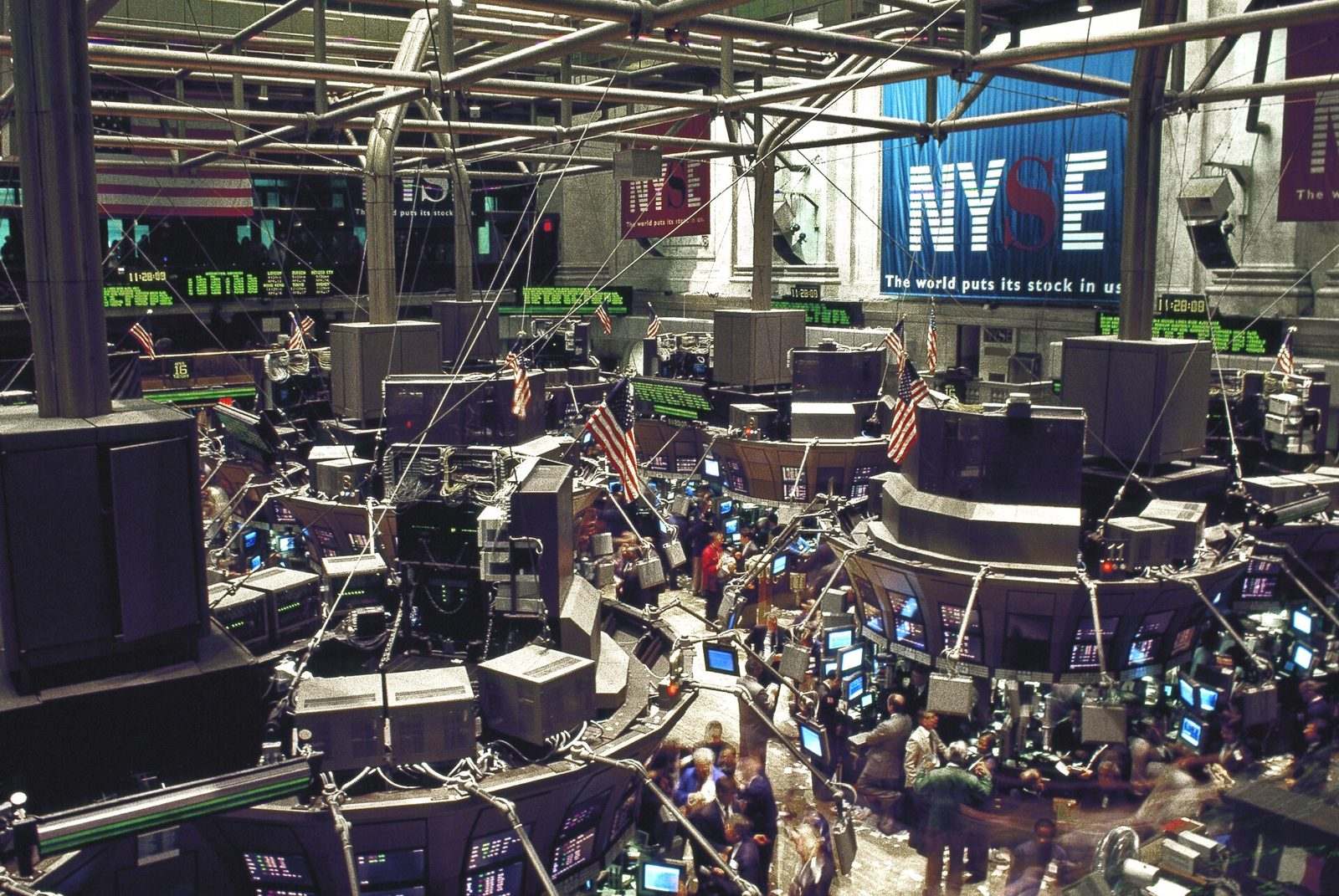
Monday, 19 October 1987. When the New York Stock Exchange closed, the Dow Jones Industrial Average stood at 1,738.74 — down 508 points from the previous Friday, a fall of 22.6%. It was the largest one-day decline in the history of the Dow, worse than any single day of the 1929 crash.[1][10]
There was no war that day. No coup, no great company going under, no central banker resigning. The front pages went looking for a cause and came back with a handful of "maybes": the trade deficit, interest rates too high, a dollar too weak, tax reform threatening takeovers. Every one of them was true. None of them was enough to explain 508 points. What made the day extraordinary was not what happened, but that almost nothing happened — and the market collapsed anyway.
This book is about that "almost nothing". It will not teach you how to predict the next crash; nobody can. It asks an older and more honest question: when millions of people and thousands of computers all follow their own good reasons at the same time, why does the sum of it look like a disaster?
Chapter 1A String Pulled Tight for Five Years
In August 1982, the Dow stood at 776. By August 1987 it had reached 2,722 — up 2.5 times in five years. In the first seven months of 1987 alone it rose another 44%, closing at a record 2,722 on 25 August.[10][1]
A market that rises for long enough makes people forget what falling feels like. At the start of 1987, the yield on the 10-year Treasury note was 7.18%; by Friday, 16 October, it had climbed to 10.23%. Borrowing was getting expensive, and bonds were quietly stealing the stock market's appeal.[2]
Share prices rose faster than earnings, and price-earnings ratios were pushed steadily higher. Federal Reserve researcher Mark Carlson later wrote that for several years before the crash, equity prices had outpaced earnings growth, and a number of commentators had already warned that the market was overvalued. The warnings were always there. Nobody wanted to hear them — in a bull market, a warning always sounds like noise.[2]
There was a longer thread in the background. On 22 September 1985, the United States, Japan, West Germany, France and Britain met at the Plaza Hotel in New York and agreed to push the dollar down together. Within two years the dollar had fallen about 40% against the major currencies. In February 1987 the same governments met again in Paris, at the Louvre Accord, to steady the dollar — it had fallen far enough, and further falls would mean trouble.[8]
The tighter a string is pulled, the louder it snaps. By the autumn of 1987 the market was no longer asking whether it would fall, but who would move first. Nobody thought of themselves as the one who would move. Everyone was just standing beside the string, waiting for someone else to let go.
Chapter 2Wednesday to Friday
On Wednesday, 14 October 1987, the Commerce Department announced a merchandise trade deficit of $15.7 billion for August, about $1.5 billion more than the market had expected. The Dow fell 95 points that day.[3]
On Thursday it fell another 57 points. On Friday, 16 October, it fell 108.35 points, or 4.6% — at the time the largest one-day point drop in the Dow's history. That same day, London's markets were forced to close early: the Great Storm of 1987 had felled trees across southern England the night before and paralysed transport.[1][10]
From the close on Tuesday, 13 October, to the close on Monday, 19 October, the Dow fell 769 points, or 31%. The Brady Report later estimated that almost $1.0 trillion in the value of American stocks had vanished in those four trading days.[3]
Nobody on Wall Street slept well that weekend. The portfolio insurance computers had already worked out how much to sell on Monday, fund managers had already taken redemption calls, and traders had already lined up their sell orders. Before Monday even opened, the selling was already queuing at the door.
Chapter 3It Fell First Where the Sun Rose First
On Monday, the sun rose in the east, and so did the selling. In Tokyo the Nikkei fell 2.5%, in Hong Kong the Hang Seng fell 11.1%, and in London the FT 30 index fell 10.1%. Then it was New York's turn.[4]
New York collapsed from the opening bell. Sell orders poured in like a tide, and by the close the Dow stood at 1,738.74, down 508 points, or 22.6%. The S&P 500 fell 20.5%. In the last hour and a quarter of trading, the Dow sank almost another 300 points. That day, 604 million shares changed hands on the New York Stock Exchange.[1][10][3]
The next morning, Tokyo's Nikkei fell a further 14.9%, with almost every stock hitting its daily limit and halting. All 23 of the world's major stock markets fell. Over the month, Hong Kong's Hang Seng lost 45.8%, the worst of any market. Worldwide losses were estimated at $1.71 trillion.[10]
Historians at the Federal Reserve would later call it "the first contemporary global financial crisis". It travelled with the sun — Tokyo, Hong Kong, London, New York, one time zone after another — and there was nowhere to hide.[1]
Chapter 4The Machines Learned to Be Afraid
After the crash, everyone asked the same question: who sold? The Brady Report's answer made many people uncomfortable. The heaviest sellers were not panicking small investors, but institutions following computer models.[3]
The strategy was called portfolio insurance. The idea was simple: use a computer model to imitate a put option — add stocks when prices rise, sell futures when prices fall — so that a portfolio always kept a "floor" under it. By mid-October 1987, an estimated $60 to $90 billion of equities was managed this way, and almost all of it ran on the same mathematics.[3]
The problem was not the mathematics. It was that everyone was using the same mathematics at the same time. On 19 October, total sales on the New York Stock Exchange came to just under $21 billion, and sell programs by three portfolio insurers accounted for just under $2 billion of it. In the futures market the pressure was greater still: the three insurers sold the equivalent of about $2.8 billion in stocks.[5]
Selling spilled from futures into cash stocks. When futures fell further below cash prices, index arbitrageurs bought futures and sold the underlying stocks, dragging cash prices down; when cash prices fell, the portfolio insurance models demanded more futures selling. The Brady Report called this loop the "cascade effect": fall, sell, fall again, sell again.[3]
Yale economist Robert Shiller surveyed investors after the crash and found something unsettling: most people sold not because they had seen bad news, but because prices themselves were falling. The falling price was the news, and the news was the falling price.[5]
More ironic still, portfolio insurance sold for exactly the reason it existed. It promised to put a floor under a portfolio, and its method was to sell when prices fell — to protect you, in other words, by selling your stocks at the moment you were most afraid. Add up the floor of every institution, and you get a trapdoor under the whole market.
No one gave an order. No one lost their mind.
Every person and every machine was doing the "right" thing —
and the right things added up to a disaster.
That is the lesson of Black Monday most worth remembering. A market needs no villains, no conspiracy, no loss of control. It only needs a crowd of rational people, running on the same rules, in the same direction, on the same day.
Chapter 5The Place That Closed for Four Days
On 19 October, Hong Kong's Hang Seng index fell 11.1%. The next morning, the Stock Exchange of Hong Kong suspended trading for four days, and the futures exchange followed. When both reopened on Monday, 26 October, the Hang Seng plunged 33% in a single day.[4]
Closing did not stop the fall. It only postponed it, and let it erupt all at once on the day trading resumed. The Hong Kong Securities and Futures Commission's later report put it plainly: the closure was ordered out of fear of panic selling and disorder, but a closed door cannot hold back fear — it can only change the hour at which fear breaks out.[4]
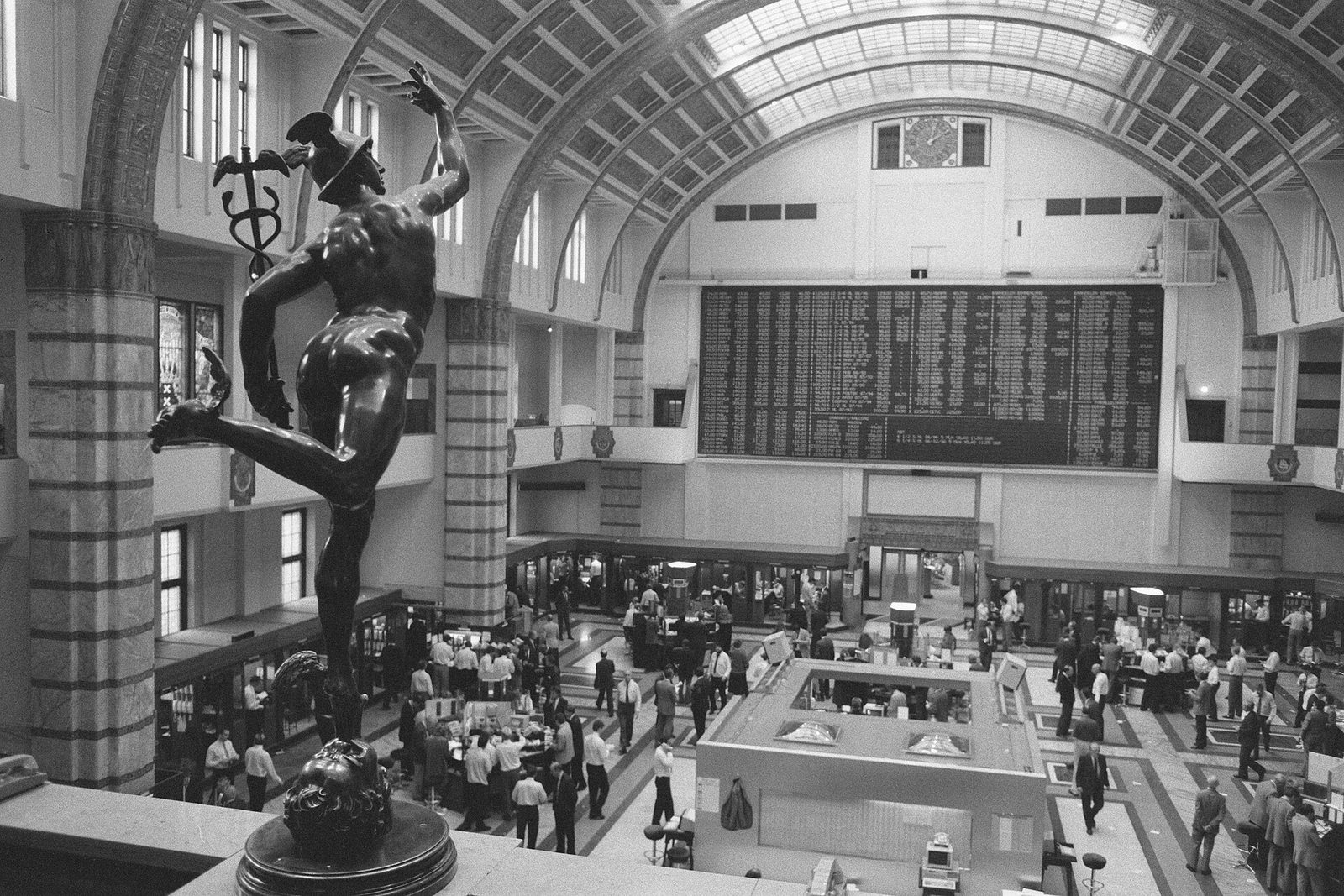
That lesson later became the circuit breaker. In 1988, the New York Stock Exchange began imposing trading curbs: when the market falls too fast, trading pauses. In the American market today, the S&P 500 falling 7% or 13% in a day halts trading for 15 minutes; a 20% fall closes the market for the day.[10][12]
A pause is not a cure. It cannot make bad news good or expensive stocks cheap. It can do only one thing: interrupt the moment when everyone runs in the same direction, and give people a few minutes to ask themselves what exactly they are afraid of. A few minutes is sometimes the whole distance between panic and thought.
Chapter 6One Sentence That Stopped the Bleeding
Alan Greenspan took office as chairman of the Federal Reserve on 11 August 1987. Sixty-nine days later, Black Monday arrived — his first examination, and the question was the largest one-day crash in American history.[7]
Before the market opened on 20 October, the Federal Reserve issued a statement of a single sentence: "The Federal Reserve, consistent with its responsibilities as the Nation's central bank, affirmed today its readiness to serve as a source of liquidity to support the economic and financial system." No figures, no promises, no explanation. The market did not want an explanation. It wanted someone to stand up and say: the money is still here, the doors are still open.[1]
Behind the statement, the Fed eased short-term credit and ran open market operations earlier than usual, making sure securities firms could borrow and settlement would not seize up.[2] Within two trading sessions, the Dow had won back 288 points — 57% of what Black Monday had taken. In under two years it had recovered all of its pre-crash highs, and the crash brought neither a recession nor a banking crisis.[1]
In January 1988, the Brady Report was published. It accused no one of a crime and proposed banning no kind of trading. Its message was about the system: futures and cash markets needed unified clearing, exchanges needed a mechanism to pause trading, and regulators needed to see the whole picture.[3] Greenspan's one sentence later became known as the beginning of the "Greenspan put" — a guarantee never written into any document, yet believed by everyone: when the fall is bad enough, the central bank will come.[6]
EpilogueThe Market Has No Memory. People Do.
Black Monday did not become 1929. On 28 October 1929 the Dow fell 12.8%, and 11.7% the next day, and then came ten years of depression. On 19 October 1987 the Dow fell 22.6% in a single day — worse than any day of 1929 — and no recession followed. Numbers can mislead; at the very least, they do not speak for themselves.[3]
The difference was not the size of the fall, but what happened after it. In 1929 the central bank tightened, and banks failed one after another. In 1987 the central bank promised liquidity within 24 hours. The same panic, once left to spread and once held down by a single sentence. A system does not show its worth on ordinary days. It shows it on the worst day.
After 1987, the market gained a set of brakes: circuit breakers, unified clearing, coordination across markets. But brakes can only buy time; they cannot change direction. Direction is always decided by people — by every person staring at numbers falling on a screen, finger hovering over the sell button.
But the story should not be told too neatly. Greenspan's sentence saved 1987, and it also planted a later problem: the market learned to believe the central bank would always come. That belief was tested again and again in 2008 and in 2020, and questioned again and again. The guarantee itself slowly became another kind of risk.
Questions Without Answers
To be honest, the following have no reliable answers, and this book will not pretend otherwise:
- The Brady Report put the largest share of blame on portfolio insurance, while the Securities and Exchange Commission and the Chicago Mercantile Exchange's inquiry held that selling by mutual funds, broker-dealers and individual shareholders mattered just as much. How the blame should be divided remains unsettled.
- Whether circuit breakers would have changed that day is unknowable — history has no replay button.
The market has no memory. It does not remember 1987, or 2008, or any Monday. People have memory. Remembering Black Monday is not about predicting the next crash. It is about recognising the scene the next time everyone starts running in the same direction — stopping, and asking yourself what exactly you are afraid of.