PrologueA Failed Launch
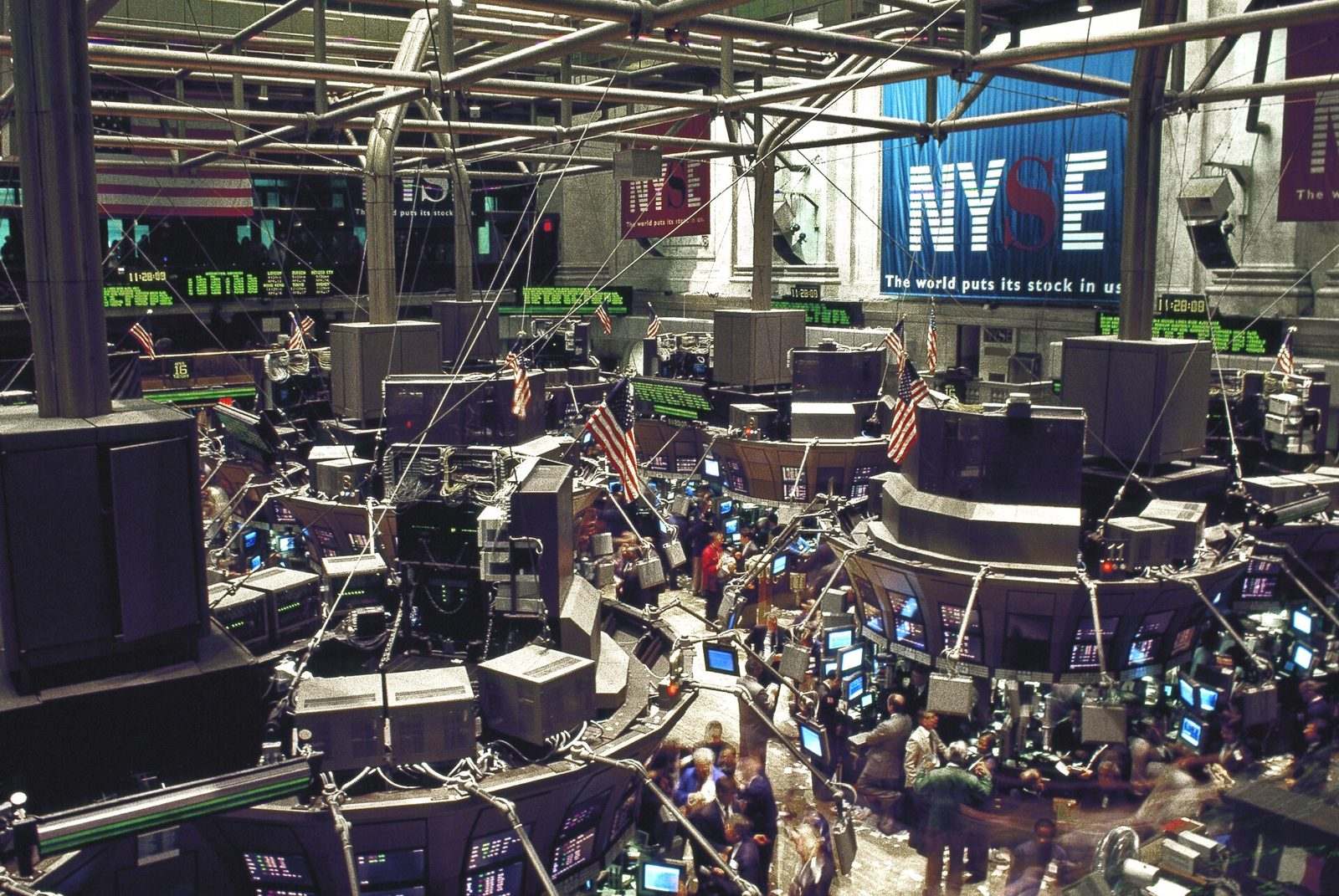
On Tuesday, 31 August 1976, in New York, the Vanguard Group's first index fund completed its initial public offering. The underwriters had set a target of $150 million. It raised $11.3 million — a shortfall of 93%.[1][3] The underwriters came to John Bogle with a suggestion: cancel the deal, return the money to investors, and pretend none of it had ever happened. Bogle answered with a single word: "Hell no."[3]
The fund was called the First Index Investment Trust, and it tracked the Standard & Poor's 500 Index. It did not promise to beat the market, to pick winning stocks, or to do anything clever. It promised only one thing: to keep up with the market, as cheaply as possible. Wall Street gave it a nickname: "Bogle's Folly."[1]
Fifty years later, the idea that was laughed at has become the first thing ordinary savers reach for when they buy a fund. This book tells how it got from a failed launch to where it is today. It will not teach you how to pick funds, and it will not predict which market will rise. It asks an older question: when an entire industry makes its money by claiming "I am smarter than you," how does a product that admits it is not smart survive?
Chapter 1The 130-Page Thesis from Princeton
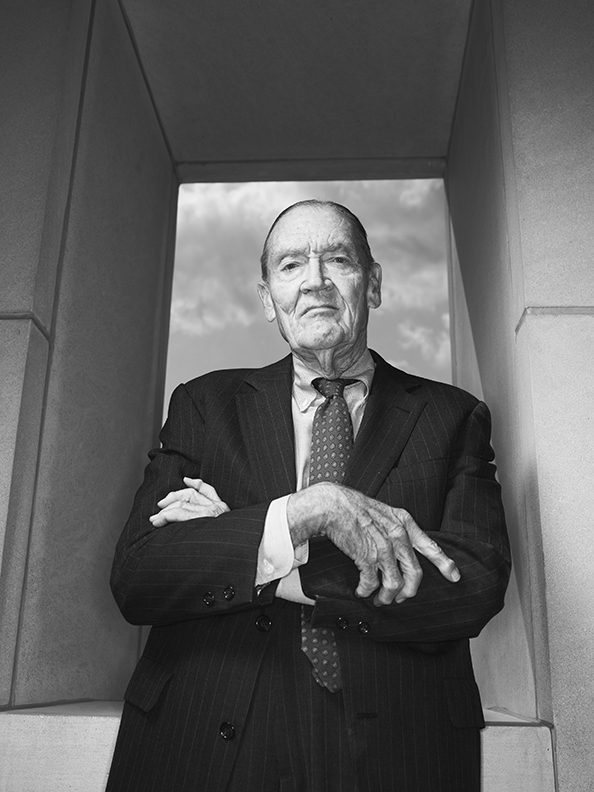
John Clifton Bogle was born on 8 May 1929 in Montclair, New Jersey, one of a pair of twins. In 1951, he graduated magna cum laude from Princeton University with a degree in economics. His senior thesis was titled "The Economic Role of the Investment Company," and it ran to 130 pages.[10]
The thesis reached a conclusion almost nobody wanted to hear. Bogle did the arithmetic: the management fees and trading costs that mutual funds charged ate away more in returns, over the long run, than managers earned back through stock picking. Most funds failed to beat the market average — not because their managers were not clever enough, but because the fee structure made it inevitable. A 22-year-old student had used 130 pages to turn the industry's whole business model into an unsolvable arithmetic problem.
The thesis was read by Walter L. Morgan, founder of the Wellington Fund and one of the grand old men of the industry. Morgan hired the young graduate on the spot. Bogle climbed fast at Wellington, rising steadily through its ranks. The irony is that he later dismantled, by hand, the very industry Morgan's generation had built.
One line from the thesis stayed with Bogle for the rest of his life: investment companies should be operated in the most efficient, honest, and economical way possible. It sounds like a platitude, but Bogle treated it as mathematics. Efficient, honest, economical — each word later became a concrete rule at Vanguard.
Chapter 2The Man Who Was Fired
In 1967, Wellington merged with the Boston investment firm Thorndike, Doran, Paine & Lewis. The merger was hailed as a joining of strengths; seven years later it had become a fight over control. In 1974, Bogle was fired, losing the position he had spent 23 years climbing toward. He was 45, with six children at home and a weak heart.[10]
Being fired is usually the end of a career. For Bogle it was an opening. Wellington's board allowed him to take the company's administrative and back-office operations and start something new. In September 1974, he founded the Vanguard Group; on 1 May 1975, Vanguard began operations.[6][10]
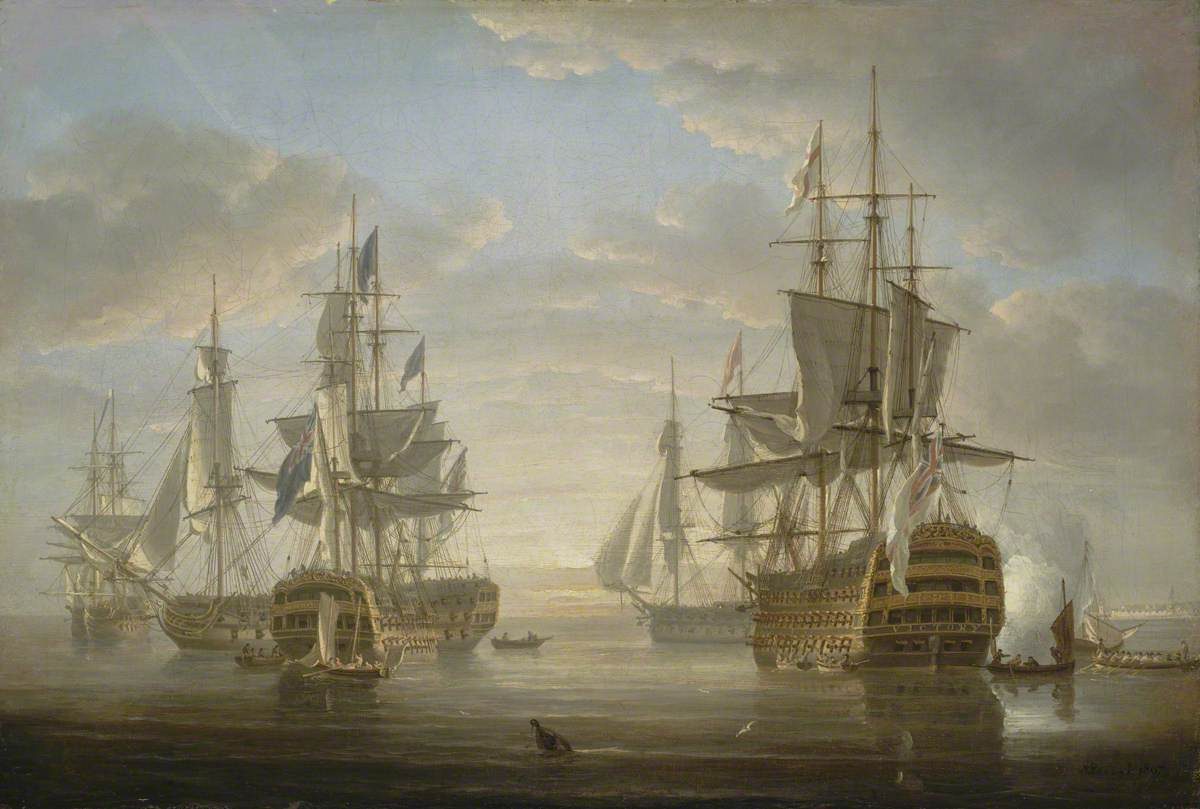
The name "Vanguard" came from HMS Vanguard, Admiral Nelson's flagship at the Battle of the Nile on 1 August 1798. Bogle had come across the ship in an old book about British naval victories and liked the name. In the dictionary, a vanguard is "the leader in a new trend."[9] A tiny company founded by a man who had just been fired — a company that did not even hold investment management powers — named itself after the leading ship of a fleet. That was not confidence. That was a declaration of war.
Vanguard's ownership structure was equally strange by Wall Street standards. It belongs to no outside shareholders. It is owned by its own funds, and the funds are owned by the investors who hold them. Nobody can extract profits from Vanguard, so the savings that come from scale have only one place to go: lower fees. From its first day, the company wrote "save investors money" into its ownership structure, not into its advertising.
Chapter 3The Idea Was Already There
Bogle did not invent the index fund. By 1976, the idea had already been circulating in academic circles and banks for 16 years. Bogle's contribution was to put it in the hands of ordinary people.
In January 1960, two young economists, Edward F. Renshaw and Paul J. Feldstein, published a paper in the Financial Analysts Journal with a title that was almost a provocation: "The Case for an Unmanaged Investment Company." They argued that instead of paying someone to pick stocks, investors should simply own the whole market.[12] By 1963 at the latest, Benjamin Graham, the father of value investing, had advocated the creation of such a fund.[3]
In 1971, Wells Fargo acted first. A team led by John McQuown used $6 million from the pension fund of the Samsonite luggage company to build the first index fund in history. It held the roughly 1,500 stocks listed on the New York Stock Exchange in equal weights — the same dollar amount in each. In practice it was a nightmare: share prices moved every day, so equal weights meant trading every day, at ruinous cost, with bookkeeping to match. In 1976, the fund was switched to the market-capitalization-weighted S&P 500.[2]
But the Wells Fargo fund was open only to institutions; ordinary people could not buy it. The gap stayed open until August 1976, when Paul Samuelson, a Nobel laureate in economics, wrote in his Newsweek column that retail investors, too, should have the chance to invest in an index.[10] In that same month, Bogle's First Index Investment Trust opened for business. An idea academics had written about for 16 years, and banks had tried for five, reached ordinary savers within a single month.
Note the order: first the papers, then the institutional product, and only last the retail product. Bogle was not the source of the idea; he was its final destination — the man who delivered a proven idea to the people with the least bargaining power. The most common role in the history of innovation is not the inventor. It is the person who carries the invention to the people who need it.
Chapter 4The Fund Nobody Wanted
The launch of 31 August 1976 was a public humiliation. The underwriting syndicate — Dean Witter, Bache Halsey Stuart, Paine, Webber, Jackson & Curtis, and Reynolds Securities, four of the largest retail brokerages in America — had aimed to raise $150 million. They raised $11.3 million. There was not enough money to buy all 500 stocks in the index; the fund opened holding only 280 of them.[1][4] Worse, this fund that preached low costs went on sale charging a sales load of as much as 6%.[4]
Wall Street's reaction was not indifference. It was hostility. Commentators called it "a sure path to mediocrity" and even "un-American" — in a country that worshipped winners, stars, and beating the averages, admitting you only wanted to keep up with the averages was itself an offense.[4] Bogle himself called the launch a "complete flop."[4]
This fund promised only one thing:
it promised nothing.
Behind the hostility lay an accusation nobody said out loud. The very existence of an index fund was an accusation against the entire active management industry: the fees you charge are not worth the value you deliver. A fund that does not pick stocks, does not forecast, and does not hire star managers is a public statement that the emperor's new clothes were woven with investors' money. Nobody likes hearing that — least of all from a man who has just been fired.
But Bogle refused to cancel the offering. $11.3 million could not buy 500 stocks, so the fund bought 280 and replicated the index by sampling. It opened for business carrying a mocking nickname and a launch its own founder admitted was ugly. Many great things begin this way: not amid applause, but amid the question, "How could this possibly sell?"
Chapter 5Cost Is the Only Certainty
The real argument for the index fund was never "active managers are stupid." It is arithmetic. All investors together earn the market's total return; after costs, what investors actually keep is the market return minus costs. The higher the costs, the less is left. That is not a forecast. It is addition and subtraction.
Bogle called this the "cost matters hypothesis": of everything in investing, the only part that is certain is cost. Nobody knows whether the market will rise tomorrow. Nobody knows which stock will soar. But what a fund charges you is written down in black and white. A fund charging 1% a year has to beat the market by 1 percentage point every year just to match an index fund charging 0.04%. The longer the horizon, the more that gap compounds, like a snowball rolling downhill.
The data are on Bogle's side. The S&P Dow Jones Indices SPIVA scorecard shows that over the 20 years through June 2026, about 90% of actively managed US large-cap funds trailed the S&P 500 — and that count includes funds that closed or merged along the way, scored as losers.[13] The reasons for losing vary endlessly. The structure of losing has only one cause: fees.
The fee gap looks even wider today than it did in 1976. The Vanguard 500 Index Fund now charges 0.14% for its investor shares and 0.04% for its Admiral shares.[5] What does 0.04% mean? On a $10,000 investment, it is $4 a year. That is not charity. It is the inevitable result of a company owned by its own investors, keeping the fruits of scale in investors' pockets.
Crowd psychology offers a cruel explanation for why the idea took so long to catch on: people do not want returns, they want a story. Star managers, exclusive insight, the thrill of beating the market — active funds never sold returns alone; they sold the feeling of being smarter than everyone else. The index fund sells the opposite: the admission that you do not know, that you are only a part of the market. That goes against human nature, which is why nobody wanted it in 1976. And because it goes against human nature, it works. Human nature does not change. Neither does arithmetic.
Chapter 6The Default, Fifty Years On
It took a long time for the index fund to travel from joke to common sense. In 1985, all the index funds in America combined held only $511 million in assets — barely more than the first offering had raised nine years earlier.[3] The turn came slowly, so slowly that most people never noticed it happening.
By 2016, the Vanguard 500 Index Fund alone held more than $252 billion.[3] According to Vanguard's calculations, $10,000 invested in the fund at the end of 1976 had grown to more than $2 million by 2026, an annualized return of a bit under 11.6%.[5] In between came the 1987 crash, the dot-com bust, the financial crisis, and the pandemic collapse. The fund did nothing. It just stayed there.
In December 2023, the historic crossover arrived: passive funds in the United States held more assets than active funds for the first time, $13.29 trillion against $13.23 trillion.[8] By the end of 2025, index funds and ETFs together held $19.1 trillion, or 52% of US long-term fund assets; in 2010, that share had been only 19%.[8] In 15 years, the minority had become the majority.
Bogle lived to see all of it. In 1999, he published Common Sense on Mutual Funds, which became a bestseller, and stepped down as Vanguard's chairman the same year.[6][10] On 16 January 2019, he died at his home in Bryn Mawr, Pennsylvania, aged 89.[10] After his death, Wharton wrote that he had done more good for the individual investor than anyone else in the past century.[7]
Today, when a young person starting to save for retirement opens any brokerage app, the first option recommended is almost certain to be some low-cost index fund. Nobody finds that remarkable. That is the greatest power of a default option: it makes people forget that someone once had to insist on it.
EpilogueThe Victory of Laziness?
The triumph of the index fund is often called "the victory of laziness": the people who did nothing won. That gets the causation backwards. Bogle was not lazy. He was honest. He honestly admitted that the only thing in investing anyone can control is cost, and that most people — including most experts — cannot beat the market consistently. Laziness admits nothing. Honesty takes courage.
What this book wants to leave behind is not the conclusion "buy index funds." Conclusions go stale; markets change, fees change, even the definition of an index changes. What should stay is a way of judging a question: when an industry tells you that money can buy intelligence, ask first whether that intelligence can be repeated. Intelligence that cannot be repeated is luck, and luck cannot charge a fee. Only two things can be repeated: the market's overall return, and the cost you pay.
Questions Without Answers
To be honest, the following have no reliable answers, and this book will not pretend otherwise:
- As index funds grow ever larger, will the market's price-discovery mechanism grow sluggish? Scholars have not reached a conclusion; the evidence points in different directions.
- How should the voting power concentrated in the hands of the Big Three index managers be checked? No widely accepted answer exists.
- Does Bogle's answer work in every market? The evidence is most complete for US large-cap stocks; for emerging markets and bond markets, it is still accumulating, and it is too early to conclude.
On 31 August 1976, the underwriters suggested returning the money and pretending nothing had happened. Bogle said hell no. Fifty years later, that refusal lives inside the retirement savings of ordinary savers around the world. Sometimes the fate of a product is decided not by what it promises, but by what it refuses to promise.