PROLOGUEA Foggy Morning in the Fog Capital
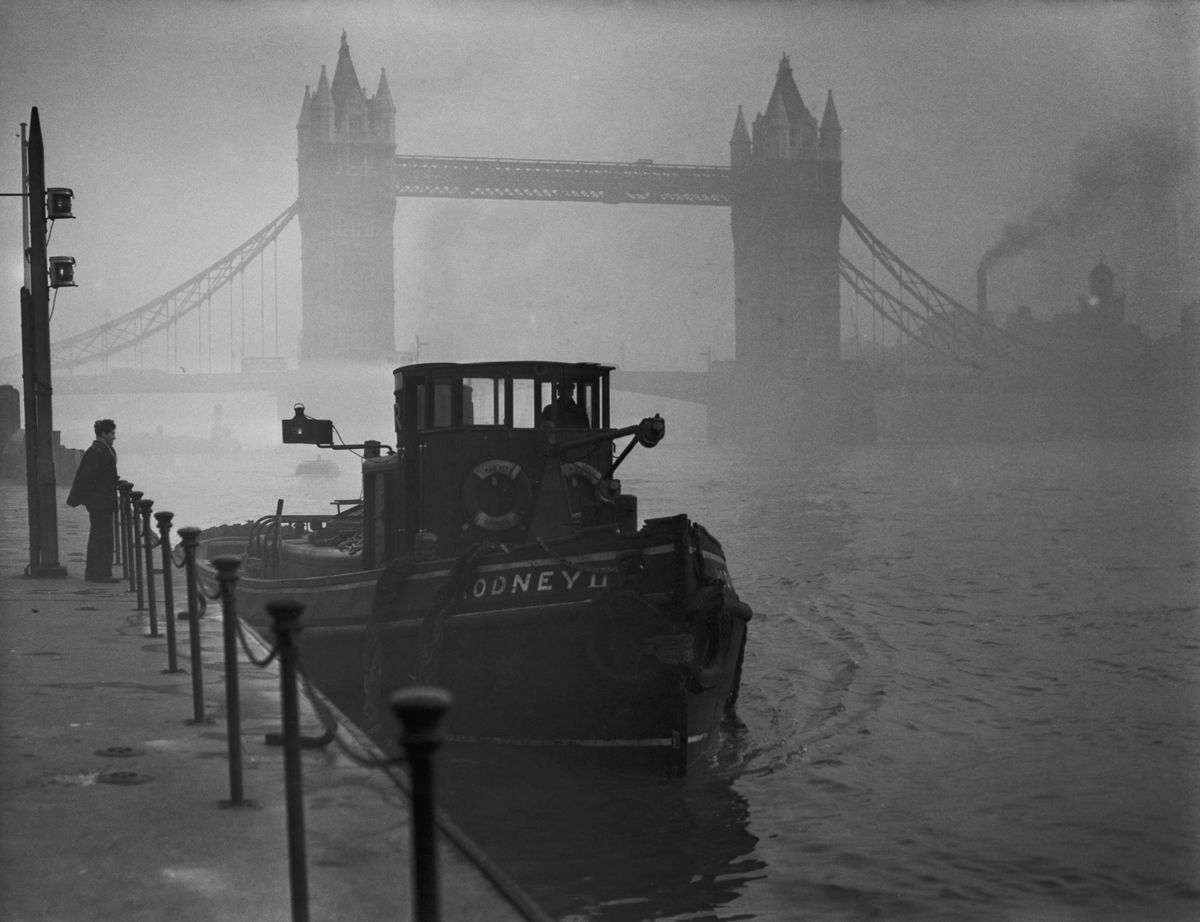
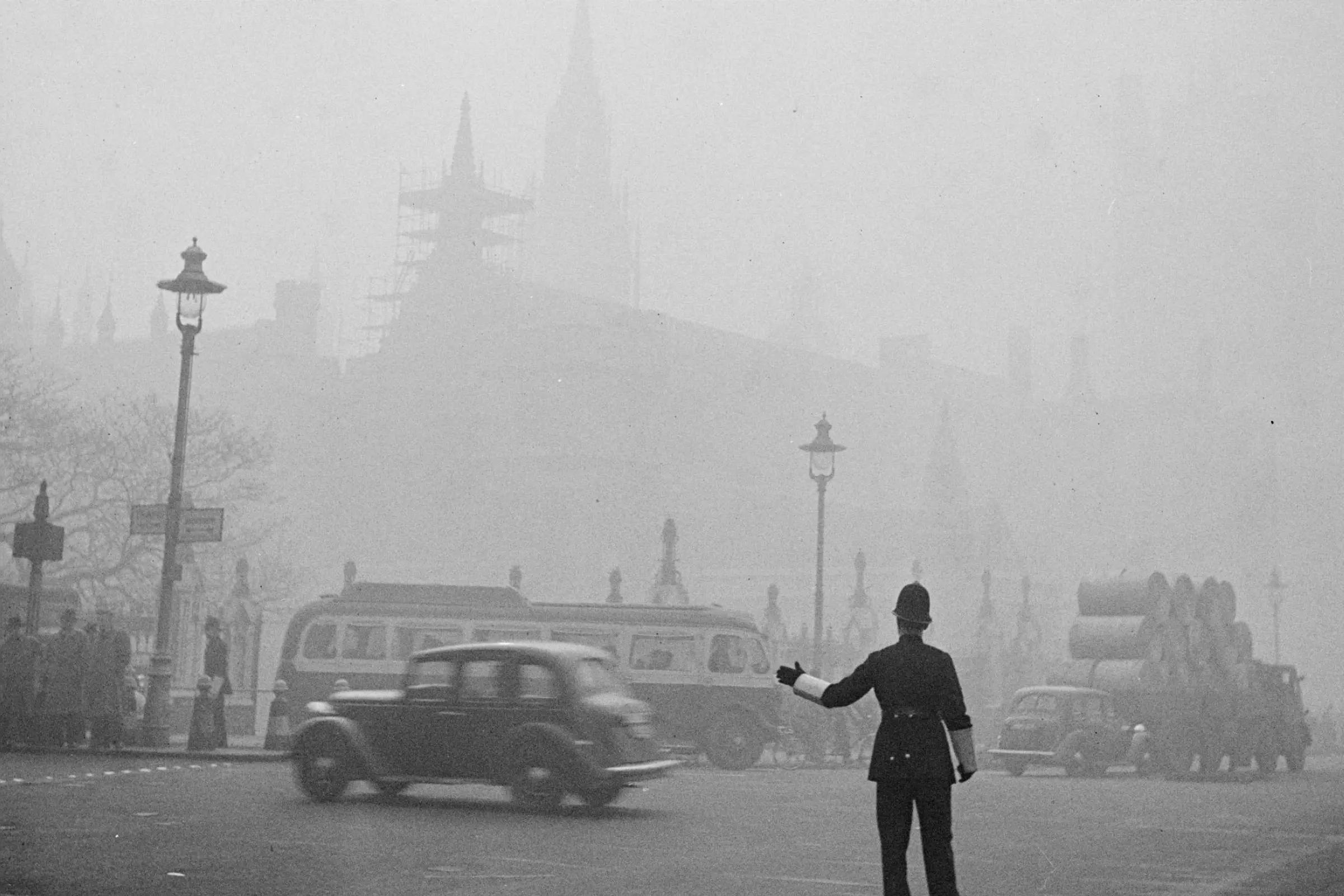
On Friday, 5 December 1952, Londoners woke to fog. There was nothing remarkable in that. London was famous for fog. Fog was part of the city's scenery, the backdrop of its novels, and a familiar feature of its winters. But this time, the fog did not lift by midday. It grew thicker, yellower, and more choking. By Saturday, the low winter sun could not burn it off. By Sunday, visibility in some places was down to about a foot, and people could not see their own feet. Five days later, a west wind finally swept it away and the city reappeared. But some people were gone.
Those five days later became known as the Great Smog of London. What made it terrible was not the sudden destruction of an explosion or a flood, but the fact that it looked so ordinary. Fog had always been part of London. Who would have thought that something so familiar could kill? That is the first lesson this disaster leaves us. The most dangerous threats are often not the strange ones, but the everyday things we have grown so used to that we stop asking questions about them.
CHAPTER ONEA Lid Over the City
The Great Smog was not caused by a single factor. It was a collision of conditions that happened to arrive together. November had been unusually cold, and Londoners burned far more coal than usual to keep warm. After the war, Britain exported much of its better coal to pay its debts, leaving households with a cheap, crumbly, sulphur-rich grade known as nutty slack. The city also had many coal-fired power stations, at Battersea, Bankside, Fulham, Greenwich, and elsewhere, all adding their own smoke, while diesel buses had replaced electric trams and left their exhaust in the streets.
The weather then supplied the final piece. On 4 December, a high-pressure system settled over southern England, creating a temperature inversion. Normally, air grows colder with height, and chimney smoke rises and disperses. During an inversion, a layer of cold air sits near the ground beneath a layer of warmer air, like a lid over the city. Smoke rises only until it meets the warm layer above, then stops. With nowhere to go, it accumulates near the ground. On the morning of 5 December, the ground lost heat rapidly, moist air condensed into fog, and the droplets formed on countless soot particles, creating a layer of fog some one hundred to two hundred metres deep, trapped beneath the inversion.
The UK Met Office later estimated what all of that put into the trapped air on each day of the smog: about 1,000 tonnes of smoke particles, about 370 tonnes of sulphur dioxide, which may have been converted into about 800 tonnes of sulphuric acid, along with about 140 tonnes of hydrochloric acid and 14 tonnes of fluorine compounds. There is no need to remember every figure. Only one thing matters: Londoners were not breathing fog. They were breathing fog mixed with coal smoke and acidic gases. Fog was the trap, not the poison itself. The poison was what burning had hidden inside the fog.
CHAPTER TWOFive Days Without Sight
The most immediate effect of the smog was that the city stopped. Visibility fell to a few metres. Buses and cars could not run, and ambulances struggled to reach the sick. Indoors was no safer. Smog seeped into houses, theatres, and offices, and people indoors coughed without relief. People felt their way along the streets, and one visitor said it was like being blind. Familiar streets, squares, and landmarks disappeared from daily life for five days.
Death came quietly. Those hit hardest were the elderly, infants, and people who already had heart or lung disease. Most died of bronchitis and pneumonia, or of existing conditions made worse by the smog. Hospital wards filled with people struggling to breathe, and undertakers could not keep up. In the weeks that followed, government medical reports estimated that about 4,000 people had died as a direct result of the smog, and about 100,000 more had been made ill. That figure was shocking enough at the time, but it was not the whole truth.
Why did the city go on for so long without anyone sounding the alarm? Partly because fog was so common in London that people could not tell which day's fog was ordinary and which was lethal. Partly because deaths were scattered, with no single scene to point to and say, the disaster is here. And partly because the government and society of the time were unwilling to admit that everyday coal heating was itself the problem. To admit that would mean changing how thousands of households lived, spending money, passing laws, and offending people. So the city stayed in the poisoned fog for days longer, and the price was paid by its most vulnerable people.
CHAPTER THREEThe Argument Behind the Numbers
The death toll of the Great Smog has no single figure on which everyone agrees. That must be stated honestly, because it is the most important legacy of the disaster for science and public discussion.
The government's estimate at the time was about 4,000, counting excess deaths during the smog and immediately afterwards. But mortality stayed high for months after the fog cleared. A preliminary report, never finalised, blamed those later deaths on an influenza epidemic, but that explanation was soon questioned. E. T. Wilkins, the government's leading air pollution scientist, charted London's weekly deaths from the winter of 1952 to the spring of 1953 against the previous year, and found about 8,000 additional excess deaths in the months after the smog, on top of the first 4,000, making about 12,000 in total.
Half a century later, in 2004, Michelle Bell, Devra Davis, and Tony Fletcher published a retrospective study in Environmental Health Perspectives, re-examining the mortality records and the influenza data. They concluded that influenza could account for only a fraction of the later deaths. To explain most of them by influenza would have required a flu season twice as deadly and four times as widespread as the one actually recorded that winter. Their findings support Wilkins's estimate, a total close to 12,000. Later summaries generally give the modern estimate as a range of 10,000 to 12,000, not a single exact number.
That range is not academic vagueness, but honesty. Calculating excess deaths involves choices about the baseline, the time window, and the attribution of causes, and each choice changes the figure. To present 12,000 as an iron certainty would be as dishonest as treating 4,000 as the whole truth. What is worth remembering is not one number, but the direction of the numbers: the official estimate at the time underestimated the scale of the disaster, by nearly three times. A society that counts only the deaths it can see at once will miss the true cost of a disaster, because much harm acts with delay, and many deaths come after the fog has cleared.
CHAPTER FOURFrom Disaster to Law
After the disaster, the British government was at first reluctant, preferring to treat the smog as a natural disaster that no one could have prevented. But public and press pressure grew. In July 1953, the government appointed the industrialist Sir Hugh Beaver to lead a Committee on Air Pollution. The committee issued an interim report in November 1953 and a final report in November 1954, arguing that smoke from domestic chimneys as well as industry had to be controlled in towns, and estimating that smoke pollution was costing Britain about £250 million a year.
In 1954, the City of London banned smoke in the Square Mile. In 1956, Parliament passed the Clean Air Act, Britain's first national air pollution statute. The Act gave local authorities power to create smoke control areas, where only smokeless fuels could be burned. It made it an offence to emit dark smoke from a building's chimney, required newly installed furnaces to be capable of operating without producing smoke, and offered financial help to households switching to cleaner fuels. Power stations and heavy industry were gradually moved out of the city. A second Clean Air Act followed in 1968, requiring industrial enterprises to build taller chimneys to disperse pollutants more effectively.
The significance of this law lay not only in controlling smoke, but in changing where responsibility lay. Before it, air pollution had been treated as a matter of personal choice or as an incidental cost of industrial progress, as if whose household burned coal or which factory smoked were private affairs. After the Great Smog, British society acknowledged for the first time, broadly, that air is shared: the smoke from one person's coal fire becomes disease in another person's lungs. Government had a duty to intervene, through legislation, designated zones, subsidies, and regulation, because the market and habit alone would not correct the problem.
Of course, law is not magic. London's air did not become clean overnight. Smog episodes still occurred in later years, and the energy transition took decades. But the legislation of 1956 drew a line. Before it, pollution was accepted as the inevitable price of life. After it, pollution was a problem that could, and should, be controlled. The value of that line only became fully clear many years later.
EPILOGUEWe Breathe the Same Air
The Great Smog leaves today's readers with at least three lessons.
The first concerns habit. Londoners were not unaware that coal smoke was harmful. They were simply used to it. The romantic image of the fog capital concealed the poison in the fog. A society's sense of danger is often decided not by science, but by familiarity. The more familiar a danger, the harder it is to notice. This reminds us that regularly re-examining the everyday things we no longer question is itself a form of self-protection.
The second concerns invisible costs. The deaths from the smog were not all at once. It took months for the full toll to appear. Many public problems behave this way. When harm occurs, it cannot be seen or counted clearly, and by the time the figures are complete, responsibility is hard to assign. That does not mean we should give up counting. It means decisions cannot rest only on the figures visible at the time. When scientists say an estimate is uncertain, that is not an evasion of responsibility. It is a reminder that truth takes time, and while we wait for it, people are still being harmed.
The third concerns collective responsibility. No single London household caused the Great Smog on its own. Every household was only burning coal to keep warm, doing something utterly ordinary. But hundreds of thousands of ordinary choices added together became a disaster. Likewise, no single household could solve it alone. Only through law, subsidies, and urban planning, changing the conditions under which everyone chose, could the air improve. Collective responsibility does not mean that everyone should blame themselves. It means acknowledging that some problems can only be solved together.
A city that could not see for five days finally learned to see the air it breathed. The forms of pollution we face today are different, their sources more dispersed, their effects longer lasting, but the structure of the problem has not changed: familiar routines, delayed costs, scattered responsibility. The story of London offers no simple answer. It offers a reminder: when the air becomes invisible, do not wait until the city itself disappears before acting.
Questions That Remain Open
In honesty, the following two things have no settled answer, and this essay does not pretend otherwise:
- How many people did the Great Smog actually kill? There is still no death toll everyone agrees on: the government's estimate at the time was about 4,000, while Wilkins put the total near 12,000, and later summaries mostly give the modern estimate as a range of 10,000 to 12,000 rather than a single figure.
- How much of the excess mortality in the months after the smog lifted should be blamed on the smog? An unfinished preliminary report at the time blamed those later deaths on influenza, but that explanation was soon questioned; a 2004 review concluded influenza could explain only a small part of them, and the rest remains a matter of range, not certainty.