PROLOGUEA Businessman Walks into a Battlefield
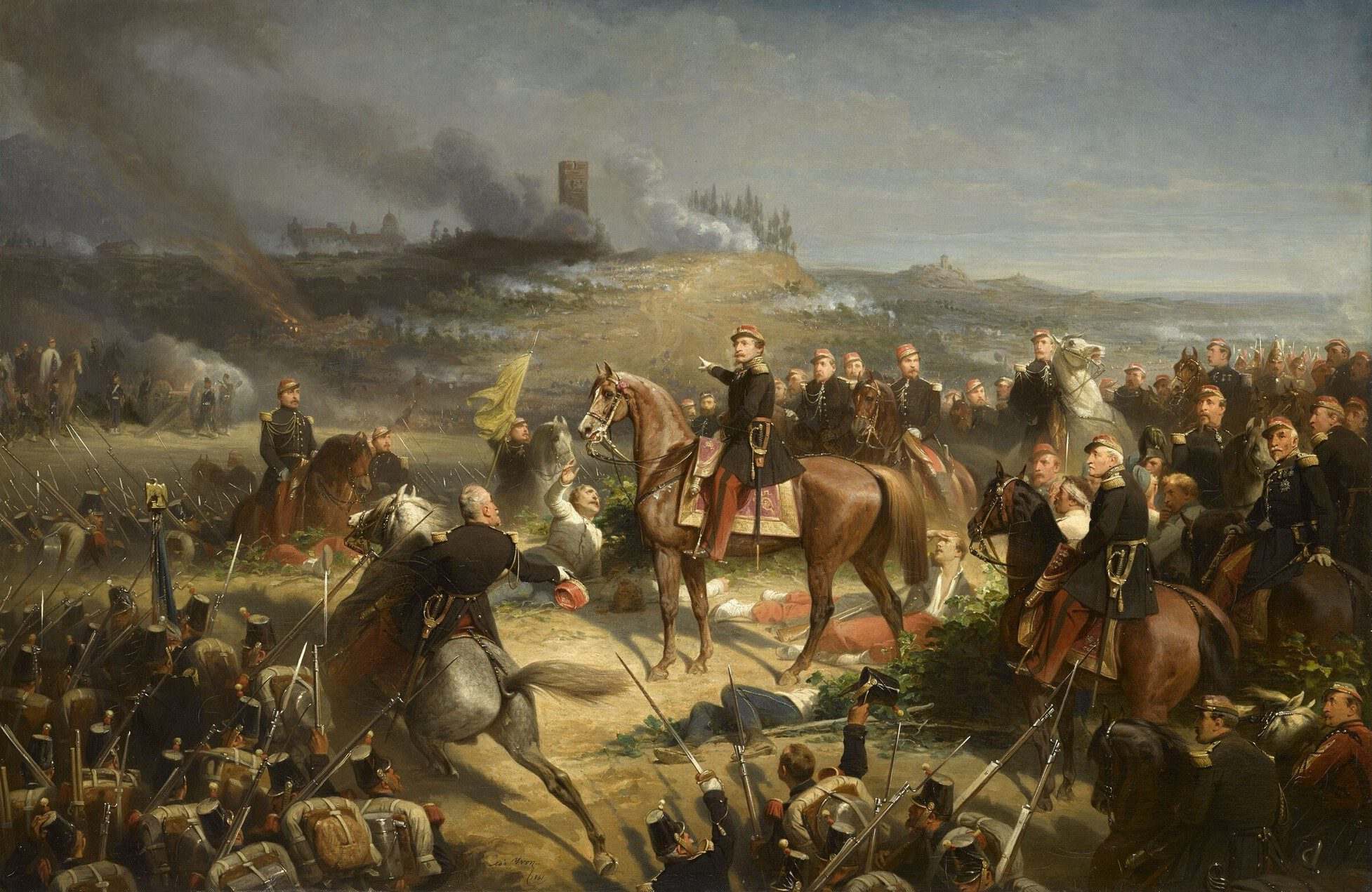
On the evening of 24 June 1859, Henri Dunant, a thirty-one-year-old businessman from Geneva, arrived near Solferino in northern Italy. He had not come to fight. He had come to meet Emperor Napoleon III of France to seek land and water rights for his business in Algeria. Earlier that day, French and Sardinian forces had fought the Austrian army here. The battle lasted only about twelve hours, yet it left nearly forty thousand men dead or wounded. Dunant had arrived carrying a business plan and a book in praise of the emperor. What he found instead was a battlefield where no one was caring for the wounded.
This opening is worth pausing over. Many great changes in history were not started by generals or kings, but by an ordinary person who arrived in the wrong place and refused to turn away. Dunant had no medical training, no military rank, and no official position. All he had was a pair of eyes that, having seen suffering, could not pretend not to have seen it. The story of the Red Cross begins with that refusal to look away.
CHAPTER ONEThe Church at Castiglione
After the battle, thousands of wounded soldiers were carried to the nearby town of Castiglione delle Stiviere. The town had almost no medical facilities, so its church became a makeshift hospital. In the Chiesa Maggiore, the town's main church, Dunant organised relief. He bought supplies with his own money and mobilised local people, above all women, to wash wounds, bring water, write letters home, and sit with the dying.
Here, language itself became a means of rescue. Local people felt hostility towards wounded Austrian soldiers and were unwilling to care for men from the enemy army. Dunant and the women of Castiglione kept repeating one phrase: tutti fratelli, all are brothers. This was not a slogan. It was a judgement made on the spot: once a soldier falls wounded, he is no longer an enemy, but a human being. French, Italian, and Austrian soldiers lay in the same church, tended by the same hands. At the time, that was extraordinarily unusual.
Dunant also did something that seemed small but proved crucial. He arranged for Austrian army doctors captured by the French to be released, so that they could return to care for their own wounded. Behind this act lay a simple idea: people who save lives should not be treated as prisoners of war, and medical care itself should stand outside war. The principle of neutrality later written into treaty law already had its shape here, though no one had yet given it a name.
It is easy to romanticise this story and imagine Dunant as a born saint. A more honest view is that he was a man forced to choose in the moment. He could have continued on his way to meet the emperor, or he could stay. And he stayed. Often, morality is not an abstract belief, but a question of whether, in a concrete moment, you are willing to get your hands dirty.
CHAPTER TWOA Book, and Two Proposals
After returning to Geneva, Dunant wrote down what he had seen in a book, A Memory of Solferino, published in 1862. He paid for an edition of 1,600 copies himself and sent them to political and military leaders across Europe. The first half of the book describes the battlefield. The second half is what truly changed history. At the end of the book, Dunant made two concrete proposals.
The first was that every country should establish a voluntary relief society, training volunteers and preparing supplies in peacetime, ready to care for the wounded of any side in wartime. This overturned the common sense of the day. Relief should not be improvised only after war breaks out; like an army, it should be prepared in advance. What is prepared in peacetime decides who lives and who dies in war.
The second proposal was that states should sign an international treaty recognising the protection of the wounded, army doctors, and relief volunteers. This was the bolder of the two, because it asked states voluntarily to limit their own power on the battlefield. A state would have to agree that even an enemy soldier who is wounded should receive care, and that relief workers must not be attacked. This was not charity, but law. Dunant understood that goodwill alone was not enough. Goodwill grows tired, is forgotten, and is crushed by the logic of war. Only when written into a treaty, as a rule that states share, does relief gain lasting protection.
The relationship between the two proposals deserves attention. The first is organisation, the second is law. Without organisation, law is only paper. Without law, an organisation on the battlefield can be treated as the enemy at any moment. By proposing both at once, Dunant showed that he was not merely a witness, but a designer of institutions. The problem he saw was not the horror of one battle, but the absence of any system for caring for the wounded in war.
CHAPTER THREEFive Men and a Conference
Dunant's book drew the attention of Gustave Moynier, a lawyer and president of the Geneva Society for Public Welfare. In February 1863, the Society formed a committee of five: Dunant, Moynier, General Guillaume-Henri Dufour of the Swiss army, and two doctors, Louis Appia and Théodore Maunoir. The committee met for the first time on 17 February, and later developed into the International Committee of the Red Cross.
The combination of these five men itself explains the nature of the enterprise. It was not a one-man performance, but a division of labour. Dunant supplied first-hand experience and the energy of advocacy. Moynier took charge of organisation and legal work. Dufour lent military prestige that won the attention of governments. The two doctors brought practical knowledge of battlefield medicine. To call the Red Cross Dunant's achievement alone would be unfair, and untrue. Real turning points often happen when a person with a story meets a group of people who know how to turn a story into an institution.
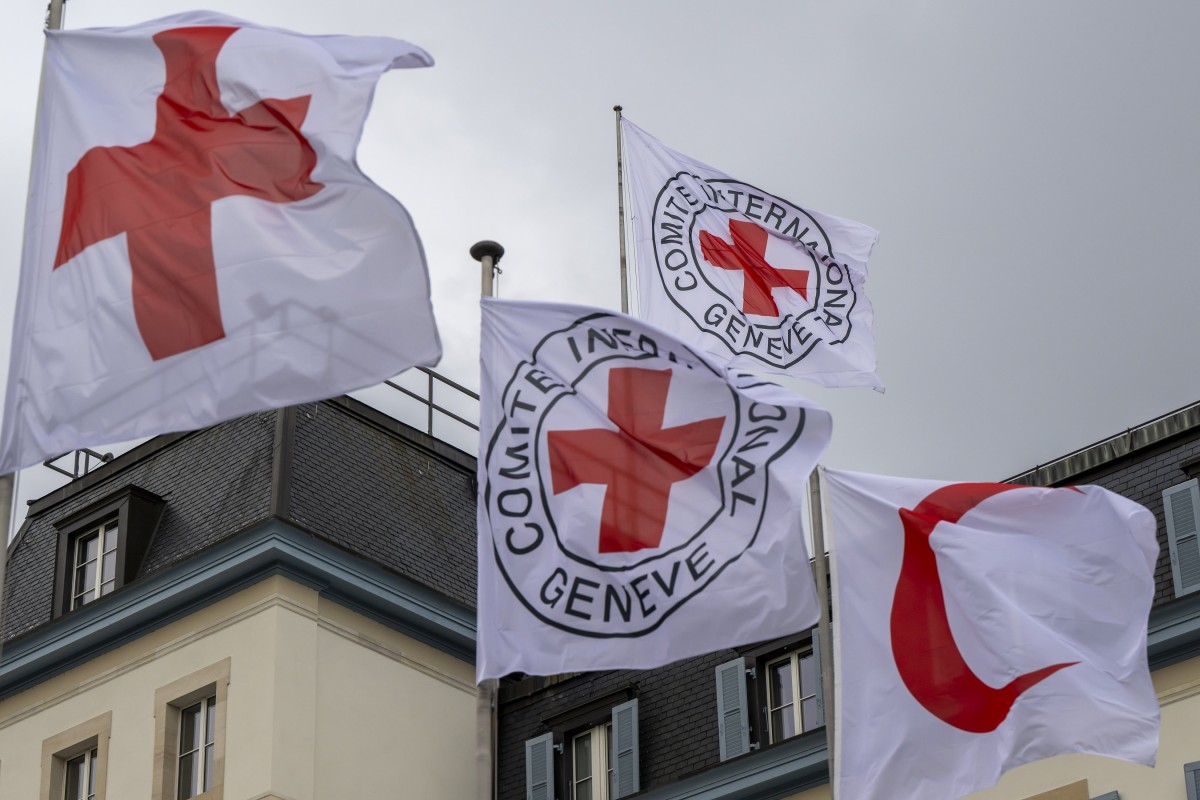
From 26 to 29 October of the same year, the committee convened an international conference in Geneva, attended by representatives of sixteen states. The conference adopted resolutions calling on every country to form relief societies, and adopted a common emblem: a red cross on a white field, the reverse of the Swiss flag, red on white. The emblem's purpose was not decoration, but recognition. In the confusion of battle, a soldier had to be able to see at a glance which people and which buildings were neutral relief, and must not be attacked. A symbol has power because a group of states has jointly promised to respect it.
The following year, the Swiss government invited governments to a diplomatic conference. On 22 August 1864, twelve states signed the first Geneva Convention, formally the Geneva Convention for the Amelioration of the Condition of the Wounded in Armies in the Field. The treaty had only ten articles, yet it established a principle that marked a new era: wounded soldiers on the battlefield should be cared for regardless of nationality, and army doctors, relief workers, and hospitals held neutral status and should be protected. War now had a limit. Even while killing each other, there were some things that must not be done.
CHAPTER FOURThe Forgotten Founder
At this point the story is often told as if it ends. But the second half of Dunant's life is the part most worth thinking about. His business failed. He gradually left public life in Geneva, and in his later years he was poor and largely forgotten. The Red Cross and the Geneva Conventions continued to grow into international institutions, while the man who first proposed them shared none of that honour.
Only in 1901, when the first Nobel Peace Prize was awarded to Dunant, jointly with the French pacifist Frédéric Passy, did he return to public view. Dunant died in 1910, at the age of eighty-two. His life reminds us that the fate of an advocate and the fate of an institution are not the same. Once an institution is built, it acquires a life of its own. It is taken up, revised, and enlarged by later generations. The advocate himself may be left behind after the institution succeeds.
This is not a sad ending, but an honest one. Doing the right thing does not guarantee a reward. In Castiglione, Dunant was not thinking of a Nobel Prize. When he wrote his book, he was not thinking that his name would enter history. He was thinking only of the wounded men before him, with no one to care for them. It was precisely that focus, without calculation of reward, that gave his proposal its force. When a person saves lives while calculating what he will gain, others can see it.
EPILOGUENeutrality as an Invention
Looking back over the five years from 1859 to 1864, humanity invented something that had not existed before: a neutral space for relief. Before that, there was no neutral ground on the battlefield. A wounded soldier's fate depended on which army's uniform he wore. After that, at least in principle, a fallen man had the right to be cared for, and the person caring for him had the right not to be attacked.
Neutrality is not indifference, nor is it standing aside. The neutrality of the Red Cross is neutrality with a position, and its position is that human life comes before nationality and allegiance. That remains difficult today. Every time war breaks out, someone asks why the enemy should be saved, why one cannot simply take a side. The answer from Solferino is simple: a wounded soldier is no longer an enemy. He is only an injured person.
There was also a practical reason why neutrality could be written into a treaty: it served both sides. Any army's soldiers might fall in the next battle, and any army needs someone to care for its wounded. Protecting medical workers is, in effect, protecting one's own men's chance of survival. Dunant's proposal was accepted by states not only because it was humane, but because it rested on a plain reciprocity: spare my doctors today, and I will spare yours tomorrow. That reciprocity is not calculation. It is the last trace of reason that human beings preserved for themselves in the extremity of war. The wording of the law has been revised over time. After the red cross came the red crescent and the red crystal, and the ten articles of 1864 grew into the four Conventions of 1949. But the core has not changed. War can take many things, but it must not take away the right to save lives.
What Dunant's story leaves us is not only a piece of history, but a question. When you see suffering with your own eyes, what will you do? Will you turn away and say it is not your business, or will you stay and do something within your power? Most people will never found an international organisation, and they do not need to. But everyone has the chance, in their own place, to refuse to divide suffering people into us and them. The Red Cross began in a village church, not because that church was especially large, but because someone there first said, all are brothers, and then acted as if it were true.