PrologueThe Road Walked for Four Hundred Years
In 1592, the Shidetang publishing house in Nanjing printed a novel with no author's name on it: 100 chapters, some 585,000 characters. A monk sets out for the West with three disciples and meets 81 calamities on the road. More than four centuries later, the road is still being walked — on stage, on television, in video games; every generation walks it again. Why? Because this was never only a journey to fetch scriptures. It is a mirror held up to demons — and to people.
What makes the book remarkable is not how spectacularly its gods and demons fight, but how accurately it writes human nature. Every member of the pilgrim band reads like a piece cut out of ourselves; every demon on the road resembles someone we have met inside an institution. This essay will not retell the plot. It follows three questions instead: why 81 calamities? What is the relationship between the four pilgrims? And when the journey ends, what exactly have they fetched?
Chapter 1From One Man to One Book
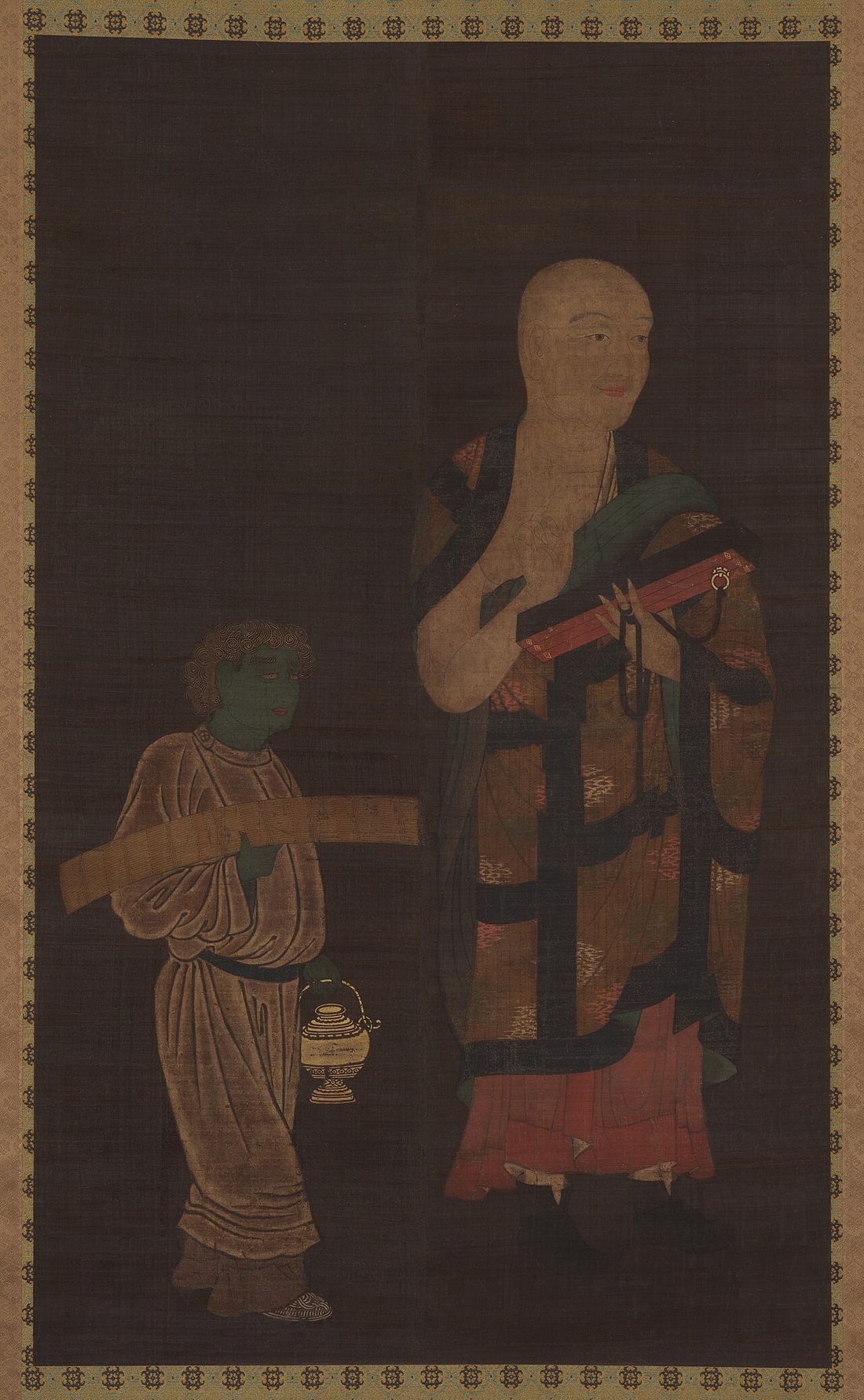
Peel away the mythology first. Xuanzang was a real person, born near Luoyang in 602 and dead in Chang'an in 664. In 629, without the court's permission to leave the country, he set out from Chang'an anyway, crossed deserts and snow mountains to India in search of the dharma; in 645 he returned to Chang'an carrying 657 Buddhist texts. Over the next 19 years he translated 75 of them — 1,335 fascicles — into Chinese, and in 646 dictated the Record of the Western Regions. The journey lasted 17 years. No magic, no disciples, only a pair of feet.
But the novel is not history. Less than two centuries after Xuanzang's return, storytellers were already embroidering his journey: in the Song-dynasty prosimetric tale The Story of How Tripitaka of the Great Tang Acquired the Scriptures, a Monkey Pilgrim who calls himself king of the monkeys of Flower-Fruit Mountain already walks beside him, along with a monster called the God of the Deep Sands. By the Yuan dynasty, Yang Jingxian's zaju play Journey to the West had assembled all four pilgrims. The story grew in storytellers' mouths for centuries before it grew, in the mid-Ming, into a 100-chapter novel.
As for who wrote it into a novel, there is still no settled answer. It is generally attributed to Wu Cheng'en of Huai'an, but no Ming edition carries an author's name; the Shidetang edition credits only its editor, the "Master of Huayang Grotto". A Ming gazetteer of Huai'an lists a Xiyou ji among Wu's writings, and Hu Shi and Lu Xun argued the attribution in the 1920s; scholars have questioned it ever since. A book with no author, telling a story whose author no one can name — the coincidence itself is very much in the spirit of Journey to the West: the most important things often carry no signature.
Chapter 2Why Eighty-One Calamities
Nine is the largest of the yang numbers, and nine times nine is the number the ancients believed to mean completion. Eighty-one was not a number arrived at by counting; it is the symbol of fullness — one more would be too many, one fewer would leave the circle unclosed. The pilgrimage is not, at bottom, about covering distance; it is about filling a measure of cultivation to the brim.
The novel says the design out loud in chapter 99. The pilgrims have received the scriptures and are halfway home when Guanyin checks the register of calamities and finds that Tripitaka has suffered only 80 — one short of the number needed for the "return of nine times nine to truth". So on the way back, at the River of Heaven, the old tortoise that once ferried them across flips them — people, scriptures and all — into the water, because Tripitaka forgot to ask the Buddha how long the tortoise still had to live. The 81st calamity is a make-up examination, scheduled at the last minute.
More telling still is that the calamities are not accidents; they are assignments. Golden Horn and Silver Horn are the boy attendants of Lord Laozi; the Green-Haired Lion is the mount of the bodhisattva Manjusri; the Great Peng is a relative of the Buddha himself. More than half the demons on the road belong, on paper, to Heaven. In other words, the pilgrims' true enemies are mostly insiders sent down in disguise. What tests you is not the stranger outside, but your own people playing the stranger.
Even the register itself is not strict bookkeeping: some calamities are split into two or three entries, and in some of them it is not Tripitaka who suffers at all. The number is a symbol, not an audit. What the ancients wanted was not for 81 to add up exactly, but for the reader to understand, by the end, that cultivation has no shortcut — every gate must be passed through in person.
Chapter 3The Four Pilgrims Are One Person
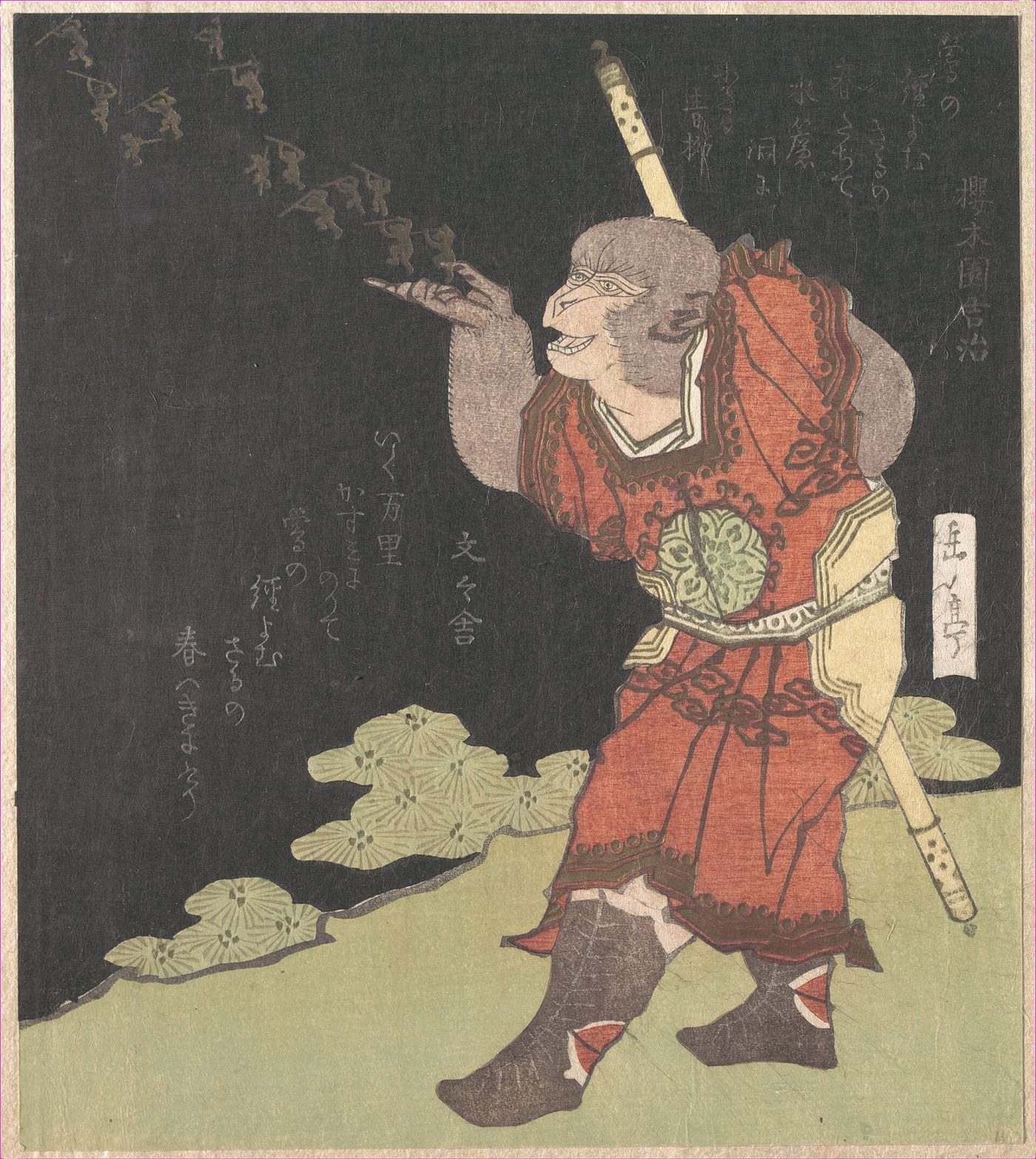
Take the four pilgrims apart and you have a team; put them together and you have a single person. Sun Wukong is the mind: 72 transformations, a somersault cloud that covers 108,000 li in a single leap, the greatest powers — and the least able to sit still. The mind is like that: one moment on Flower-Fruit Mountain, the next storming the Jade Emperor's palace. The golden headband is not an instrument of torture; it is a procedure imposed on the mind — however great your powers, once you join the organization, you wear the band.
Zhu Bajie is the body: appetite, sleep, lust, fear of death — every human desire lives in him. He is the most ordinary of the four, and the most laughed at. But without him the band would have no trace of ordinary human warmth. A cultivation that ignores the body ends by cultivating an empty shell.
Sha Wujing is steadiness: the fewest words, the heaviest load. He carries the luggage and leads the white horse, and never complains. Endurance without complaint is not the absence of character; it is character refined into patience. Every team needs such a person — no grabbing for credit, no grumbling; whatever is handed to him gets done.
Tripitaka is faith itself: mortal eyes that cannot tell a demon from a good person. When the White Bone Demon changes shape three times, he sees only three human lives; Wukong strikes the demon down, and he chants the headband spell and sends Wukong away. He has no powers at all, yet he is the one person who cannot be replaced — because the direction is in his hands. The mind causes trouble, the body steals rest, steadiness carries the load in silence, and faith sometimes misreads the situation. Put the four together, and you have one complete person.
Chapter 4Cultivation, or Promotion?
At Vulture Peak, things do not become pure. The first scriptures the pilgrims receive are blank — wordless sutras, a stack of white paper. The venerables Ananda and Kasyapa ask for a consideration, and Tripitaka offers the purple-gold alms bowl given by the Tang emperor; only then do they receive scriptures with words. Even the Buddhist gate keeps its own customs of "personal consideration"? The novel is not polite about this: even fetching scriptures, at the very last gate, must pass through the gate of "connections".
The Buddha's store holds 35 sections, 15,144 fascicles; the pilgrims carry home 5,048 of them. What they fetch was never the whole. Scriptures are like that; people are like that.
The ending is the Five Sages Attaining Truth: Tripitaka is made the Buddha of Sandalwood Merit, Wukong the Victorious Fighting Buddha, Bajie the Envoy of the Altar, Sha Wujing the Golden-Bodied Arhat, and the white dragon-horse a Heavenly Dragon of the Eightfold Host. Everyone gets a title and a post. The pilgrimage ends as a collective promotion review. Wukong's journey from the self-styled Great Sage Equal of Heaven to the conferred Victorious Fighting Buddha differs not in power, but in who grants the name.
Now look at what happens to the demons: those with patrons are taken home — Golden Horn and Silver Horn return to Lord Laozi, the Green Lion to Manjusri's seat; only the unconnected are killed. The White Bone Demon, with no one behind her, dies at the third blow; the Great Peng, a relative of the Buddha, is taken into the fold. This is no coincidence; it is the novel's sketch of the institution: the rules are the same for everyone, but the backing is not. The pilgrimage is both cultivation and promotion. Cultivation is the inward account; promotion is the outward result.
Chapter 5Why Everyone Loves Sun Wukong
The Havoc in Heaven is the most exhilarating passage in the book: a stone monkey storms the Celestial Palace, the Jade Emperor is helpless, a hundred thousand heavenly soldiers cannot stop him. What readers love is not violence; it is that moment — the first time the institution meets a person it cannot handle. Everyone carries a Sun Wukong inside; most of us never dare let him out.
But the novel is honest about the price: Wukong ends up pinned under the Five Phases Mountain for 500 years. The thrill of rebellion is real, and so is the cost. Freedom is not the absence of a price; it is seeing the price clearly and deciding anyway.
The three blows against the White Bone Demon are a classic scene of crowd psychology: in chapter 27, the demon changes shape three times and Wukong sees through her every time, but Tripitaka sees only three human lives, chants the spell, and dismisses him. Those who see the outcome condemn the one who acted; those who cannot see the truth hold the floor. Wukong leaves in grievance, and Tripitaka is in danger almost at once — the moment the band loses the person who can see the truth, it pays for it.
The True and False Monkey King goes one step further: in chapters 57 and 58, the Six-Eared Macaque impersonates Wukong so well that neither Guanyin nor the Jade Emperor can tell them apart; only the Buddha himself can identify the real one. For a person to prove "this is who I am" requires the highest authority to vouch for him. Identity was never yours to declare — a sentence that holds just as true today.
Wukong is loved because he is the part of each of us that wants to rebel and does not dare; Tripitaka is revered because he is the part of each of us that walks into the mountains knowing tigers live there. A book that can house two opposite selves in the reader's heart at once — that is why it has lived for more than 400 years.
EpilogueThe Page the Water Damaged
After the 81st calamity, the scriptures are soaked; laid out on a rock to dry, their last pages stick to the stone and tear when lifted. The true scriptures the pilgrims bring home are incomplete. It is the most honest ending in the book: no pilgrimage is perfect, no scripture is complete.
Xuanzang himself brought back 657 texts and translated 75 — even he rendered only a part of what he carried home. Fetching scriptures was never haulage; it was selection, transformation, making what is outside into one's own.
More than 400 years later we still read this book, not because we want to learn to subdue demons, but because each of us has a pilgrimage of our own: the restless mind-monkey to govern, Bajie's appetites to soothe, Sha's burden to shoulder, Tripitaka's direction not to lose. Eighty-one is not an ancient number; it is the allowance of a lifetime. The torn page reminds us: cultivation is not finished when the calamities are done; when they are done, the road is still there, and the walking goes on.