PrologueWinning Without Fighting
There is a book written more than 2,500 years ago — 13 chapters, about 6,000 characters — still opened in military classrooms, boardrooms, and negotiating rooms. It speaks of no heroism, no loyalty, no single battle, only of what must be thought through before winning or losing. The book is Sunzi's Art of War.
Its first sentence sets the tone: "War is a matter of vital importance to the state, the province of life and death, the road to survival or ruin. It is mandatory that it be thoroughly studied."[1] War is not a contest of temper; it cannot be entered into without careful thought. Whoever treats war as a grave matter learns first not how to fight, but how not to fight.
The book's most famous line negates war itself: "To subdue the enemy without fighting is the acme of skill."[1] Winning a hundred battles is not the best; making the other side yield without a battle is the best. For two and a half millennia, people quoting it have remembered the cleverness and forgotten the precondition: winning without fighting is not a trick of words, but the result of a whole system of calculation, institutions, and patience. This book is about how that result is built.
Chapter 1Count the Cost Before You Fight
The Art of War opens with "Laying Plans," and the chapter is not about sending troops out. It is about accounting. Five factors — the Way, Heaven, Earth, Command, and Discipline — and seven comparisons, from which ruler holds the Way to whose rewards and punishments are clearer. Before fighting, put yourself and your enemy on the same table and measure. "The general who wins a battle makes many calculations in his temple before the battle is fought. The general who loses a battle makes but few calculations beforehand."[1] Most of victory is decided before the fighting begins.
Such coldness was startling in an age that worshipped martial courage, when glory on the battlefield was the most direct road to advancement. Sunzi pushes glory aside and talks about cost first. "Waging War" does the arithmetic: raising an army of 100,000 and marching it a thousand li costs a thousand ounces of silver daily, and a long war exhausts the people and empties the treasury. "Victory is the main object in war. If this is long delayed, weapons are blunted and morale depressed."[1] The longer a war drags on, the higher the price of winning.
Human nature shows its first flaw here: people overestimate their own will and underestimate time and logistics. Wars are decided in a single night; the bill takes years to pay. The first thing Sunzi asks is not to sharpen a sword, but to look at the ledger when blood runs hot. It is the same for a state and for a person: the price of impulse is never paid in the moment.
Chapter 2The Ladder of Complete Victory
If "Laying Plans" is about calculating, "Attack by Stratagem" is about choosing once the calculation is done. Sunzi arranges victory into a ladder: "The highest form of generalship is to balk the enemy's plans; the next best is to prevent the junction of the enemy's forces; the next in order is to attack the enemy's army in the field; and the worst policy of all is to besiege walled cities."[1] Best is to defeat the enemy's strategy; next, to isolate him; next, to meet him in the field; worst of all, to besiege a city.
Why is besieging a city the worst? Its cost is certain and its return is not. "It will take three months to prepare the siege engines; building mounds against the walls will take another three months." The general, unable to control his impatience, sends his men swarming up the walls like ants; a third are killed, and the city still stands. "Such are the disastrous effects of a siege." A campaign ends with the city untaken, a third of the men dead, the state's strength drained. That is not victory. It is disaster.
Here appears the book's central judgment: "In the practical art of war, the best thing of all is to take the enemy's country whole and intact; to shatter and destroy it is not so good." To make the enemy's state submit intact is best; to receive it in ruins is the lesser policy. "Hence to fight and conquer in all your battles is not supreme excellence; supreme excellence consists in breaking the enemy's resistance without fighting."[1] Winning a hundred battles sounds glorious, yet Sunzi says it is not the best, because every battle won consumes the winner. True victory is when the other side lays down its arms unharmed, and you march home unharmed too.
Hidden here is a deep institutional insight: the ladder of victory is the ladder of destruction turned upside down. The higher you climb, the more it depends on mind and vision; the lower you go, the more on blood and time. A society that can only resolve conflict by the lowest means is not brave; it is poor in means. Attacking by stratagem ranks highest because it demands the most: intelligence, patience, an understanding of hearts, and the steadiness not to be led by the hunger to win.
Chapter 3First Make Yourself Unbeatable
Half of Sunzi's idea of victory is negative — not in the dismissive sense, but in the sense of first seeking not to lose. "The good fighters of old first put themselves beyond the possibility of defeat, and then waited for an opportunity of defeating the enemy."[1] To secure ourselves against defeat lies in our own hands; the opportunity of defeating the enemy is provided by the enemy himself. First stand where you cannot be beaten, then wait for the moment he can. Initiative lies not in showing strength, but in waiting.
Such waiting is not doing nothing. "Energy" teaches the direct and the indirect: hold the line with the direct, break the deadlock with the indirect, until momentum builds like "a round stone rolled down a mountain a thousand feet high" and becomes irresistible once released. "Weak Points and Strong" teaches making the enemy come to you, rather than being made to go to the enemy: make the other side dance to your rhythm, and always strike where it is weakest. These sound like tactics, but they say one thing: never prove yourself where the enemy is strongest.
Crowd psychology shows its second flaw here: people see only the instant of victory, never the long preparation before it. The histories remember the day the Wu army entered the Chu capital of Ying, and rarely record the years of drilling and diplomacy that came before. In 506 BCE, the Wu army took Ying, with Sun Wu and Wu Zixu in command, in a victory of the few over the many[8] — but the real work was done before the battlefield: Wu first made itself unbeatable, then waited for the moment Chu could be beaten.
Modern readers rush to translate this into business technique: how to grab market share, how to defeat a rival. But Sunzi says the opposite: do not rush to defeat anyone. Ask first whether you can stand, whether your supplies hold, whether you have a way back. Every attack by someone who cannot stand is a gamble, and what gambling wins is sooner or later lost.
Chapter 4Intelligence Is Another Kind of Force
The final chapter, "The Use of Spies," gathers the whole book's logic. Sunzi says that what enables a wise sovereign and a good general to strike and conquer, achieving things beyond ordinary men, is foreknowledge. And foreknowledge "cannot be elicited from spirits; it cannot be obtained inductively from experience, nor by any deductive calculation. Knowledge of the enemy's dispositions can only be obtained from other men."[1] Five kinds of spies — local, inward, converted, doomed, surviving — each with its own use.
Placing spies at the very end is deliberate. The temple calculation needs intelligence; the stratagem needs intelligence; avoiding the strong and striking the weak needs it even more. Without intelligence, all calculation spins in the air; with it, even an unequal battle can be turned around. Intelligence is not an accessory to war. It is another kind of force — and often the cheapest one.
This is also the most modern chapter in the book. "Variation of Tactics" weighs advantage against disadvantage and plans for exceptions; "The Army on the March" reads intention from terrain and the enemy's smallest movements; "Terrain" and "The Nine Situations" show how different battlefields shape different hearts. Sunzi's way of facing the world is always close reading: reading Heaven, reading Earth, reading people, reading hearts. Every detail on the battlefield is a message; the person who cannot read it is only swinging fists in the dark.
"If you know the enemy and know yourself, you need not fear the result of a hundred battles."[1] The line is quoted so often that people forget what follows: "If you know yourself but not the enemy, for every victory gained you will also suffer a defeat. If you know neither the enemy nor yourself, you will succumb in every battle." To know yourself and not the enemy is to win half the time; to know neither is to be in danger always. Sunzi never promises victory. He promises only one thing: bring ignorance down, and danger comes down with it.
Chapter 5A Journey of Two Thousand Years
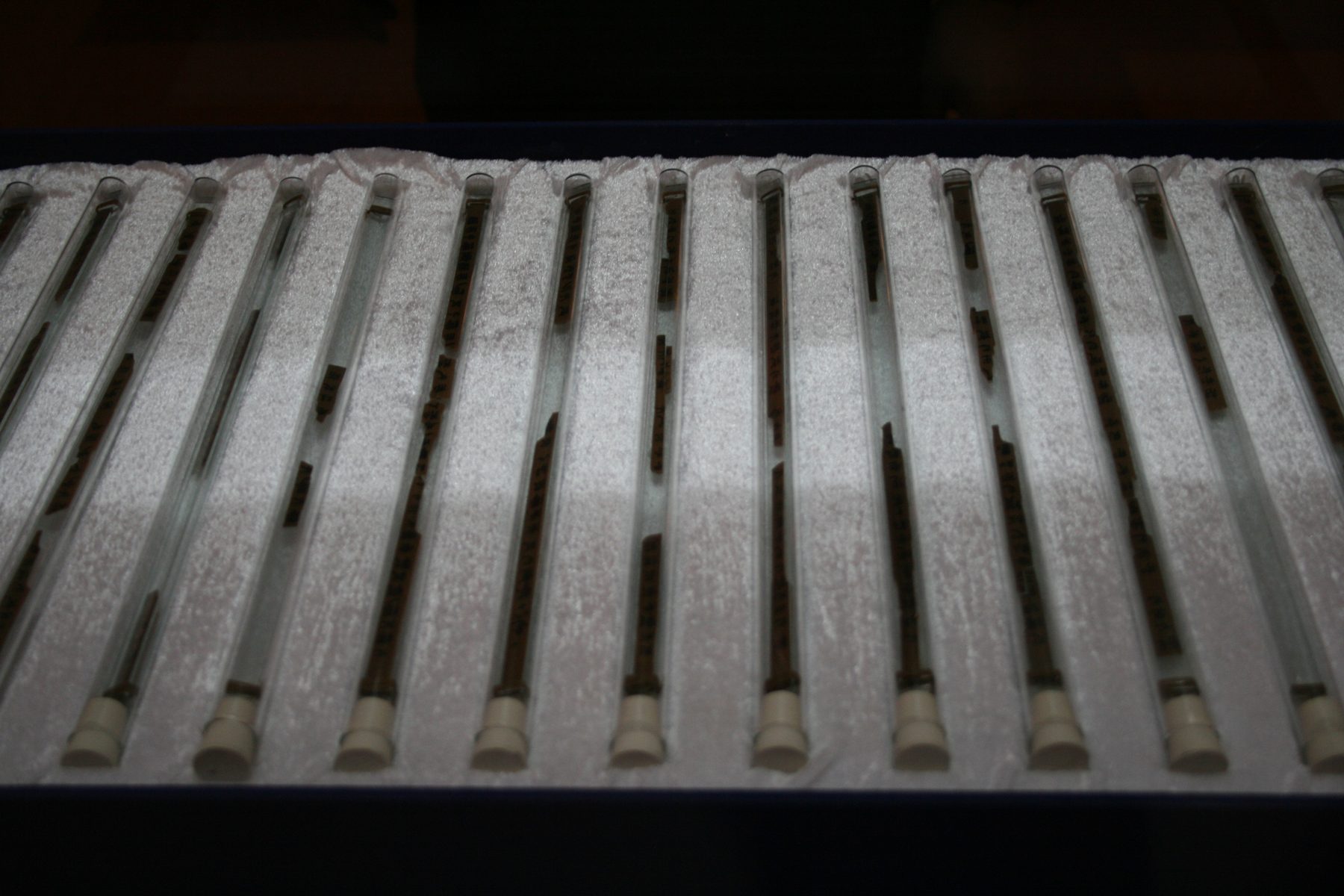
How does a book of about 6,000 characters live for 2,500 years? Part of the answer is an excavation in 1972. That year, the Han tombs at Yinqueshan in Linyi, Shandong, yielded 4,942 bamboo slips, including fragments of Sunzi's Art of War and the long-lost Art of War of Sun Bin, missing for more than 1,400 years.[6] The find settled a long dispute, proving Sun Wu and Sun Bin were two different men with two different books. The writing on the slips is mottled and broken, yet more persuasive than any handed-down copy: this book was no legend invented by later generations. It truly existed, and was copied with care and carried into the grave.
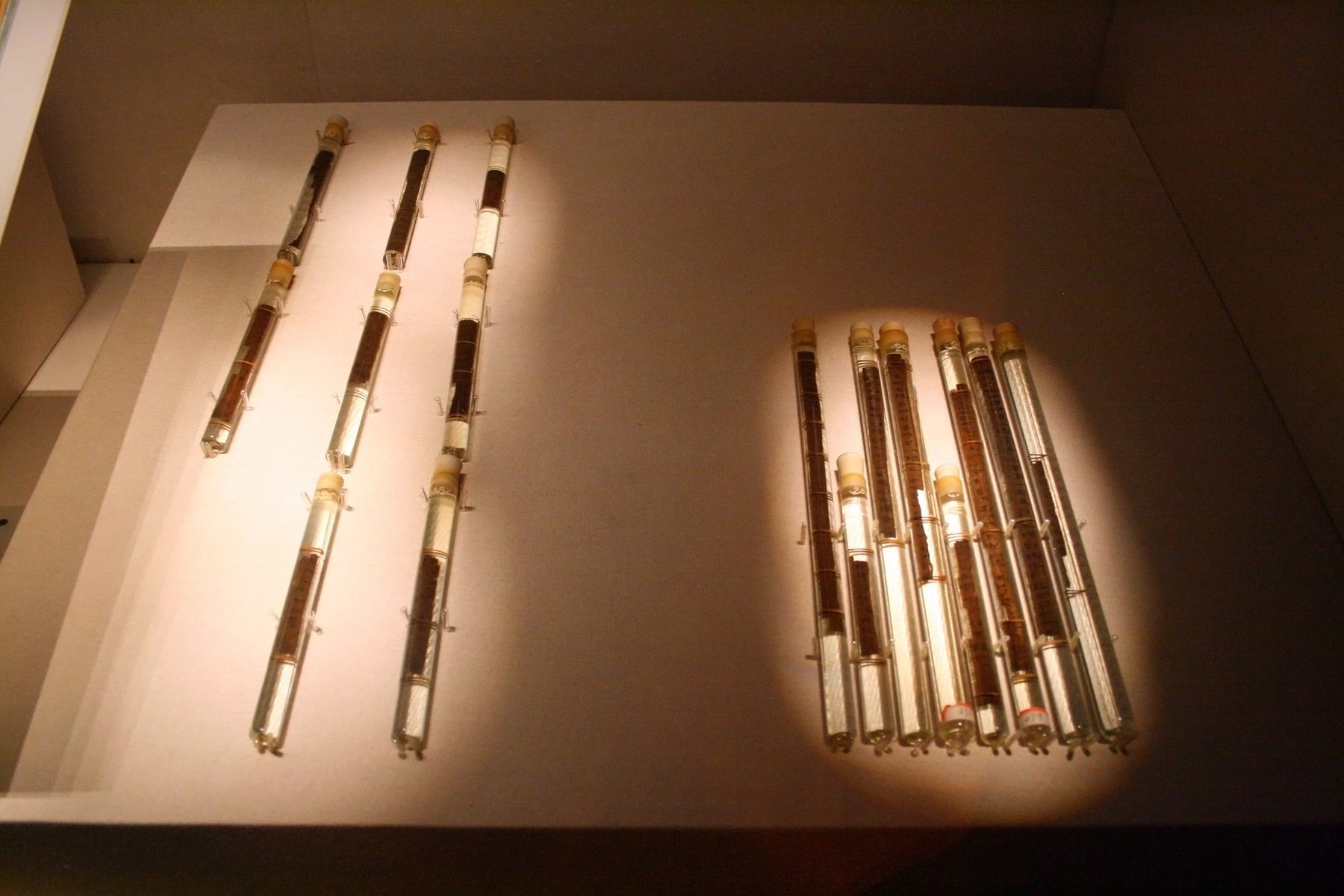
Another part of the answer lies in institutions. In 1080, Emperor Shenzong of Song placed the Art of War first among the Seven Military Classics, required reading for the military examinations, and from then on it was the canon of Chinese military education.[9] Once a book enters examinations and the bureaucracy, it outlives dynasties: everyone who wanted to be a general had to read it first.
Then it left China. In 1782, the French Jesuit Jean Joseph Marie Amiot's French translation appeared in Paris; in 1905, British officer E. F. Calthrop published the first English translation; in 1910, Lionel Giles of the British Museum published the most influential English version, calling it "the oldest military treatise in the world."[4] In the 20th century, leaders as different as Mao Zedong, Vo Nguyen Giap, and Douglas MacArthur drew inspiration from it.[9]
But borrowers often read the book backwards: "warfare is the way of deception" becomes a license for cunning, and "subdue the enemy without fighting" an excuse for weakness. Sunzi wrote about restraint, and his readers found craftiness; Sunzi wrote about counting the cost and fighting less, and his readers remembered only how to win battles. A book's fate is often not in its author's hands, but in its readers': every age takes from these 13 chapters what it wants, and leaves what it does not need.
EpilogueThe Best Victory Is the One You Never Need
Return to the opening line. "To subdue the enemy without fighting is the acme of skill." Read again after all 13 chapters, it is not a maxim but a conclusion: it requires the calm of the temple calculation, the breadth of stratagem, the foundation of being unbeatable, and the foreknowledge of spies. Take one away, and it is only a pretty empty phrase.
There is no real battlefield in ordinary life, but conflict is everywhere: at work, across a negotiating table, at home, in the market. Sunzi's logic holds in all of them: count the cost before you speak; stand firm before thinking about how to win; where understanding can settle it, do not use confrontation. Many battles are not unavoidable; it is only that no one is willing to stop and do the arithmetic first.
This book was written more than 2,500 years ago, yet it speaks to today, because the problem it faces has never changed: how does a person stay clear-headed amid the crowd's impulses, remember the cost when the hunger to win flares up, and choose not to win when winning is possible. The best victory is the one you never need — and the person who can see which battle need not be fought is the true master of war.