PrologueThe Sign in the Yard
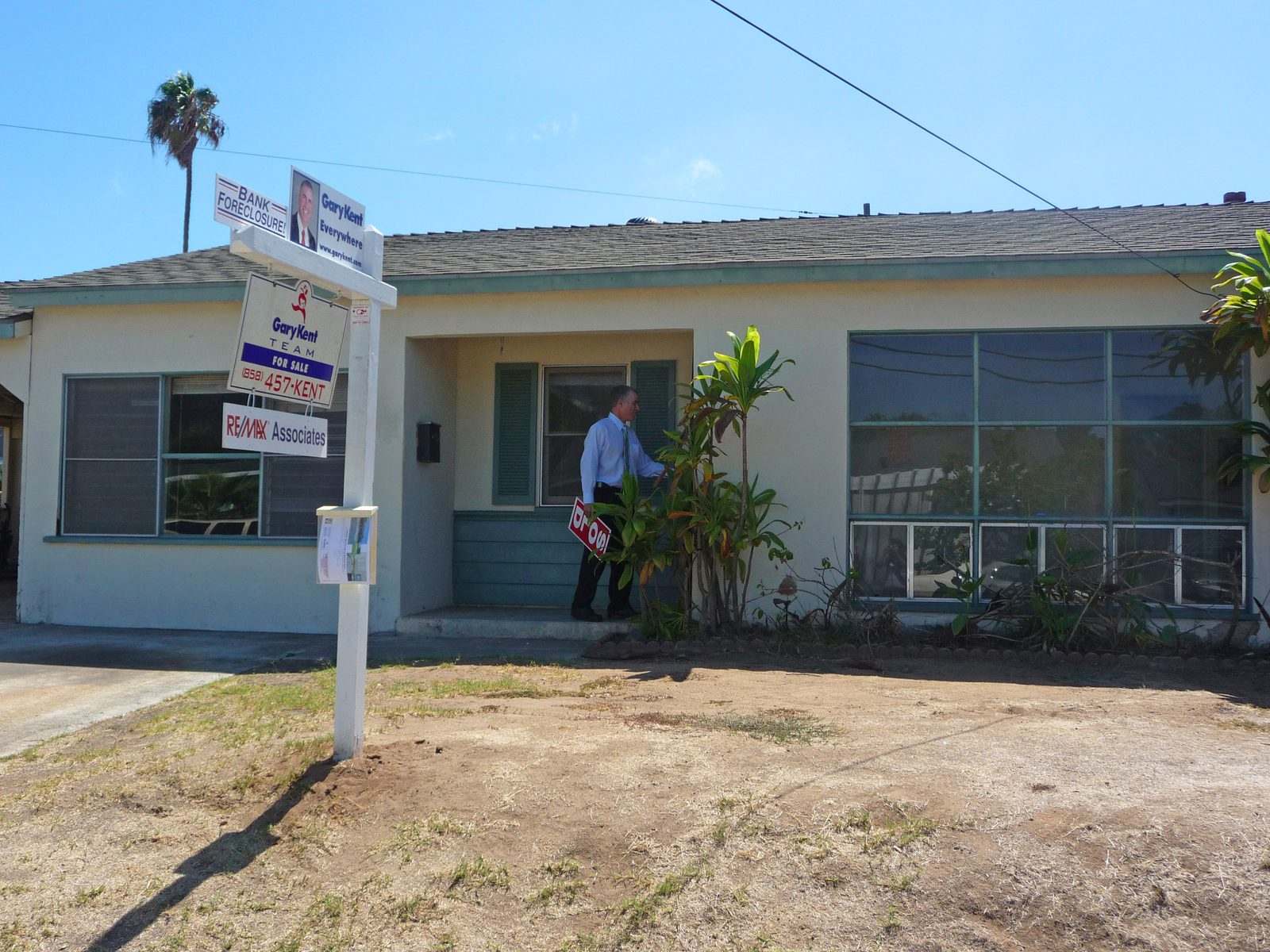
One day in 2009, a sign went up in front of a plain house in San Diego, California. "BANK FORECLOSURE," it read, with the name of a real estate agent and a phone number underneath. Nobody lived inside any more. The lawn had gone yellow, the curtains were drawn, and the mailbox was stuffed with letters no one would collect. A few years earlier, this house had been a family's everything — the mortgage, the renovations, the children's rooms, the weekend barbecues. Now it was a line item on a bank's balance sheet, waiting for the next buyer.
This book tells the story of how that sign got there. It did not fall from the sky, and no single villain put it up overnight. It was the last link in a very long chain: cheap money, loose lending, clever packaging, trusting ratings, and one insurance company that sold protection to the entire world. Everyone on the chain thought they were doing one small, reasonable thing — until all the small things added up and dragged the world down with them.
The storm began in American houses. But this is not a book about houses. It is a book about trust — how trust gets lent out, and how it can be called back overnight.
Chapter 1Everyone Deserves a House
In 2001 the dot-com bubble burst, and after 11 September the Federal Reserve cut its benchmark rate from 6.5% all the way to 1% in June 2003, holding it there for a full year. Money had never been so cheap, and cheap money had to go somewhere. Houses looked like the safest place of all: prices had risen for decades, and buying one felt like saving money while living inside the savings account.[1]
America set off on a national home-buying march. Queues formed outside banks, builders threw up whole new neighbourhoods in the desert, and the adverts said prices could only go up. The national home price index rose for 10 straight years from 1996, often at double-digit rates, peaking in the second quarter of 2006. Buying a house stopped being a life decision and became common sense.[2]
Common sense is the most dangerous thing there is. When everybody believes the same thing, the belief no longer needs evidence. New construction surged, and in some markets prices climbed 10 to 20% in a single year. Nobody asked the obvious question: if prices stop rising, what holds all of this up?
The real fuel of the bubble was not greed but goodwill. America had a decades-old bipartisan consensus: more people should own their own homes. Both parties supported it, the banks went along, and the government stood behind it. Owning a house was the ticket into middle-class life, the most concrete shape of the American dream. When one goal is at once a policy, a business and a dream, nobody has any reason to step on the brakes.
By October 2008 the national home price index had already fallen 21% from its 2006 peak; the 10-city index was down 25%. The dream was unwinding faster than anyone had imagined possible.[2]
Chapter 2Lending to People Who Cannot Repay
To let more people buy houses, lenders had to lend to people who could never have borrowed. Enter the "subprime" mortgage: loans to borrowers with low credit scores, unstable incomes, sometimes no proof of income. In 2006 alone, lenders originated $600 billion of subprime loans — 23.5% of all new mortgages. In a few short years, a market that had been marginal grew into a quarter of the entire mortgage business.[1][3]
The loans themselves were a gamble by design. The most common was the "2/28" adjustable-rate mortgage: a temptingly low rate for 2 years, then a sharp reset that could double the monthly payment. The contract assumed one thing: that in 2 years, house prices would have risen enough for the borrower to refinance into a cheaper loan. In other words, the loan was never meant to be repaid — only refinanced.
The lenders did not care whether borrowers could repay, because the loan was sold within days of being made. The lender earned a fee, not interest — so the looser the checks, the faster the loans, the bigger the fees. The Financial Crisis Inquiry Commission later found that a firm hired to inspect loan files had rejected 28% of the mortgages it reviewed between January 2006 and June 2007 — and most of them were funded anyway.[1]
On 2 April 2007, New Century Financial, a subprime lender, filed for bankruptcy. Its collapse was a gunshot, a warning that someone had already left the game. But most people still thought it was one company's problem.[1]
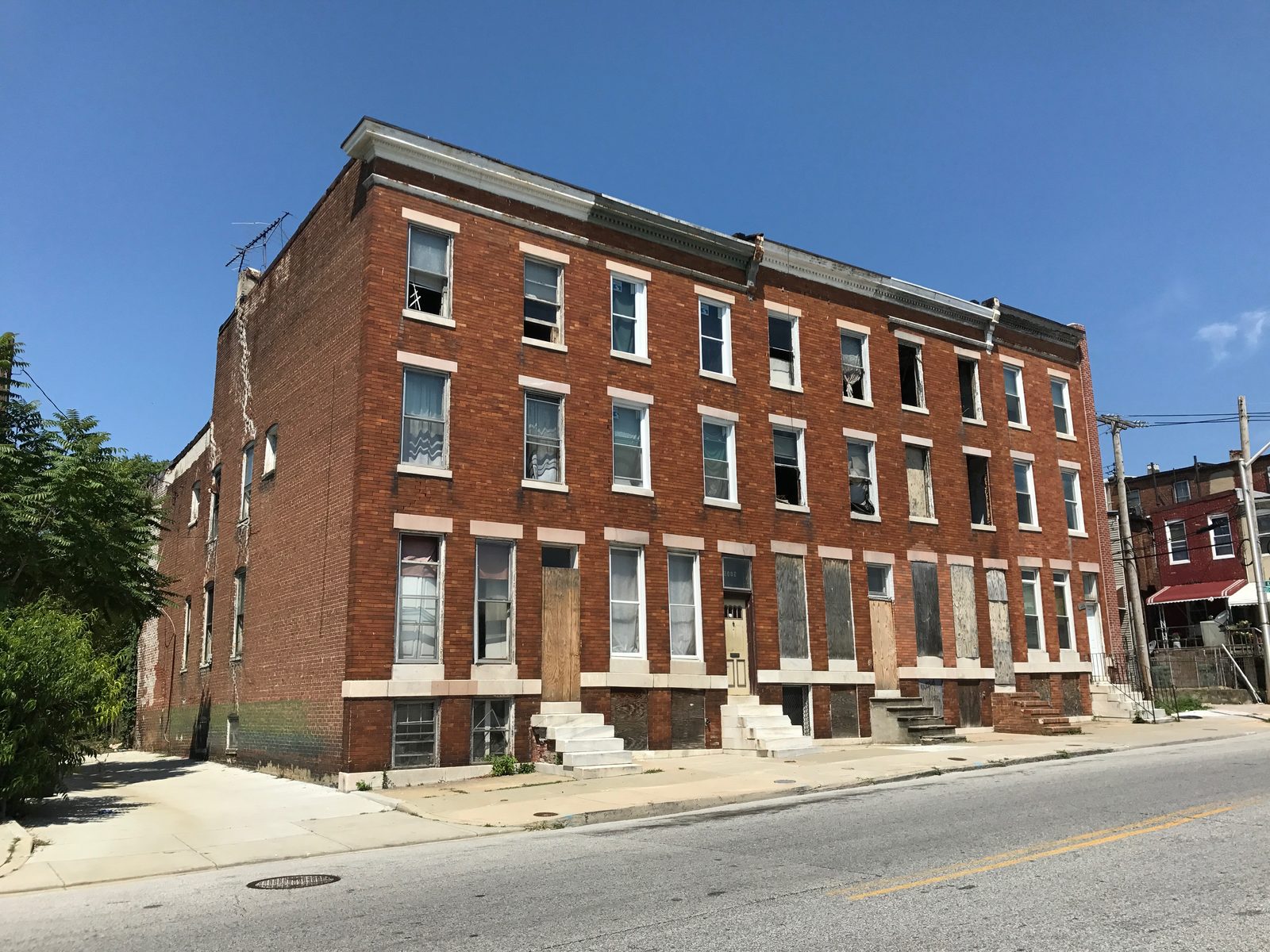
When the defaults came, they came fast. Once prices fell, the refinancing escape route closed. Once rates reset, payments doubled. In 2009, 2.8 million American properties received a foreclosure filing — 2.21% of all housing units, one home in every 45. That was 21% more than in 2008 and 120% more than in 2007.[9]
Chapter 3Slicing Risk
How does a loan that cannot be repaid become a "safe asset" in pension funds around the world? The answer is securitisation. Banks bundled thousands of mortgages into a mortgage-backed security, then sliced out the lower-rated pieces, repackaged them, and created a "collateralised debt obligation", or CDO. Slice and repackage, again and again.[3]
The trick depended on mathematics. The models assumed that house prices across America would never fall at the same time. If defaults were scattered and unrelated, mixing a thousand bad loans would dilute the risk. The Federal Reserve Bank of Philadelphia later did the sums: between 1999 and 2007, 727 publicly traded structured-finance CDOs were issued, worth $641 billion in total. Just $64 billion of BBB-rated subprime bonds was transformed into $140 billion of CDO collateral — the same risk, copied more than twice over.[4]
The models were wrong about one thing: falling house prices were not scattered accidents; they were a single tide. When prices in Florida, California and Nevada turned down together, every model failed at once. The eventual writedowns on those CDOs were estimated at $420 billion — 65% of everything that had been issued. Nearly two-thirds of the money put in evaporated.[4]
Strangest of all, securitisation was supposed to spread risk around. Instead it hid risk deeper. The loan passed from lender to bank, from bank to investor, from investor to the next investor, until nobody knew which houses and which borrowers stood behind the piece of paper they held. Risk had not disappeared; it had become invisible.
The crisis was avoidable.
Those words were not written by a columnist. They are the first conclusion of the Financial Crisis Inquiry Commission's final report, published in 2011. Not an act of God. Not an accident. Something people did.[1]
Chapter 4The Magic of Three Letters
A CDO is a complicated piece of paper — so complicated that its buyers often could not understand it. So everyone asked the same question: what is it rated? Three rating agencies — Moody's, Standard & Poor's and Fitch — held the power of life and death. Stamp a bond "AAA" and pension funds, insurers and local governments could legally buy it, because their rules allowed them to hold only the safest assets.[12]
Between 2000 and 2007, Moody's alone awarded its triple-A rating to nearly 45,000 mortgage-related securities. The CDO trick was even stranger: feed in BBB-rated subprime bonds, and 70 to 80% of the new bonds that came out were rated triple-A. The agencies' models used the same assumption as the issuers': house prices would never fall everywhere at once.[12]
Hidden in plain sight was a conflict of interest everyone pretended not to see: the issuer paid for the rating. Issuers could shop around, taking their business to whichever agency gave the highest grade. In a business like that, saying "no" is the most expensive word there is.[1]
On 11 October 2007, Moody's moved all at once, downgrading $57 billion of securities from the 2006 subprime vintage — 2,506 tranches in a single day. It was the first public alarm bell, but it was too late: by April 2010, the Inquiry Commission estimated, 73% of the mortgage-backed securities Moody's had rated triple-A in 2006 had been cut to junk.[5][12]
Those three letters, AAA, were supposed to mean "perfectly safe". In this crisis they became a kind of magic — turning doubt into trust, and rubbish into gold. While the magic worked, everybody made money; when it stopped, everybody discovered at once that the gold had never been gold.
Chapter 5The Whole World Bought Insurance
If the story ended here, it would be an American housing disaster. It did not end here: one more link tied mortgages in American suburbs to financial institutions everywhere — the credit default swap, or CDS. In simple terms, a CDS is insurance: you pay a premium, and I promise to pay up if the bond you hold goes bad. The biggest seller of this insurance was an insurance company — American International Group, AIG.[7]
AIG's financial products division sold CDS contracts in astronomical quantities, guaranteeing other people's CDOs. As long as house prices held, it was the easiest money in the world: collect premiums, never pay a claim. But when prices fell, the policies all came due at once, and no company could pay the claims. On 16 September 2008, the Federal Reserve lent AIG $85 billion, taking a 79.9% equity stake in return; in total, the government committed $182.3 billion to keep AIG alive.[7]
AIG was not the only one caught. Banks in Germany, towns in Norway, investors far from America — all had bought American mortgage securities, because the AAA label made them look as safe as government bonds. When the label was torn off, panic travelled back along the same wires, and banks stopped lending to each other. In the autumn of 2008, the blood of the financial system clotted.[1]
In the same month, the US government took over Fannie Mae and Freddie Mac. Between them, the two companies guaranteed $5.4 trillion of mortgage-backed securities and debt — roughly equal to the entire publicly held US debt. On 7 September, the government had no choice: letting them fall would have shut down half the American mortgage market.[6]
The mechanism of contagion is simple. Modern finance is a net, and every knot in the net trusts that the other knots are still holding. When one knot slips, everyone rushes to check the knot under their own feet, and the checking pulls the net tighter. Confidence is not a mood; it is infrastructure.
Chapter 6The Lehman Weekend
On Monday, 15 September 2008, Lehman Brothers filed for bankruptcy, listing about $639 billion in assets — the largest bankruptcy in American history. The government had rescued Bear Stearns, and Fannie Mae and Freddie Mac, but it did not rescue Lehman. The rescue talks collapsed over that weekend, and when markets opened on Monday, the whole world learned the same lesson: nobody could promise who would be next.[1]
But Lehman was not where the storm began. It was where the storm ended. What brought Lehman down was the pile of mortgage securities on its own books; what terrified the markets was that every other bank might be hiding the same thing. Lehman's bankruptcy held a mirror up to the balance sheets of the system.
Over the next 2 months, the government did everything it could. On 3 October, President Bush signed the Emergency Economic Stabilization Act, authorising $700 billion for the Troubled Asset Relief Program. On 25 November, the Federal Reserve announced the first round of quantitative easing, buying $600 billion of mortgage-backed securities. By the end of the year, the benchmark interest rate was close to zero.[8]
These measures stopped the collapse, but they could not stop the recession. The American economy had been in recession since December 2007, emerging only in June 2009. Real GDP fell 4.3%, unemployment rose from 5% to 9.5%, and peaked at 10% in October 2009. World output shrank 1.3% in 2009 — the deepest global recession since the Second World War.[10][11]
The order is worth remembering: first the houses, then the loans, then the securities, then the ratings, then the insurance, and only last of all the banks. Lehman fell in the final square, but the storm started in the first. Anyone who watches only the last square will think this was a banking crisis. Start at the first square, and you see a crisis about houses — and a house is the biggest decision a person ever makes.
EpilogueQuestions on the Ruins
After the crisis, the foreclosure signs came down one by one, but the questions stayed. In 2009 alone, 2.8 million American households received a foreclosure filing. Behind every number was a family: a moving van, an empty room, a child changing schools. A financial system can be bailed out. A family cannot.[9]
The first lesson of the storm is that "diversified" does not mean "safe". Mixing a thousand bad loans does not make them good; it only hides which ones are bad. Complexity is not proof of intelligence — sometimes it is just a sophisticated way of hiding ignorance.
The second lesson is that incentives decide behaviour. Lenders paid by the loan will lend as much as they can; agencies paid by issuers will struggle to say unpleasant things; insurers who see only premiums will sell protection to the world. It is easy to blame human greed. The harder job is fixing the rules that made greed profitable.
The third lesson is about the words "this time is different". In every bubble, clever people explain why prices make sense this time: the internet changed everything, house prices only go up, new tools have made risk disappear. And every time, the ending reads the same: what goes up must eventually answer for what it is worth.
That same year, 2008, the world also saw two events that seemed to have nothing to do with any of this. On 8 August, the Beijing Olympics opened before 91,000 spectators in the Bird's Nest. On 31 October, a person calling himself Satoshi Nakamoto sent a nine-page white paper to a cryptography list. Fireworks, bankruptcy and a white paper — all in the same year.[13][14]
Nobody can promise that the next crisis will not come. What we can do is remember where this one began: not in Wall Street's computers, but in front of one house after another, where a sign read "for sale". Storms always start in the smallest places — where people live.
Questions Without Answers
To be honest, the following have no reliable answers, and this book will not pretend otherwise:
- Bailouts and quantitative easing stopped the collapse — but did they also teach markets that "too big to fail" will always hold? There is still no settled answer.
- The rating agencies' issuer-pays model has never been fundamentally reformed. In the next crisis, who will be accountable for a rating?
- If house prices fall everywhere at once again, will today's models be any wiser than the ones in 2008? Past data cannot answer a question about the future.