PrologueThe Bell on the Last Trading Day
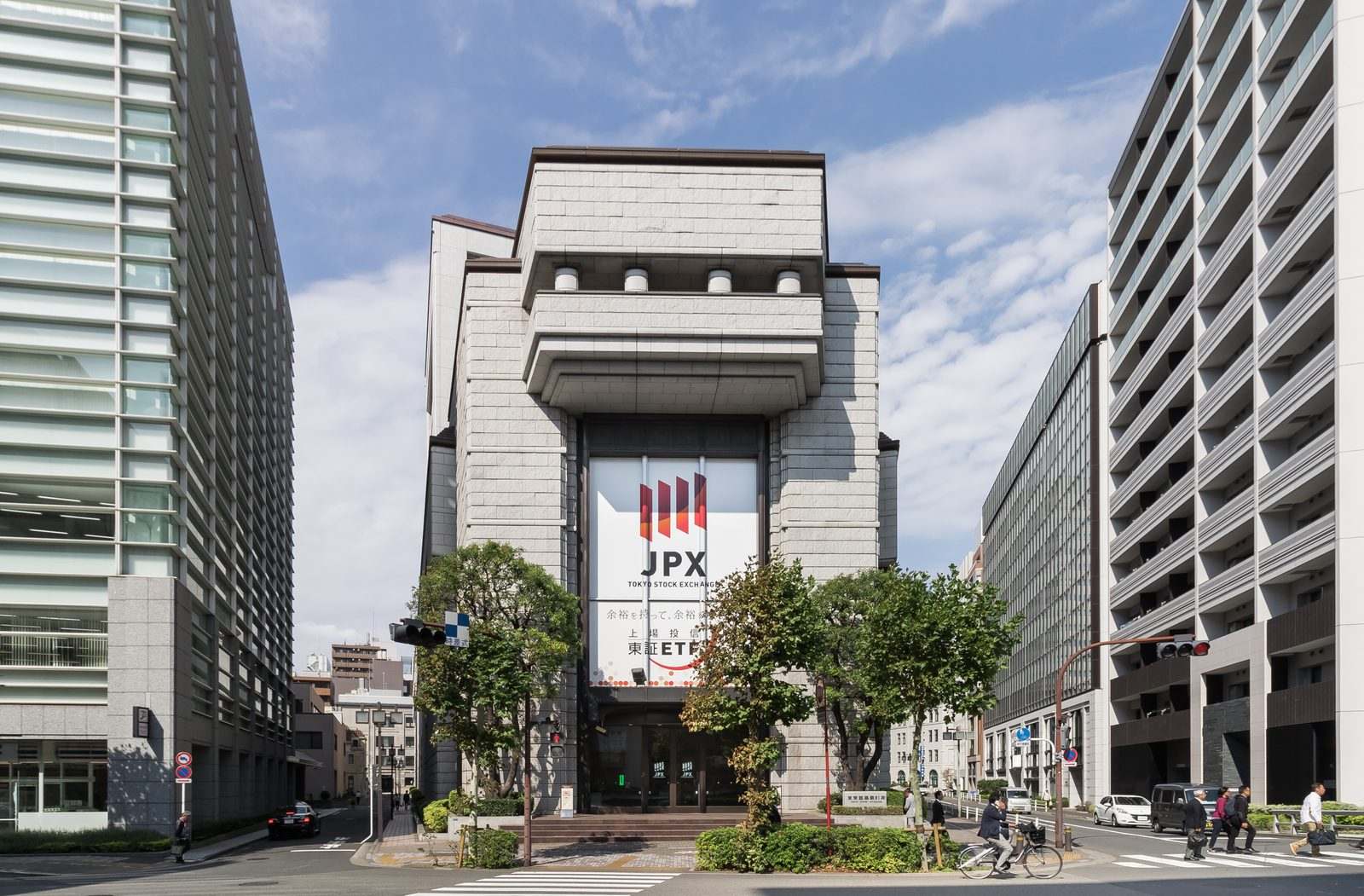
Friday, December 29, 1989, the last trading day of the year at the Tokyo Stock Exchange. When the closing bell rang, the Nikkei average stood at 38,915.87.
Nobody thought the number was strange. Four years earlier, the index had been around 13,000; in four years it had nearly tripled. Through the whole of the 1980s, Japan seemed to be held in the world's open palm: its cars, televisions and semiconductors sold everywhere, money piled up with nowhere to go, and Tokyo's nights shone as bright as day. Traders packed up to go home for the New Year, wondering, most likely, how much higher it would go next year.
No one knew that the number would sit untouched for 34 years. It was not until February 22, 2024, that the Nikkei closed at 39,098.68, finally passing the peak of that winter[1]. An entire generation's youth was caught between those two numbers.
This is not the story of an index curve. It is the story of how a whole country came to believe one thing together — and how that belief turned around and devoured them.
Chapter OneA Piece of Paper at the Plaza
It all began in a hotel. On September 22, 1985, the finance ministers and central bank governors of the United States, Japan, West Germany, France and the United Kingdom gathered at the Plaza Hotel in New York and signed what became known as the Plaza Accord: a joint commitment to push down an overvalued dollar[2].
The dollar at the time was absurdly strong, and America's trade deficit and Japan's surplus had both grown too large to ignore. Once the accord took effect, the yen ran like a wild horse: before the agreement, one dollar bought 240 yen; by the start of 1988, it bought only about 120 — nearly doubling in value in under three years[2]. Exporters saw their yen earnings shrink overnight, and the Japanese gave that period a name: endaka fukyo, the recession brought by a strong yen.
To stop the bleeding for exporters, the Bank of Japan began cutting rates. Between January 1986 and February 1987, it lowered the official discount rate five times, from 5% to 2.5%, the lowest in Japan's history at the time — and it stayed there for more than two years[3]. Cheap money flooded the financial system like a tide. The problem was that it did not go into building more factories. There were already enough factories.
The money went where money always goes most easily: into land and shares.
Chapter TwoWhere the Cheap Money Went
The fuel of a bubble is never just the interest rate; it is also a logic that makes everyone feel safe. Japanese banks lent against collateral, and the best collateral was land. When land rose, companies could borrow more; the borrowed money bought shares and land, prices rose again, and the collateral became worth still more. A loop that fed on itself began to turn.
Companies joined the game. A word became fashionable: zaitech, the art of making money through financial engineering. No matter how hard the manufacturing business worked, it could not match a month's gains in the stock and land markets. With borrowing costs at 2.5%, any asset that rose faster than that made borrowing a piece of risk-free arithmetic. So the whole country started solving the same sum.
The banks, above all, believed. That land only ever rose was not a forecast in those days; it was common sense, the lived experience of the entire postwar era. How could a nation that had never seen land prices fall imagine them falling? It would be like asking someone who had never seen winter to imagine snow. The loan officers were not villains. They were simply living inside an assumption that had never yet been proved wrong.
Chapter ThreeBuying America
In September 1989, Sony bought America's Columbia Pictures for $3.4 billion and assumed $1.4 billion of its debt; around the same time, Mitsubishi Estate bought New York's Rockefeller Center[5][9]. American newspapers and television erupted: Japan was buying America.
The anxiety was not baseless. A saying went around at the time: the grounds of the Imperial Palace in Tokyo were worth more than the whole of California. That was, of course, not a precise valuation — the palace was never for sale. But scholars later estimated that by the end of 1991, all the land in Japan was worth close to $20 trillion, roughly five times the value of land in the United States, and the palace grounds were indeed valued on a par with all the land in California[4]. Behind an exaggerated joke sat a set of numbers that were disturbingly real.
In 1989, six of the ten richest people in the world were Japanese. The richest was Yoshiaki Tsutsumi of the Seibu Group, worth an estimated $15 billion[8]. That December, two weeks before the Nikkei peaked, the Japanese collector Yasumichi Morishita spent $100 million at New York auctions on paintings by Van Gogh, Monet, Renoir and Gauguin; a month earlier, another property tycoon had paid $51 million for Picasso's Les Noces de Pierrette[8].
A country buying paintings, film studios and skyscrapers was not really buying assets. It was buying a feeling: that we are number one in the world, and always will be.
Chapter FourNo One Believed It Could Fall
At its peak, the Nikkei traded at more than 60 times earnings. Investors were willing to pay 60 years of a company's profits for a share today. That number is itself a confession: people were no longer buying what companies would earn in the future. They were buying what the next person would pay.
The strangest moment in crowd psychology is when doubt itself becomes the error. When everyone is making money, the person who says "too expensive" is not a prophet; he is a killjoy, a fool who missed the rally. The newspapers carried no warnings. Television experts explained why this time was different: Japan's land was scarce, its population dense, its companies cross-held each other's shares — there were structural reasons prices could only rise. Each claim sounded reasonable on its own. Together, they were a collective hypnosis.
The institutions helped. Companies held one another's shares, so rising prices lifted everyone's book capital, and stronger capital meant more borrowing. Banks, companies, land prices and share prices were tied to the same rope, rising together — and destined to fall together. Nobody designed this mechanism. It had been layered up, decade after decade, out of success.
That is how mania fulfils itself: people who believe prices will rise buy in; buying makes prices rise; rising prices prove the belief was right. Until one day the rope is pulled to its limit.
The most insidious part of the bubble was not in the trading halls but in everyday conversation. Office workers talked about their shares over lunch, not their work; housewives at gatherings moved from children's grades to which stock had hit its daily limit; taxi drivers held forth on land prices. Once a society starts treating asset prices as small talk, prices stop being a market matter and become a matter of identity. Selling a share meant admitting you had been wrong; holding on meant proving you were right. In that atmosphere, no one was simply an investor. Everyone was the defence counsel of their own belief.
Chapter FiveThe Man Who Raised Rates
On May 31, 1989, the Bank of Japan raised the official discount rate from 2.5% to 3.25%, its first increase in nine years[3]. The market shrugged and kept climbing. On October 11, it rose again to 3.75%, and the market still climbed. The momentum of a bubble is larger than anyone imagines.
The real turn came on December 17, when Yasushi Mieno, a career central banker who had watched the speculation swell for years, became governor of the Bank of Japan with a mission to cool the economy. On December 25, the discount rate went to 4.25%; in March 1990 it reached 5.25%; by August 30, 1990, it stood at 6%[3]. In little more than a year, the cost of borrowing had risen nearly one and a half times over.
In 1990, the Nikkei fell almost 39% in twelve months, closing the year near 23,850[7]. But that was only the first act. Land reacted half a step later, beginning its fall in 1991 and sliding until 2005; the commercial land price index for Japan's six largest cities fell about 87% from its peak[7]. In August 1992, the Nikkei dropped to 14,309, more than 60% below its high[7].
The deadliest part was not the size of the fall but the collapse of the collateral. The loans had been made on the assumption of what the land was worth, and when the land fell, the loans became debts that could never be repaid. Banks eventually wrote off about 100 trillion yen in bad loans[1]. The number is too large to mean anything: it amounts to taking a whole generation's savings and using them to fill in a value that had never existed.
Chapter SixThe Lost Thirty Years
The 1990s became known as Japan's Lost Decade. Then people discovered that ten years was not enough, and added ten more. Across the 1990s, Japan's GDP grew by an average of only 1.6% a year, less than half the 3.8% of the previous decade[6]. Prices fell instead of rising, companies stopped investing, and banks refused to admit their losses, while the government refused to let large banks fail. A chronic illness replaced the acute collapse.
Banks kept lending to companies that should long since have died, purely so the bad loans would not surface on the balance sheet. These were the "zombie companies": neither dead nor alive, soaking up the capital and talent that should have flowed to new firms. Young people graduated straight into an employment ice age, and a whole generation was pushed into irregular work, its clocks for marriage, children and home ownership all set back ten years.
The Bank of Japan cut rates to effectively zero in 1999 and, in 2001, became the first major central bank to launch quantitative easing — but lost time could not be recovered. During the global financial crisis, the Nikkei stood 82% below its 1989 peak in October 2008[7]. An investor who bought at the 1989 peak would wait 34 years to break even[1].
Numbers recover. Confidence does not. It was not until February 22, 2024, that the Nikkei closed at 39,098.68 and passed its 1989 record — 34 years and nearly two months after the bell of that winter[1].
The deeper wound stayed in the mindset. The generation that lived through the crash learned to keep money in the bank instead of the market, to borrow nothing, to expand nowhere, to risk nothing. Companies sat on piles of cash and refused to invest; households preferred saving to spending, and the whole society turned defensive and cautious. Economists call this a balance-sheet recession. For ordinary people it had a simpler name: never again. The trouble is that excessive caution carries its own price — it left a country walking on tiptoe long after it had recovered.
EpilogueBetween Price and Value
After the bubble burst, the lesson the Japanese learned was not to stop believing, but to doubt belief itself. Land only rises, shares only climb, this time is different — in 1989 these sounded like common sense; in 1990 they sounded like jokes; in 2024 they sound like warnings.
The real lesson of Japan's bubble is not about which policy was wrong. The Plaza Accord, the rising yen, the low rates — each step had its unavoidable reasons at the time. The lesson is this: when an entire country makes decisions on the same assumption, the assumption stops being an assumption and becomes fate. Prices can stay detached from value for a very long time — long enough for everyone to conclude that value has caught up with price.
Today's world is still full of shadows of 1989: cheap money, prices feeding on one another, and the words someone is always ready to say — this time is different.
The bell of December 29, 1989, rang long ago. What it reminds us is not what Japan did wrong, but something quieter: a nation's mania is never driven by madmen. It is driven by rational people, walking step by step into a seemingly rational assumption.