PrologueA Sentence That Lived for Two and a Half Thousand Years
'To learn and in due season to practice what one has learned — is this not a pleasure?' These words open the Analects, describing an act so ordinary it barely seems worth recording: learn something, return to it often, and feel joy in the doing. More than 2,500 years later, the sentence is still quoted, still in textbooks, still on the lips of elders advising the young. A sentence lives that long not because it is beautifully written, but because it names something that never goes out of date: human beings grow by learning.
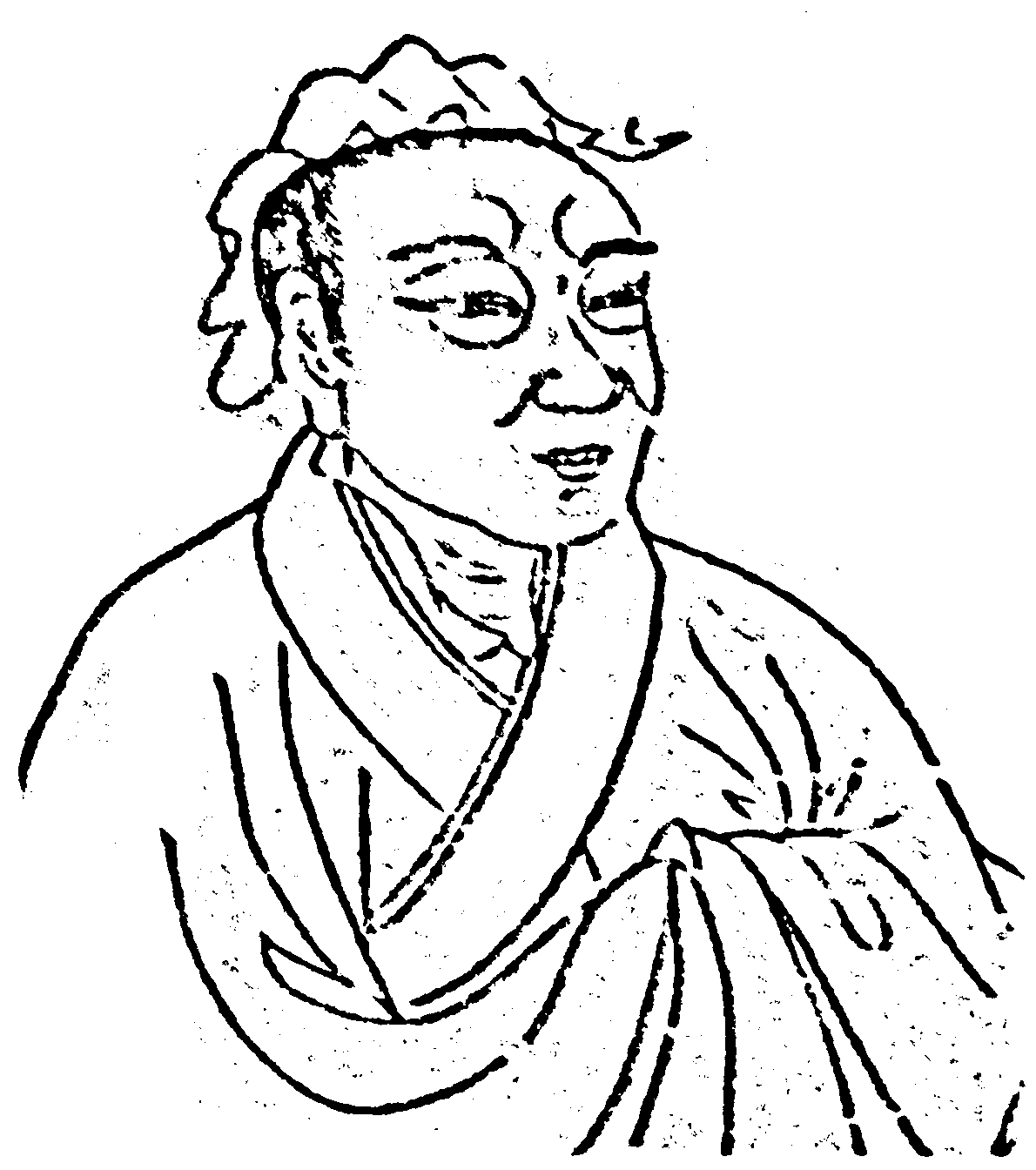
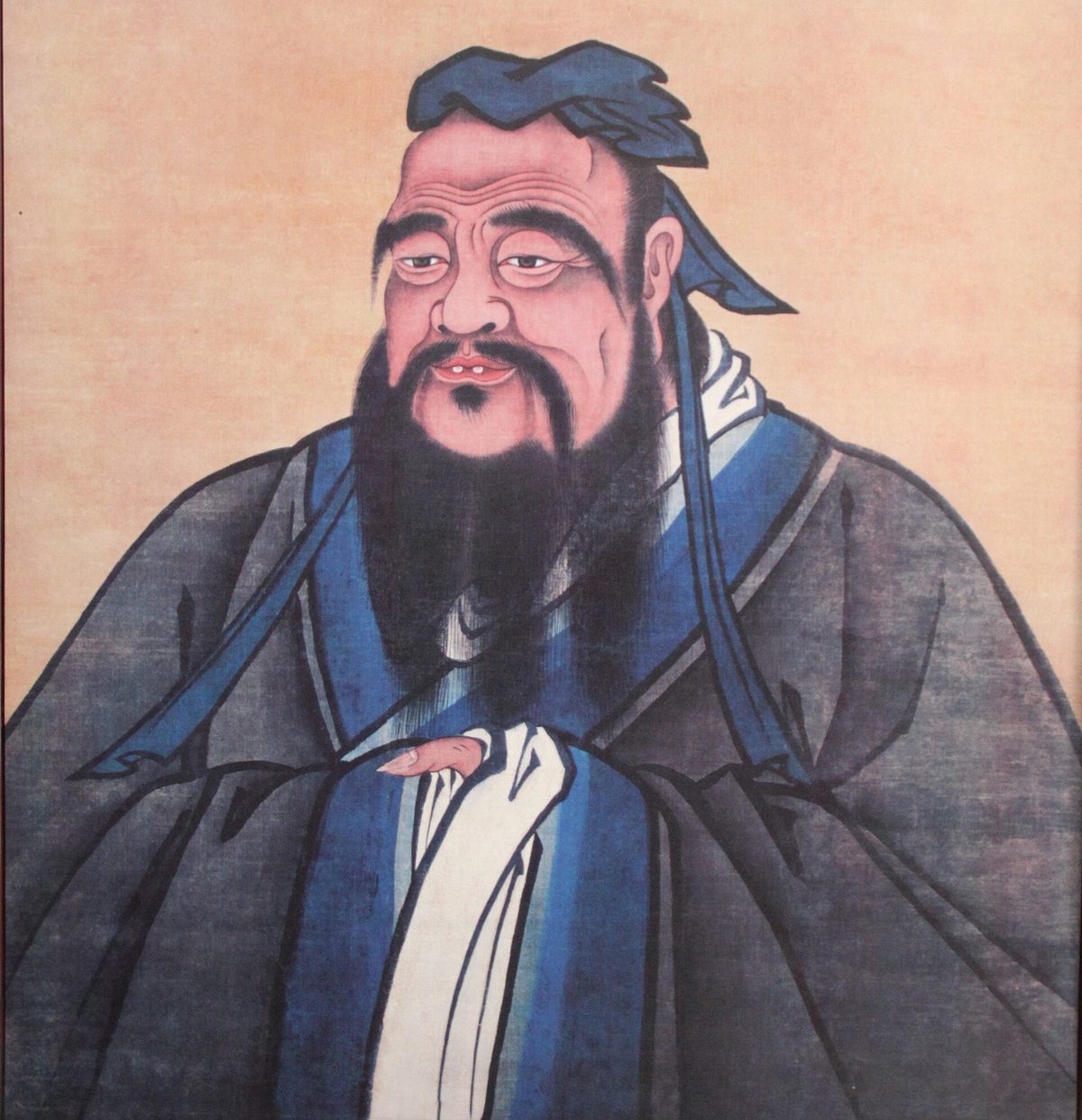
Confucius was born in 551 BCE and died in 479 BCE, a man of Lu in the Spring and Autumn period.[5] He never wrote a book in his life; the Analects was compiled by his disciples after his death.[4] A book written by other people about a man who left no writing of his own — and yet he became the most quoted figure in Chinese history. He lived when the Zhou royal house could no longer hold the realm together. What he offered was plain: first put yourself in order, then bring order to those around you, and only then speak of governing a state.
Chapter OneAn Age Without Schools
When Confucius was born, China had no such thing as a school. The Spring and Autumn period ran roughly from 770 to 481 BCE,[5] and the Zhou king, though still the nominal overlord, could barely defend his own domain. The old order loosened a little more each year. Education was a privilege of the aristocracy: the poems, documents, rites and music circulated only among royal houses and great clans.
Confucius was born just on the wrong side of that door. His father, Shuliang He, had been a warrior of Lu, but the family fortunes had fallen; Confucius lost his father at three and grew up poor. He said that because he was poor and of low station in youth, he became skilled in many menial things.[5] He worked as a storehouse keeper and a herdsman, yet pursued the rites and classics with near obsession. Around the age of thirty he began taking students. In his day this was close to heresy.
Confucius was not the first thinker in China, but he was the first to turn thought into a craft and hand that craft to ordinary people. Opening a private school looked like opening a classroom; it was taking the torch of civilization out of aristocratic hands and passing it to many more.
Chapter TwoEducation Without Distinction
'In teaching there should be no distinction of classes.' These words, from the Book of Weilinggong in the Analects,[1] are the most famous statement of Confucius's educational ideal. Today it sounds like a slogan; two and a half thousand years ago it was a revolution. At the time, a person's future was almost entirely fixed by birth, and learning was part of one's rank, not something to be shared.
His students came from every walk of life. Yan Hui, the poorest, lived on a bowl of rice and a gourd of water in a narrow lane, and was the disciple Confucius admired most. Zigong came from a merchant family and later grew rich; Zilu was rough and carried a sword when he came to study. According to the Records of the Grand Historian, Confucius had about 3,000 disciples, of whom 72 had mastered the Six Arts;[2] another passage gives 77, so the numbers differ slightly,[11] but the scale was unprecedented.
Confucius seldom lectured at length; he mostly answered questions, often with a question of his own. 'When three people walk together, one of them can be my teacher,'[1] he said — a description of his classroom, where teacher and student could trade places. He taught not only knowledge but how to live with others: ritual was a set of rules that kept people from harming each other. By teaching these rules to commoners, Confucius was handing out passports to civilization.
Chapter ThreeRen: A Political Science in One Word
If one word must sum up Confucius, it is ren — humaneness. The word appears 109 times in the Analects, and disciples asked about it again and again; his answers were never the same. Sometimes he said ren is to overcome the self and return to ritual; sometimes, to establish others as you would establish yourself; sometimes only one word: to love others. The answers differ because ren is a capacity for judgment in a concrete situation, not a definition to be memorized.
The most famous passage comes when Zigong asks whether there is a single word that can guide a whole life. Confucius answers: 'Perhaps reciprocity. Do not impose on others what you yourself do not desire.'[1] Its point is practical: first imagine how you would not wish to be treated, then decide how to treat others. If everyone thought this way, most conflicts would never begin.
Ren is not only about personal cultivation; it is also Confucius's political science. 'Govern with virtue,' he said, 'and you will be like the Pole Star, which stays in its place while all the other stars turn toward it.'[1] In his day this found almost no buyers. Feudal lords wanted wealth and military strength, results they could see at once; Confucius offered slow work: first cultivate the self, then order the family, then govern the state. If the ruler does not cultivate himself, no number of laws will help.
The power of this idea is that it turns political problems into human problems. When a state is badly governed, the root is a problem of people — and the problem of people is, at bottom, a problem of education. Confucius did not speak of ghosts, the afterlife, or abstruse cosmology. He spoke of how this person here should live, and how this society here should run. As long as people must live together, the question of ren remains.
Chapter FourFourteen Years on the Road
At fifty-five, Confucius left Lu and began fourteen years of travel among the states.[10] From about 497 to 484 BCE he visited Wei, Song, Zheng, Chen, Cai and Chu,[10] presenting his vision of government to each ruler in turn. None ever truly adopted it.
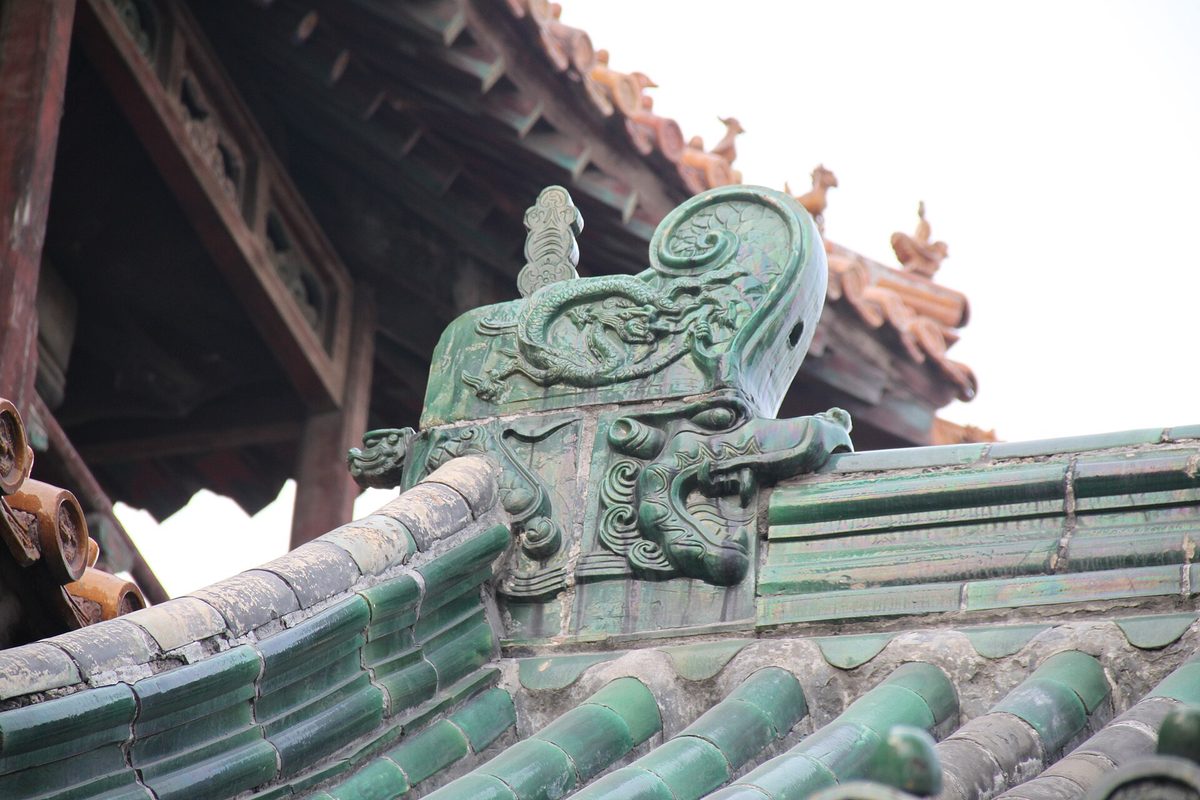
Those fourteen years were full of humiliation. In Kuang he was mistaken for a local enemy and besieged for five days; in Song, the minister Huan Tui had the tree under which he taught cut down and sought his life. Between Chen and Cai, the party was surrounded in the wilderness and cut off from food for seven days.[2] Zilu asked: does a gentleman also come to such a pass? Confucius answered: 'The gentleman holds firm in hardship; the small man, when in hardship, will do anything.' A person's worth is shown by what he does when things are at their worst.
Around 484 BCE, at sixty-eight, Confucius returned to Lu, honored as a national elder but still never employed.[10] He spent his final years editing the poems, documents, rites and music. Politically, his life was a failure: the post he wanted never came, and no state adopted his program of humane government. But by the measure of civilization, those fourteen years of failure are his most precious legacy. He proved that a person's value does not depend on the position he obtains, but on whether he still holds to what he believes when the position never comes.
Chapter FiveThree Lamps of the Axial Age
Confucius was not thinking alone. In The Origin and Goal of History (1949), the German philosopher Karl Jaspers proposed the idea of the Axial Age: roughly between 800 and 200 BCE, China, India, Persia, Israel and Greece produced, almost simultaneously, a generation of thinkers who, with no contact among them, asked the same question — how should a person live?[6][8]
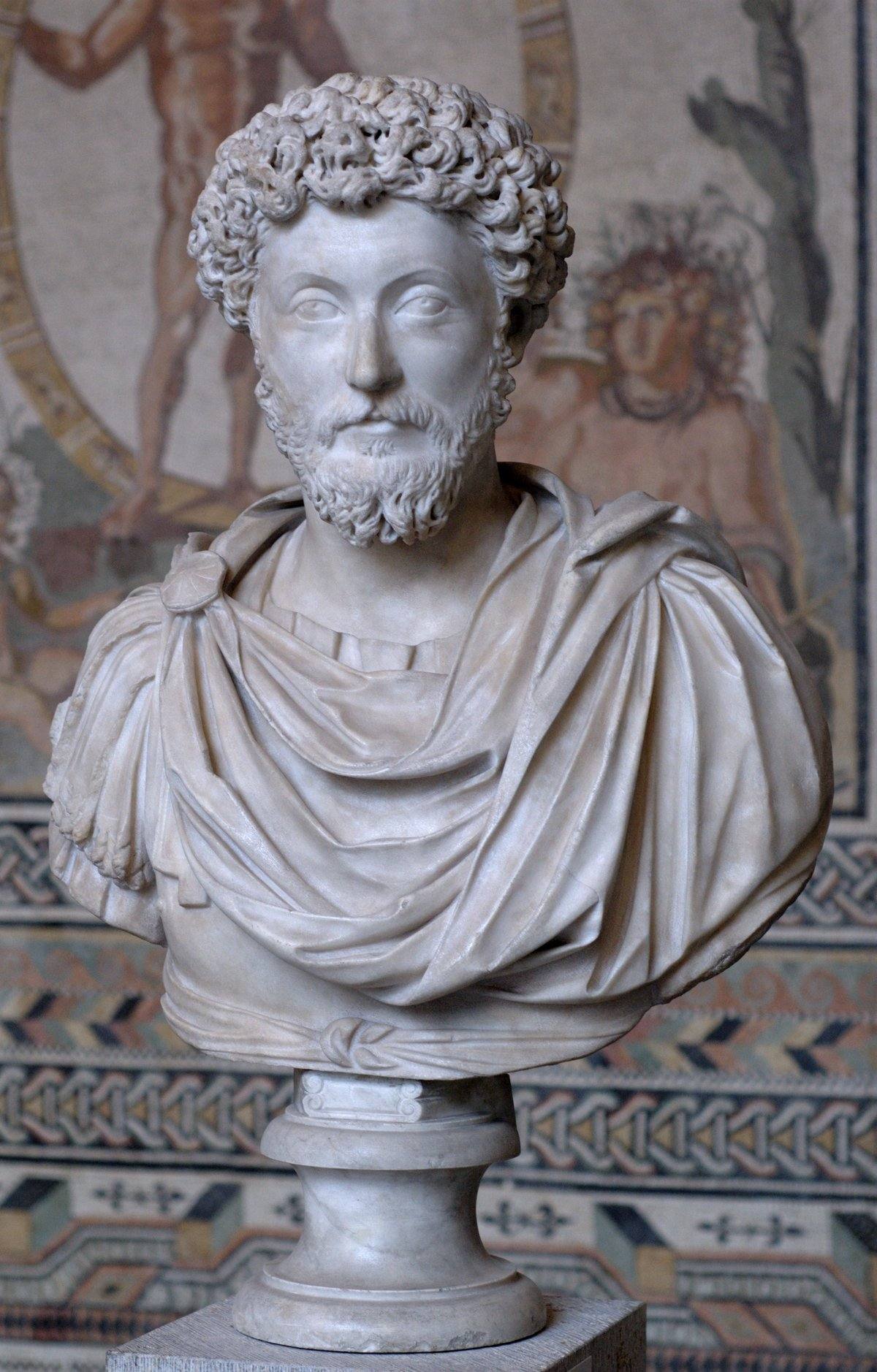
In China there was Confucius, in India the Buddha, in Greece Socrates. None of them wrote a book; all survive through the records of disciples. The Buddha was born around 563 BCE and died around 483 BCE,[9] about twelve years older than Confucius; Socrates was born around 470 BCE and died in 399 BCE,[8] nearly a century later.
But they lit different directions. The Buddha looked inward, asking after the root of suffering and teaching release from the world; Socrates looked inward, asking what truth is, and teaching 'know thyself'; Confucius looked outward, asking how people should live with one another. One taught liberation, one taught truth, one taught order. Together they form a complete picture — humanity discovering, from three directions at once, the problem of the human being. When Zilu asked him about death, he answered: 'You do not yet understand life — how can you understand death?'[1] His engagement with the world is why his teaching travelled farthest.
Chapter SixFrom Private School to State Orthodoxy
Confucius's thought did not become mainstream at once. During the Warring States period, a hundred schools contended and Confucianism was only one of them; after Qin unified China, the Legalist state suppressed Confucian learning. The turning point came under the Han. In the reign of Emperor Wu, the scholar Dong Zhongshu urged that Confucian teaching be made the center of state learning; in 136 BCE the court established the Erudites of the Five Classics, and Confucian texts formally became the official learning of the empire.[12] The position Confucius had sought all his life, his followers obtained three centuries later.
From then on, the Analects was no longer a set of classroom notes but a state textbook. In later dynasties the civil service examinations took shape, and any scholar who wanted office had to pass through the Confucian classics; in the Song dynasty, Zhu Xi grouped the Analects, the Mencius, the Great Learning and the Doctrine of the Mean into the Four Books.[4] The sayings of a private-school teacher had become an empire's standard for talent.
The process had its gains and its losses. The gain was that Confucius's thought acquired institutional protection and survived two thousand years; the loss was that once his words became examination material, they were easily turned into dogma. By the Ming and Qing dynasties, the eight-legged examination essay had reduced the Analects to a set of model answers. Yet every time Confucian thought hardened into dogma, someone returned to the text and rediscovered the living Confucius — Zhu Xi in the Song, evidential scholars in the Qing, Hu Shi in the twentieth century. That a book can be rediscovered again and again is evidence that it contains something beyond dogma.
EpilogueWhy We Still Quote Him
Why, two thousand years on, do we still quote Confucius? Because he offered not doctrines but methods. 'Review the old to learn the new'[1] is a method of learning; 'Do not impose on others what you yourself do not desire' is a method of living with others; 'Learning without thinking is wasted; thinking without learning is dangerous' is a method of thought. Doctrines go out of date; methods do not.
In the Book of Weizheng there is a famous self-portrait: 'At fifteen I set my heart on learning; at thirty I stood firm; at forty I was free of doubt; at fifty I understood the mandate of Heaven; at sixty my ear was attuned; at seventy I could follow my heart's desire without transgressing the bounds.'[1] Its moving point is the last line: at seventy he could do whatever his heart desired, and never step outside the bounds. Freedom and self-discipline become one. What a lifetime of learning accumulates is a sense of measure — knowing what should be done and what should not.
Confucius died in 479 BCE at the age of seventy-three[10] and was buried on the banks of the Si River north of Qufu. His disciples kept mourning for three years, and Zigong built a hut by the grave and stayed for six.[2] When the disciples dispersed, they compiled their teacher's words into the Analects — twenty books, 492 sections[3] — and passed them to the next generation.
We quote Confucius not because he was a sage, but because he was an ordinary person who carried ordinary things to their extreme. He had no power, no wealth, no army — only a band of students and a collection of sayings. But hidden in those sayings is a complete answer to how to live, how to treat others, and how to govern a society. As long as those questions remain, Confucius will not go out of date. A sentence that lives for two and a half thousand years is evidence that some questions have never truly been solved, and that some answers are worth saying again, generation after generation.