PrologueLaunch Day
Thursday, July 30, 2015. Ethereum's genesis block was mined. There was no ribbon cutting, no applause, nobody pressing a giant switch. Only a line of code beginning to run in sync on computers scattered around the world.
It was called Frontier. The name was honest: this was not a finished product but a freshly staked-out territory, the roads not yet paved. The developers said so themselves — this release was for technical users, rough and hard to use, and the amount of computation each block could carry was deliberately squeezed small, a gas limit of only 5,000, like a construction site lit by a single lamp.[2]
But the lamp was on. A white paper written by a 19-year-old in November 2013, followed by a crowdsale in 2014 and nearly two years of development, had finally turned from an idea on paper into a living chain.[2] This book tells how that chain grew out of one young man's frustration into a world computer that nobody owns and anyone can use.
Chapter OneBitcoin Was Not Enough
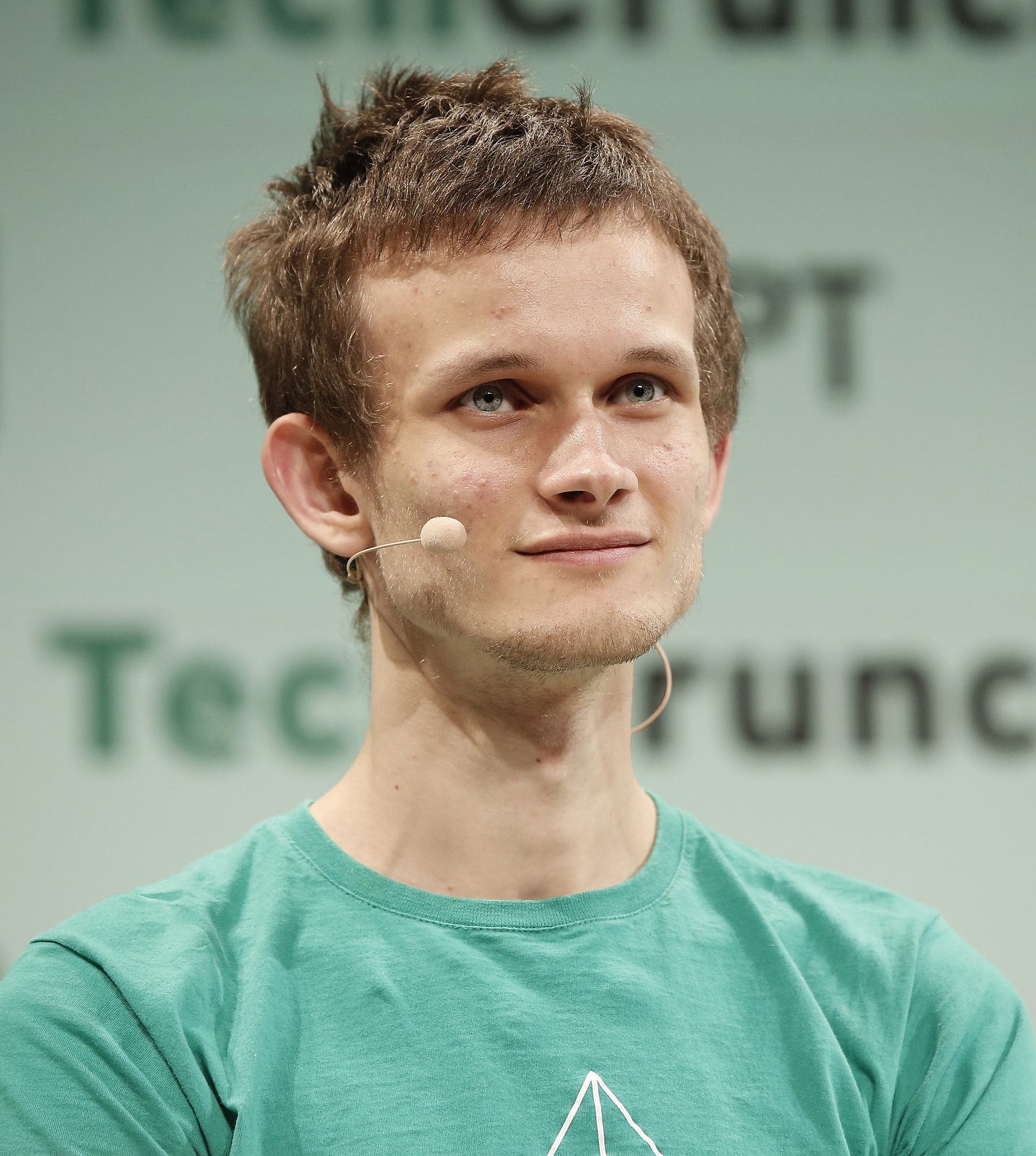
Vitalik Buterin was born in 1994, Russian by birth, raised in Canada. In 2011, at 17, he first encountered Bitcoin and began writing for Bitcoin Magazine, eventually becoming a co-founder. To a teenager, Bitcoin was already the most fascinating thing in the world — but the more he wrote about it, the more he felt it was not enough.
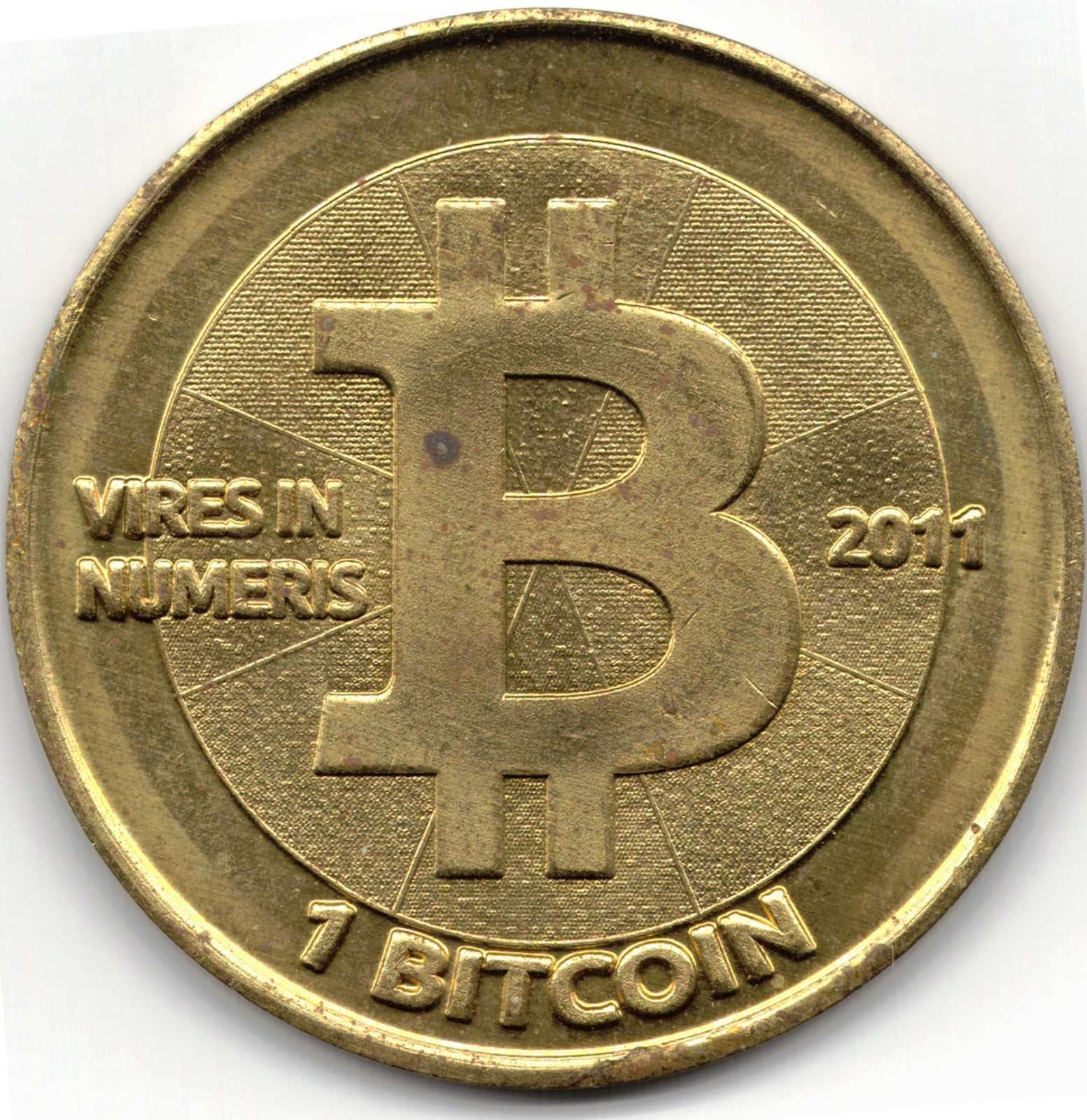
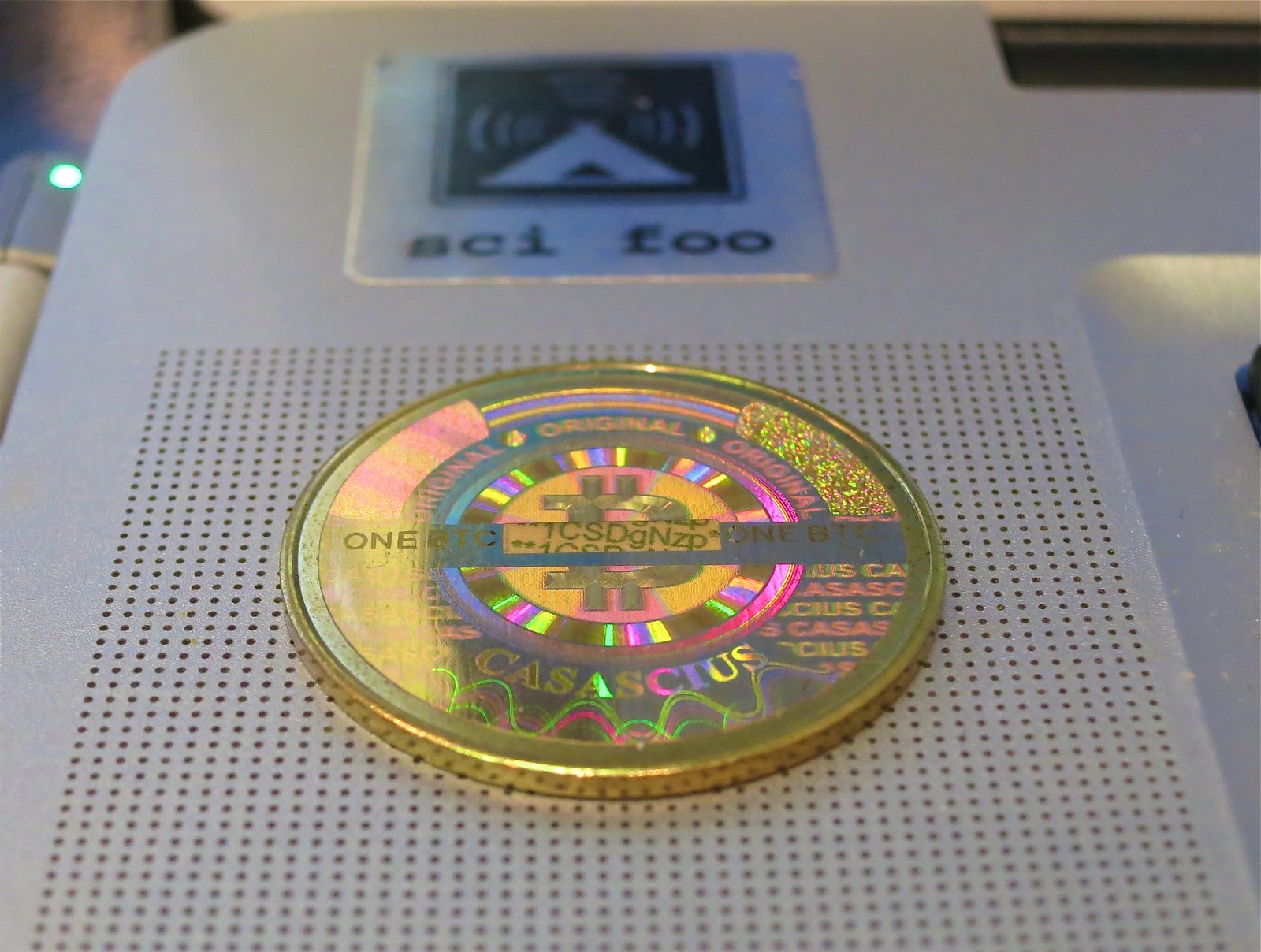
Bitcoin is a beautifully designed machine that does one thing: keep a ledger, move money, and do it flawlessly. The problem is that it only does that one thing. Buterin wanted to build other things on top of it — insurance, voting, organizations, games — and found that Bitcoin's scripting language was deliberately limited, like a calculator that can only add, subtract, multiply and divide. You cannot ask it to run a real program.
He first went to Bitcoin's developer community and asked whether the scripting language could be loosened. The answer was no. Bitcoin's conservatism was not laziness but a survival strategy: for something that holds money, simpler is safer. So in the autumn of 2013, after travelling the world to visit developers, he returned to Toronto and sat down to write a new proposal. On November 27, 2013, the Ethereum white paper went out to a dozen or so people he trusted, titled “A Next-Generation Smart Contract and Decentralized Application Platform.”[1][2]
Its core idea was a single sentence: instead of building a new chain for every application, build one chain that can run any program. Bitcoin was digital gold. Ethereum wanted to be the world computer.
Chapter TwoMiami and 42 Days
In January 2014, Buterin took the white paper onto the stage of the North American Bitcoin Conference in Miami and presented Ethereum in public, describing it as a general-purpose computer running on a decentralized, permissionless network, with uses ranging from crop insurance to decentralized exchanges.[2] The audience understood half of it; the other half was excitement. Afterwards, he put all his time into the project.
Eight people joined one after another as co-founders: Gavin Wood, who wrote the Yellow Paper; Joseph Lubin, who would go on to found ConsenSys; Charles Hoskinson, Anthony Di Iorio, Mihai Alisie, Jeffrey Wilcke and Amir Chetrit — plus Buterin himself.[2] In April 2014, Wood wrote the Yellow Paper, translating the white paper's vision into precise technical specification; in June of the same year, the Ethereum Foundation was established in Switzerland.[2]
Where would the money come from? On July 22, 2014, Ethereum launched a 42-day public crowdsale: participants paid in bitcoin for ether, at 2,000 ether per bitcoin for the first two weeks, the price then declining in a straight line to 1,337. When the 42 days ended, the team had received 31,529 bitcoin, worth about $18.3 million, and sold 60 million ether; another 12 million were pre-mined for the Foundation and early contributors, making a genesis supply of 72 million.[3][4][5]
It was a gamble. When buyers paid, the chain did not exist; not a single line of runnable code was live. They were not buying a product but a promise from a 20-year-old. Less than a year after the crowdsale, the price of bitcoin fell, the Foundation's bitcoin holdings shrank, and development funding nearly ran dry — before the promise had been kept, reality had already come to collect.[4]
Chapter ThreePromises That Execute Themselves
Ethereum did not invent the smart contract. In 1994, the computer scientist Nick Szabo defined it: “A smart contract is a computerized transaction protocol that executes the terms of a contract.” He imagined a vending machine: insert coins, choose, collect — the whole transaction needs no clerk and no court. The machine carries out the promise by itself.[6]
What Szabo lacked was a ledger nobody controlled. Bitcoin gave him the ledger but would only record transfers. Ethereum moved Szabo's idea onto the chain entire: every node runs the same virtual machine, a contract is written, deployed, and when the conditions are met it executes automatically. Nobody can change it; nobody can stop it.
To keep a program from running forever and dragging the whole chain down, Ethereum invented gas: every step of computation costs a fee, like a car burning fuel — when the fuel runs out, the program stops. On July 30, 2015, Frontier went live, and the first block was mined, carrying only the developers' test contracts. But from that day on, money had learned to run programs by itself.[2]
Chapter FourThe Price
In the spring of 2016, an experiment called The DAO pushed Ethereum into the spotlight. It was a decentralized venture fund written as a smart contract: no managers, token holders voting on what to invest in. It went live on April 30 and in under a month raised more than $150 million worth of ether from over 11,000 supporters — the largest crowdfunding experiment on Ethereum at the time.[12]
On June 9, the developer Peter Vessenes warned publicly that many smart contracts carried a flaw known as a reentrancy bug. Eight days later, the attack came. On June 17, 2016, the attacker exploited the contract's withdrawal function, calling it again and again before the system could update the balance, and drained about 3.6 million ether — roughly a third of everything The DAO held.[9][12]
The community split in two. One side said code is law: a mistake must stand, or the blockchain's immutability means nothing. The other said $150 million was real money and could not simply be watched as it was stolen. After a vote, the majority chose a hard fork: on July 20, 2016, at block 1,920,000, Ethereum moved the stolen funds into a refund contract so investors could reclaim their money.[9]
But a small minority refused to follow. They kept running the original chain, which later became known as Ethereum Classic. From that day on, Ethereum carried its first crack — and its first lesson: code can execute promises automatically, but promises are written by people, and people make mistakes.
Chapter FiveOne Standard, One Economy
On November 19, 2015, the developer Fabian Vogelsteller and Buterin wrote EIP-20, later known as the ERC-20 standard. It asks for only six required functions and two events, defining how a token transfers, how balances are read, and how one account authorizes another to spend on its behalf.[7] A single page of agreement let any wallet or exchange recognize any new token without rewriting code for each one.
Once the standard was set, the door opened. In August 2015, the prediction market Augur ran the first crowdsale on Ethereum, selling 8.8 million REP tokens and raising more than $5 million — before ERC-20 even existed, so the tokens had to be issued some other way.[11] Over the next two years the ICO wave swept in: anyone with a white paper and a deployed contract could raise money from the whole world.
In November 2015, the first Ethereum developer conference, DEVCON1, was held at Gibson Hall in London, and Nick Szabo himself came to give the keynote.[8] Almost nobody in the hall talked about price. They talked about protocols and applications. A chain barely three months old already looked like a community should look: organized not around prices, but around problems.
The mania soon soured. In 2017, countless ICOs had no product and no users, only promises and price charts. Money came too easily, and frauds wore the same clothes as dreamers. But what remained after the tide went out was real: stablecoins, decentralized exchanges, lending protocols — a financial system that never needed a bank to open its doors began to grow on this chain.
Chapter SixSwapping the Engine
Ethereum was born on proof of work: miners burned electricity solving puzzles, racing to keep the ledger. The mechanism was secure, but it consumed a staggering amount of power. Before the switch, a new proof-of-stake chain — the Beacon Chain — had already been running in parallel for nearly two years, waiting to take over. On September 15, 2022, the two chains merged. The Merge was complete: the miners left, and validators staking 32 ether took over the bookkeeping.[10]
The Merge changed nobody's balance and did not make fees cheaper — it was never meant to. Its result was a single number: energy consumption fell by about 99.95%.[10] For the first time, a world computer proved it could live without burning electricity.
But the Merge also left an open question: the more staking concentrates, the more the chain resembles the very thing it set out to replace. Decentralization is not a state you arrive at once; it is a fight that never ends.
EpilogueThe World Computer Is Still Being Written
From a white paper in November 2013, to the genesis block on July 30, 2015, to the Merge in 2022, Ethereum's journey reads like a condensed history of trust: first we stopped trusting banks, and got Bitcoin; then we stopped trusting intermediaries, and got smart contracts; then we discovered that even code cannot be trusted entirely, and got forks, regulation, and endless repair. It has no headquarters, no CEO, and no one who can press pause; it has only rules, and people around the world willing to follow them, day after day.
The most valuable thing on this chain was never the price of ether. It was the proof of something: thousands of strangers can maintain one computer together without any single person being in charge.