PrologueThe Morning of July 2
On the morning of July 2, 1997, before the banks of Bangkok had even opened, the Bank of Thailand spoke: the baht would no longer be pegged to the dollar. By the end of the day the baht had fallen 15% in the onshore market and 20% offshore.[4] A country that had borrowed too much in dollars discovered, in a single morning, that its debts had suddenly become nearly a fifth more expensive. Nobody knew it yet, but this was only the first domino.
That summer, Asia was the part of the world that believed most firmly tomorrow would be better than today. Thailand, Indonesia, Malaysia, South Korea — growth rates more beautiful than the next, foreign money more eager than the next. But beneath the prosperity ran an undercurrent: everyone borrowed in dollars and earned in local currency, and the exchange rate was held up by a single government promise. A promise weighs nothing in good times; only when it breaks do you learn it was the load-bearing wall of the whole economy.
This book tells how that wall fell, who was standing beside it when it did, and why East Asia was never the same afterwards.
Chapter OneBorrowed Prosperity
The baht's peg to the dollar dated from 1984. For more than a decade, the baht sat at roughly 25 to the dollar, steady as a river that never moved.[6] For Thai businesses, that river was wonderfully convenient: borrowing in dollars was cheaper than borrowing in baht, and with the exchange rate unmoved for over a decade, borrowing in dollars seemed to carry no currency risk at all. So factories borrowed dollars to build plants, developers borrowed dollars to build towers, and finance companies borrowed dollars to lend onward. The whole country lived like a person paying with a credit card — and nothing had gone wrong for more than a decade.
The trouble was that borrowed money has to be repaid, and the ability to repay depended on exports. In 1996, Thai exports began to slow, the current-account deficit widened, empty flats piled up, and the finance companies' bad loans grew thicker. Smart money smelled it and quietly began swapping baht for dollars. The Bank of Thailand answered by spending its foreign reserves to buy baht, holding the line at 25, pushing interest rates above 24% — and still it could not hold.[6] The higher the rates, the faster businesses died; the faster they died, the faster the money ran. It was a self-fulfilling spiral, and the central bank's ammunition only shrank.
On July 2, 1997, the ammunition ran out. The Bank of Thailand announced a managed float — an admission that the number it had defended for more than a decade could no longer be defended. The baht plunged that day and kept sliding; by January 1998, it had depreciated 56% against the dollar.[6] Everyone who had borrowed in dollars found their debts had doubled in baht terms overnight. Factories closed, banks closed, and unemployment washed through every street of Bangkok like a tide.
Chapter TwoThe Man Who Sold Short
The day the baht fell, all of Asia asked the same question: who did this? An answer soon arrived, with a name attached: George Soros. The man who had made his name shorting the pound in 1992 was now said to be hovering over Bangkok. Malaysia's Prime Minister Mahathir Mohamad publicly accused him of being part of a Western conspiracy to end Asia's economic miracle.[8] Overnight, Soros became Southeast Asia's public enemy number one.
But the story was more complicated than one man breaking one country. In a book published in 2000, Soros himself admitted that in January 1997 his Quantum Fund had sold the baht and the ringgit short in the forward markets, sending a market signal that the baht might be overvalued.[7] He also insisted that hedge funds had not triggered the crisis, though they played a role in it; had the Thai authorities responded sooner to the depletion of their reserves, he argued, the adjustment would have come earlier and hurt less.[7] That defence, of course, was written from his own side of the table.
The market's own numbers tell another side. According to what a former Bank of Thailand official heard in the markets, the Quantum Fund deployed about $700 million against the baht — while the real heavyweight was Julian Robertson's Tiger Fund, which bet $3 billion.[8] On May 14, 1997 alone, speculators bet $10 billion against the baht in a single day.[8] The Bank of Thailand fought back, splitting the currency into a two-tier market and barred local banks from lending baht to foreigners, and for a while the short-sellers were hurt — Soros's manager Stanley Druckenmiller later admitted their first round had gone badly wrong.[8] But the second round came faster, and harder.
Casting Soros as the sole villain is a comforting simplification. The real culprit was a structure: a decade of fixed exchange rates that encouraged everyone to borrow in dollars, lax supervision that let finance companies lend to towers nobody would occupy, and free capital flows that turned a shift in confidence into a stampede. Soros saw the structure, and he placed a bet; but without the structure, there would have been no bet to place. Blaming one man for everything lets the system that deserved the blame off the hook.
Chapter ThreeContagion
Once the baht fell, the market measured every neighbour with the same ruler. The Philippine peso was let go on July 12, the Malaysian ringgit on July 14.[6] The logic of investors was simple: whatever disease Thailand had, you might have it too. Current-account deficits, short-term foreign debt, property bubbles — the symptoms were shared across Southeast Asia, differing only in severity. Once doubt began, doubt itself became the most contagious virus of all.
Indonesia was the next disaster. On August 14, 1997, the rupiah was floated, in the hope of a gentle landing; instead it fell without stopping, from around 2,400 rupiah to the dollar to about 17,000 on January 22, 1998 — a devaluation of more than 80%.[11] The collapse of the rupiah was not only a matter of numbers: import prices soared, banks faced runs, corporate foreign debts defaulted, and the everyday order of society was dragged into the storm. By January 1998, Indonesia was negotiating a new agreement with the International Monetary Fund.[11]
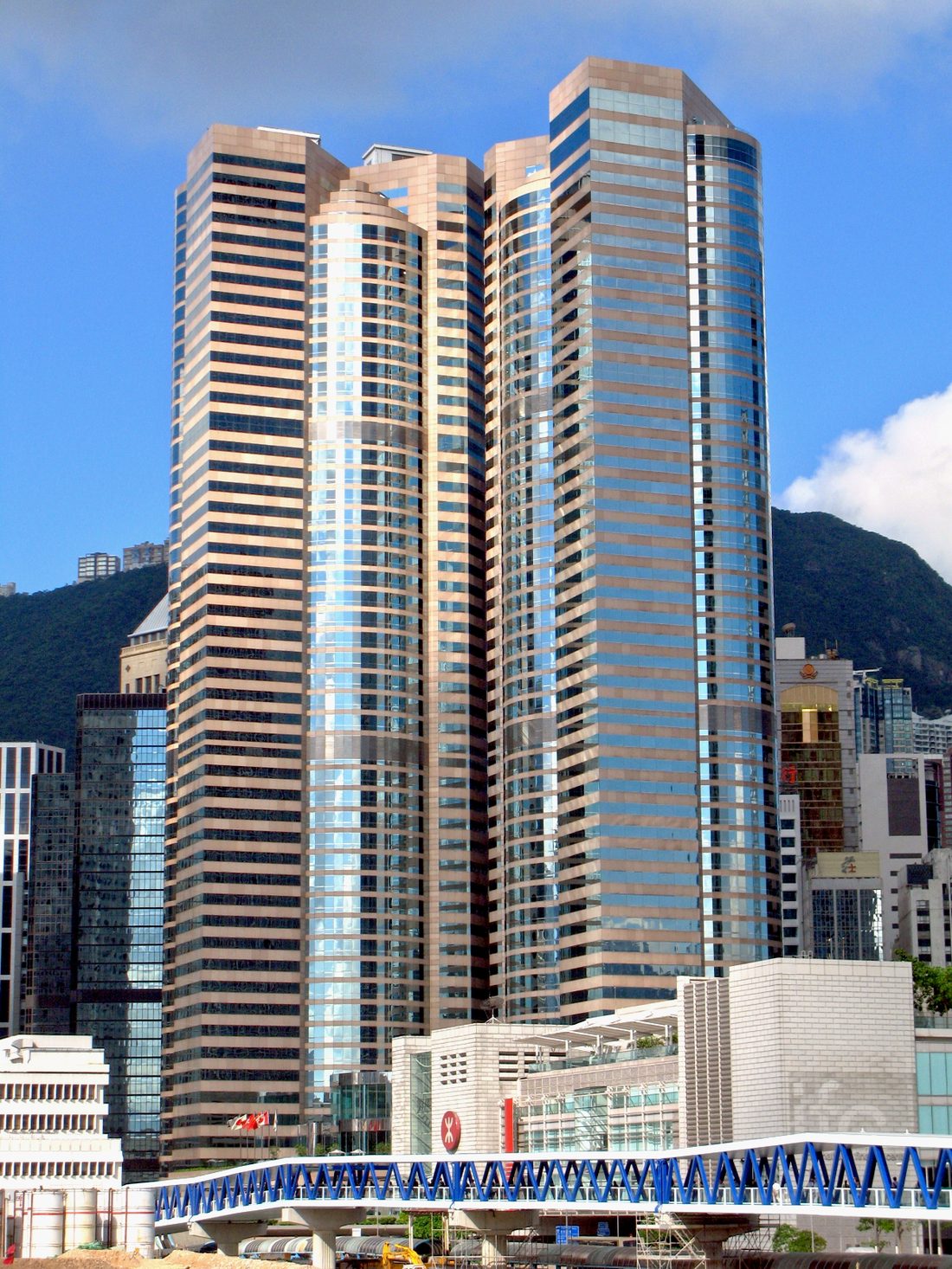
Taiwan could not stay out of it either. Despite ample foreign reserves and a perennial current-account surplus, the speculative wave hit all the same. From early July to October 17, the central bank spent more than $7 billion defending the New Taiwan dollar at NT$28.6 to the US dollar, before giving up in mid-October; the currency fell to NT$30.5 at once, and by the first week of January 1998 it had dropped 19%, from NT$28 to NT$34.5.[10] Taiwan's lesson was that even the strongest fundamentals cannot stop a regional collapse of confidence; what they can do is make the fall smaller and the wound shallower.
South Korea was the last great economy to fall, and the most surprising. In early 1997 it was still the world's 11th-largest economy, the model student of a thirty-year miracle. But the chaebol had over-expanded and short-term foreign debt had piled up, and by late December the won had fallen 55% against the dollar.[6] In late November, Korea turned to the International Monetary Fund, and on December 3 it signed a rescue package.[1] For a country to ask the IMF for help is to admit before the whole world that it cannot pay its bills — for a fiercely proud Korea, the humiliation of that day was no smaller than the fall of the currency itself.
Chapter FourHong Kong: The First Battle After the Handover
Hong Kong's return to China took place at midnight on July 1, 1997.[12] Twenty-four hours later, the baht was floated. For the brand-new Hong Kong Special Administrative Region, this was a war that began while the celebration was still echoing: the Linked Exchange Rate System pegged the Hong Kong dollar at HK$7.8 to the US dollar, unquestioned for more than a decade — but once the baht fell, speculators turned their guns on the richest target in Asia.
The first wave arrived in October. Between October 20 and 23, the Hang Seng Index fell 23% in four days, dropping 10.4% on October 23 alone.[12] To defend the peg, the Hong Kong Monetary Authority pushed overnight interbank rates as high as 300%, making the cost of borrowing ruinous overnight and choking the stock and property markets at the same time.[12] This was no longer Hong Kong's battle alone.
The speculators' method later acquired a name: the "double play". On one side, borrow Hong Kong dollars in bulk and sell them, forcing the Authority to raise interest rates; on the other, build large short positions in Hang Seng Index futures, so that when rates rose and stocks fell, both sides paid off. The Hong Kong Monetary Authority later described it as a sustained speculative attack by international predators using a "double play" strategy, designed to provoke panic and manipulate interest rates and stock and futures prices.[2] Interest rates were the peg's weapon and its Achilles' heel: every time rates were used to defend the currency, the stock and property markets paid the price. And that was exactly what the speculators were betting on — the peg might hold, but confidence might not.
Chapter FiveTen Trading Days
In August 1998, the attack returned, fiercer than before. The Hong Kong government made a decision that shocked the free-market world: it would step into the market itself and buy stocks. On August 14, the Monetary Authority began buying, with Financial Secretary Donald Tsang and HKMA Chief Executive Joseph Yam giving the order to deploy the Exchange Fund into Hang Seng constituent stocks.[2]
Over those 10 trading days, the government mobilised HK$118 billion — about 18% of the Exchange Fund's total assets at the time — to buy 33 constituent stocks of the Hang Seng Index.[2] That figure did not include the money deployed to build long positions in the Hang Seng Index futures market. August 28 was the settlement day for the August futures contracts, and the day of the showdown: the stock market recorded a historically high turnover of over HK$79 billion, with the HKMA almost the only buyer in town, and the Hang Seng Index closed at 7,830 — 18% above the level at which the government had started intervening on August 14.[2] The speculators had wanted to drive the index to 4,000; they did not get halfway there.
At the time, the intervention drew a storm of criticism: the government was interfering with a free market, damaging Hong Kong's reputation, gambling with taxpayers' money. But Joseph Yam later recalled that the operation not only defended the integrity of the financial system — it made money for the people of Hong Kong. By August 2000, the government had recouped HK$72.5 billion of the HK$118 billion invested, and still held shares worth about HK$175 billion at market value.[3] Those shares were later disposed of gradually, and the government publicly pledged on March 16, 1999 that, even with sufficient shareholding, it would not nominate directors to the boards of the Hang Seng companies. For those 10 days, free-market doctrine stepped aside for a more primitive truth: when the other side does not play by the rules, those who cling to the rules die first.
Chapter SixThose Who Came In, and the One Who Said No
After the crisis broke, the International Monetary Fund became East Asia's busiest visitor. Thailand accepted a $17.2 billion package in August, Indonesia received $42.3 billion in October, and South Korea signed for $58.2 billion in December.[1] The Fund itself contributed $20.9 billion to Korea, $11.2 billion to Indonesia and $4.0 billion to Thailand; the rest came from the World Bank, the Asian Development Bank and bilateral government pledges.[1] Taken together, it was the largest collective rescue the Fund had ever mounted.
The money was not free. The conditions were higher interest rates, cuts in public spending, the closure of failed banks and structural reform — a prescription written for Latin America's budget crises, handed to East Asia's private-debt crisis. The medicine made economies shrink further first; unemployment and poverty spread, and protests filled the streets. In Thailand and Indonesia, many people still believe the rescue saved foreign banks and investors, not ordinary citizens. That resentment later became the engine of East Asia's frantic accumulation of foreign reserves: never again to be in the position of having to ask.
Only one country said no. Prime Minister Mahathir Mohamad of Malaysia refused an IMF programme and, in September 1998, imposed capital controls and pegged the ringgit, closing the door to the free movement of capital.[9] Orthodox opinion at the time condemned him almost unanimously, calling it a step backwards, a self-exile from the world. Yet Malaysia's economy recovered no more slowly than its neighbours that had accepted bailouts. More than two decades on, economists still argue over whether the capital controls were reckless or prescient; but one thing is certain — the decision of September 1998 proved that in a crisis, the textbook is not the only answer.
EpilogueNo Winners, Only Survivors
When the storm passed, East Asia looked different. The baht, the rupiah, the ringgit and the won never returned to their old levels; tens of thousands of businesses vanished, the savings of generations evaporated, and the political maps of Indonesia and South Korea were redrawn. Hong Kong held its peg, but the price was a halved property market, a recession, and a generation's doubt about the promise that tomorrow would always be better.
Soros's name endured, and became a symbol: some use it to denounce speculation, others to denounce governments, others still to remind themselves that the market is not a court of morality — it rewards those who see clearly, not those who see rightly. But what deserves remembering is not a name; it is the lesson behind a set of numbers. Borrow short, invest long, and let a government promise underwrite the risk: put those three together, and any country can discover overnight that it has been standing at the edge of a cliff.
What 1997 taught East Asia was not how to predict the next crisis, but how to survive one: hold enough foreign reserves, keep short-term foreign debt within what you can bear, and never treat the words "the exchange rate will never move" as a national policy. More than two decades have passed; the lessons are in the textbooks now, and in the hearts of everyone who lived through those two years. The storm will come again — storms always do. The question was never whether it would come, but where you would be standing when it arrived.