PrologueThat Day, the World Had No Way Back
In the early hours of 1 September 1939, German tanks crossed the Polish border, and the world slid into the abyss overnight. Six years later, an estimated 70 to 85 million people were dead, a continent lay in ruins, and we still live in the world that war drew.[11][2]
This is not a chronicle of battles. Battles pass, and numbers get revised, but the questions a war leaves behind are never on the map; they are in the human heart. How does a civilised society turn mass murder into routine, step by step? How do ordinary people hand over their judgement between an order and a fear? And how do the victors decide, standing on the rubble, what kind of world is worth rebuilding?
The Second World War ran from 1 September 1939 to 2 September 1945 — six years and one day — its fire reaching across Europe, Asia, Africa, and three oceans.[1] It was a war about institutions, about human nature, about the psychology of crowds. To understand it is not to memorise who won and who lost, but to recognise whether the conditions that made catastrophe possible are still with us.
Chapter OneThe Price of Appeasement
No world war begins with the first shot. It begins much earlier, in the moments when people keep persuading themselves to let this one pass.
When the First World War ended, the victors believed punishment could buy peace. The Treaty of Versailles weighed a defeated Germany down with reparations and humiliation, and then the Great Depression swept the globe in 1929, driving a wounded society toward the extreme with unemployment and inflation. In 1933, Hitler and the Nazi Party came to power, and hatred found a complete language: blame a complicated suffering on a single, clearly named enemy, and promise national rebirth as a kind of purification.[4]
Europe's democracies saw the danger and chose to stall. At Munich in 1938, Britain and France, hoping to purchase peace, allowed Germany to annex the Sudetenland of Czechoslovakia. Appeasement was not ignorance; it was a calculation — that concession could buy time, that a dictator's appetite had a limit. History's answer was that appetite has no limit, only an appetite that has been fed.
On 23 August 1939, Germany and the Soviet Union signed a non-aggression pact, with a secret protocol carving Eastern Europe into their respective spheres of influence.[7] A week later, German troops invaded Poland. The fire was lit on 1 September; Britain and France declared war on 3 September; the Soviet Union invaded from the east on 17 September, and Poland was torn apart between two totalitarian regimes.[2] The bill for appeasement, in the end, was paid by someone else.
Chapter TwoLightning War and Total War
The war's first lesson was speed. German tanks, aircraft, and radios combined into an entirely new way of fighting. Poland fell within little more than a month; Denmark and Norway fell in the spring of 1940; France — the country that had believed itself to possess Europe's strongest army — surrendered on 22 June 1940.[1] Within a year, almost all of Western Europe was occupied, and Britain alone was still holding out.
Britain did not surrender, but neither could it win. On 22 June 1941, the war turned its bloodiest page: Germany tore up its pact with the Soviet Union and launched Operation Barbarossa, the invasion of the Soviet Union.[7] The Eastern Front became a mincing machine, and the scale and cruelty of the war leapt to another order of magnitude. German armies drove toward Moscow and laid siege to Leningrad, and millions died in the years that followed — in battle, from hunger, and from cold.
What deserves attention is that the war's expansion was never one person's decision. It was a chain of institutional permissiveness: generals who valued the arrows on a map above human lives, bureaucrats who valued a transport timetable above conscience, newspapers that drew the enemy less and less like a human being. When a society outsources killing to procedure, procedure develops a momentum of its own, and no one can stop it.
Chapter ThreeFire in the Pacific
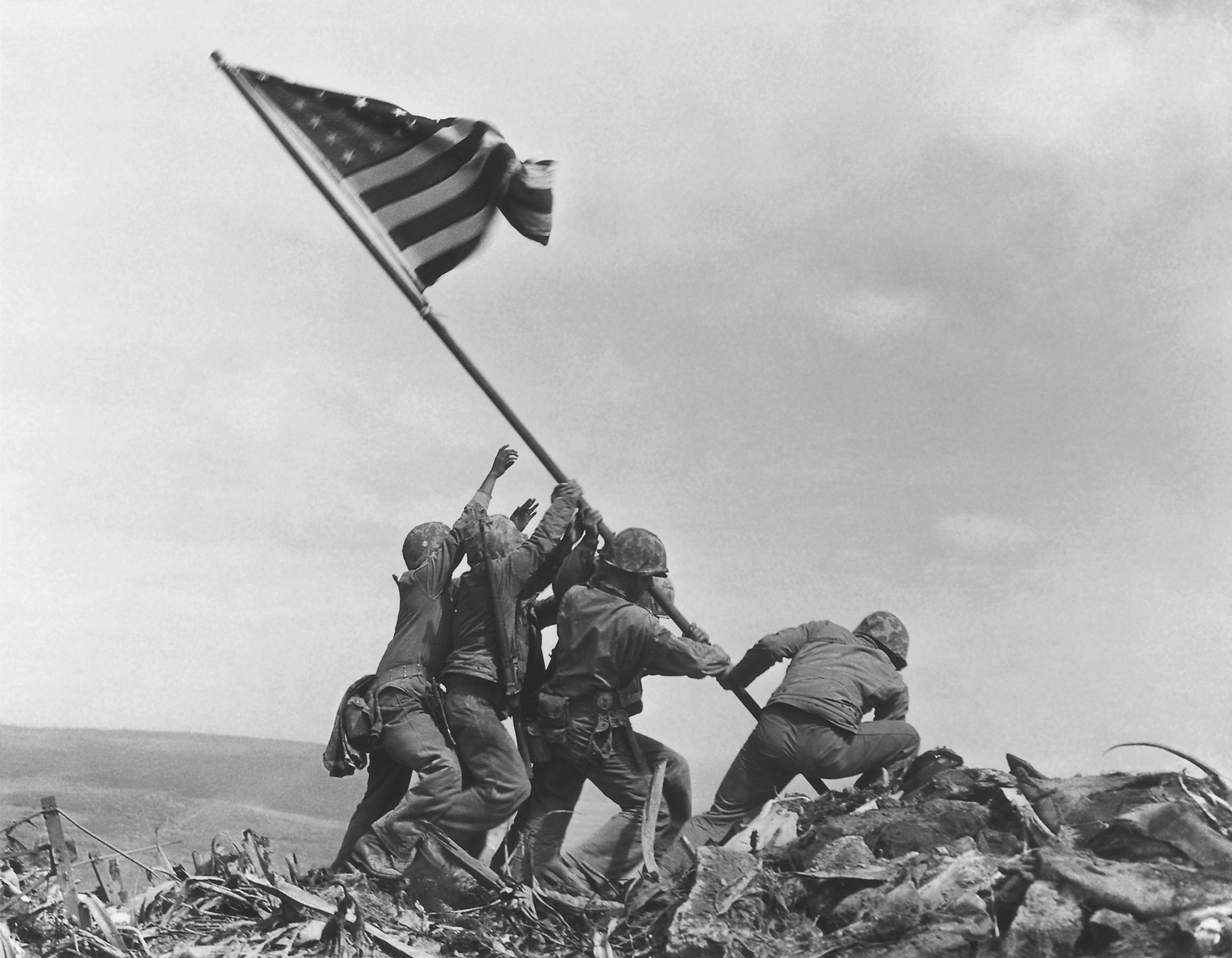
On the morning of 7 December 1941, Japanese naval forces struck Pearl Harbor, and the U.S. Pacific Fleet was mauled within 90 minutes.[9] The next day, the United States declared war on Japan, and the conflict formally became a truly world war. Japan's calculation was clear enough: strike first, seize the oil and resources of Southeast Asia, and then force America to negotiate with a single decisive battle. The flaw in the calculation was its assumption that the opponent would follow its script.
Six months later, from 3 to 6 June 1942, the Battle of Midway reversed the course of the Pacific war.[1] American forces sank four Japanese aircraft carriers, destroying the first-line carrier strength of the Japanese navy.[1][9] From then on, Japan lost the strategic initiative, and the war became a war of attrition it could not afford. Pearl Harbor taught the world its first lesson: a surprise attack can win a morning but not a war. Midway taught the second: intelligence, patience, and a little luck often matter more than the tonnage of a fleet.
The Pacific theatre also exposed the racial face of the war more nakedly than anywhere else. Each side portrayed the other as less than human — in the caricatures of propaganda posters, in the abuse inside prisoner-of-war camps, in island battles where almost no prisoners were taken. All of it said the same thing: once the enemy is no longer treated as a person, war has no floor. This was not a problem of East or West; it was a shared human weakness. We are far too ready to translate fear into hatred.
Chapter FourThe Winter of Turning Points
In the winter of 1942, the direction of the war reversed in several places at once. El Alamein in North Africa, Midway in the Pacific, Stalingrad on the Eastern Front — doors closing almost simultaneously. The Battle of Stalingrad ran from August 1942 to February 1943; the German Sixth Army was destroyed entirely, and after Stalingrad the Wehrmacht never again launched a strategic offensive in the east.[9]
To the north, Leningrad was besieged for 872 days, from 8 September 1941 to 27 January 1944, and roughly one million civilians died inside the city, most of them from starvation.[8] In the coldest winter of the siege, hunger proved a more effective weapon than shells, and the city survived on a supply line opened across a frozen lake — yet it never surrendered. A city can be encircled, bombed, and starved of a million people, and still refuse to hand itself over. That is the hardest thing about this war to explain, and the most worth remembering.
Turning points deserve close attention because they are never the miracle of a single day. The victory at Stalingrad belonged to soldiers fighting house by house through the ruins, to a home front that turned an entire country into an arsenal, and to generals who had finally learned not to underestimate their enemy. Wars are rarely decided by genius; more often they are decided by who is exhausted first, and who makes the mistake from which there is no recovery. In 1942, Germany and Japan made the same mistake: believing they could win one more great battle, while their opponents had learned how to lose slowly and endure.
Chapter FiveIndustrialised Murder
The darkest page of the Second World War is not found on any battlefield. The Holocaust was the systematic, state-sponsored murder of Europe's Jews by Nazi Germany and its collaborators: some six million Jews were killed, about 2.7 million of them in the killing centres.[3] That figure is not rhetoric; it was reconstructed piece by piece from the Nazis' own documents, from pre-war and post-war demographic studies, and from the testimony of survivors.[3]
In 1933, Europe was home to about nine million Jews; by the end of the war, nearly two out of three were gone.[4] The killing did not happen only in the gas chambers. It happened at gunpoint as well: as many as two million Jews were murdered in mass shootings, many of them falling just outside their own hometowns.[13] Roma, disabled people, Poles, Soviet prisoners of war, and political dissidents were persecuted and murdered under the same logic of race and ideology.[4]
What made the machinery of killing so terrifying was not how advanced it was, but how ordinary. Train timetables, purchase orders for poison gas, architectural drawings for the camps — murder was sliced into countless separate tasks, and each person in the chain only had to do their own small job well, and look away from the whole. Evil did not need demons. It needed only a crowd of people who had stopped asking questions.
Chapter SixAtomic Fire and Ruins
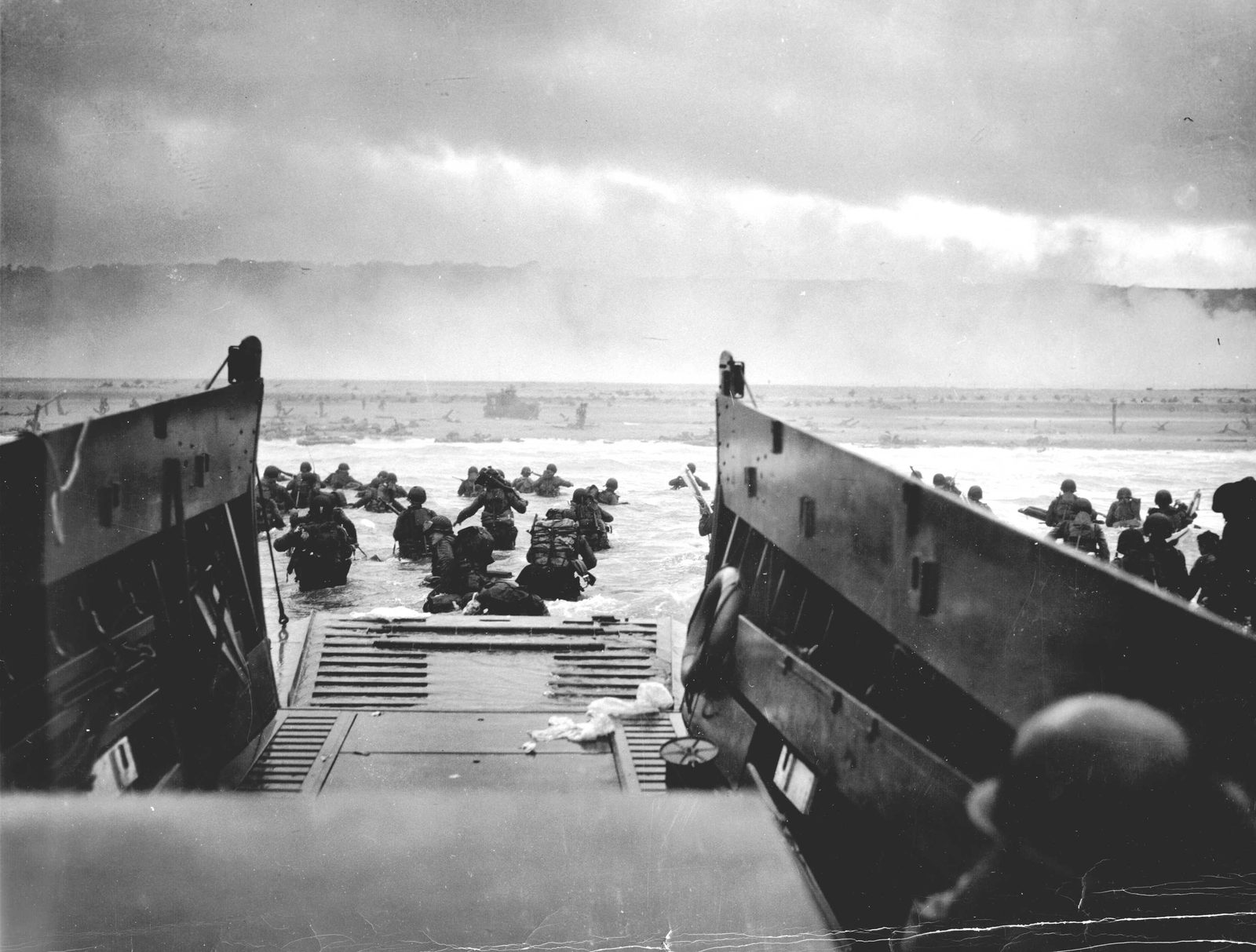
On 6 June 1944, the Allies landed in Normandy, opening a second front in Europe.[1] That winter, Germany launched its last great offensive in the Ardennes; once it failed, the collapse of the Reich was only a matter of time. In February 1945, Roosevelt, Churchill, and Stalin met at Yalta to divide up post-war Europe — victory not yet in hand, and the bargaining over the spoils already begun.[1]
On 30 April 1945, Hitler killed himself in his Berlin bunker; on 8 May, Germany formally surrendered, and the war in Europe was over.[10] But the war in the Pacific went on. On 6 August, an atomic bomb fell on Hiroshima, ultimately killing as many as 140,000 people; on 9 August, a second bomb fell on Nagasaki, killing about 70,000.[6] Japan announced its surrender on 15 August and signed the instrument of surrender aboard the battleship Missouri on 2 September, formally ending the Second World War.[6]
The story of the atomic bomb begins six years earlier. On 2 August 1939, Albert Einstein signed a letter drafted by the physicist Leo Szilard, warning President Roosevelt that Germany might be developing an atomic bomb and that the United States should start its own nuclear programme.[12] The letter designed no weapon, and Einstein himself never worked on the Manhattan Project — but it marked the beginning of an era: the first time scientists discovered that their equations could become a city's ashes. From that day on, knowledge and responsibility could never be separated again.
It is worth facing honestly that the argument over the atomic bomb remains unresolved. Some say it ended the war and saved hundreds of thousands of lives that an invasion would have cost; others say Japan was already near surrender, that the bombing was an unnecessary slaughter of civilians, and that it opened the nuclear arms race. History does not hand out simple answers; it keeps both accounts on the record and leaves the question to us: when victory demands a whole city as its price, what is left of victory itself?
EpilogueThe World That Grew from the Ruins
When the war ended, an estimated 70 to 85 million people were dead — roughly 3% of the world's population at the time.[11] Of those, about 21 to 25 million were soldiers and about 50 to 55 million were civilians: the first time in human history that civilian deaths far outnumbered military deaths.[11] The Soviet Union lost some 24 to 27 million people, China some 15 to 20 million.[11] Every revision of the numbers reminds us of the same thing: the heaviest price always falls on those with the least choice.
Yet something new also grew out of the rubble. On 26 June 1945, the Charter of the United Nations was signed in San Francisco, and it came into force on 24 October 1945, bringing the United Nations into being.[5] Its predecessor, the League of Nations, had failed to prevent war; the new organisation set out with the same ideals and stronger machinery, and the five permanent members of its Security Council were the war's five principal victors.[1] That same year, the International Military Tribunal at Nuremberg opened on 20 November 1945, the first time war crimes were tried before an international court.[14] "I was only following orders" would never again be an acceptable defence.
The post-war world unfolded along the cracks the war had drawn: the Cold War between the United States and the Soviet Union, European integration, the collapse of colonial empires and the wave of decolonisation, and a generation's near-religious longing for peace. None of these were side effects of the war; they were its direct inheritance. Many of the questions we argue about today — whether international law has teeth, whether great-power politics will return, whether technological progress must bring peace — can all be traced back to the rubble of 1945.
The most important lesson of six years of fire may not be how to win a war, but how to keep war from becoming an option again. Peace is not something that grows by itself once the fighting stops. It is an institution that must be maintained daily, a judgement that must be practised again and again, and an ability to keep seeing the other person as a person even in fear. On that morning of 1 September 1939, the world had a chance to turn back. It did not. Are we, today, any better at turning back?