PrologueThe Price of Two Pizzas
On May 22, 2010, a programmer living in Jacksonville, Florida, traded 10,000 bitcoins for two pizzas.
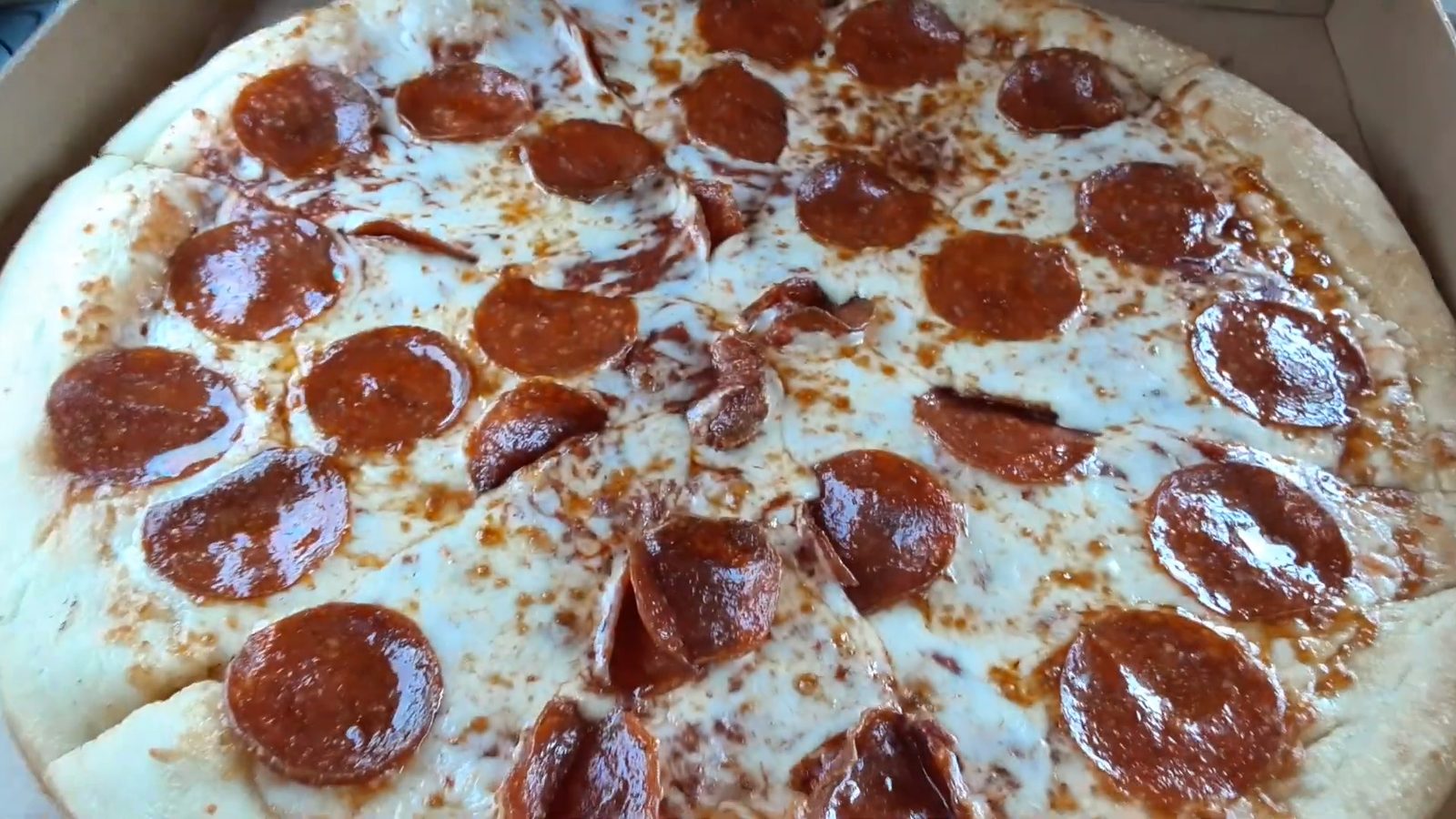
They were two large Papa John's pizzas, costing about $25 in total.[2] The 10,000 bitcoins were worth roughly $41 at the time.[2] Written as an equation, one bitcoin equalled $0.0041. It was the first time bitcoin had a price in the real world that anyone could point to.
People looking back at this story usually ask only one question: how much were those 10,000 bitcoins worth later? But the important part of the story is not that number. It is how the number came to exist. A price does not fall from the sky, and it is not computed by a program. A price is what happens when one person makes an offer and another person accepts, when two people agree on a small thing. May 22, 2010, was the first day that agreement happened.
Chapter OneAn Ad Nobody Answered
In the early hours of May 18, 2010, Laszlo Hanyecz posted a message on the Bitcointalk forum. The title was "Pizza for bitcoins?"[1] He wrote that he would pay 10,000 bitcoins for a couple of pizzas, maybe two large ones, so he would have some left over for the next day. He liked onions, peppers, sausage, mushrooms, tomatoes, pepperoni.[1] What he wanted was not really the pizza. He wanted someone to bring food to his house while he did nothing at all — the way a hotel brings you a breakfast platter, and you are simply happy.
Bitcointalk had only around 230 members at the time.[11] Days passed, and nobody took the deal. On May 21, Hanyecz asked in the thread whether the amount he was offering was too low.[2] A currency that had never been used to buy anything sat there waiting for a bid, and what it got first was silence. That silence is where the story really begins: a currency nobody will accept is only a string of files. The first condition of a price is not mathematics. It is someone willing to stand on the other side.
On May 22, someone finally did. Jeremy Sturdivant, a 19-year-old Briton living in California who went by "jercos" on the forum, took the deal.[11] He ordered two large pizzas from a Papa John's in Jacksonville on his credit card, had them delivered to Hanyecz's house, and received 10,000 bitcoins in return.[2] Later that day, Hanyecz returned to the forum to report: "I just want to report that I successfully traded 10,000 bitcoins for pizza."[1] That transfer is still on the blockchain today, recorded in block 57,043.[13] In the moment the trade completed, bitcoin stopped being only a technical demonstration. It became something you could exchange for dinner.
Chapter TwoA Price Calculated from Electricity
Before the pizza, bitcoin already had a price of sorts — but it was more like talking to itself. On October 5, 2009, a website called New Liberty Standard published bitcoin's first exchange rate: one US dollar equalled 1,309.03 bitcoins, or $0.000764 per coin.[4] The number had not been called out by any market. The site's operator had calculated it from the cost of electricity — dividing the power needed to run a computer for a year by the bitcoins it mined in 30 days.[4] A week later, on October 12, 2009, a Finnish student named Martti Malmi sold 5,050 bitcoins for $5.02 over PayPal, the first known trade of bitcoin for fiat money.[4]
These numbers were real, but they were all missing the same thing: a purchase in the open, where anyone could see it. A price derived from electricity describes the cost of production, not value. A private trade between two people describes a relationship, not a market. The pizza trade was different. It happened on a public forum, with the price written out for everyone: 10,000 bitcoins, two pizzas, about $25. The reference price at the time came from Bitcoin Market, the first bitcoin exchange, which had gone live on March 17, 2010; its first trade had swapped 333 bitcoins for one dollar.[5] The pizza did not "set" the price. It was simply the first time a price had witnesses.
There is a detail here that is easy to miss: Papa John's never touched bitcoin. Sturdivant paid with a credit card, and the restaurant took dollars.[2] Strictly speaking, this was not bitcoin paying a merchant. It was a barter between a bitcoin holder and a stranger, with a credit card in the middle. New money never arrives out of nowhere. It always enters through the pipes of the old world. The impurity of the first transaction is precisely what makes it honest.
Chapter ThreeWhy Pizza
Hanyecz was not trying to become famous, and he was not trying to invest. His post says so plainly: he was hungry, he liked leftover pizza, and he wanted someone to bring food to his door.[1] A hungry person trading what he has for dinner is the oldest transaction there is, and the most honest motive. Later, people turned the story into a fable about wealth. For the man in it, it was first of all a meal.
That it was pizza is no accident. For money to become money, it must first buy ordinary things. Gold can buy land and banknotes can buy bread, but the first lesson of any new currency is always the same: can it buy one small thing you want today? Pizza is ordinary enough, concrete enough, and ambitious enough about nothing. It promises no future and no revolution. It is simply hot, edible, and wanted now. A currency that cannot buy a pizza cannot buy anything.
Nor did Hanyecz stop there. He kept the offer open on the forum and spent the whole summer of 2010 buying pizzas the same way; he later said in an interview that he had spent close to 100,000 bitcoins on pizza that year.[11] This was not a single slip. It was a sustained experiment. He was not spending money. He was testing whether this thing could function as money at all. The result is written in the ledger: a person willing to use it again and again to buy dinner is the plainest credit rating a currency can earn.
Chapter FourTwo Pizzas, One Market
After the pizza trade, price discovery suddenly accelerated. In July 2010, Mt. Gox went live; on July 17, its first trade matched 20 bitcoins for $0.99, or $0.04951 per coin.[3] Within two months, bitcoin's price was already 12 times what it had been on pizza day. A place where buyers and sellers could meet in real time now existed, and the price no longer had to wait for someone to get hungry. It began to move on its own.
This is what the birth of a market looks like. Nobody designs it. A crowd walks in, each person carrying a private judgment, and they bid, trade, change their minds, and bid again, slowly grinding out a number everyone can live with. The pizza trade was the market's first brick: it proved that someone would publicly bid for bitcoin. Mt. Gox turned that into a 24-hour routine. From that day on, the price of bitcoin was no longer an advertisement. It was a curve.
But a curve has one cruel property: it only moves forward, and it waits for no one. The $0.0041 of May 2010 now exists only in memory. Every market is born the same way — first, one person agrees to a trade at a price that looks absurd, and then everyone who comes after takes that price as the starting point, never to return.
Chapter FiveThe Year the Founder Left
2010 held more than pizza. That December, Satoshi Nakamoto, the inventor of bitcoin, walked away. On December 11, he warned on the forum that the attention brought by WikiLeaks would send "the hornet's nest" swarming toward a project that was not ready for it;[8] on December 12, he published his last public post, about denial-of-service protections in version 0.3.19, and never appeared again.[7]
Set side by side, the two events have a strange symmetry. In May, an ordinary person bought dinner with bitcoin, proving that the thing could run without its inventor. In December, the inventor himself turned and left, handing the thing to the crowd. The true coming of age of a currency is not that someone prices it. It is that it no longer needs any particular person. Hanyecz's pizza and Nakamoto's farewell say the same thing: from now on, the value of bitcoin would be decided by everyone who used it, and guaranteed by no one.
Nakamoto's white paper was published on October 31, 2008, under the title "Bitcoin: A Peer-to-Peer Electronic Cash System."[6] It says nothing about pizza, nothing about price, nothing about exchanges. It only describes a way to transfer value without a middleman. Two years later, a hungry programmer added the chapter the white paper had left out: this method could buy dinner.
Chapter SixA Number You Can Never Go Back To
Then comes the part everyone already knows. In 2017, bitcoin reached $19,700, and those 10,000 coins were worth $197 million; in November 2021, bitcoin set a record high of $68,789, and the same 10,000 coins were worth $687.89 million.[9] Every May 22, someone does the arithmetic again. The number grows larger each year, and the story sounds more like a joke each year.
But the joke has a blind spot: it judges a decision made then by a price discovered later. In May 2010, nobody knew bitcoin would reach $68,789 — not even Hanyecz. Sturdivant spent almost all of the 10,000 bitcoins before the price ever crossed one dollar, on travel, on goods, on living his life.[10] He was not foolish. He simply did with bitcoin what bitcoin was invented to do: he spent it.
Regret is the privilege of hindsight. When we call those the most expensive pizzas in history, what we really mean is that the world changed afterwards, and the people in it did not know. But every price works this way: a trade that looks absurd today may look like a bargain in ten years, and a decision that looks shrewd today may look empty in ten. The real lesson of the pizza trade is not "never spend your bitcoin." It is that no one, in the moment, can know the future of a price. Hanyecz made no mistake. He simply paid tuition earlier than everyone else — and the tuition was dinner.
EpilogueThe Day Price Was Born
Today, the price of bitcoin flickers every second, and exchange tickers glow like neon. But every price curve can be traced back to one afternoon on May 22, 2010: one person was hungry, another took the order, and two pizzas arrived at the door. Before that moment, bitcoin was an idea. After it, bitcoin was a price.
What is a price? Not a number, but an agreement. What is an agreement? Two people nodding over a small thing, and then a third person, and a three-hundredth, and a three-millionth, nodding after them. The nod shared by Hanyecz and Sturdivant was later written into block 57,043, into the Guinness World Records, and into an anniversary observed every May 22.[12][13]
Every May 22, bitcoin communities around the world order pizza to mark the day. Some treat it as a joke, others as a holiday. But what it really commemorates is a very small thing: one person willing to believe first, and another willing to believe after him. Every market begins with two nods like that.
The two pizzas are long gone. What remains is the answer to a question: how does something go from having no price to having one? The answer is simple, and it is hard: find one person, in broad daylight, and trade it for something you truly want. On May 22, 2010, someone did exactly that. From that day on, the world had one more price — and one more possibility.