PrologueDecember 10, 1948, Just Before Midnight
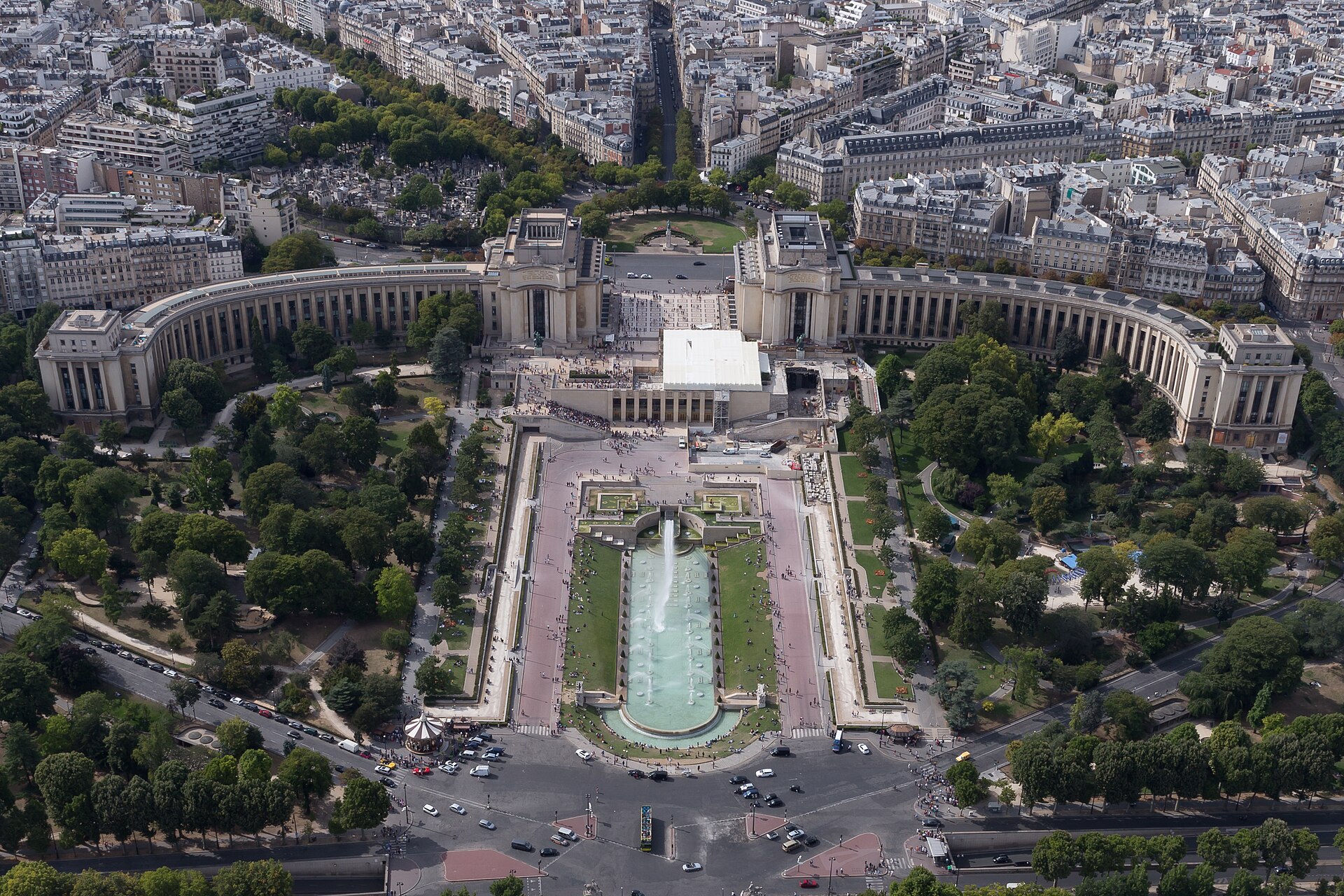
Late on the night of December 10, 1948, in the Palais de Chaillot in Paris, the lights were still on in the hall of the third session of the United Nations General Assembly. The delegates of 58 member states sat in their seats, waiting for the final vote on a document. The vote was completed just before midnight: 48 in favour, none against, 8 abstentions, and 2 states that did not vote.[2]
Not a single country said no. That almost never happens at the United Nations — and the document, when you come down to it, was only a page of paper. It was not a treaty. It carried no legal force, no court, no police, no penalty. A country could sign it and throw a dissident in prison the next morning without facing a single lawsuit.
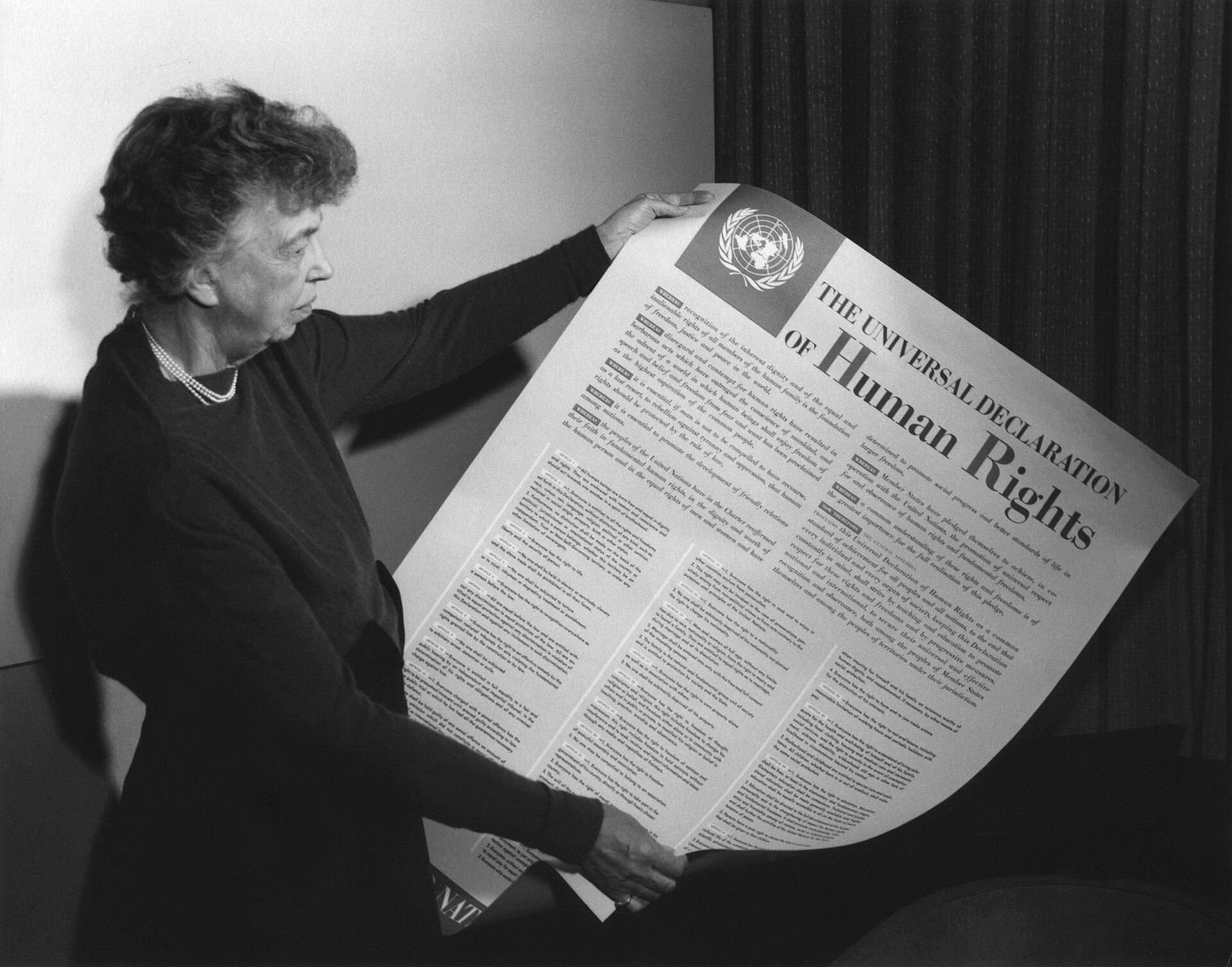
The night before, Eleanor Roosevelt, chair of the drafting committee, had stood at the same rostrum and told the Assembly: "We stand today at the threshold of a great event… This Universal Declaration of Human Rights may well become the international Magna Carta of all men everywhere."[4] She said "may well". She knew better than anyone that whether those words came true would not be decided by tonight's vote, but by what the world did with this page over the decades to come.
Chapter OneWhy 1948
To understand why 1948, go back three years. The Second World War ended in 1945, leaving tens of millions dead, cities levelled, and people walking out of concentration camps. The war taught the world one thing: there is no bottom to what a government can do to its own people — and until then, international law had almost nothing to say about it.
On June 26, 1945, the Charter of the United Nations was signed in San Francisco. It spoke of human rights, but it never said what human rights were. A word had been written into the Charter, but no one had defined it — like a house with an empty room, the nameplate on the door, and nothing inside.
The Nuremberg trials gave the first answer. Between 1945 and 1946, the victorious powers set up an international military tribunal to try Nazi war criminals. The defence was almost always the same: "I was only following orders." The tribunal's answer went down in the history of international law: following orders is no excuse. What a state does to its own people was no longer merely an "internal affair".
In February 1946, the United Nations Economic and Social Council created the Commission on Human Rights and gave it a task: turn the two words "human rights" into a list the whole world could accept. The Commission had 18 national representatives, chaired by the American delegate, Eleanor Roosevelt.[6] She was no lawyer and no career diplomat — she was the former First Lady of the United States, a woman who had written a newspaper column for more than two decades and answered readers' letters every week. The United Nations gave her the job not because she knew the law best, but because she knew best how to get a room full of people who disagreed to disagree their way to a result.
The problem was harder than it looked. What is a "right"? The Western delegates said a right is the individual's freedom against the state: speech, belief, assembly. The Soviet delegates said rights come first as work, education and medical care — things the state owes its people. The Chinese delegate said rights cannot be only about the individual; they must also be about responsibility between people. One word, three worldviews. The Commission worked for more than two years before it produced a draft.
Chapter TwoA List, and a Temple
In June 1947, the first draft appeared, written by the Canadian John Peters Humphrey, director of the Division of Human Rights in the UN Secretariat. Over several months he had read national constitutions, declarations and works of legal scholarship from around the world, and distilled them into a list of rights.[6]
The draft went to the French delegate, René Cassin. A jurist, a veteran of the First World War, the legal architect of Free France, Cassin rearranged the list and gave it a shape — he compared the Declaration to the portico of a Greek temple: the foundation was Articles 1 and 2, on dignity, liberty, equality and brotherhood; the four columns were Articles 3 to 27, the first the rights of the individual, the second the rights of the individual in civil and political society, the third spiritual, public and political freedoms, and the fourth economic, social and cultural rights; the pediment was Articles 28 to 30, on the social order that makes these rights real, and on each person's duties to society.[6]
The Drafting Committee had only eight members: Roosevelt in the chair, Peng Chun Chang of China, Charles Malik of Lebanon, William Roy Hodgson of Australia, Hernán Santa Cruz of Chile, Cassin of France, Alexander Bogomolov of the Soviet Union, and Charles Dukes of Britain; Humphrey sat in from the Secretariat. They came from eight countries across five continents, spoke different languages, followed different faiths, and barely agreed on what a "right" was. On June 18, 1948, the Commission on Human Rights approved the draft by 12 votes to none, with 4 abstentions, and sent it to the General Assembly.[2]
Chapter ThreeOne Word, Half of Humanity
The Declaration's most famous sentence is Article 1: "All human beings are born free and equal in dignity and rights." But it almost read differently. The draft in English said "All men are born free and equal". Hansa Mehta, the delegate from India, insisted: change men to human beings. The difference of one word was half of humanity — write men, and whether women counted as people becomes something to argue about; write human beings, and there is nothing to argue about.[7]
Peng Chun Chang of China changed a word in the same article. The draft said human beings were "endowed by nature" with reason and conscience. Chang objected to "by nature" — an idea from 18th-century Western philosophy, he said, not one the East shared. After debate, "by nature" was dropped, leaving "endowed with reason and conscience". In the discussion he quoted Confucius: "What you do not wish done to yourself, do not do to others." Brotherhood, he was saying, does not come from nature; it comes from how people treat one another.[7]
Cassin, too, fought over a single word: the title should read "Universal", not "International". International means between states; universal means every human being. If rights belong only to the "international", they remain a transaction between states; only if they belong to every person do they deserve to be called a declaration.[11]
Roosevelt herself changed no words. She changed the atmosphere. The eight people in the room never agreed for a single day: America wanted liberty, the Soviet Union wanted equality, China wanted responsibility, Lebanon wanted faith. Roosevelt let each of them speak, wrote down every objection, and put into the text whatever could be put in. The drafting itself was an experiment: eight people from different worlds, somehow signing the same document.
Chapter Four81 Meetings, 168 Amendments
On September 30, 1948, the draft went to the Third Committee of the General Assembly, which handles social and humanitarian affairs. Over the next 68 days, the Committee held 81 meetings, received 168 proposals for amendments, and took 1,233 separate votes. Of those votes, 88.08% were affirmative, and 18 articles passed without a single objection.[2]
On December 6, the Third Committee adopted the whole draft by 29 votes to none, with 7 abstentions.[2] On December 9, Eleanor Roosevelt addressed the Assembly. First she made the document's character clear: it is not a treaty, not an international agreement, and not legally binding. "It is a Declaration of basic principles of human rights and freedoms, to be stamped with the approval of the General Assembly by formal vote of its members, and to serve as a common standard of achievement for all peoples of all nations."[4]
Late on the night of December 10, the Assembly voted: 48 in favour, none against. The eight abstainers had different reasons: the Soviet bloc thought the Declaration failed to condemn fascism and said too little about economic and social rights; South Africa objected to the clauses on racial equality; Saudi Arabia opposed the freedom to change one's religion in Article 18.[5]
When the vote ended, midnight was near. Of 58 states, not one voted no — not because they had all lived up to it, but because no country dared to vote against "all human beings are born free" in front of the whole world.
Chapter FiveNot a Law — Yet It Changed the Law
The mockery that followed the Declaration was always the same: it has no teeth. No court can rule on it, no police can enforce it. A country could sign it and ignore it the next morning. The critics were right — but only half right.
The lack of binding force was precisely why it could pass. Had the 1948 document been a binding treaty, the Soviet Union would not have abstained; it would have voted no, and South Africa and Saudi Arabia with it. The 48 votes in favour were possible only because the document bound no one. Roosevelt said so plainly the day before the vote: it is not a law, it is a standard. And the power of a standard is that it needs no court — it only needs to be remembered by everyone.[4]
Once the standard was set, teeth began to grow. In 1966, the United Nations adopted two binding covenants — the International Covenant on Civil and Political Rights and the International Covenant on Economic, Social and Cultural Rights — which entered into force in 1976 and, together with the Declaration, form the International Bill of Human Rights. At least 90 national constitutions have been inspired by the Declaration, and at least 20 African nations that won independence in the decades after 1948 cited it directly in their constitutions. Today, all 193 member states of the United Nations have ratified at least one of the core human rights treaties shaped by it.[5]
It also became the most translated document in the world. Guinness World Records counted 298 languages in 1999, 370 in 2009, more than 500 in 2016, and 562 by 2024. One page of paper, rendered into 562 languages — because behind every language there are people who want to say the same sentence in their own words: all human beings are born free.[9]
In 1968, the Declaration's 20th anniversary, Cassin received the Nobel Peace Prize, the ceremony falling on December 10 — exactly 20 years to the day after the vote. The Nobel Committee's citation was a single sentence: "for his struggle to ensure the rights of man as stipulated in the UN Declaration."[10]
EpilogueA Page Still Being Written
The preamble reads: "Whereas disregard and contempt for human rights have resulted in barbarous acts which have outraged the conscience of mankind."[1] It was written in 1948, about the past. But it can also be read in the present tense — because barbarous acts did not end in 1948.
Article 1 is a single sentence, and no country has yet fully lived up to it. It is not a report card; it is a measuring stick. The use of a measuring stick is not to praise anyone, but to give every deviation a name: when a journalist is jailed, people can say it violates Article 19; when a child cannot go to school because of poverty, people can say it violates Article 26. The advantage of numbered articles is that condemnation no longer needs improvisation — it only needs to be read aloud.
Just before midnight on December 10, 1948, 48 countries voted yes. Seventy-eight years have passed, and the Declaration has not grown old; it reads more and more like a letter to the future. What it promises, no age has yet delivered in full; but from the moment it was written down, how human beings ought to be treated stopped being something to bargain over.
Roosevelt said it "may well become the international Magna Carta of all men everywhere". Seventy-eight years later, the "may well" is still there — and no one has dared to take it back. That is the fate of a page of paper: it guarantees nothing, except one thing — from now on, no one can say they never knew how human beings ought to be treated.