PrologueApril 26, 1986, 1:23 a.m.
At 1:23 a.m. on April 26, 1986, in a nuclear power plant in northern Ukraine, the operators on duty pressed the emergency shutdown button. The button was called AZ-5, and it had exactly one purpose: in danger, to stop the reactor. They pressed it. The reactor did not stop. It exploded.
The explosion lifted the reactor's lid off, set the graphite on fire, and sent a plume of radioactive dust high into the sky, where the wind carried it across Europe. Before that night, "Chernobyl" was an obscure place name on a map. After that night, it became a word for the worst nuclear disaster in human history.
The disaster was not caused by war, by nature, or by aging machinery. It was caused by a test — a test arranged to make the plant "safer." And the test spun out of control not because one person pressed the wrong button, but because an entire system had spent years teaching everyone in it the same lesson: do not question, do not stop, do not tell the truth.
Chapter OneA City Built for a Power Plant
Pripyat was a city the Soviet Union built with its own hands. Founded on February 4, 1970, it had exactly one purpose: to give the workers of the Chernobyl Nuclear Power Plant, 3 kilometres away, a home.
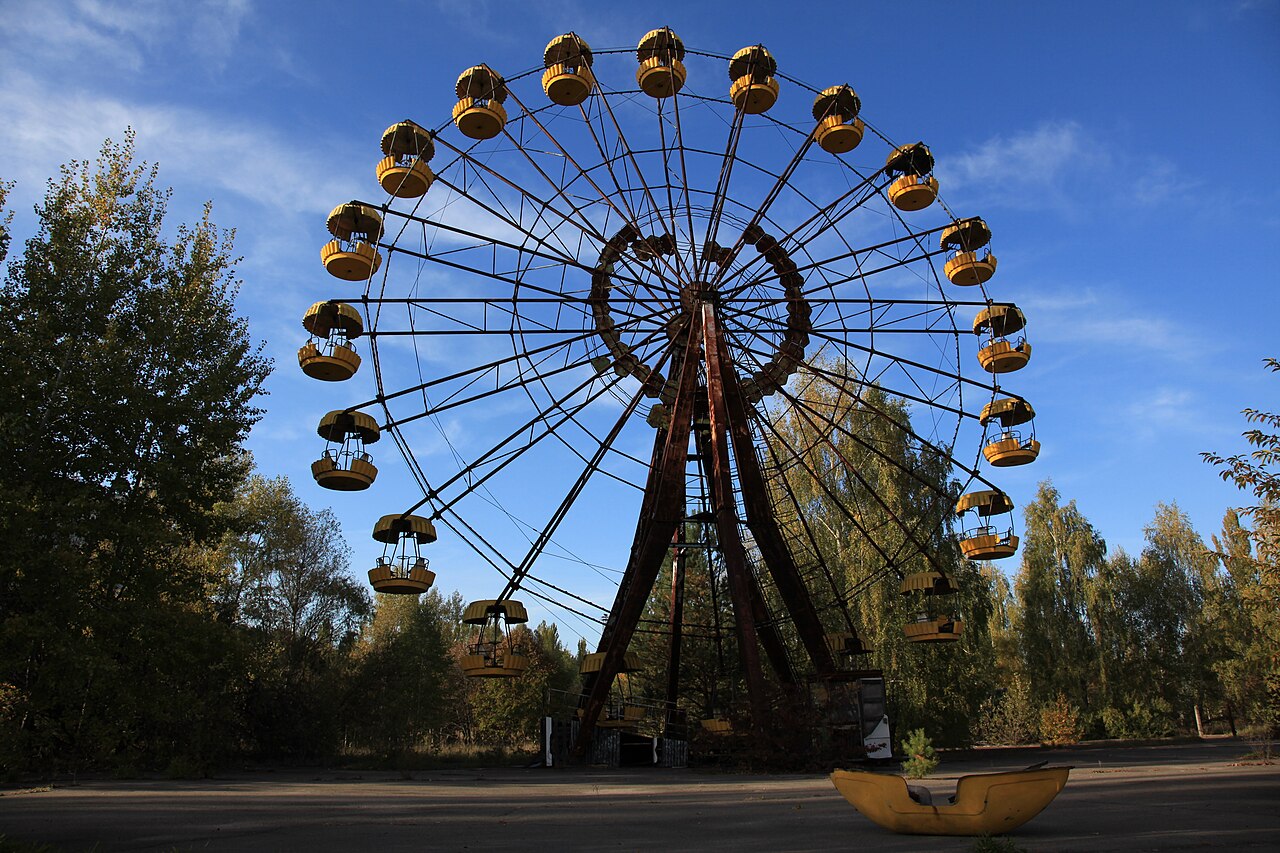
It was a young city. Most of its residents were young families in their twenties and early thirties, and it had one of the lowest average ages of any city in the Soviet Union. It had schools, a hospital, a swimming pool, a cinema, a palace of culture, and an amusement park being rushed to completion for the May Day opening on May 1, 1986. For the people who lived there, the power plant was not just a workplace; it was the reason the whole city existed — clean, modern, and valued by the state.
On the night of April 25, 1986, Pripyat went to sleep as usual. Its residents did not know that Reactor 4, 3 kilometres away, was about to undergo a test. And the people running the test did not know that they were pushing a reactor with a known design flaw toward the most dangerous state it could be in.
Chapter TwoA "Safety" Test
To understand what happened that night, you first have to understand what Reactor 4 was. It was an RBMK-1000 — a graphite-moderated, water-cooled reactor of Soviet design, with an electrical output of 1,000 megawatts.[4]
The RBMK had a fatal characteristic called a "positive void coefficient": once the cooling water began to boil and form steam bubbles, the nuclear reaction sped up instead of slowing down. Western reactors were designed the other way around: less water meant a slower reaction. In an RBMK, less water meant a fiercer reaction. The designers in Moscow knew about this flaw. The operators at the plant did not — the information was classified and never made it into their operating manuals.
The test itself sounded reasonable enough: simulate a total blackout and see whether the spinning turbine, as it coasted to a stop, could still drive the cooling pumps long enough to keep the reactor cool for a few dozen seconds. The test had been scheduled for the daytime shift of April 25, with the most experienced crew, but delays in the power grid pushed it into the night, into the hands of the smallest and least experienced shift.
Worse, the power level had accidentally dropped too low during the handover. To bring it back up, the operators withdrew almost all the control rods — far below the safe minimum. At 1:23 a.m., the test began. Seconds later, the crew sensed something was wrong and pressed AZ-5. But the tips of the control rods were made of graphite, and in the first instant of insertion they pushed the reaction higher still. Within seconds the power surged out of control, the fuel rods shattered, the cooling water flashed into steam, and two explosions blew the lid off the reactor.[4]
The explosion killed 2 workers on the spot. Firefighters arrived within minutes, believing they were fighting an ordinary fire — nobody had told them they were standing on an exposed reactor core, breathing air full of lethal radiation.[1]
Chapter Three36 Hours Later
The 36 hours after the explosion were the most chilling part of the whole disaster. Not because the radiation was at its worst, but because nothing happened at all.
On the morning of April 26, the people of Pripyat woke up, saw smoke rising from the direction of the plant, and were told nothing. Children went to school as usual. Adults strolled in the streets. Some climbed onto rooftops to watch. It was not until the afternoon of April 27 that the authorities finally ordered the whole city to evacuate by radio: bring your papers, bring a little food, you will be back in 3 days.
All 49,360 residents boarded buses within a few hours and left their homes behind. They believed they would return in 3 days. Nobody ever returned. Pripyat became a ghost town.[1]
The Soviet government did not publicly admit the accident until the evening of April 28 — and only because monitors at Sweden's Forsmark nuclear plant had detected abnormally high radiation first, and the Swedish government demanded answers from Moscow. The lie could no longer hold.[4]
The evacuation zone was then extended to a radius of 30 kilometres. About 115,000 people were evacuated during 1986, and about 220,000 more were relocated from contaminated areas in the years that followed. In the end, around 350,000 people were forced to leave their homes, and the Exclusion Zone covered about 2,600 square kilometres.[2]
Chapter FourThe Liquidators
After the explosion, the Soviet Union mobilized the largest cleanup force in human history. They had a name: the liquidators.
About 600,000 liquidators were officially registered, including soldiers, firefighters, miners, drivers, doctors, and helicopter pilots. In 1986 and 1987 alone, about 440,000 of them worked at the site. Their job was to bury the wreckage of the reactor, scrape away the contaminated soil, and build a sarcophagus over the ruins.[2]
The sarcophagus was begun in May 1986 and finished in November — just 206 days. It used 400,000 cubic metres of concrete and 7,700 tonnes of metal. Of the 90,000 people who built it, many worked in shifts in high-radiation conditions, allowed only very short stays at a time.[7]
What the liquidators paid for it remains a number nobody agrees on. Within a few months of the accident, 28 of the 134 workers who developed acute radiation syndrome had died. The International Atomic Energy Agency records it this way: the explosion killed 2 people directly, and 28 firefighters and emergency workers died of acute radiation sickness within 4 months.[1]
Chapter FiveThe Invisible Price
The hardest part of Chernobyl to write about is the numbers. Because on the question of "how many people died," there is still no figure everyone accepts.
The direct deaths are clear: 2 in the explosion, 28 from acute radiation sickness — 30 in all. But radiation does not settle its accounts on the day. Iodine-131 has a half-life of only 8 days, yet in the first weeks after the accident it was enough to reach children's thyroids through contaminated milk; caesium-137 has a half-life of 30 years and is still in the soil of the Exclusion Zone today.[2]
The United Nations Scientific Committee on the Effects of Atomic Radiation (UNSCEAR) counts more than 6,000 cases of thyroid cancer reported by 2005 among children and adolescents in Belarus, Russia, and Ukraine, most of them most likely caused by radiation exposure shortly after the accident. The same assessment also notes that, apart from this increase, there is no evidence of a major rise in overall cancer incidence or mortality attributable to radiation.[2]
Estimates of the long-term death toll range from about 4,000, in the United Nations' assessment, to about 16,000 across Europe. The size of that gap is itself part of the story: when a state conceals the truth at the beginning, every accounting that follows is doomed to be uncertain.[4]
And there is a price that appears in no statistics at all. Hundreds of thousands of people forced from their homes lost their houses, their jobs, and their communities; many spent the rest of their lives in fear and stigma, wondering whether radiation was harming them. Studies after the Soviet collapse found that the psychological trauma and social loss suffered by evacuees sometimes ran deeper than the radiation itself.
EpilogueA Hundred Years From Now
In November 1986, the sarcophagus was sealed. But everyone knew from the start that it was only temporary. It would crack, leak, and age. The real problem was left to the next generation.
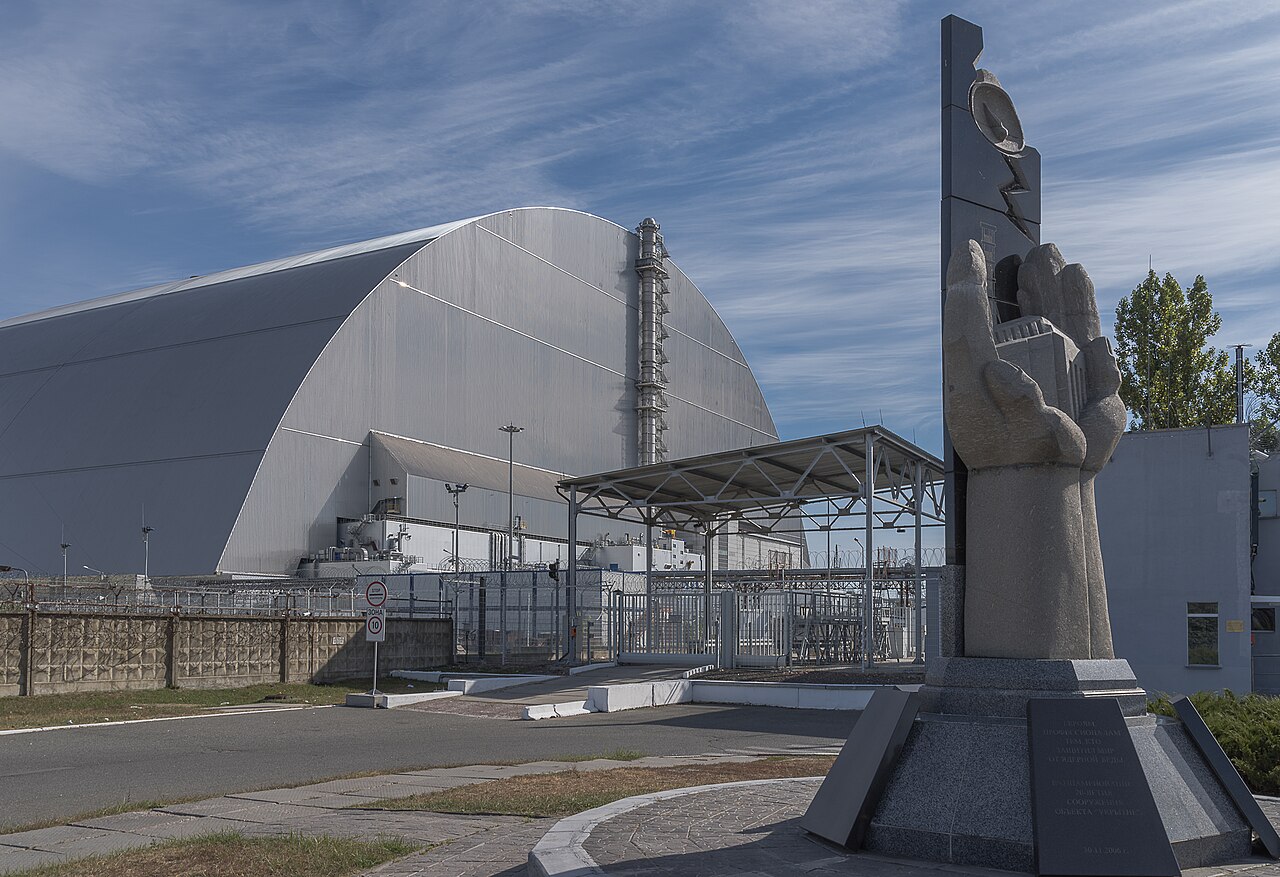
Thirty years later, the international community paid for a second lid: the New Safe Confinement. In November 2016, a steel arch 108 metres high, with a span of 257 metres and a length of 162 metres, weighing 36,000 tonnes, was slowly slid into place over Reactor 4. It cost €1.5 billion, was designed to last 100 years, and was handed over to Ukraine in July 2019. It is the largest movable land-based structure humans have ever built — and one of the most expensive bills ever presented for a single mistake.[7]
There are no people in the Exclusion Zone, but there is life. Wolves, wild boar, lynx, and wild horses breed in the abandoned streets and forests, in numbers greater than before the zone was created. Radiation did not turn the place into a wasteland; the departure of humans handed an entire habitat back to wildlife. That is not a heartwarming ending. It is a cold reminder: for many species, humans are more dangerous than radiation.
On February 14, 2025, during the Russo-Ukrainian war, a drone struck the New Safe Confinement, blasting a hole about 6 metres across in the outer cladding and starting a fire. In December 2025, the International Atomic Energy Agency confirmed that the structure had lost its primary confinement function, though radiation levels had not risen and the load-bearing structure was not permanently damaged. The European Bank for Reconstruction and Development estimates repairs will cost at least €500 million. Forty years on, Chernobyl is not over.[8]
In 2006, Mikhail Gorbachev wrote that the Chernobyl disaster was "perhaps the real cause of the collapse of the Soviet Union, even more than my launching of perestroika." The claim may be exaggerated, but it captures a fact: a state that had to conceal its own reactor explosion for two days could no longer ask its people to believe anything it said. Chernobyl destroyed more than a reactor. It destroyed an empire's credibility.
Valery Legasov, First Deputy Director of the Kurchatov Institute of Atomic Energy, recorded tapes two years after the accident, telling how the reactor's design flaws had long been known and kept secret; on April 27, 1988, the day after the second anniversary of the disaster, he took his own life. The tapes were later made public and became one of the most important first-hand accounts of the catastrophe.
What Chernobyl leaves the world is more than an exclusion zone and a steel arch. It leaves a question no country has yet answered well: when a system rewards silence and punishes people for telling the truth, disaster stops being a question of "whether" and becomes a question of "when." That question does not belong to 1986, and it does not belong to Ukraine. It belongs to every reactor still running, every organization still in session, and every late night when someone is still saying "it'll be fine."