PrologueSeptember 27, 1825: The First Train
On the morning of September 27, 1825, Darlington station in the northeast of England was packed. George Stephenson's locomotive, Locomotion No. 1, pulled a train of wagons carrying some 450 people along the Stockton and Darlington Railway at 15 miles per hour. Stephenson drove it himself, a horseman with a flag riding ahead. Some in the crowd cheered; others covered their ears — they had never heard a sound so loud in their lives.[3]
It was the world's first public railway to carry passengers and freight with steam traction. From that day, "on time" acquired a new meaning: time no longer followed only the sun and the church bell, but the timetable. A person could leave one town in the morning, reach another by noon, and be home by night. Before 1825, that was a speed reserved for kings.
But the train was not the beginning; it was the result. Rewind 60 years: in Britain in the 1760s, a weaver's wife was worrying about one thing — she could never spin yarn as fast as the loom demanded. That small frustration would set off a chain reaction that rewrote how all of humanity lives. And the chain reaction began not with an invention, but with a question: when hands are not enough, what do people do?
Chapter OneWhy Britain?
The most common misunderstanding about the Industrial Revolution is to treat it as a story of genius inventors. The spinning jenny, the steam engine, the power loom — the names line up like a hall of heroes. But inventions happen everywhere. Why did they add up to a revolution in Britain, in the 1760s? The answer lies not with the inventors, but with prices.
Eighteenth-century Britain had a peculiar combination of prices: labour was relatively expensive, and coal was relatively cheap. As the Oxford economic historian Robert Allen argued in 2009, high wages made it profitable to replace workers with machines, while shallow coal seams near navigable water made energy cheap enough to waste. Coal did more than heat homes: it pumped water out of mines, boiled water to drive steam, and smelted cheaper iron; cheaper iron made cheaper boilers and engine parts, which went into more steam engines. A self-feeding loop began to turn.[9]
The coal figures tell the scale of that loop best. The Cambridge historian E. A. Wrigley calculated that Britain produced about 2.6 million tons of coal a year in the early 1700s, about 15 million tons in the early 1800s, and about 74 million tons in the 1850s — nearly 30 times as much in a century and a half. This was not just digging harder; the whole country had changed its source of energy, from muscle, water, and firewood to sunlight sealed underground hundreds of millions of years earlier.[1]
Britain also happened to hold several other cards no one else held at the same time: a patent system that protected inventors, so Hargreaves, Arkwright, and Watt could all profit from what they made; stable property rights and the rule of law, so merchants dared to put money into factories that might take a decade to pay back; capital and markets from overseas colonial trade; and an agricultural revolution that came first — crop rotation and new tools grew more food and more people, and the surplus people from the countryside walked straight into the town factories. A revolution is never one cause; it is a set of conditions arriving together.
The name "Industrial Revolution" entered general use through the lectures of Arnold Toynbee, published in 1884; he dated the transformation to 1760–1840. The name has stuck around the world ever since, but it is slightly misleading: it sounds like an explosion, when it was more like a slow tide — except that once the tide came in, it never went out.[14]
Chapter TwoCotton First
If the Industrial Revolution had a leading industry, it was cotton. Cotton had one quality no other industry had: it was new from start to finish. Wool had guilds, traditions, and centuries of rules; cotton had none. Nobody had decreed how cotton should be spun or who should spin it, so new machines met no resistance here.
In 1764, James Hargreaves, a carpenter in Lancashire, built the spinning jenny, which let one worker spin 8 threads at once, later 16 or more. Suddenly there was far more yarn than the weavers could handle, and the bottleneck moved from spinning to weaving. In 1769, Richard Arkwright's water frame used water power instead of muscle and spun a stronger thread — but the machine had to stand beside a river, and so the factory was born: workers no longer took work home but walked into the same building every day and stood beside the same machine all day long. In 1779, Samuel Crompton combined the two and built the spinning mule; in 1785, Edmund Cartwright's power loom mechanised weaving as well. Every bottleneck solved created the next bottleneck, and every new bottleneck summoned the next machine.[12]
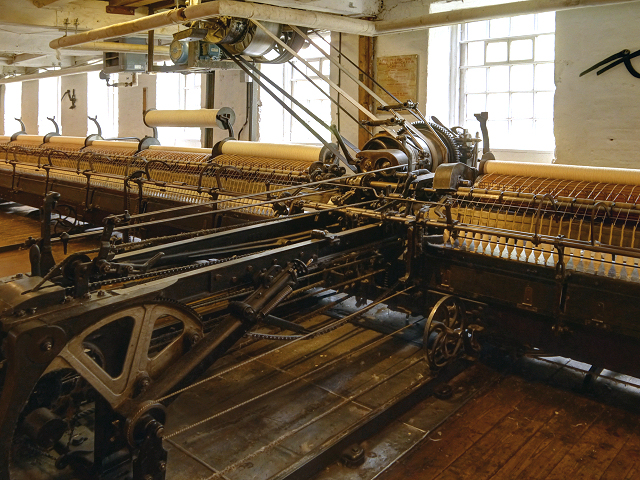
The supply of raw material was unblocked at the same time. In 1793, the American Eli Whitney invented the cotton gin, which cleaned cotton seed dozens of times faster; the cotton fields of the American South expanded in its wake, and slave-worked plantations became the supply chain of Britain's textile mills. This is the least honourable side of the Industrial Revolution: the prosperity of the Manchester spinning mills was tied, across the Atlantic, to enslaved labour.[12]
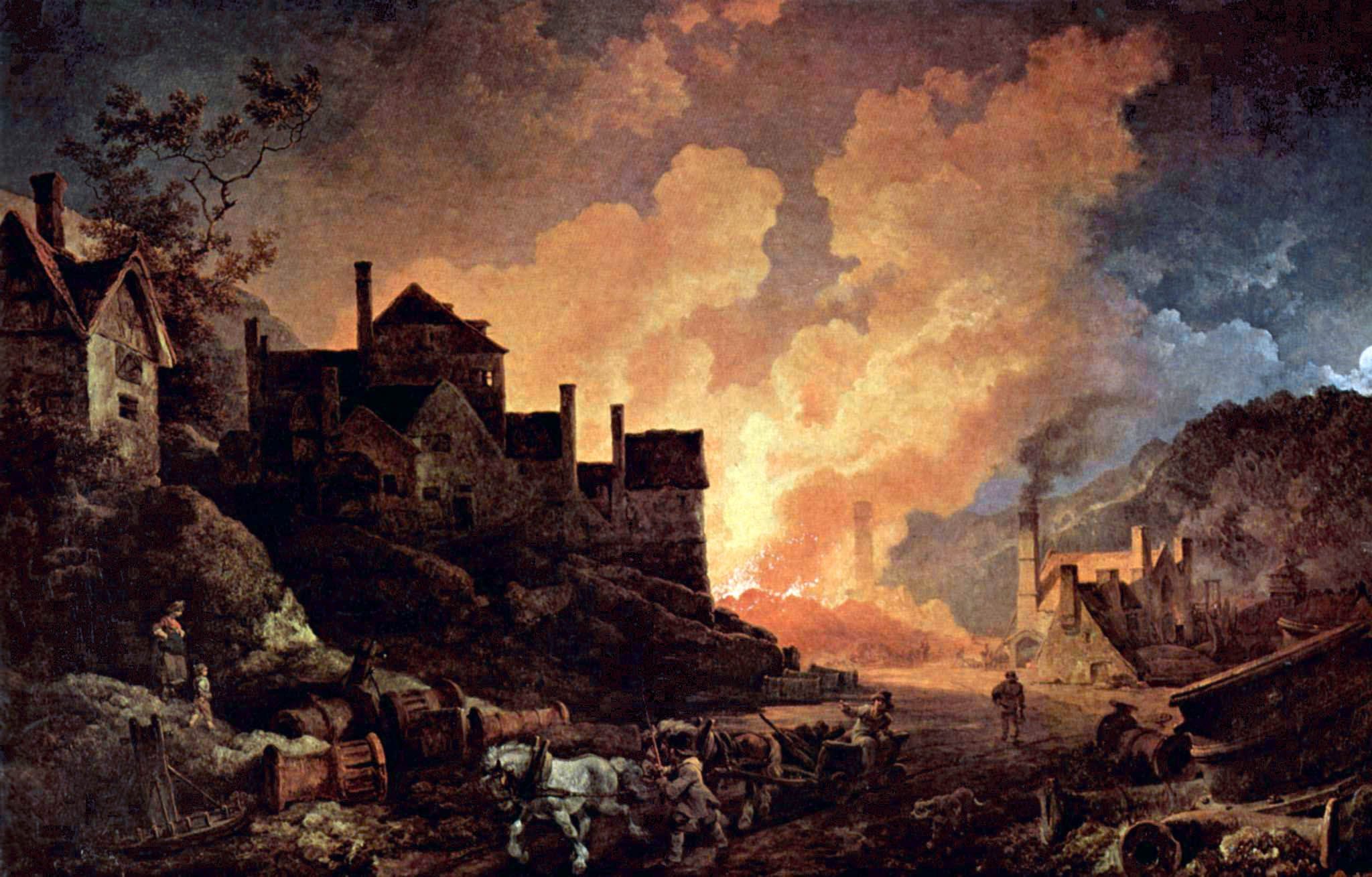
The power side of the story had begun earlier, in 1709, when Abraham Darby smelted iron with coke at Coalbrookdale — cheaper than charcoal, hotter-burning, and no longer limited by the forests. In 1712, Thomas Newcomen built the first practical steam engine, to pump water out of mines. In 1763, James Watt was sent a Newcomen engine to repair and found it wasted too much heat; in 1769 he patented the separate condenser, and the steam engine's coal consumption fell sharply. Factories could finally leave the riverside and be built anywhere coal could reach. The steam engine's decisive gift was to free power from geography: a waterwheel had to sit on a river, but a steam engine could sit anywhere there was coal. Factories clustered in towns, towns grew a workforce and a market, and the market fed the next round of machines.[12]
Chapter ThreeThe City and the Price
Where factories clustered, people followed. Manchester is the clearest example: in 1750 it was still a town of about 18,000 people; the census of 1801 counted 70,409; by 1851 there were 303,382. In a century it had grown nearly 17-fold. The city grew so fast that no one had time to provide it with houses, sewers, or schools.[4][13]
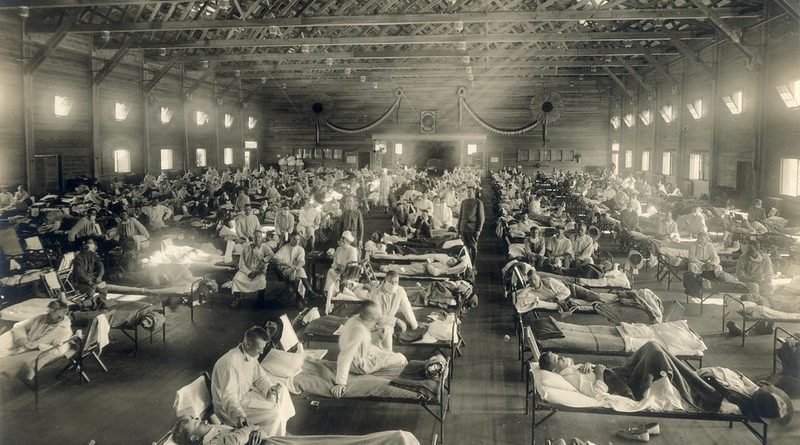
In 1842, the public-health reformer Edwin Chadwick published his Report on the Sanitary Condition of the Labouring Population; a table printed in The Lancet the following year still shocks today: in Manchester, the average age at death among labourers was 17; in the same year, rural labourers in Rutland lived to 38 on average. Same country, same generation — move into an industrial city and you lost 21 years of life. Chimney smoke, crowded housing, and streets without sewers were collecting a different kind of tax.[13]
Child labour in the factories is the hardest part of this revolution to look at. Textile mills liked to hire children: nimble fingers, low wages, and no unions. Children darted between roaring machines; some were sent to clean lint from under machines while they were still running, and one slip could cost a hand. Page after page of parliamentary inquiries laid it bare, and society was finally forced to face the fact that the ledger of efficiency had a column no one wanted to fill in.
"An Act to regulate the Labour of Children and young Persons in the Mills and Factories of the United Kingdom."
— The Factory Act of 1833
On August 29, 1833, Britain passed the Factory Act: no child under 9 could be employed; children aged 9 to 13 could work no more than 9 hours a day and 48 hours a week; those aged 13 to 18, no more than 12 hours a day; no one under 18 could work at night; child workers had to receive 2 hours of schooling a day; and the government appointed 4 factory inspectors to enforce the law. It was the first time in history that a state used the law to tell the machine: this far, and no further. The law did not stop the factories, but it established a principle — the pace of progress must not be paid for by those with the least power to bargain.[5]
Chapter FourThe Machine Breakers
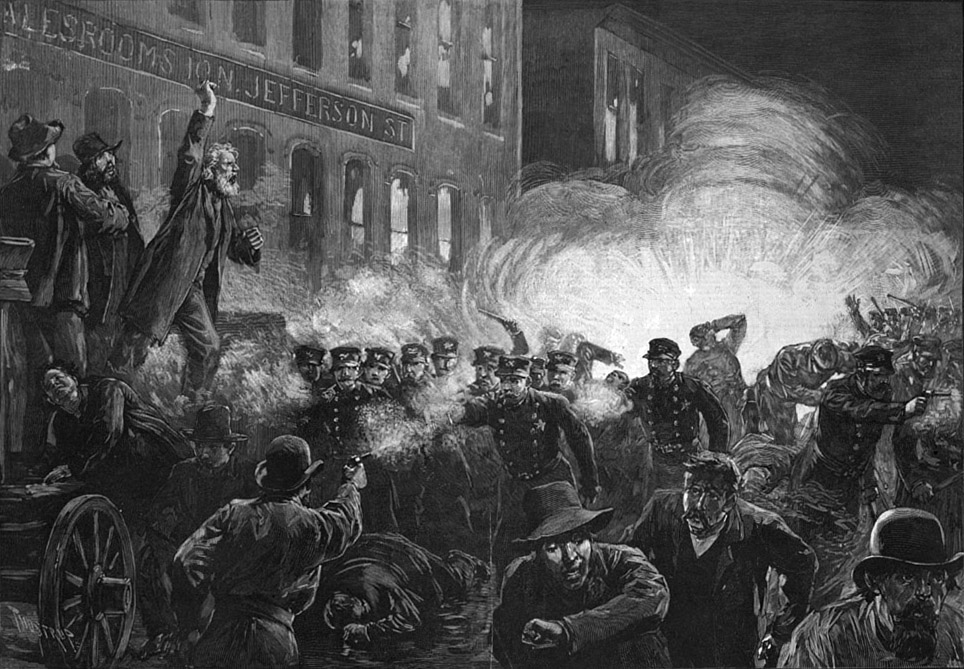
Not everyone saw the machine as progress. From 1811 to 1816, textile workers across the north and Midlands of England rose in the Luddite movement: by night they broke into factories and smashed the new power looms and stocking frames. Their leader was the legendary "Ned Ludd," a fictional general said to live in Sherwood Forest. The movement began in Nottinghamshire and spread to Yorkshire, Lancashire, and the East Midlands. The workers were not smashing machines as such; they were smashing the bargain behind them — the new machines let mill owners produce cheaper cloth with lower wages and poorer craftsmanship.[8]
The government's answer was colder than the machines. In 1812, Parliament passed the Frame Breaking Act, making machine-breaking punishable by death. The poet Lord Byron opposed the bill in his maiden speech in the House of Lords, asking whose interests the law was really protecting: property, or people? The government sent 12,000 troops into the north. In 1813, 15 Luddites were executed at York. The movement was crushed within a few years, but it left a question that is still valid today: when technology makes some people rich and takes others' livelihoods, who is responsible for the gap in between?[8]
Economic historians are still arguing over the answer. Output certainly exploded, but ordinary workers' real wages barely rose before 1830. The first Industrial Revolution was less a consumption revolution than a production revolution: the world became far better at making things, but the people who made them had to wait another generation before life got better. That is why the word "Luddite" has survived to this day — it never meant only the people who smashed machines, but everyone who stands before a new technology and asks, "What about us?"
EpilogueThe Answer Inside the Crystal Palace
On May 1, 1851, in Hyde Park, London, a building of iron and glass called the Crystal Palace opened its doors. The Great Exhibition displayed more than 100,000 objects from nearly 14,000 exhibitors; over five and a half months, more than six million visits were recorded — about a third of Britain's population at the time. Queen Victoria herself came 34 times. The exhibition made a profit of £186,000, which went to build the Victoria and Albert Museum and the Science Museum in South Kensington. The Industrial Revolution had finally learned how to throw itself a celebration.[6][7]
But what the Crystal Palace really exhibited was not machinery; it was confidence. In less than a century, one country had proved that human beings could turn coal into power, power into goods, goods into cities, and cities into a new way of life. The price was on display too: the 12-hour days of child workers, the average age of death of 17 in Manchester, the smashed looms and the executed workers. Celebration and cost were two sides of the same revolution.
The Industrial Revolution never ended; it only changed its name. Every wave of technology since — electricity, the automobile, the computer, artificial intelligence — replays the same set of questions: whose hands will be replaced? Who decides what machines are for? Who does the new wealth flow to, and who pays the price? The British of 1760 had no standard answers, and neither do we. But they left a clue: machines never decide the future on their own. The future is decided by the choices people make in front of machines — whether to legislate, whether to compensate, and whether, alongside speed, to leave a place for people.
Unanswered Questions
If a machine could do your job tomorrow, would you want it to ask you first — or just replace you?