PROLOGUEThe Invisible Factory
The phone in your hand, the television in your living room, the car on the road — their hearts all come from the same thing: a chip smaller than a fingernail. And the world's most advanced chips are made almost entirely on one island, by one company. That company designs no chips at all. It only makes them for others. This is a story about the division of labour — and about how an island invented a business.
According to a 2021 report by the Semiconductor Industry Association and Boston Consulting Group, using 2019 data, Taiwan held 92% of the world's manufacturing capacity for the most advanced logic chips — those below 10 nanometres — with South Korea holding the other 8%. That is not one company's market share; it is one island's share of capacity. In 2025, TSMC alone took 69.9% of the global foundry market's revenue. An island of 36,000 square kilometres holds the throat of the world's most precise industry. How did that happen?
The answer begins 50 years ago, in a factory that made electronic watches. Taiwan had no semiconductor industry at all — it could not make a single transistor. What it had was a group of people who believed that manufacturing could be a business of its own, and a government willing to wait 10 years for a tree to grow.
CHAPTER ONEIt Started with Electronic Watches
In 1973, Taiwan's Executive Yuan founded the Industrial Technology Research Institute (ITRI). The following year, Wen-Yuan Pan, a research director at the American company RCA, drafted a plan for an integrated-circuit industry; on August 17, Minister of Economic Affairs Yun-Suan Sun approved it. In April 1976, ITRI sent its first team of engineers to RCA in the United States to learn complementary metal-oxide-semiconductor (CMOS) technology — not yet the mainstream choice, but prized for using little power.
In October 1977, Taiwan's first integrated-circuit demonstration fab opened at ITRI, producing wafers on a 7.5-micron process. Within 6 months of opening, its yield reached 70%, far above the 50% achieved by RCA, the plant that had transferred the technology. On the strength of watch movements made in that small fab, Taiwan became the world's third-largest exporter of electronic watches. An island with no semiconductor industry had proved, for the first time, that it could make chips.
The demo fab proved the technology worked; the next step was to turn it into a business. On May 22, 1980, ITRI joined the Bank of Communications, China Development Corporation and other investors to put up NT$500 million and found United Microelectronics Corporation (UMC), transferring the 4-inch wafer technology and the whole R&D team — including Robert Tsao, who would later chair UMC. UMC was Taiwan's first semiconductor manufacturer. That December, the Hsinchu Science Park opened, and UMC was its first tenant. In 1985, UMC listed on the Taiwan Stock Exchange, the first semiconductor company in Taiwan to do so.
But UMC followed the mainstream model of the day: design, manufacturing and sales under one roof. Taiwan had its first semiconductor company, but not yet its own answer. That answer would have to wait for a 55-year-old man to come home from America.
CHAPTER TWOA 55-Year-Old Man and an Idea Nobody Wanted
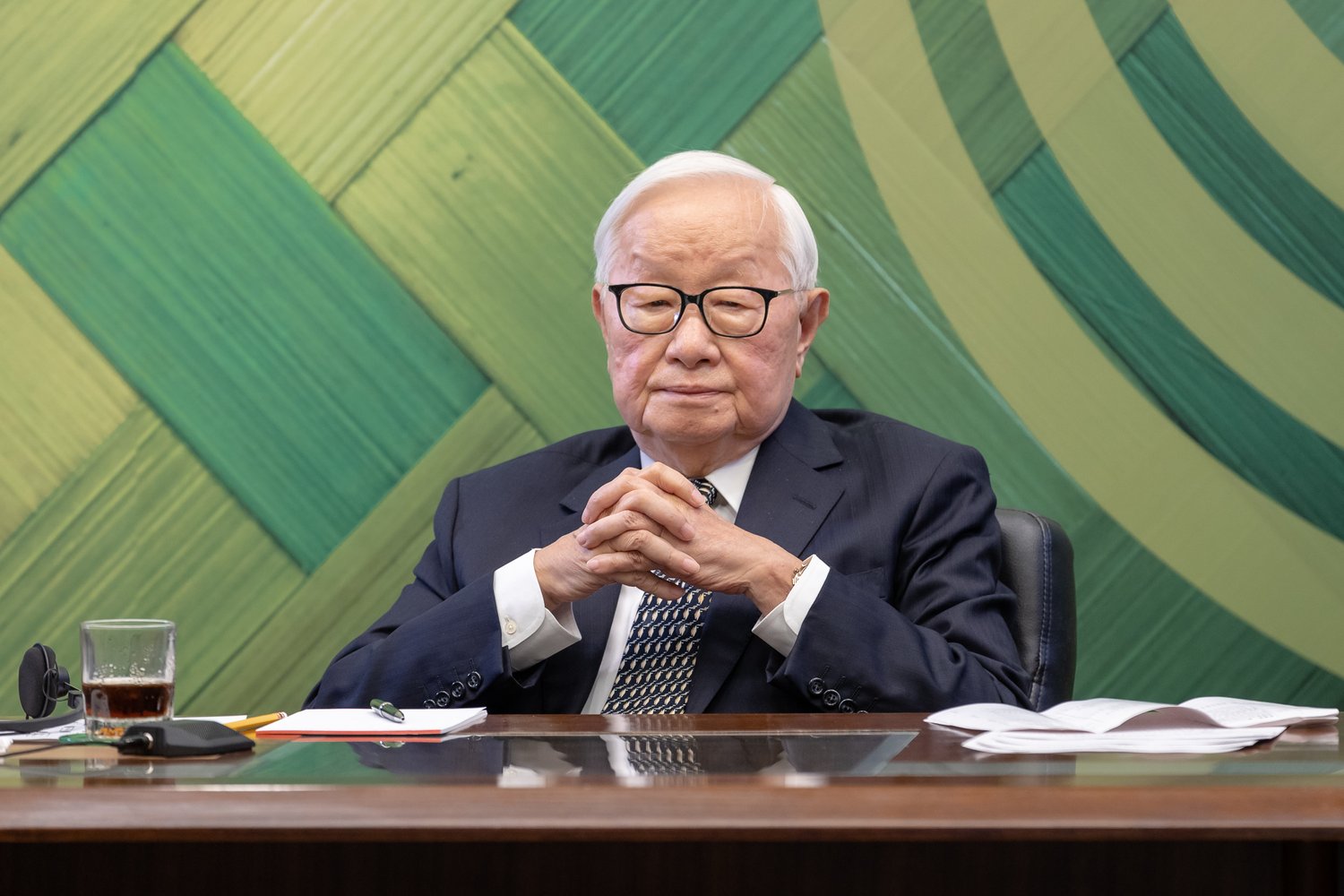
Morris Chang was born in Ningbo, Zhejiang, on July 10, 1931. In 1949, at 18, he left for Harvard, intending to study literature; a year later he transferred to the Massachusetts Institute of Technology to study mechanical engineering, taking a bachelor's degree in 1952, a master's in 1953 and an engineer's degree in 1955. In 1955 he joined the semiconductor division of Sylvania Electric Products, where his job was raising transistor yields; in 1958 he moved to Texas Instruments, where he stayed for 25 years and rose to group vice president in charge of the company's worldwide semiconductor business. TI paid for him to return to Stanford for a doctorate; in 1964, after about 2 years of study, he took a PhD in electrical engineering.
In 1983, at 52, Chang was passed over for the top job at TI. The next year he became president and chief operating officer of General Instrument. In 1985, K.T. Li, a minister without portfolio, and Hsu Hsien-hsiu, chairman of ITRI, invited him back to Taiwan to head ITRI. Two weeks into the job, Li handed him an assignment: plan an integrated-circuit manufacturing company.
Chang's calculation was an honest one: Taiwan had no strength in chip design, no marketing channels and no brands of its own — but it had excellent engineers and operators, and it knew how to manufacture. So why not do only manufacturing? The model he proposed was unheard of: a "pure-play foundry" that would design no chips and sell no products of its own, manufacturing only for its customers. It was a promise to the whole world: I will never compete with my customers.
Nobody in America wanted the idea. Intel and Texas Instruments both refused to invest. Only the Dutch company Philips said yes: US$40 million, plus transferred technology and licensed patents, for a 27.5% stake. Taiwan's National Development Fund put in US$70 million for 48.3% — deliberately kept below half, so the company would not be bound by the rules for state-owned enterprises — and private investors put in US$35 million for 24.2%. On February 21, 1987, Taiwan Semiconductor Manufacturing Company was founded, with Chang as its first chairman. ITRI transferred fabs, equipment, technology and 98 professionals to the new company, whose first fab was leased space on ITRI's Chung-Hsing campus. Chang would later say, many times in public: "Without K.T. Li, there would be no TSMC."
CHAPTER THREEManufacturing Only, Designing Nothing
The pure-play foundry is a business built on trust. When a design company hands its blueprints to a foundry, it hands over its lifeblood — leak the designs, or use them to build competing products, and the design company is finished. TSMC's promise removed that fear: because it designs nothing, it has no motive to steal a customer's design; because it sells no brand, it has no reason to take a customer's market. The more customers it won, the larger the fabs grew; the larger the fabs, the better the yields and the lower the costs; the better the yields, the more customers came. It was a flywheel that spun faster with every turn.
The model also redrew the industry's division of labour. In the mid-1980s, a new kind of American chip company appeared: the fabless company, which designed chips but owned no factory. With TSMC, these companies could turn a design into a product without spending billions on a fab. Design and manufacturing split apart and each specialised: design firms competed on ideas, manufacturers on yield. In 1996, TSMC went further with its "virtual fab" concept, giving customers the control of owning a factory without owning one.
Within 2 years of its founding, TSMC's revenue had reached NT$2 billion. On September 5, 1994, it listed on the Taiwan Stock Exchange; on October 8, 1997, its American Depositary Receipts listed on the New York Stock Exchange, the first Taiwanese company to do so. Chang stepped down as chief executive in 2005, returned after the financial crisis in 2009, and retired formally on June 5, 2018, at 86. The baton passed to Mark Liu and C.C. Wei; on June 4, 2024, Wei became chairman.
CHAPTER FOURWhen the Whole World Came Queuing
The year TSMC was founded, the world's semiconductor champion was Japan. In 1986, Japanese companies held more than 3/4 of the global DRAM market; in 1989, Japan held 51% of the world semiconductor market, with 6 of the top 10 companies Japanese and NEC, Toshiba and Hitachi in the top 3. In 1985, NEC had overtaken Texas Instruments to become the world's largest semiconductor company. Japan's model was the MITI-led, vertically integrated conglomerate, doing design and manufacturing under one roof. In September 1986, the United States and Japan signed a semiconductor trade agreement that set floor prices for Japanese chip exports — the champion's position was already starting to loosen.
At the same time, another force was changing the rules. In 1981, IBM launched the personal computer; in 1984, Apple launched the Macintosh. Computers left the machine room and entered offices and homes, and demand for chips was no longer decided by a handful of large manufacturers but by millions of consumers. More and more companies needed new chips, in more and more varieties — exactly the battlefield where the foundry model was strongest: one factory serving hundreds of designs.
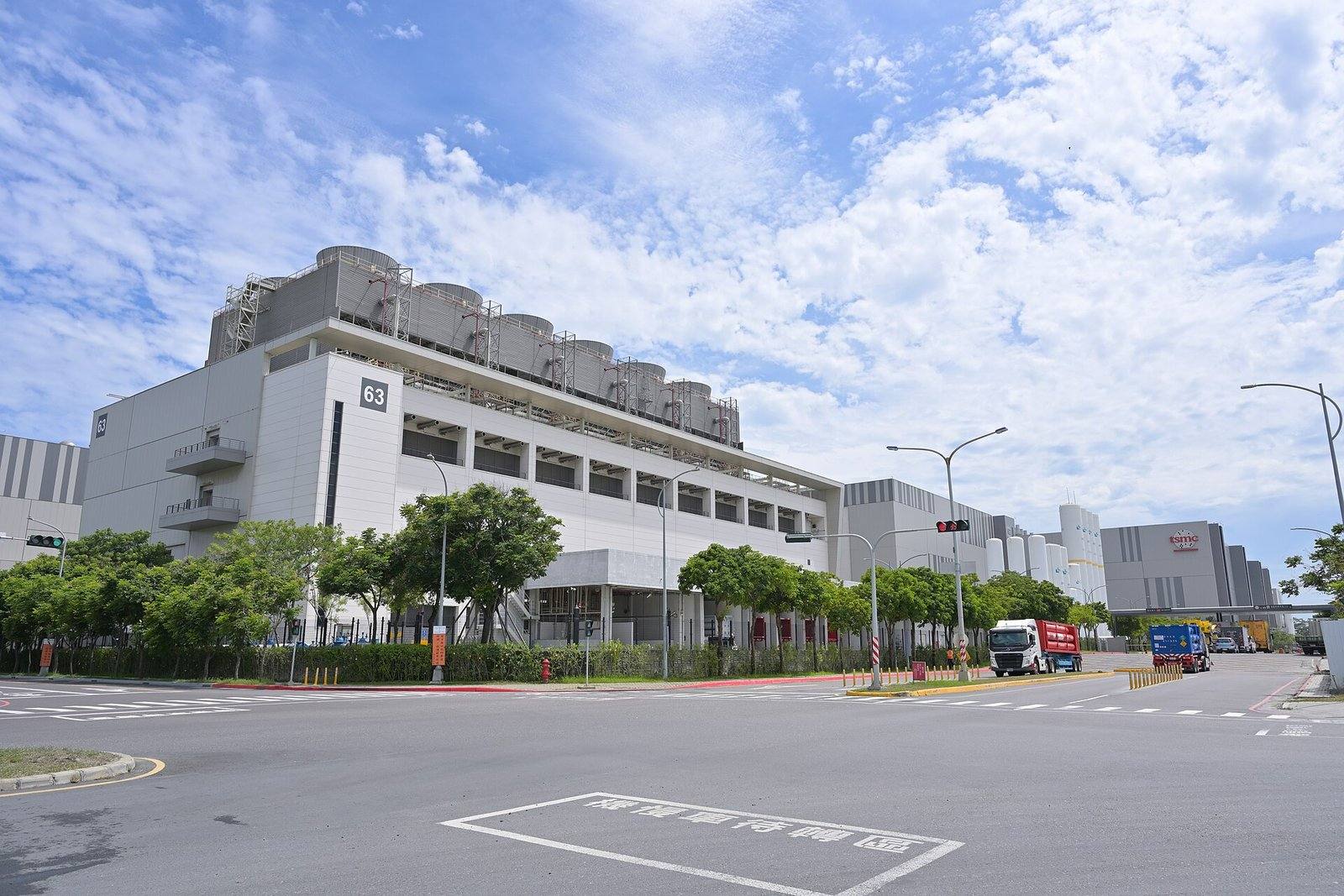
TSMC answered with a long race in process technology. On December 29, 2022, its Fab 18 in Tainan held a ceremony for the start of 3-nanometre mass production, making TSMC the first foundry to move 3-nanometre FinFET technology into high-volume production; in the fourth quarter of 2025, its 2-nanometre process began volume production at Baoshan in Hsinchu, the first to use nanosheet transistors. In 2024, TSMC's revenue was NT$2,894.31 billion and its net income NT$1,173.27 billion; that year it made 11,878 products for 522 customers, 3-nanometre technology was 18% of its wafer revenue, and advanced processes of 7 nanometres and below were 69%. In 2025, revenue rose further to NT$3,809.05 billion, with net income of NT$1,717.88 billion; according to TrendForce, TSMC's share of the foundry market rose from 64.4% in 2024 to 69.9%, while second-placed Samsung had only 7.2%.
CHAPTER FIVEThe Sacred Mountain and Its Weight
Once chips became a chip in geopolitical poker, TSMC began to leave Taiwan. Its first fab in Phoenix, Arizona, began volume production on the 4-nanometre process in the fourth quarter of 2024, and its investment commitment there has grown from an initial US$12 billion to US$165 billion; a second fab is scheduled to begin volume production on the 3-nanometre process in the third quarter of 2027. In Kumamoto, Japan, the first fab opened in February 2024 and began volume production that December, a joint venture with Sony, DENSO and Toyota making 22/28-nanometre and 12/16-nanometre chips. A fab in Dresden, Germany, is under construction.
But the most advanced processes stay in Taiwan: 3 nanometres in Tainan, 2 nanometres at Baoshan in Hsinchu. Taiwanese call the company the "sacred mountain that protects the nation" — an island's fate tied to a company's fate. The name carries pride, and unease: when the whole world depends on a handful of fabs on one island, dependence itself becomes a risk. TSMC's real moat was never geopolitics. It is what 38 years have accumulated: yield, trust, and engineers who know how to squeeze out another 0.1% of yield.
EPILOGUEAn Island Invented a Business
What Taiwan invented was not just a company but a division of labour. Before 1987, the common sense of the chip industry was that design and manufacturing had to live inside one company, because no one could trust anyone else. Chang's bet was the opposite: split design from manufacturing, trade a promise never to compete for trust, and trade serving everyone for scale. The bet won — and won so completely that today, almost all of the world's most advanced chips come out of this model.
Looked at from the end, there is no miracle in TSMC's story, only a series of honest judgements: admit you cannot design, and do only manufacturing; admit you have no large home market, and serve the markets of the whole world; admit a small island has no strategic depth, and make one link in the chain so good that the world cannot do without it. On February 21, 1987, one more small company nobody believed in opened its doors in the Hsinchu Science Park. Thirty-eight years later, it has become the most important company in the world — and it still designs no chips at all.