PROLOGUERain-Fed Fields
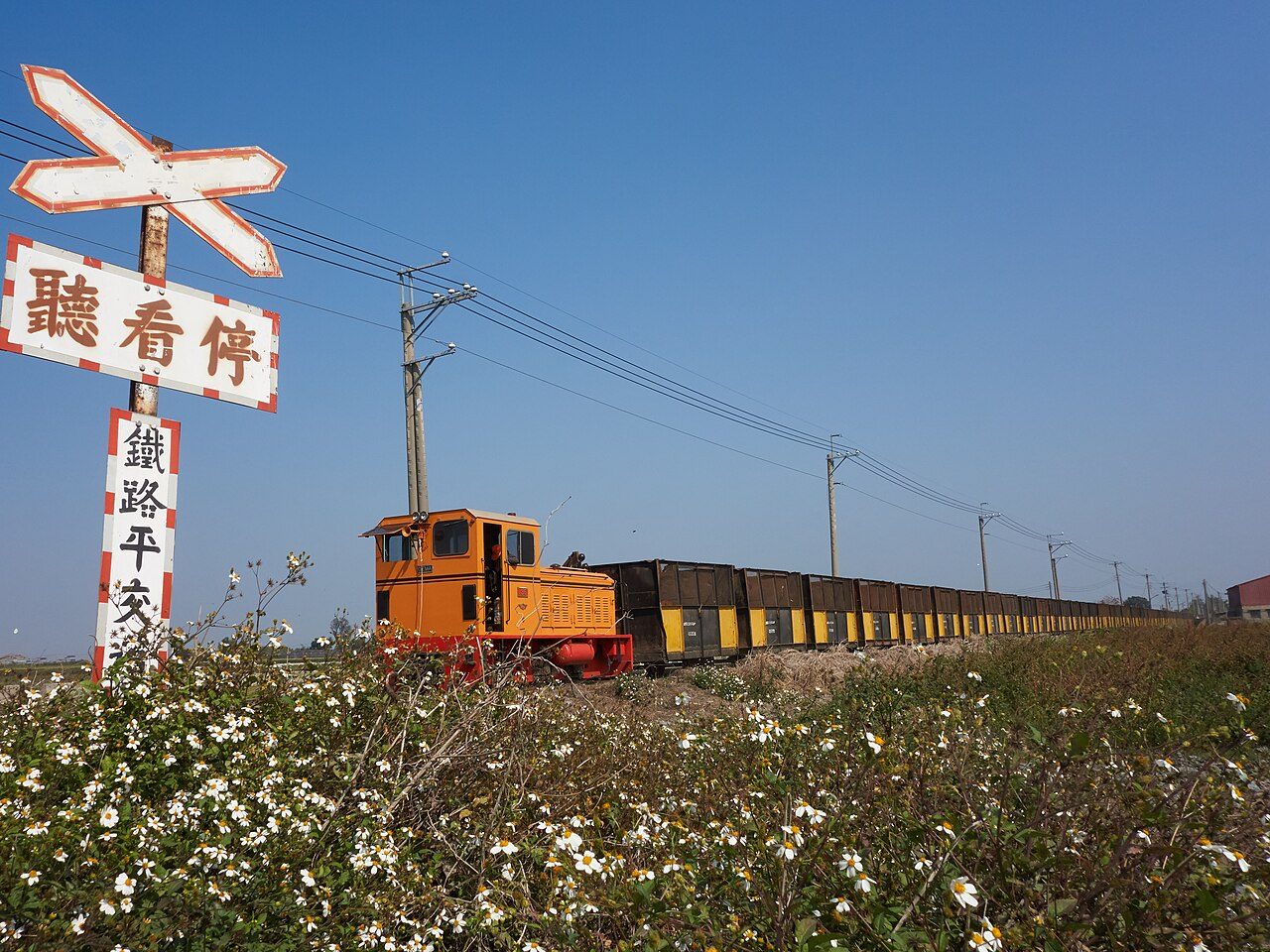
On the Chianan Plain, rain used to be a curse. From May to October it fell too hard, the Zhuoshui River flooded, and fields were washed away. In the other months it barely fell at all; the earth cracked, and salt rose from below ground in white crusts where nothing would grow. The same field could flood, then dry out, then yield nothing at all in a single year. People called such land rain-fed fields — fields that ate at the sky's mercy.
The Chianan Plain is Taiwan's largest plain, its soil flat and fertile. But without reliable water, farmers could plant only one crop a year, and only when the weather allowed. The absurd part was that the water was there: the Zhuoshui and Zengwen rivers carried enormous volumes to the sea every year. Nobody could hold the water back and carry it to the fields. The water ran in the rivers; the fields thirsted on the banks. That contradiction was Taiwan's biggest agricultural problem at the start of the 20th century.
After Taiwan was ceded to Japan in 1895, the Government-General began with land surveys and the trunk railway, putting the island's skeleton together piece by piece; water was the next great task. Without water, the finest land is only a plain on a map.
In 1918, rice riots broke out across Japan. The price of rice soared, and crowds seized grain. Suddenly the rice of the colony was a strategic good of the empire. That same year, a proposal once rejected by the Finance Ministry was pulled out of a drawer.
CHAPTER ONEA Young Man from Kanazawa
Yoichi Hatta was born on February 21, 1886, in Imamachi, Kanazawa, the fifth son of a farming family. In 1907 he entered the civil engineering department of Tokyo Imperial University, and in August 1910, at 24, he took a post with the civil engineering bureau of the Taiwan Government-General and sailed for Taiwan. From that day on, he never left the island again — except for the last time.
His first job in Taiwan was Taipei's sewer system, followed by the planning of Kaohsiung Harbour and the design of the Tainan waterworks. He was promoted to engineer in 1914. From May to July 1916 he toured water facilities in the Philippines, Java, Borneo, Singapore, Macau, and Hong Kong. That same year construction began on the Taoyuan Canal, his first great canal design; completed in 1921, it watered 35,000 hectares of the Taoyuan terrace. The Taoyuan Canal was the practice piece. Chianan was the real work.
After construction began in 1920, Hatta resigned from the Government-General, joined the Chianan Canal Association, and moved his family to the worksite at Wushantou, where he served 10 years as head of the reservoir office. His office was the construction site, and his home stood beside the reservoir.
On August 14, 1917, the 31-year-old Hatta returned to Kanazawa and married Toyoki Yonemura, who was 16. The couple returned to Taiwan together and settled in Sachicho, Taipei — the area around today's Jinan and Zhongshan South roads — and eventually raised two sons and six daughters. That same year, he submitted the Kanden Creek Irrigation Plan to the Government-General: a great reservoir and a great network of canals for the Chianan Plain.
CHAPTER TWOThe Rejected Proposal
Hatta's plan was shockingly large: four times the scale of the Taoyuan Canal, at a cost the Finance Ministry refused outright, calling it too idealistic and insufficiently surveyed. The proposal was shelved. Hatta did not give up. In 1918 he led a team across the Chianan Plain, measuring the land and the water inch by inch.
The turning point came from a riot. In 1918, the rice riots swept Japan; prices soared and crowds seized grain. The colony's food supply suddenly became a matter of imperial importance. On the condition that Taiwan raise part of the funds itself, the Chianan Canal was approved. In 1919 the Kanden Creek Irrigation Association was founded, and Hatta led a team of more than 80 engineers in charge of all surveying, design, and construction. In 1920 the design was finished, and that September construction began — the largest irrigation project in Asia at the time.
The idea was simple and audacious: build a great dam in the low valley around Guantian in Tainan, hold back the Guantian Creek, and turn it into a lake; then draw two main canals, north and south, from the lake to water the whole plain. Where the lake's water fell short, more would be brought in from the Zengwen and Zhuoshui rivers. One lake, two main canals, one network — 150,000 hectares of fields, solved in one stroke.
CHAPTER THREETen Years, One Earthen Dam
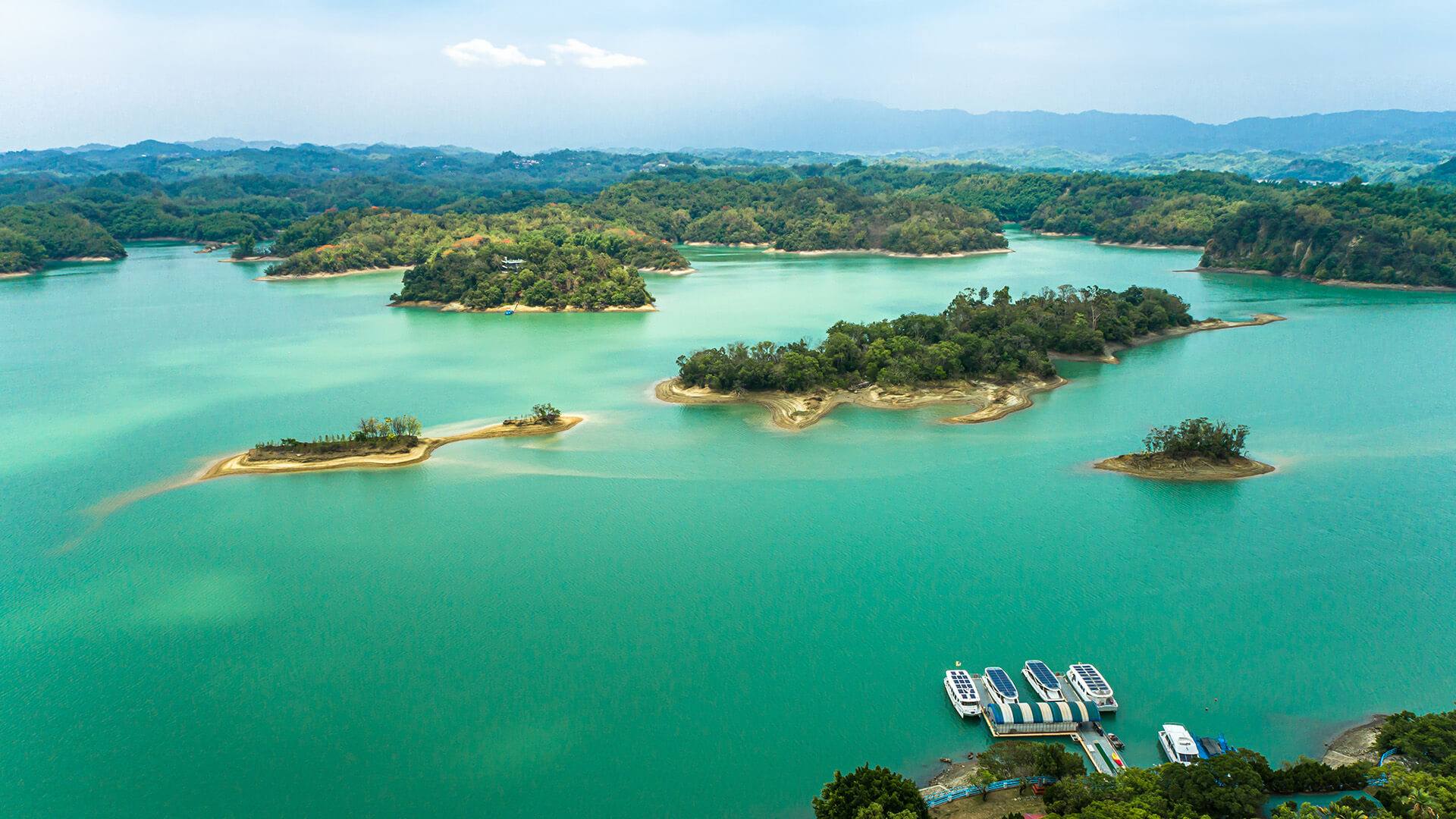
The heart of the project was the dam across the Guantian Creek, in the low valley between Guantian, Liujia, Danei, and Dongshan. It was not built of concrete. Hatta used the most advanced method of the day, the semi-hydraulic fill: earth and rock were piled up from both sides, then washed with water so that fine soil flowed to the centre and formed an impermeable clay core. The embankment ran 1,273 metres long and 56 metres high; it held 150 million tonnes of water behind a lake of 13 square kilometres. The shoreline wound like coral, and the lake came to be called Coral Lake.
Still the water was not enough. The Guantian Creek alone could not serve 150,000 hectares, so Hatta cut a tunnel to bring in water from the Zengwen River, and built a northern main canal to draw directly from the Zhuoshui River. The network split into a southern and a northern main canal, two arms embracing the entire plain.
To bring in the Zengwen River's water, the builders cut a diversion tunnel through the hills, letting another river's water cross the mountains into the lake at Wushantou. The reservoir's catchment grew in one stroke from 60 square kilometres to more than 500.
In 1922 Hatta travelled to the United States, Canada, and Mexico to study large civil works and buy machinery. In 1926 work began on the dam itself. Across the 10 years of construction, the project survived the fiscal tightening that followed the 1923 Great Kanto Earthquake, and the global depression that began in 1929. The total cost was 54.14 million yen — more than half of the Taiwan Government-General's annual revenue at the time.
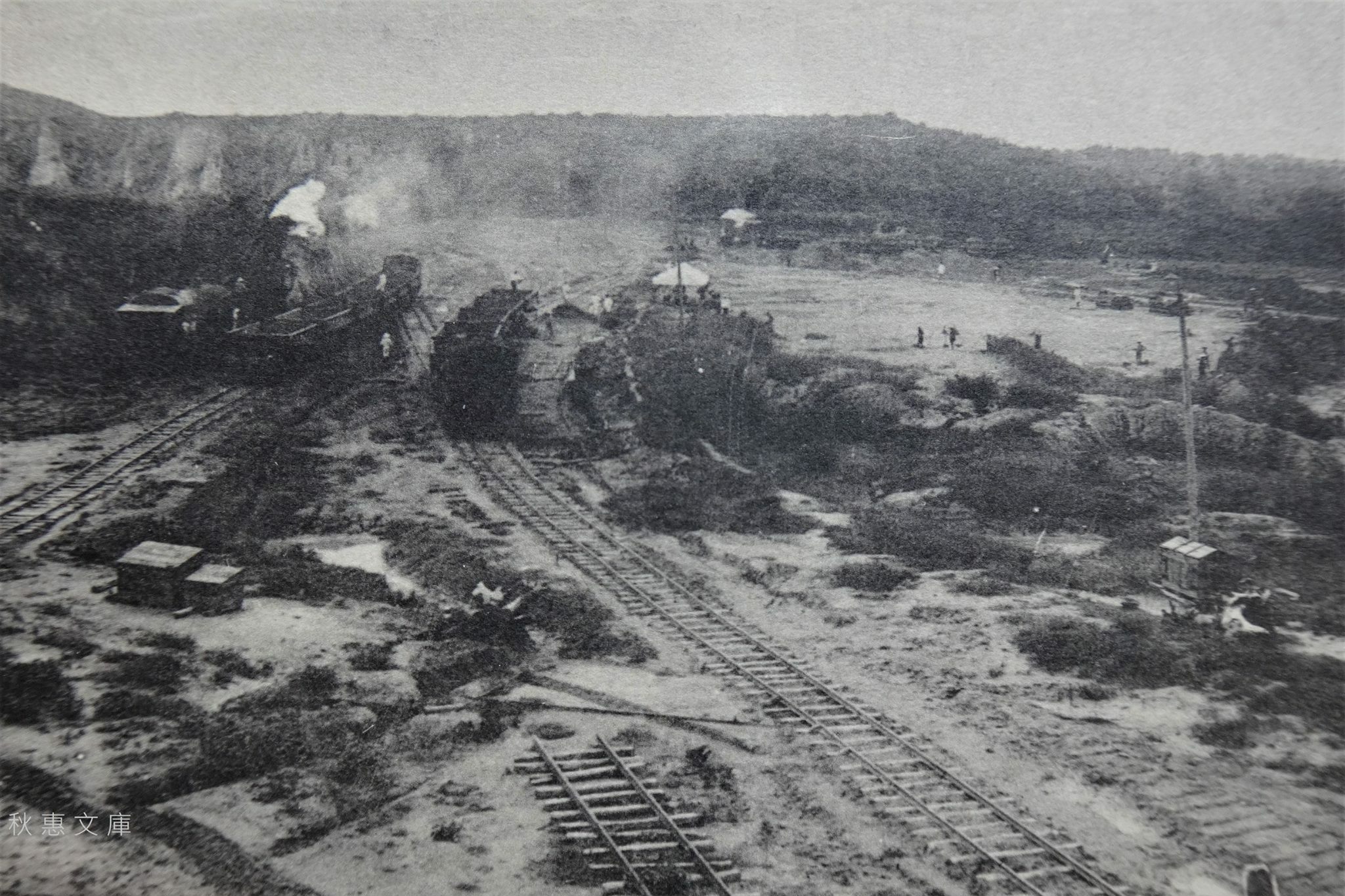
On April 10, 1930, water flowed through the Chianan Canal. Its irrigation channels ran 10,000 kilometres in total, its drainage channels 6,000 kilometres — a network of 16,000 kilometres watering 150,000 hectares. In the year it was completed, it was the largest reservoir in Asia and the third largest in the world. Farmers stood at the water's edge and cheered, calling it water given by heaven.
CHAPTER FOURThe Three-Year Rotation
But Hatta's cleverest design was not the dam; it was the rule. The water was still not enough: the Zengwen River and the reservoir together could not flood all 150,000 hectares at once. His answer was the three-year rotation: divide the 150,000 hectares into three zones, and rotate rice, sugarcane, and coarse grains with green manure — this year the watered zone grows rice, the others grow cane or grain, and the rotation turns every 3 years. Everyone gets water; they just take turns.
A canal plus a rule for taking turns — that was what truly solved the problem of sharing. Building the reservoir answered "is there water"; the rotation answered "whose turn is it." Hatta understood that the other half of engineering is institutions: when water runs short, fairness matters more than volume.
The rotation changed the look of the plain, too. Cane went to the sugar mills, rice to the granaries, coarse grains to the livestock at home, and green manure returned strength to the soil for the next rice crop. No field grew only one thing anymore, and no year brought only one harvest.
The results came quickly. The plain came to produce more than 83,000 tonnes of rice, sugarcane, and other crops each year, and more than 600,000 farmers benefited. Rain-fed fields became Taiwan's granary. Farmers called Hatta the father of the Chianan Canal — not a title granted by officials, but a name the fields gave him.
CHAPTER FIVEThe Taiyo Maru and the Spillway
In 1931 his subordinates raised a bronze statue of him beside the reservoir — a rare honour for a living man. Eleven years later, the war took him. In May 1942, at the Army's request, Hatta boarded the Taiyo Maru bound for the Philippines to survey irrigation. On May 8, the ship was torpedoed by an American submarine off the Danjo Islands in the East China Sea and sank. He was 56.
The tragedy did not end there. In August 1945, Japan was defeated, and the Japanese in Taiwan faced forced repatriation. Toyoki refused to leave the land her husband had given his life to. In the early hours of September 1, she threw herself into the reservoir's spillway. She was 45. Today the couple lie buried together in the cemetery beside the reservoir, looking out over the lake they made.
From 1946 onward, the farmers of Chianan have gathered at the reservoir every May 8 — the anniversary of Hatta's death — to remember him. The memorial has never been interrupted; it has run for nearly 80 years. On May 8, 2011, the Yoichi Hatta Memorial Park opened beside the reservoir, his old residence restored and open to visitors — a quiet meeting place between Taiwan and Japan.
EPILOGUEThe Water Still Flows
Nearly 100 years have passed since the Chianan Canal first carried water, and the water still flows. The same network still irrigates the fields of the plain. Silt has cut the reservoir's effective storage to about 79 million cubic metres — roughly half of what it held at completion — but the canals, the gates, and the rotation still work every day. In 2009 the Wushantou Reservoir was listed as a potential World Heritage Site.
Today Hatta's story is in Taiwan's history textbooks, and every May 8 the memorial brings people from both Taiwan and Japan to the reservoir. What one engineer left behind has become one way an island remembers itself.
The 10 years Hatta spent building were years when the whole world was learning to tame water. In 1928 the Soviet Union launched its first Five-Year Plan, using the power of the state to remake land and industry; in 1931 the United States began the Hoover Dam on the Colorado River, completed in 1936, the most famous public work of the Great Depression. One generation, in three different places, in three different ways, answered the same question: can people rearrange where water goes for the land?
Hatta's answer was the quietest of the three. He left no famous words and no memoirs — only a lake, a network of canals, and a rule that let 600,000 people take turns with water. Perhaps that is the best thing an engineer can leave a place: after he is gone, the water still flows, the fields still grow, and the rule still works. Every May 8 the farmers of Chianan still go to the reservoir, not to remember a Japanese man, but to remember one thing — that someone once thought hard about how every person on a piece of land might have water.