PrologueAfter Dark, the Island Opens for Business
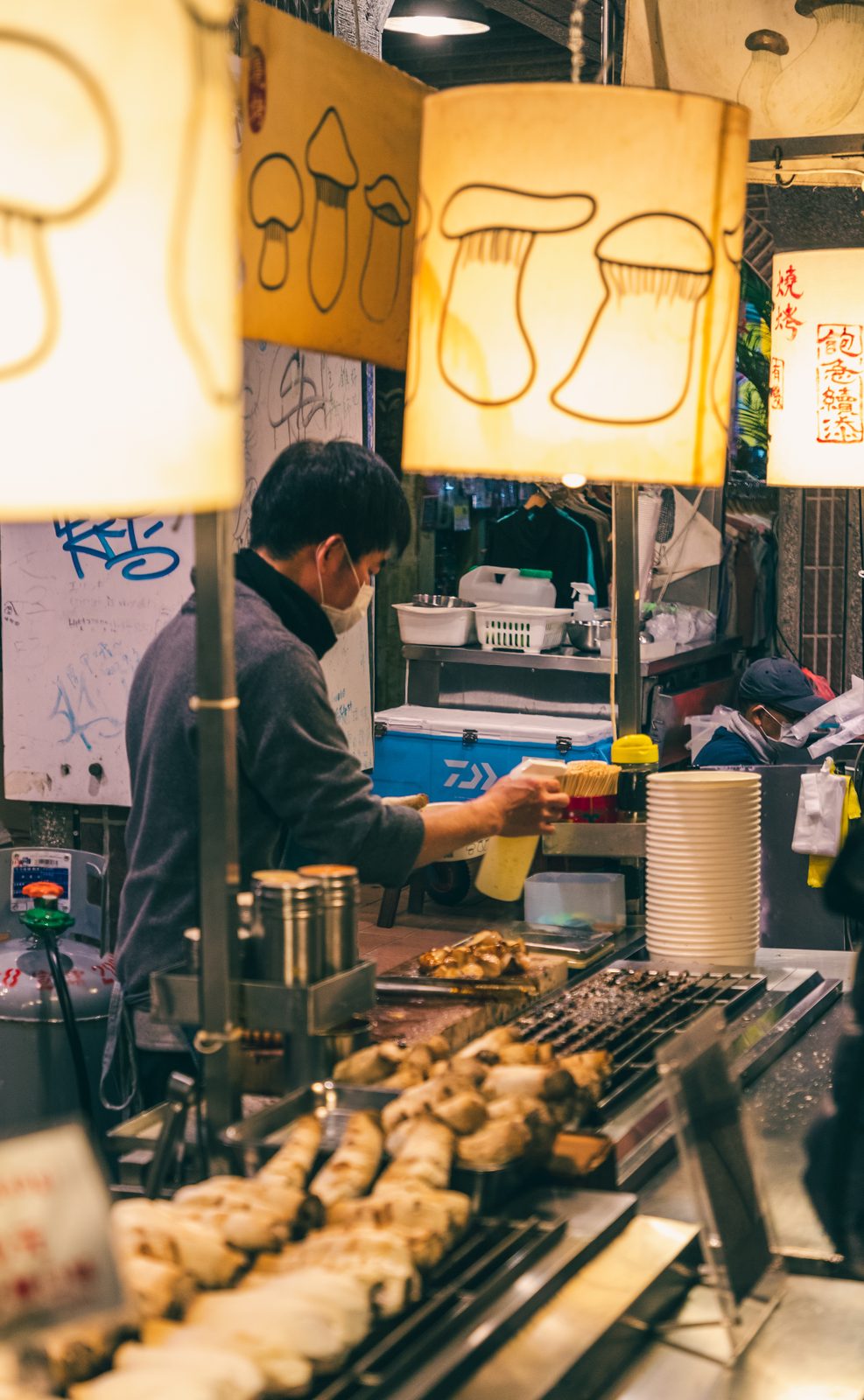
At six in the evening, Taiwan's cities change their face. The daytime shops pull down their shutters, and another economy is just opening. One lamp lights up, one pushcart rolls out, and a street comes alive.
Night markets were not invented by the Taiwanese — every society has its fairs, temple festivals and roadside stalls. But few places have turned the night market into a whole island's shared way of life the way Taiwan has. More than 300 night markets stretch from Keelung to Pingtung; almost every town has its own street of lights[10]. What they sell was never just snacks. They sell a possibility: a person with no shop, no diploma and no capital can start doing business tonight.
This book is about how that street grew. It began at a temple-front market, passed through war, migration, industrialisation and the age of tourism, and became Taiwan's most resilient people's economy. Sometimes, to understand Taiwan, you need not look at the stock index or export figures. Stand in a night market for one evening, watch how the crowds flow and how money changes hands in coins, and you will see it more clearly.
Chapter One1909 — A Market Is Born
The story of Shilin Night Market begins with a river. In the Qing era, merchants who had finished trading farm produce in Shilin loaded their goods at the nearby Sanjiaodu ferry, sailing down the Keelung and Tamsui rivers to Dadaocheng and Bangka. The river was the highway of its day, and Shilin was a market town on its bank[1].
In 1909, Shilin Market was established; the market building was constructed in 1913 and opened in 1915. Once the market stood, vendors gathered around it in growing numbers — selling vegetables by day, snacks by night — and the night market grew out of the market's edges. In 1998, Shilin Market was listed as a municipal historic site: a livelihood facility had become a piece of history[1].
The same era was building markets across the island. In 1908, the island's trunk railway opened along its full length, joining Keelung to Kaohsiung and tying farm produce and people together for the first time[2]; in the same year, Taipei's Red House opened as Taiwan's first officially built public market[3]. The market system and the railway together drew scattered fairs into the order of the modern city. But order never quite contained the vendors: the market was built, and the stalls still spilled out beyond it — toward the temple front, the roadside, anywhere people walked.
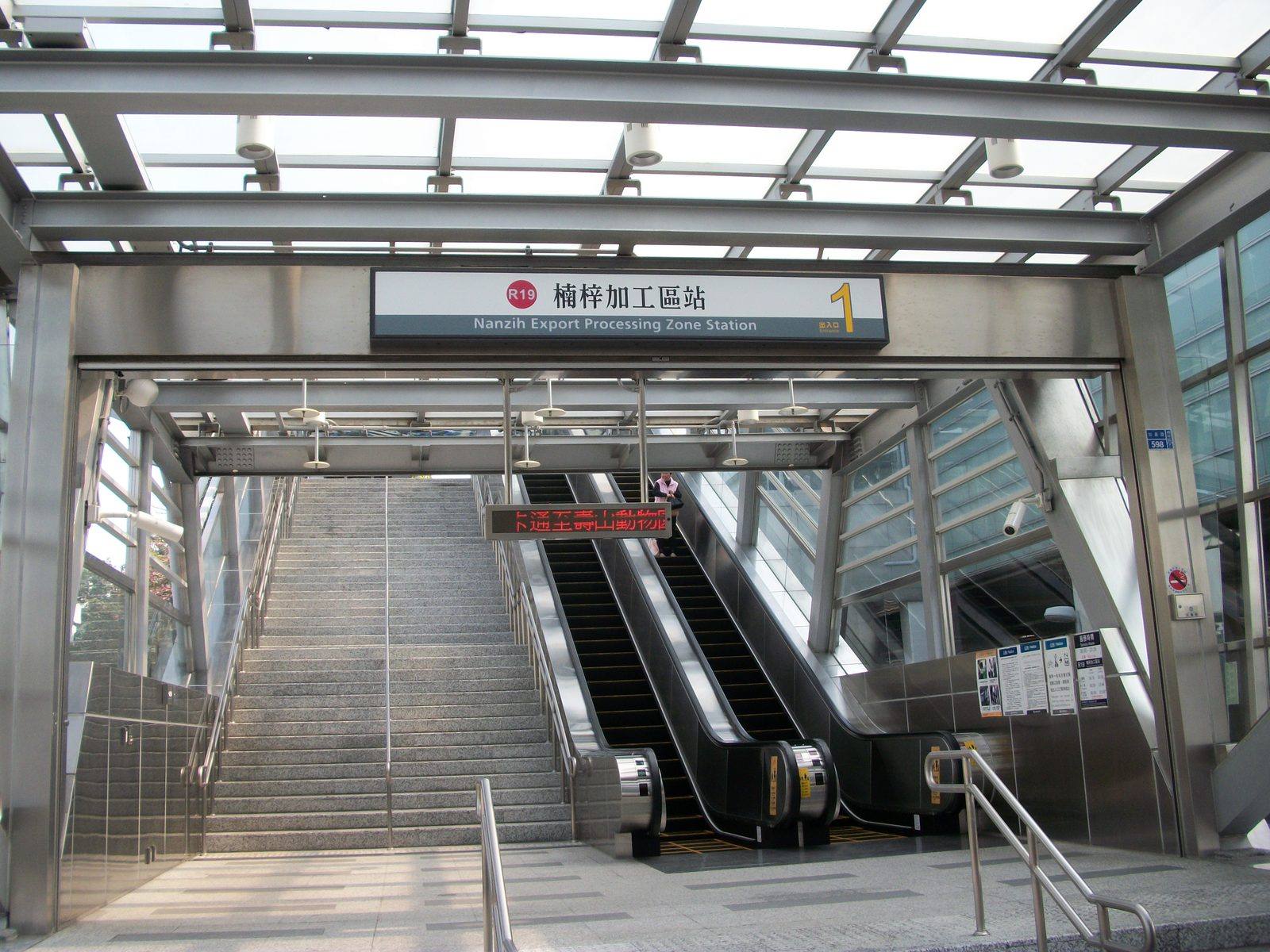
Shilin Market's buildings were later torn down and rebuilt. In 2002, the old market was demolished over safety and sanitation concerns, and vendors moved to a temporary market beside Jiantan Station; in 2012, the new market opened. Buildings can be demolished and rebuilt, but crowds remember a street by its smells and its place, not by its architecture.
Chapter TwoThe Postwar Crowds and Their Pushcarts
The night market truly became an island-wide phenomenon after the war. In the late 1940s and early 1950s, a great wave of migrants arrived in Taiwan, and formal jobs fell far short of the need. Many earned their living by hawking. The government of the day treated street vending as a remedy for unemployment, and tolerated hawkers to a high degree. A pushcart was a livelihood; the roadside was a shopfront[4].
In the early 1970s, Taiwan shifted from agriculture to industry, and large numbers of rural people moved into the cities. Those who could not find factory work, or had no skill to sell, returned to the same road: the pushcart. By the early 1980s, hawking was no longer only a poor person's occupation, but a job anyone might consider[4].
Taipei's Jiancheng Circle was the emblem of that age. After the war, vendors returned to the circle and business grew beyond its prewar scale, reaching its height in the 1950s and 1960s. In 1954, the vendors even raised money together to pave the road with asphalt and mark out their own stalls. People used to say, "The Circle in the north, Longshan Temple in the south" — after dark, the whole district was a city that never slept[5].
Kaohsiung's Liuhe Night Market grew along the same path. In the 1950s, food stalls began appearing on vacant land near Dagangpu, multiplying until people called it the Dagangpu Night Market; it later became Liuhe. From 1987, a corner of the market was closed to traffic every evening from 18:00 to 02:00, and a stretch of road was handed over to pedestrians and vendors each night[6].
These markets share one origin: nobody planned them. They were walked into being by crowds. Wherever people got off work, got out of school, or could not afford a restaurant, stalls would grow.
Chapter ThreeFengjia — A University Raises a City
If Shilin grew out of a market, Fengjia grew out of a school. In 1963, Feng Chia College of Engineering and Business moved from Beitun to its present site in Xitun, Taichung, bringing more than 20,000 students with it. Outside the school gate, Wenhua Road had been a remote suburb at the edge of a military dependents' village. Mothers from the village set up stalls to feed the students; merchants followed with food and daily goods; and Wenhua Night Market took shape[7][8].
Students are the perfect market. Young, curious, short of money but vast in number — and they must eat every day. Fengjia evolved with student tastes: from lunchboxes and noodles to wave after wave of creative snacks. Whatever survives in Fengjia can be copied across Taiwan. The night market here is not only a place to eat; it is an open-air laboratory for starting a business, with no walls around it.
The numbers tell the scale. On weekdays, Fengjia draws about 30,000 visitors a day; on holidays, more than 100,000. In 2014, it received about 12 million visitors and did about NT$10.9 billion in business. Around 2,200 shops now fill the district, spreading from Wenhua Road and Fengjia Road to Fuxing Road and the lanes around them[7][8].
In 2006, the Taichung City Government's Economic Development Department helped establish a management committee for the Fengjia Shopping Town. A business district that had grown out of roadside stalls now had its own organisation. It was the night market's coming of age: from growing wild to being recognised, managed — and expected to deliver.
Chapter FourOne Stall Feeds a Family
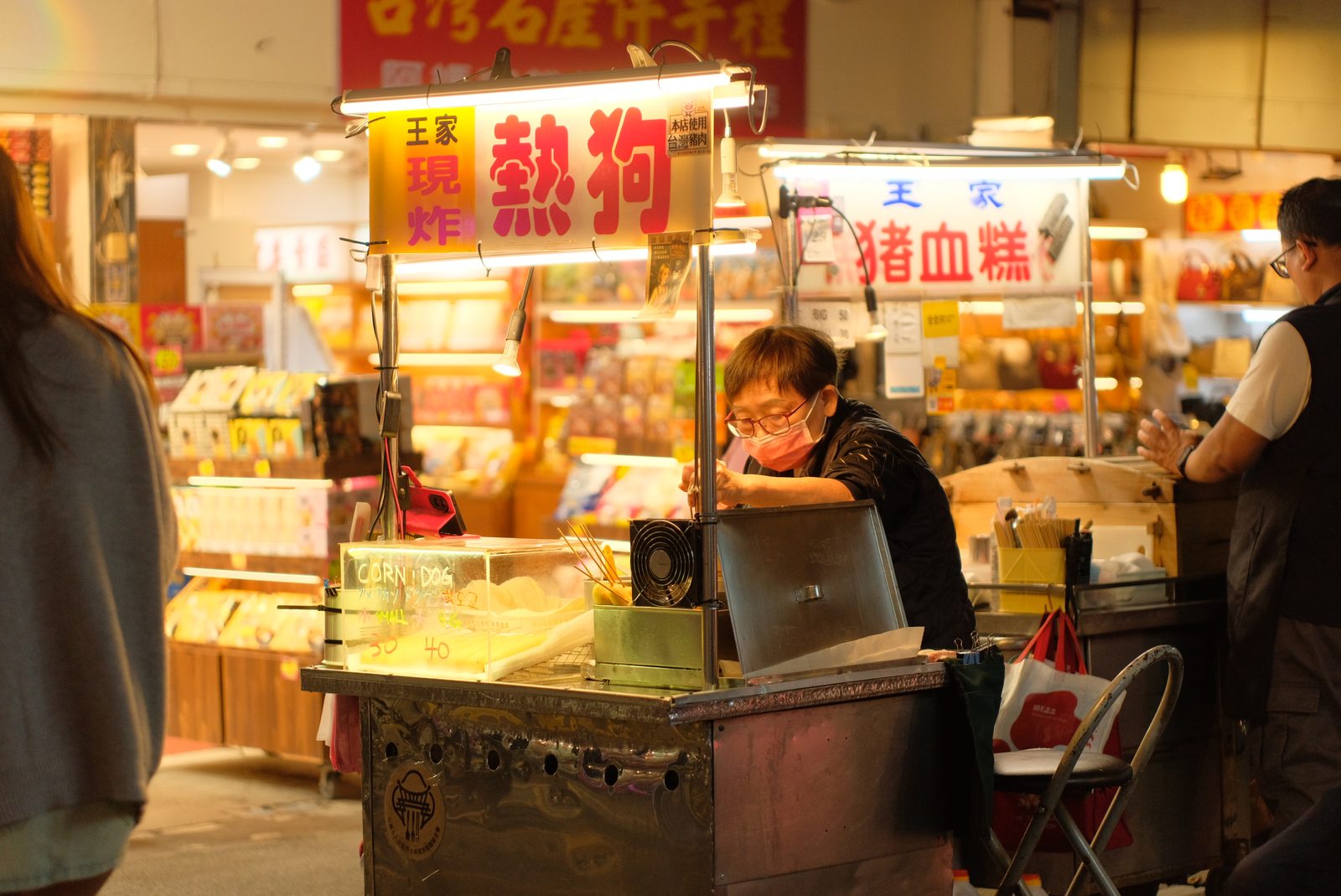
The economics of the night market can be summed up in one sentence: one stall feeds a family. A 2013 survey by the Directorate-General of Budget, Accounting and Statistics counted 318,796 mobile and semi-fixed vendor stalls across Taiwan, employing 491,883 people and taking in NT$551 billion in a year. Snacks, food and drinks accounted for 169,752 stalls — 53.25% of the total. The average stall earned NT$1.728 million a year at a profit margin of 31.94%, or NT$32,092 of profit per worker per month[9].
Behind those figures sits a low-barrier model of starting a business: no shopfront, no diploma, no large capital — one pushcart, one wok, one family recipe is enough to open. Cash comes in the same day; profit and loss are known by nightfall. For many households, vending is not a side job. It is the only livelihood, and the only one they control themselves.
But a low barrier is not the same as no cost. Most vendors have no labour insurance and no pension; a typhoon night with no stall means a night with no income, and there is no one to cover a sick day. The freedom of the night market and its fragility are two sides of the same coin. Many vendors stake a lifetime on one street: children grow up doing homework behind the stall, and when they grow up, some take over and some leave. Those who stay become the old shops.
Taiwanese consumers are estimated to spend about NT$90 billion a year at night markets — a scale comparable to a supermarket chain with 800 branches. The difference is that a chain's NT$90 billion sits in one company's hands, while the night market's NT$90 billion is spread across hundreds of thousands of households[9]. That is the most remarkable thing about the night market: it is an economy that keeps money in the neighbourhood, in the hands of families.
Chapter FiveCrowds Are Currency
The most valuable thing in a night market is not the ingredients. It is the crowd. When 20 people are queuing at a stall, the 21st person thinks: this must be good. The queue is itself an advertisement, and herd instinct is the night market's most effective marketing. Word of mouth travels faster than any advertisement — a new stall praised by students, housewives and tourists can go from unknown to famous in a single evening.
Shilin is the peak of that logic. It is the largest night market in Taipei and the most checked-in night market landmark in Taiwan[1]. In a 2010 online poll by the Tourism Bureau, the island's top five night markets were Liuhe in Kaohsiung, Shilin in Taipei, Luodong in Yilan, Garden in Tainan and Fengjia in Taichung[10]. The night market had changed from a livelihood facility into a tourist calling card — the first stop for foreign visitors getting to know Taiwan.
But becoming a calling card has its price. When a night market turns into a tourist attraction, local tastes and tourist tastes begin to pull apart: prices climb, flavours drift toward the mainstream, old customers feel it has changed, and new customers find it fresh. Some night markets grow bigger in that tug-of-war; others slowly lose the customers they started with. It is the common fate of every beloved place: the crowd brings money, and it brings change.
The age of check-ins added another layer. The night market became a backdrop and food became a picture; a street's worth began to be measured in photographs. Vendors learned to plate their food and to make their signs bright enough to photograph well. Some call this a corruption; others say it is only what night markets have always done — watch what the crowd wants, and become it.
Chapter SixBetween Crackdown and Disappearance
The history of the night market is also a history of crackdowns and tolerance. Under Japanese rule, the government built public markets on one hand and restricted roadside stalls with regulations on the other; after the war, it tolerated vendors as a cure for unemployment while worrying about traffic and sanitation. Vendors have always stood on the border between legal and illegal — and that border is exactly the space in which night markets grew.
In 2021, the Ministry of Economic Affairs counted 138 listed night markets across Taiwan — 23 public and 115 privately run[11]. "Listed" means brought under management: a defined area, a vendors' association, basic sanitation and fire-safety requirements. It took the night market a century to travel from an unnamed roadside gathering to a name on an official list.
But not every night market survives the journey. Jiancheng Circle was demolished in 1973 for road widening; business moved east, the Xinyi Planning District rose, and the old west side's glow slowly faded[5]. Public traditional markets have also been shrinking: their turnover fell from about NT$96.5 billion in 1999 to NT$80 billion in 2010, and an estimated NT$69.8 billion in 2013[12]. Supermarkets and hypermarkets took over daily shopping, and markets and night markets were forced to find a new place for themselves.
The place they found is something the daytime cannot offer: food made now, eaten now, in a crowd, right now. Shilin Market was demolished and rebuilt, vendors moved away and came back, and the crowds never cared about the building. As long as people still want to go out at night, spend a little money on a good meal, and wander through a crowd, the night market has a reason to exist.
EpilogueLamplight Is a Social Contract
So what is a night market? It is a city's living room after dark, a safety net for the unemployed, a young person's first shop, and the way Taiwanese people get to know one another. A society with only department stores and chain shops lets money concentrate upward. But as long as night markets stand, money keeps flowing through the neighbourhoods, and a family can feed itself with a single pushcart.
The next time you stand in a crowd waiting in line, consider this: you are not only queuing for a snack. You are queuing for someone's livelihood tonight, a family's school fees tomorrow, and the reason this street is still lit. The lamplight of the night market was never only lamplight. It is an unspoken agreement: as long as someone is willing to set up a stall, someone will be willing to walk out; and as long as people keep walking out, the nights of this island will never go dark.