PrologueMarch 1, 1995: The Day the Rules of Seeing a Doctor Changed
On the morning of March 1, 1995, queues formed at the registration counters of hospitals all over Taiwan. That day, National Health Insurance began. From that day on, seeing a doctor no longer started with the question "Can you pay?" but with "Did you bring your card?" A thin paper card — one stamp per visit, six stamps and it had to be replaced — became everyone's ticket in. By the end of the first year, 92% of the population was enrolled[6]; more than 30 years later, about 99.9% of people are inside the net[1].
This article is not the invention history of a card. It is the story of a quiet revolution: how a society decided that falling ill should not be a reason for a person to go bankrupt. The decision was not cheap, and it was not perfect — people are still arguing about the money today. But it changed how the people of Taiwan relate to hospitals, to disease, and to one another. And it all begins with a very simple question: before the card, who had insurance, and who did not?
Chapter OneBefore the Card: Who Was Covered, and Who Was Not
Before 1995, Taiwan's medical insurance was divided by occupation: workers had labor insurance, founded in 1950; civil servants and teachers had government-employee insurance, founded in 1958; farmers had farmers' insurance, founded only in 1989; soldiers had military insurance[4]. People with jobs mostly had coverage. People without jobs — children, the elderly, homemakers, day laborers — mostly did not. Before the NHI, overall coverage was only about 59%: out of every 10 people, 4 had to pay the full cost of care themselves[12].
The largest groups without insurance were children under 14 and people over 65[12]. The two most vulnerable ends of a family were precisely the two ends with the least protection. A child with a fever, an elderly person who had fallen — before 1995, for many families, the first question was arithmetic: how much will this visit cost? For many families of that era, where the money for a doctor's visit would come from was an account to be settled every month.
Before 1995, Taiwan's health care system was a free market[2]. Hospitals were a market, patients were customers, and for those who could not pay, the best option was to endure — to wait for the illness to pass on its own, or to wait until it could no longer be endured. That was no one's fault; it was simply an age in which the institution had not yet been invented.
The government had known about the problem for a long time. In 1968, the Ministry of the Interior drafted a national health insurance plan; in 1986, a long-term outlook approved by the Executive Yuan set the year 2000 as the target for launch[2]. But from plan to launch took 27 years. In 1988, the Council for Economic Planning and Development set up a National Health Insurance planning task force and invited Harvard professor William Hsiao to serve as chief adviser for the first phase of planning[5]; Hsiao would later be called the NHI's "chief architect of the early phase"[5]. On July 19, 1994, the Legislative Yuan passed the National Health Insurance Act on its third reading[2]; on January 1, 1995, the Bureau of National Health Insurance was established[2]; and on March 1 of the same year, the system went into effect[2].
Chapter TwoThe Birth of a Card
The NHI's design rests on three keywords: a single payer, compulsory enrollment, and premiums shared three ways. The government is the sole insurer, every citizen is required by law to enroll, and premiums are shared by the insured, employers, and the government[2]. And no one is asked about their medical history: whatever illnesses you have had in the past, you are treated the same. That "no questions asked" is the card's most important design feature — adverse selection, the thing insurers fear most, was abolished by law.
Compulsion was not the whole story. The system also left a door open for the poorest: premiums for low-income households are fully subsidized by the government, and since July 2011, the government has subsidized half the premiums of lower-middle-income households[7]. For a card to cover everyone, the law alone is not enough — people who cannot pay must still be able to afford it. That is where the NHI differs most from commercial insurance.
In the early days, the card was paper. One stamp per visit; six stamps and you exchanged it for a new one[9]. The process was as plain as a credit union passbook — and the plainness was the point: even a grandmother who could not read could understand it. With this card, you could see a doctor.
By the end of the first year, enrollment had reached 92%[6]. Elderly people and children who had never had insurance walked into hospitals for the first time without having to count the cost first. For them, the change was not an abstract institution; it was something concrete: a feverish child could be taken to the emergency room in the middle of the night, instead of waiting until morning to see how things went.
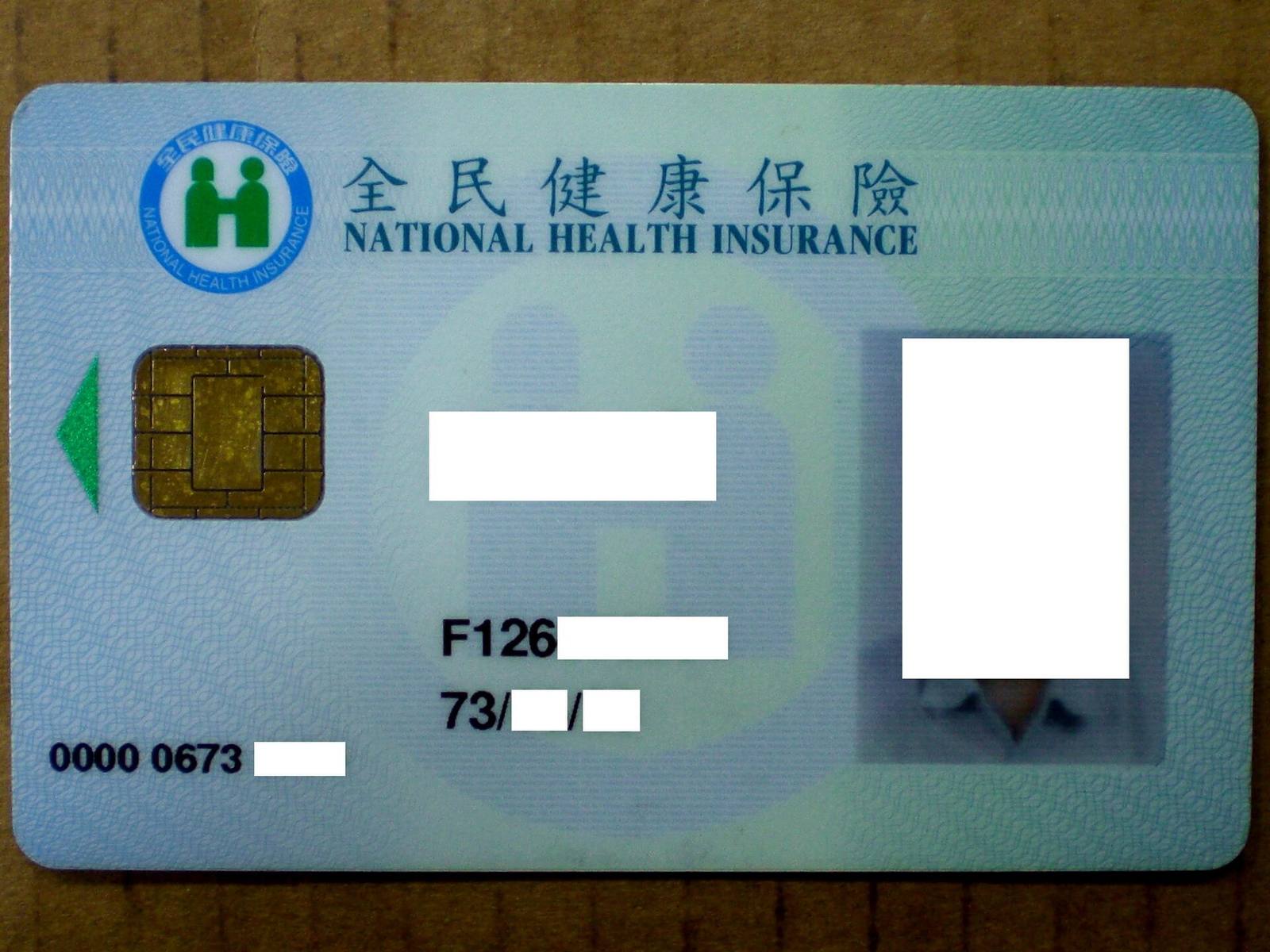
The card itself kept evolving. On January 1, 2004, the NHI IC card went into use nationwide and the paper card was retired[8][9]; medical records went onto a chip, making Taiwan the first country in the world to use IC cards across its whole health care system[8]. The same year, the NHI adopted the Resource-Based Relative Value Scale (RBRVS) designed by Hsiao, so that payments for different medical services better reflected the actual costs involved[5]. In February 2014, the National Health Insurance Administration launched "My Health Bank," letting people look up their own visit and prescription records online[2]. One card had gone from stamped paper to a portable health file.
Chapter ThreeThe Price of Cheap
But cheap has a price. In the early years the NHI paid fee-for-service: the more that was done, the more was paid. Hospitals and clinics that did more earned more, and medical spending rose fast. From 1998, the NHI's annual accounts began to run a deficit[4]; seven years after launch, the premium rate had been raised only once, from 4.25% to 4.55% in September 2002[4]. A system that had promised to cover everything discovered, for the first time, that its pockets were not deep enough.
The answer was the "global budget" system: the NHI Administration sets a total for a year's medical spending in advance, and anything above the total is paid at a discount[2]. Dentists went first, in July 1998, followed by Chinese medicine in July 2000, primary-care clinics in July 2001, and hospitals in July 2002[4]. From then on, one NHI point no longer always equaled one New Taiwan dollar — it became a floating number. The total is the ceiling; the point value is what everyone under the ceiling ends up dividing.
Premium rates moved back and forth along the same road: to 5.17% in April 2010[2]; on January 1, 2013, the second-generation NHI took effect, a supplementary premium was introduced, and the rate fell to 4.91%[7]; in January 2021, the rate returned to 5.17%, with a supplementary premium rate of 2.11%[11]. Every rate adjustment is an argument for the whole society: employers say it costs too much, citizens say it costs too much, doctors say the payments are too low. No one is satisfied — yet the system keeps running. That may be the most remarkable thing about it.
Between the global budget and the premium rate lies the NHI's real tension: with one hand it promises coverage for everyone, and with the other it must guard the public purse. Holding down the growth of spending was never just arithmetic; it was distribution. A little more for this consultation fee, a little less for that drug — behind every point lies someone's livelihood.
Questions That Remain Open
The argument over the NHI's finances has never stopped. The law caps premium increases at 6%[2], yet the population is aging and medical technology keeps getting more expensive. What will keep a card that promises coverage for everyone going for another 30 years? As this article was written, there was no answer yet.
Chapter FourBehind the World's Number One
On the numbers, the NHI is a handsome report card. Public satisfaction was about 65% in the early days, and about 80% by the end of 2004[12]; a 2017 survey put satisfaction at 85.8%[3]. In 2016, Taiwan spent only 6.3% of GDP on health care, and administrative costs were only about 1% of total NHI spending[3] — a great deal done with very little money.
What matters more is the result. After the NHI began, life expectancy rose: in 2016, women lived 83.4 years on average and men 76.8, close to the levels of the major OECD countries[3]. In 2025, Taiwan scored 86.5 in Numbeo's global Health Care Index, its seventh consecutive year at the top[10].
"From birth, every citizen — regardless of age, wealth, or occupation — enjoys the equal right to medical care."
— Chen Shih-chung, "Taiwan's National Health Insurance: A Model for Universal Health Coverage," 2018[3]
But the other side of the top ranking must be written down honestly, too. Diluted point values, stretched medical staff, crowded emergency rooms — these arguments come up almost every year. A system can be number one in the world and still leave its frontline workers exhausted. That is not a contradiction; it is two sides of the same coin. Cheap medical care always means someone, somewhere in the chain, pays the price.
There is another way to do the arithmetic of "cheap." How much a society is willing to pay so that no one goes bankrupt from falling ill is a choice of values, not an accounting problem. Every argument over the premium rate is really that choice being recalculated, once a year — each time the rate moves, Taiwan answers again the question of how much it is willing to pay for one another's health.
The NHI's most honest report card is not in any ranking. It is in the queues at the registration counters every morning. People are not queuing for a number ticket; they are queuing for a kind of trust — the belief that this card will still work tomorrow, and that when they fall ill, society will not ask first whether they have money.
EpilogueOne Card, One Contract
From 1995 to today, the NHI has traveled more than 30 years: from paper cards to chip cards, from 59% to 99.9%, from a system launched in a hurry[12] into the everyday background of life in Taiwan. Being taken for granted is precisely its greatest success — the best social institutions are the ones people forget are there.
At its heart, the card is a contract: everyone pays a little, and the sick use it first. This is not charity; it is the oldest promise of insurance: risks shared. The healthy you of today pays for a stranger who is ill today; the ill you of tomorrow will be paid for by someone else. The contract holds only if everyone believes everyone else will keep it. The contract also rewrote the relationship between doctor and patient: the patient was no longer a customer walking in the door, and the doctor was no longer simply a shopkeeper — for the first time, the two people in the consulting room stood on the same side of the same card.
On March 1, 1995, there were no fireworks and no ribbon-cutting worth remembering — only one more card at the registration counter. But some revolutions happen like that: not with a bang, but with the quiet fact that from then on, seeing a doctor would never be the same. What the NHI taught Taiwan is not only how to pay for medicine, but how a society can treat people who are ill.