PROLOGUEOne Decree, 38 Years
At midnight on July 15, 1987, martial law in Taiwan was lifted. When the decree went up, many people on the island could no longer remember what life without martial law felt like. It had begun on May 20, 1949, and by that day it had lasted 38 years and 56 days — 13,935 days, long enough for a person to be born, grow up, marry, raise children, and grow old inside it. People say Taiwan's democratization began on that day. That is only half true. Lifting martial law opened a door; walking through it, and casting ballots one by one into the box, would take another 9 years.
This book tells the story of those 9 years, and the 4 that followed. Between 1987 and 2000 — 13 years — one society turned the question "who rules us" from one man's decision into every person's decision. There was no revolution, no bloody coup, no foreign army landing. There was an opposition party nobody came to arrest, a group of students sitting in a square, a constitution amended clause by clause, and a few elections on which everyone held their breath.
Democratization rarely happens this way. In most countries, democracy arrives by revolution, or by defeat in war, or grows out of the power vacuum left by a strongman's death. Taiwan's road was different: an authoritarian regime still alive, still in command of the army and the police, reformed itself step by step. The road was slow, and it was dangerous. But precisely because of that, it left behind something worth looking at closely — how a society can change everything without overthrowing everything.
CHAPTER ONEThe Longest Martial Law
Go back to 1949. That year, the Nationalist government lost the civil war on the mainland and retreated to Taiwan. On May 19, Chen Cheng, chairman of the Taiwan Provincial Government and commander of the Taiwan Garrison Command, proclaimed martial law for the province; from midnight on May 20, the whole island lived under it. The reason given was war: the Communist armies were still across the strait, and the island had to guard against infiltration and subversion. That reason lasted 38 years.
Martial law was not a single order but a whole system of rule. Assemblies, associations, newspapers, and publications all needed prior approval; speech had forbidden zones, and civilians could be tried by military courts. More decisive still were the Temporary Provisions Effective During the Period of Communist Rebellion, in force since May 10, 1948, which froze the constitution: the president could be re-elected without limit, and the central representatives elected on the mainland in 1947 — the National Assembly, the Legislative Yuan, the Control Yuan — stayed in office for decades because they "could not be re-elected." People called them the "ten-thousand-year parliament." The constitution still existed, but much of what it promised — elections, term limits, separation of powers — had stopped working.
The island was not without resistance. On December 10, 1979, the Kaohsiung Incident saw opposition figures arrested and jailed. But resistance is one thing; institutions are another. Under martial law, Taiwan's economy took off, society grew rich, a middle class grew up — yet the door of politics stayed open only a crack. From the late 1970s into the early 1980s, the dangwai opposition kept winning seats in elections, and voices in the street grew louder. The question was no longer "democracy or not" but "when, and how."
The opening came from inside the regime. In the mid-1980s, President Chiang Ching-kuo's health was failing, and he began to think about succession and what would follow him. On October 7, 1986, in an interview with Katharine Graham, publisher of The Washington Post, he said publicly that Taiwan would lift martial law and allow the formation of political parties. For the first time, the supreme ruler had spoken a timetable for reform aloud.
CHAPTER TWOThe Opposition Party That Moved First
In fact, someone had already moved before Chiang spoke. On September 28, 1986, 132 dangwai activists meeting at the Grand Hotel in Taipei suddenly announced the founding of the Democratic Progressive Party — Taiwan's first opposition party. Forming a party was illegal at the time, and no one in the room knew whether the police would come. Chiang did not crack down. "Times are changing, trends are changing, the environment is changing," he said, and let the DPP live. An illegal party went on living, legally.
On July 14, 1987, Chiang issued a presidential order; from midnight on July 15, martial law was lifted in the Taiwan area, with a new National Security Act as its companion. Thirty-eight years and 56 days of martial law were over. On November 2 that year, the government allowed residents to visit relatives on the mainland, and families separated for nearly 40 years could finally meet. On New Year's Day 1988, the press ban was lifted, ending limits on the number and size of newspapers. In January 1989, the Civil Associations Act was amended, making political parties legal at last; the DPP received its legal status.
But lifting martial law was not the same as democracy. The decree was gone, yet the Temporary Provisions remained, the ten-thousand-year parliament remained, and the president was still chosen by the National Assembly — the people still could not elect their own president. Lifting martial law had only pushed the door open; the house behind it still had to be rebuilt, room by room.
On January 13, 1988, at 3:55 in the afternoon, Chiang Ching-kuo died of heart failure at his Chi Hai residence, aged 78. That evening at 8:08, Vice President Lee Teng-hui was sworn in as president, the first Taiwan-born president. Forty-three years of rule by the Chiang father and son came to an end. What would happen next, nobody knew — probably not even Lee himself.
CHAPTER THREE7 Days and 6 Nights in the Square
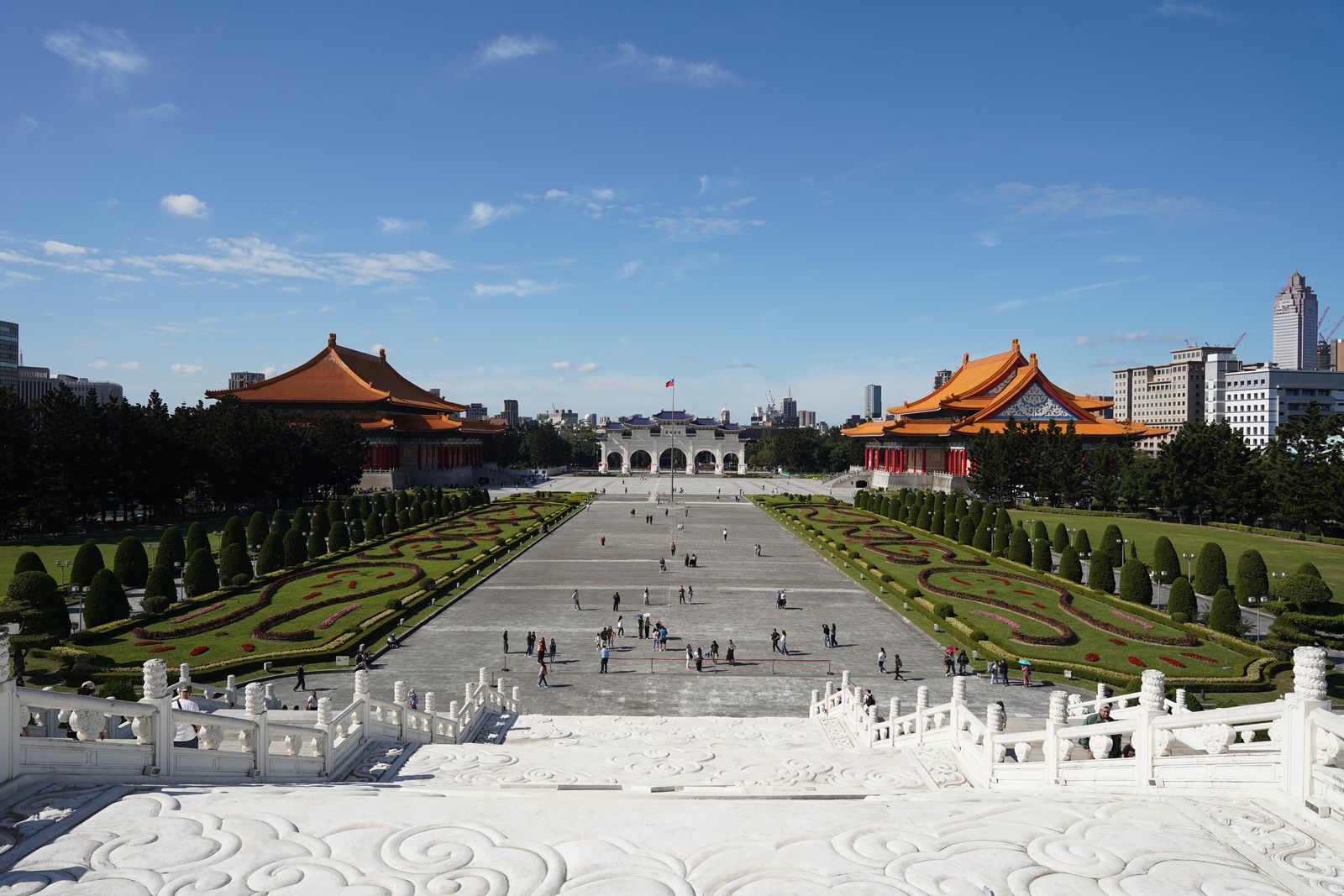
In March 1990, the National Assembly was about to elect a president. Its first-term members — elected in 1947 — had sat for 43 years, and there were rumours that some wanted to amend the constitution to extend their own terms. On March 16, a dozen National Taiwan University students began a sit-in at Chiang Kai-shek Memorial Hall Square; the numbers quickly swelled to nearly 6,000 students from across the island, who sat in the square for 7 days and 6 nights.
They put forward 4 demands: dissolve the National Assembly, abolish the Temporary Provisions, convene a National Affairs Conference, and publish a timetable for political and economic reform. The demands were calm, and so was their manner: they did not call for overthrowing anyone, only for the system to follow its own written rules. On March 19, the name "Wild Lily" was proposed — Taiwan's native wild lily, a symbol of purity and resilience — and the movement had its name.
The decisive day was March 21. President Lee did not send in riot police; instead he met the student representatives and promised to convene a National Affairs Conference. The next day, the students announced the end of the sit-in. A president of an authoritarian regime chose dialogue over repression; a group of students in their early twenties chose to trust a promise rather than keep fighting. Because both things happened at once, Taiwan's democratization truly began to accelerate.
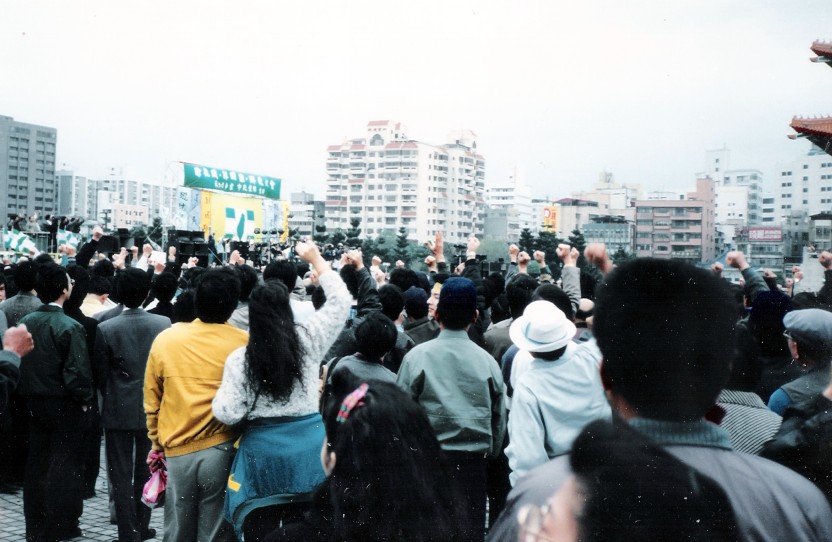
The National Affairs Conference met at the Grand Hotel from late June to July 4, 1990; 141 delegates discussed in groups and reached consensus on retiring the senior representatives and directly electing the president and provincial and municipal executives. On June 21 that year, the Council of Grand Justices handed down Interpretation No. 261: all first-term central representatives had to retire by December 31, 1991. On April 22, 1991, the National Assembly voted to abolish the Temporary Provisions; on April 30, Lee proclaimed the end of the Period of Mobilization, effective May 1 — the provisions that had been in force for 43 years were history. On December 31, 1991, the senior central representatives all retired, and the ten-thousand-year parliament ended. That December, the second National Assembly was fully re-elected; on December 19, 1992, the second Legislative Yuan was fully re-elected, all 161 seats chosen by Taiwan's voters. The Kuomintang took about 53% of the vote, and the DPP passed 50 seats for the first time. For the first time, Taiwan had a parliament entirely of its own choosing.
CHAPTER FOURPractising the Vote
With parliament re-elected, the next step was the executives. A constitutional amendment in May 1992 wrote direct election of provincial and municipal executives into the constitution; on December 3, 1994, Taiwan elected a provincial governor and two directly-administered city mayors on the same day for the first time: James Soong as governor, Chen Shui-bian as mayor of Taipei, and Wu Den-yih as mayor of Kaohsiung. The top executives of an island were, for the first time, all decided by ballot.
One last barrier remained: the presidency. On July 28, 1994, the National Assembly amended the constitution to provide for direct presidential elections, with a 4-year term. On March 23, 1996, Taiwan held its first direct presidential election — the first time in the history of the Republic of China that the people directly chose their own head of state.
The atmosphere of that election is still remembered. On the eve of voting, missiles were test-fired into the waters off Taiwan, and the shadow of war hung over polling day. Some feared turnout would collapse; some feared the election would have to be postponed. The opposite happened: 10.88 million people went to the polls, a turnout of 76.04%. Lee Teng-hui and Lien Chan won 5,813,699 votes, 54.00%; Peng Ming-min and Frank Hsieh, 2,274,586 votes, 21.13%; Lin Yang-gang and Hau Pei-tsun, 1,603,790 votes, 14.90%; Chen Li-an and Wang Ching-feng, 1,074,044 votes, 9.98%. The missiles did not frighten voters away; instead, the ballot became a kind of answer.
From the lifting of martial law in 1987 to direct elections in 1996: 9 years. In 9 years, one society travelled from "no parties allowed" to "directly electing the president." Other countries often take decades for that journey, or pay for it with a revolution.
CHAPTER FIVEThe Night After
Direct elections were done — was democratization done? One piece was still missing: a change of ruling party. If the same party always governs, elections are only a ritual. The real test is whether a ruling party that loses will hand over power.
On March 18, 2000, the second direct presidential election was held. The Kuomintang had split into two camps, and the DPP's Chen Shui-bian and Annette Lu won with 4,977,697 votes, 39.30% of the vote; James Soong took 36.84%, Lien Chan 23.10%. Turnout reached 82.69%, the highest in the history of presidential elections. On election night, the streets of Taipei filled with people. Power changed hands peacefully — the Kuomintang, which had governed for 55 years, handed the keys of the Presidential Office to the opposition.
39.30% — less than 40% of the vote. That is a number worth remembering: it meant that on the new president's first day in office, more than 60% of voters had not voted for him. Democracy is not "the majority is always right"; it is "the minority also gets a next time." On that night in 2000, Taiwan proved two things: voters can replace a ruling party, and a replaced ruling party can survive, and wait for the next election.
EPILOGUEDemocracy Is Something You Do Every Day
Looking back over those 13 years, from 1987 to 2000, Taiwan's democratization has a distinctive shape: it was not a revolution but a series of repairs. The Additional Articles of the constitution were amended again and again, parliament changed its members, the presidency changed how it was chosen, and the parties changed who governed. No repair was complete; each one left new problems — money politics, provincial identity, unification versus independence, a chaotic media. But each repair also made the next step possible.
Many ask why Taiwan's democratization shed no blood. The answer may lie not in any one person's wisdom but in the fact that at every decisive moment, someone chose to give way: Chiang Ching-kuo did not crush the new party; Lee Teng-hui did not crush the students; the senior members of the National Assembly accepted retirement; the party that lost the election accepted the result. Giving way is not weakness; it is a calculation — which costs more, violence or dialogue? After 1987, more and more people in Taiwan arrived at the same answer.
The hardest part of democratization was never the first vote; it is every day after the vote. An election can be finished in a day; democracy has to be practised daily: reading the news, checking the evidence, joining the discussion, watching those elected, and remembering, at the next election, what happened at the last one. The decree that lifted martial law at midnight on July 15, 1987 was only a piece of paper. What made it real was everyone who walked into a polling station, and everyone who sat down in a square, in the 13 years that followed.