PrologueLondon, Summer 1665
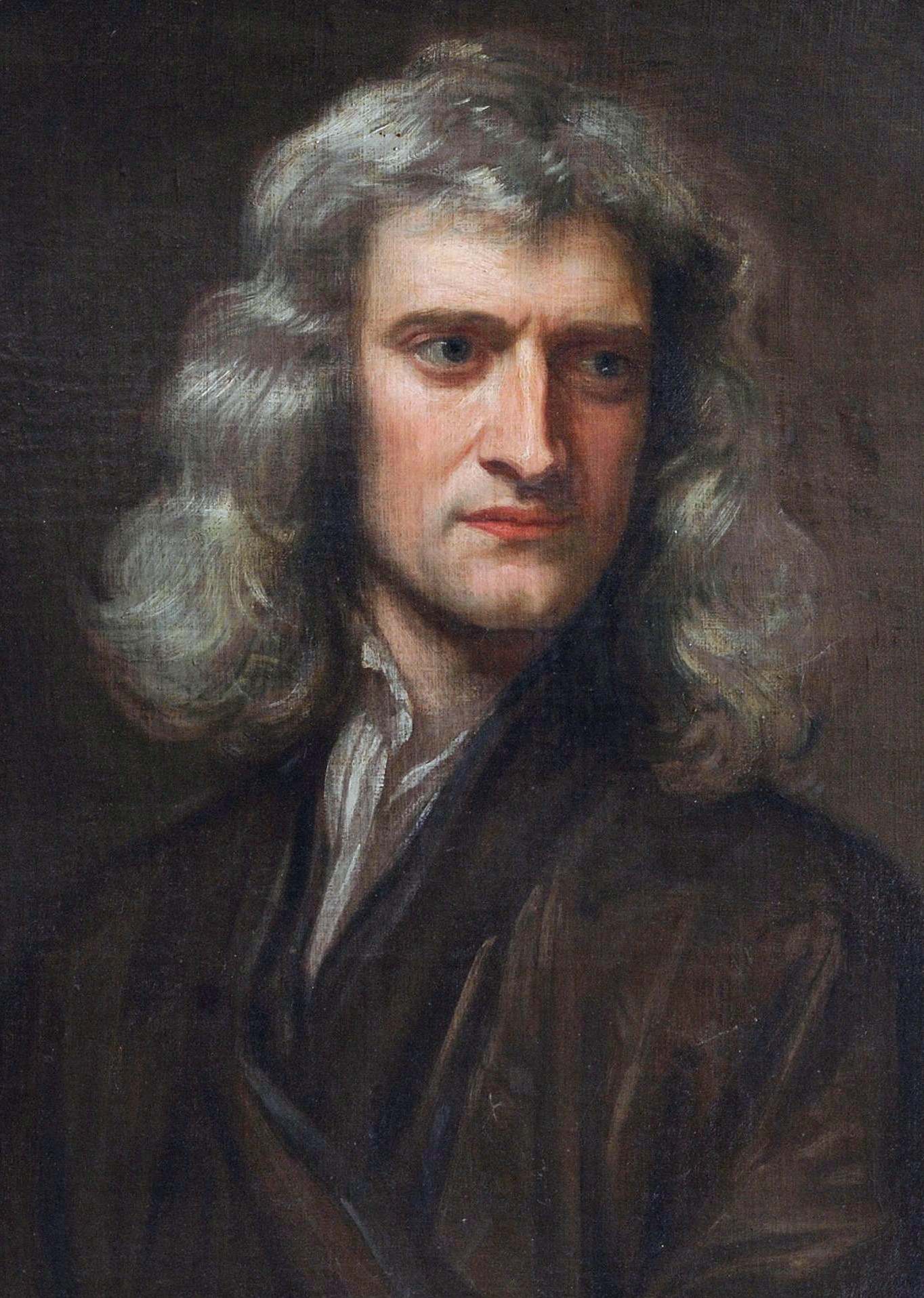
In the summer of 1665, London was dying, and a 22-year-old Isaac Newton was packing his bags to leave Cambridge.
The plague crept into the parish of St Giles-in-the-Fields in the spring; by September, 7,165 people died in a single week. The official Bills of Mortality recorded 68,596 deaths, but the true toll probably exceeded 100,000 — in a city of about 460,000, one person in every four or five.[1]
The city's response was a mirror. A house with plague victims had a red cross painted on its door, with the words “Lord have mercy upon us,” and a watchman posted outside to seal the household in. The rich fled to the countryside early; the poor stayed behind, unable to afford distance, buying superstition instead: herbs, amulets, bloodletting. Samuel Pepys filled his diary with empty streets and carts of corpses — one literate man leaving a written record of a city's fear.[10]
A plague is never only a disease. It is a social experiment in how fear is distributed: who gets to flee, who must stay, who is sealed behind a door, whose death is recorded, and whose death leaves no name at all. In 1665, London laid those questions bare in the sunlight.
Cambridge dispersed that summer. Newton had taken his degree in January 1665 and carried a few books back to Woolsthorpe in Lincolnshire — the stone house where he was born. Later generations would call the next two years the annus mirabilis, the year of wonders. But “miracle” is too light a word, as if disaster itself could do magic. The question worth asking is different: how could a plague rewrite science? The answer is not in the apple. It is in institutions and in human nature.
Chapter OneWhen a University Closes Its Doors
Cambridge had closed for plague before; the university's response never changed: disperse, go home, and wait for the epidemic to pass. For most students, it was stolen time. For Newton, it was time returned.
Newton had entered Trinity College on June 4, 1661, as a subsizar — a working student who ran errands for wealthier undergraduates in exchange for reduced fees. He was born into a yeoman farming family at Woolsthorpe; his father had died three months before his birth, and after his mother remarried he was raised by his grandmother. At Cambridge he had no connections and no patron — only a notebook full of writing.[2]
The university gave him lectures, examinations, and disputations, and it took away his timetable. When all of that vanished overnight, he possessed, for the first time, unbroken stretches of time — no bells, no weekly exercises to hand in, no one telling him what to read today. A 22-year-old, in a stone farmhouse in the countryside, was arranging his days entirely by his own curiosity for the first time.
But the story should not be told too romantically. The manuscripts show that the breakthroughs of the miraculous years did not fall from the sky: from 1664 onward he had been working through Descartes and Wallis in his notebooks, and the preparation was well underway before the plague arrived. As the biographer Richard Westfall warned, the marvellous years owed as much to a young man's expanding intellectual world as to his physical location. The plague gave him no talent. It gave him 18 months without interruption.[2]
Thousands of people were shut away at home in those same months. Only one of them walked out carrying calculus. Isolation is a condition, not a cause — and that is the most honest place for this story to begin.
Chapter TwoThe Apple and the Moon
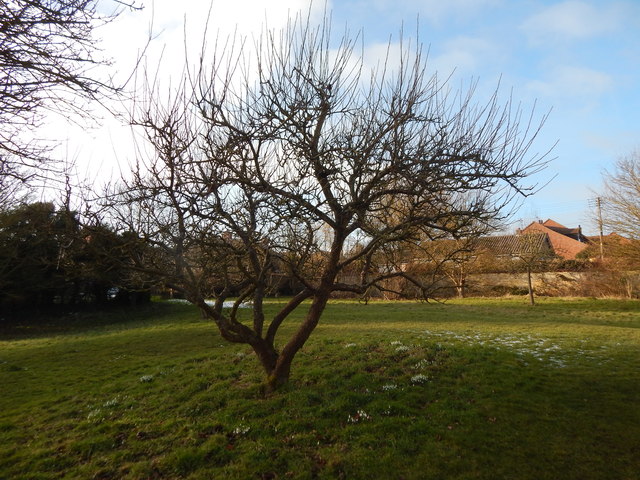
The legend goes like this: walking in the orchard at Woolsthorpe, Newton watched an apple fall and suddenly wondered whether the force that pulled it down might reach all the way to the Moon. The story comes from his recollections to his friend William Stukeley late in life; the details may not be exact, but the intellectual move it points to is real.[9]
What makes that move remarkable is that it broke down a wall that had stood for 2,000 years. Since Aristotle, heaven and earth had been two different worlds: celestial bodies were perfect, eternal, moving in circles, while earthly things were heavy, corruptible, and fell down. For Newton to claim that one law governed both the apple and the Moon was not arithmetic. It was trespass.
He tested the idea at once, checking the Moon's orbit against the data he had — and it did not fit. So he put the thought away. He did not force the numbers, and he did not rush to publish. The idea waited nearly 20 years. The most underrated virtue in the history of science is often not inspiration but this kind of restraint: when the calculation fails, say nothing yet.[2]
People love the apple version because it compresses years of thinking into a single image that takes one second to tell. But the truth is this: if there was a moment of insight, it happened in the orchard; proving it took 20 years. Confusing the two is the legend's greatest misunderstanding of science.
Chapter ThreeThe Colours Inside White Light
In 1666, Newton acquired a glass prism, darkened a room, cut a small hole in the window shutter, and let a beam of sunlight pass through the prism onto a wall 22 feet away. The patch of light should have been circular — the Sun is round, and so was the hole — but it came out oblong, about five times longer than it was wide. A wrongly shaped patch of colour became the starting point of everything.[5]
The received wisdom was that the prism “modified” light, dyeing pure white light with colour. Newton's suspicion ran the other way: perhaps the colours were already in the white light, and the prism merely separated them. He designed a decisive test: take one colour from the spectrum and pass it through a second prism — red light emerged still red, spreading no further; then use a lens to gather the spread colours back together, and the light turned white again. This was what he called the experimentum crucis, the crucial experiment.[5]
White light is not pure; it is a mixture. That sounds like common sense today, but in 1666 it overturned the whole tradition of optics: colour was not a decoration on the surface of things, but part of the structure of light itself.
In 1672, he sent his results to the Royal Society, and they appeared in the Philosophical Transactions. What greeted him was not applause but objection — above all from Robert Hooke. Newton's response says much about his character: he withdrew his manuscript, refused to argue, and the full Opticks did not appear until 1704, the year after Hooke's death.[5]
Publication was never just writing the answer down; it was a social act. Newton could endure 18 months of solitude, but he could not endure public criticism; he could face the universe alone, but not his colleagues. The Royal Society gave him a stage, and it also gave him a reason to be hurt — a genius's fragility and a genius's insight run on the same nerves.
Chapter FourFluxions and a Lawsuit Forty Years Late
Calculus was the other foundation Newton laid during the plague years. By his own later account, he found the method of tangents in May 1665, the direct method of fluxions in November, and the inverse method in May 1666 — a mathematics of rates of change, essentially complete at Woolsthorpe. But he did not publish it. It stayed in his notebooks, surfacing only occasionally in letters to friends.[2]
In 1684, Gottfried Wilhelm Leibniz published his differential calculus in the journal Acta Eruditorum, using the notation students still write today: dx and the integral sign. Leibniz published first; Newton invented first. Both statements are true — and put together, they meant war.
The dispute broke into the open in 1699 and reached its peak in 1712. The Royal Society appointed a committee to investigate, and its president at the time was Newton himself. The committee's report, the Commercium Epistolicum, ruled in Newton's favour and implied that Leibniz had plagiarised him — and later scholarship has shown that Newton wrote large parts of the report himself. Leibniz died in 1716 without ever receiving a fair hearing.[4]
The modern consensus is that the two men invented calculus independently of each other. But the consensus arrived 40 years late — too late for one of them.[4]
This is the darkest lesson of the whole story. Science needs above all a neutral arbiter, yet the arbiter was himself a party to the dispute. The Royal Society was not at fault; the fault lay in letting an institution serve one man. A priority dispute was never a mathematical problem. It was a human one: a man unwilling to share the honour, meeting a man desperate to be recognised, with no institution strong enough to stand between them.
There is another cost that is rarely mentioned: Newton kept his results locked in a drawer for 20 years, sparing himself arguments but giving someone else the chance to speak first. Silence is not free — in science, what is not written down and published does not count.
Chapter FiveThe Belated Principia
In the summer of 1684, the astronomer Edmond Halley came to Newton with a question: if the planets are pulled by a force that weakens with the square of the distance, what shape would their orbits take? Newton answered: ellipses. Halley asked for the proof; Newton said he could not find it, and promised to work it out again. That one question produced a book.[3]
Over the next 18 months, Newton wrote the Philosophiae Naturalis Principia Mathematica. On July 5, 1686, the Royal Society licensed it for publication; on July 5, 1687, it appeared, printed at Halley's own expense. Its three books contained the three laws of motion, the law of universal gravitation, and a complete system of the world, from Kepler's laws to the tides and the comets.[3]
But why did it take 20 years? Why did ideas formed during the plague wait until 1687 to see daylight? The answer has three layers. First, he needed better data — the Moon's orbit, the comets, the tides; the calculation that failed in 1666 failed because the data were not good enough. Second, he needed someone to push him — Halley did not only pay, he chased the manuscript, corrected it, and carried the risk of publication. Third, he needed an external pressure that made writing unavoidable: a concrete question, a friend waiting for the answer, a society waiting to print.
This is what science really looks like: solitary thinking is only the first half; the second half is a relay run by many hands. Without Halley, the Principia might have remained forever as a few notebooks in a drawer at Woolsthorpe. We like to write the history of science as a one-man show, but behind every great book there is someone who pushed the genius out of the door.
EpilogueWhat the Plague Taught Us
Let this be clear first: the plague did not “make” Newton. In 1665, London lost 100,000 people, and Cambridge closed by administrative decision, not as a scientific experiment. To romanticise disaster as a womb of inspiration is disrespectful to the dead and a misunderstanding of science.
But the plague did do one thing: it removed the middle layers. Timetables, examinations, social obligations, duties — institutions normally slice human attention into fragments, and the plague switched the slicing machines off. A man who was already prepared could therefore spend 18 consecutive months facing only his own questions. When we talk today about remote work and creativity in isolation, we are talking about the same thing: attention is the scarcest resource.
Yet the two years at Woolsthorpe were only the first half. The second half happened in London: the arguments at the Royal Society, Halley's urging, the lawsuit with Leibniz, the risks of publication. Without the second half, the year of wonders would be nothing more than a few notebooks full of writing, lying in a drawer.
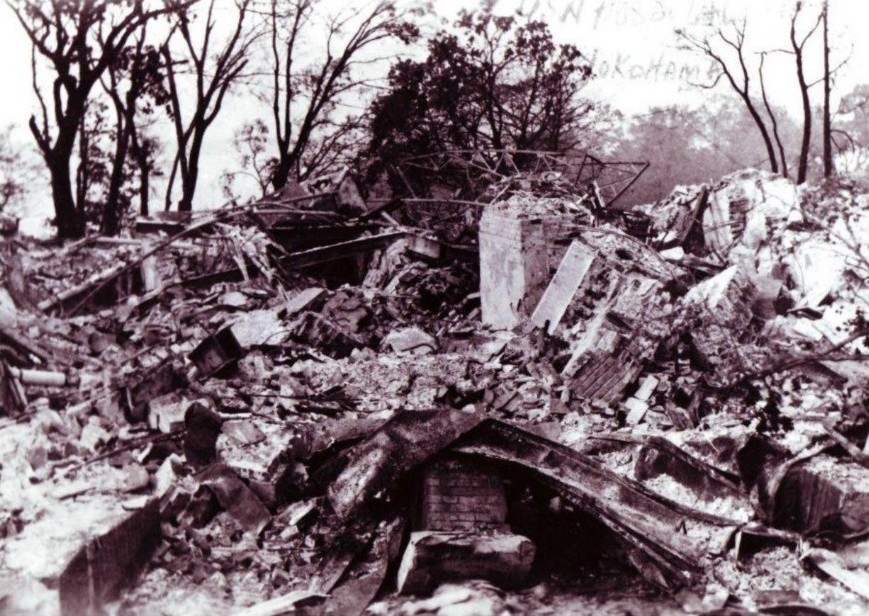
On September 2, 1666, the Great Fire of London started in a bakery on Pudding Lane and, in four days, burned down 13,000 houses and 89 churches; even St Paul's Cathedral turned to ash. The same city died of plague one year and burned the next — and rebuilt itself in brick and stone.[8] Newton's two years were like that too: what was destroyed was the old order; what remained was a set of new questions.
Disaster will not do our thinking for us. At most, it can quiet the world. What we fill that quiet with afterward — that is each person's own affair, and the most honest lesson Newton left behind.