PrologueThat Afternoon
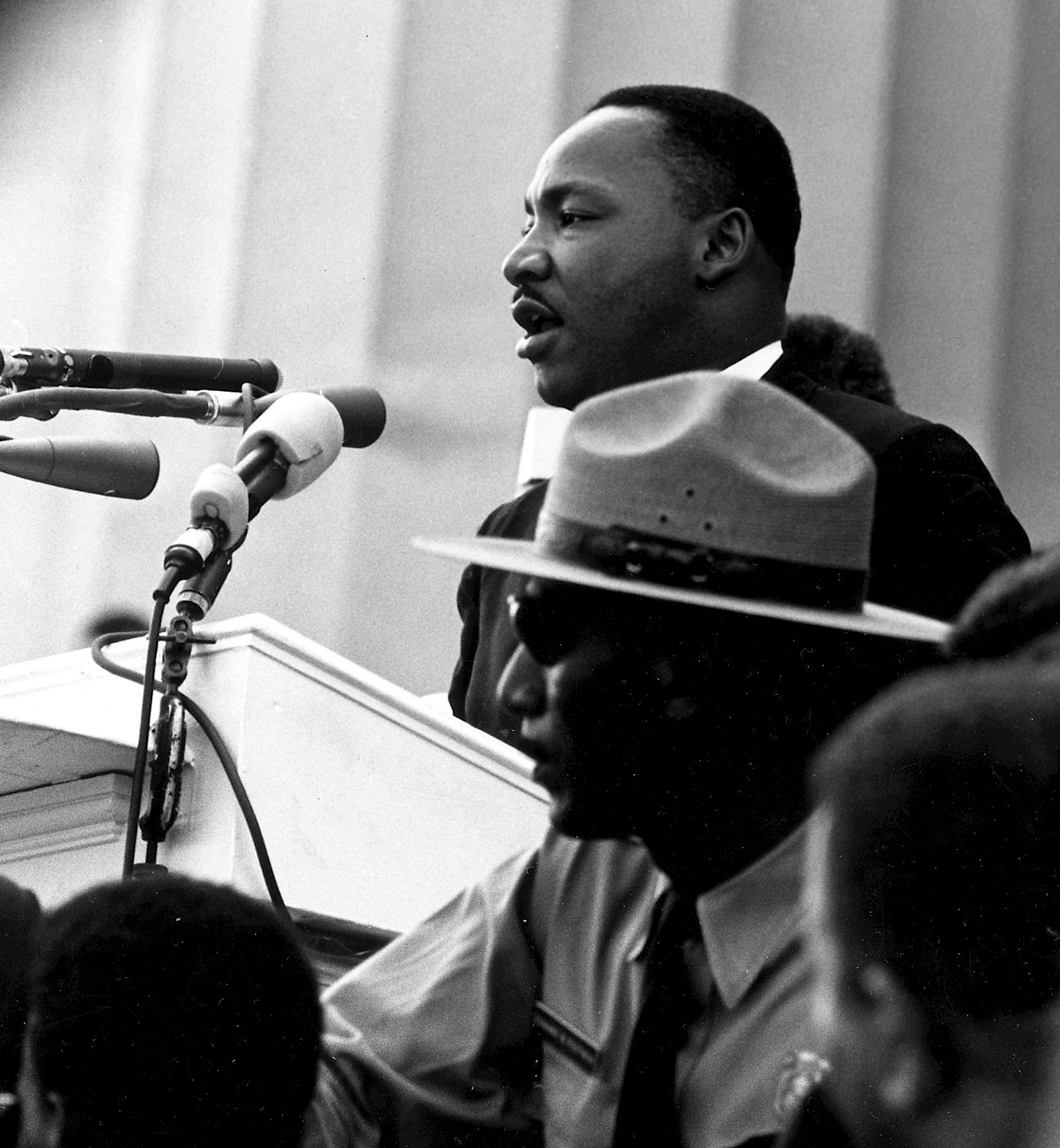
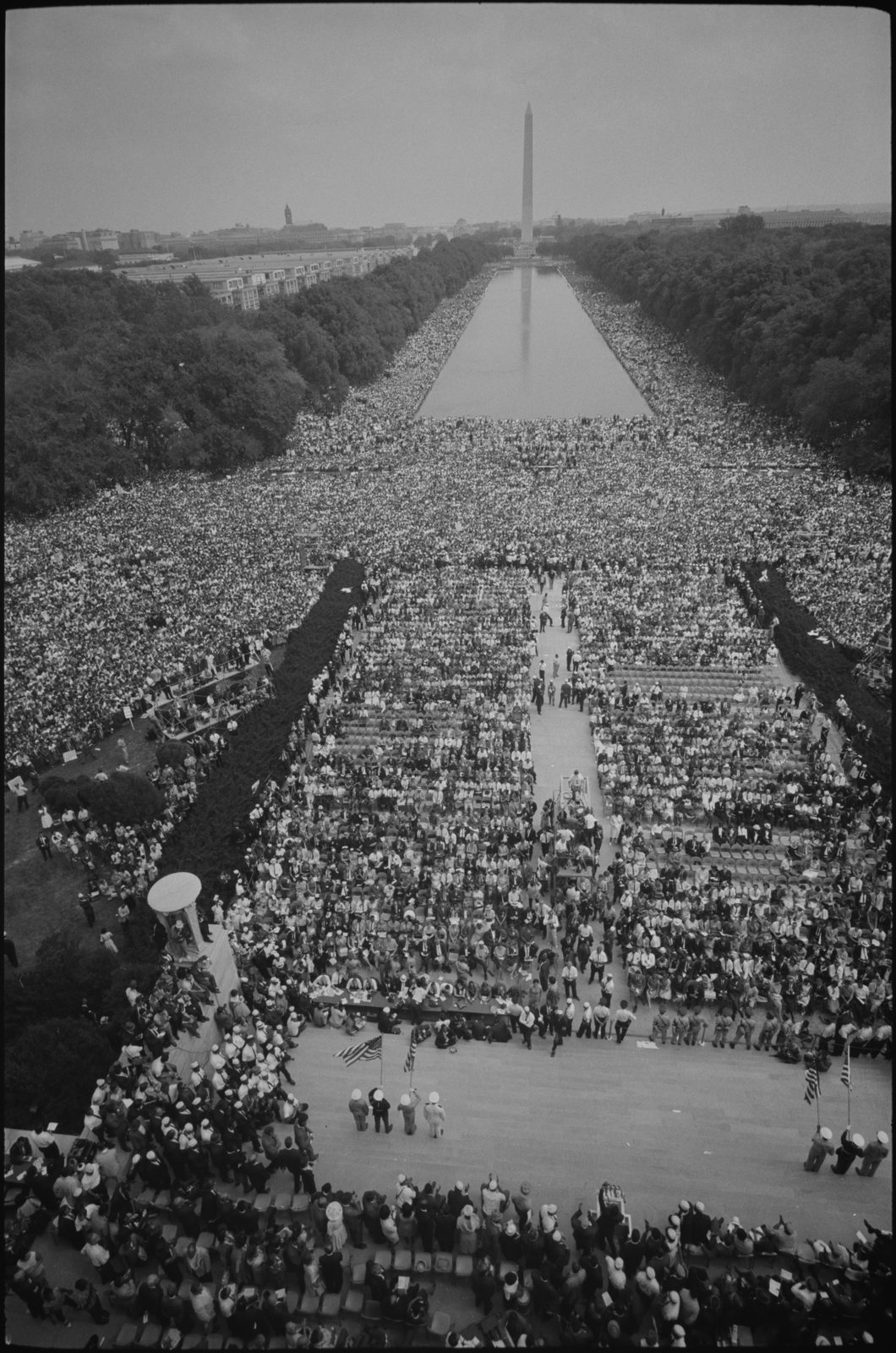
Wednesday, August 28, 1963, 3 p.m. The Washington summer hung hot and heavy, and on the steps of the Lincoln Memorial stood a 34-year-old Baptist minister, facing 250,000 people — half again as many as the organizers had expected — stretching from the memorial along the Reflecting Pool to the Washington Monument.
He held a prepared text, finished with his aides the night before. Nowhere in it did the words "I have a dream" appear.
His first sentence looked back 100 years. In 1863, in this same city, Lincoln signed the Emancipation Proclamation; King said the proclamation was a check America had written to Black people, a check that came back stamped "insufficient funds." An accountant's metaphor, sharper than any accusation: a nation could write "all men are created equal" into its Constitution and hang "Whites Only" on a restaurant door at the same time. The gap between promise and reality is where the whole civil rights movement begins.
This is not the story of a speech. It is the story of how a speech became a law — and how a dream changed 250,000 hearts before it changed a nation's institutions.
Chapter OneA Bus in Montgomery
King was not born a leader. In 1955 he was 26, less than a year into his pastorate at Dexter Avenue Baptist Church in Montgomery, Alabama.
On December 1, Rosa Parks, a 42-year-old seamstress, refused to give up her seat to a white passenger and was taken away by police. The Black community decided to boycott the buses and chose King to head the Montgomery Improvement Association — not because he was the most famous, but because he was the newest and least entangled in local factions. The boycott ran from December 5, 1955, to December 20, 1956 — 381 days. Black residents walked, carpooled, endured harassment and violence, rather than ride segregated buses. King's home was bombed; he was arrested; the boycott held. In November 1956, the Supreme Court ruled in Browder v. Gayle that Montgomery's bus segregation was unconstitutional.
Those 381 days taught King the movement's central discovery: suffering itself can be a weapon — provided those who suffer refuse to strike back, and the whole world is watching. Gandhi's nonviolent resistance and Thoreau's civil disobedience turned, in his hands, from books into tactics. One person being beaten changes nothing; one person being beaten while all of America watches changes a great deal.
In 1957 he helped found the Southern Christian Leadership Conference, threading scattered local struggles into a single network. Montgomery was only one city's buses, but it proved one thing: if a community holds out long enough, the law has to catch up.
Chapter TwoSpring in Birmingham
In the spring of 1963, King carried that tactic to Birmingham — then the most rigidly segregated city in America, ruled by Public Safety Commissioner Eugene "Bull" Connor.
On April 3, "Project C" began: sit-ins, marches, boycotts, designed to force the city into a showdown. On Good Friday, April 12, King led about 50 volunteers into the streets, defied an injunction, and was arrested and put in solitary confinement. From his cell he wrote the "Letter from Birmingham Jail," answering white clergymen who called the campaign untimely. It contains the sentence that became the movement's motto: "Injustice anywhere is a threat to justice everywhere." Justice too long delayed, he wrote, is justice denied.
Jail did not stop the movement. On May 2, Birmingham's children marched — the Children's Crusade. More than 600 were arrested on the first day; with the jails full, Connor turned fire hoses and police dogs on them. Television carried the images into living rooms across America: children bowled over by jets of water, dogs seizing a boy's trousers. In that moment, segregation lost its defence before a national audience for the first time.
On May 10, Birmingham reached an agreement: shops, restaurants and schools would desegregate step by step. It was the movement's first proof that manufacturing a crisis is not about manufacturing chaos — it is about making a nation that pretends not to see, look.
Chapter Three250,000 People Walk to Washington
The images from Birmingham pushed President Kennedy into a corner. On June 11, he went on television and called civil rights "a moral issue" for the first time, announcing he would send a comprehensive civil rights bill to Congress. That same night, Medgar Evers, an NAACP organizer in Mississippi, was shot dead outside his home.
Two and a half months later came the March on Washington. Its initiator was the labour leader A. Philip Randolph; its chief organizer was Bayard Rustin — a strategist who spent his life backstage and never stood at the centre of the platform. The march's full name was the March on Washington for Jobs and Freedom: the demand was not only civil rights but work and a living — for Black Americans, freedom that could not be exchanged for a job and a wage was only a sentence.
That day Washington braced for the worst: 5,900 police officers on duty, another 6,000 soldiers and National Guardsmen on standby — nearly 12,000 armed men for a peaceful march. But nothing happened. 250,000 people walked from the Washington Monument to the Lincoln Memorial without a single outbreak of violence. The order of that day was itself an argument: a people described as dangerous could be more orderly than the state.
Crowd psychology has a paradox: the larger the crowd, the easier it is for individuals to lose control. Here the opposite happened — the larger the crowd, the firmer the discipline. Everyone knew they had not come to vent; they had come to bear witness. 250,000 people standing in one place is testimony in itself. Testimony needs no slogans. It only needs to stand.
Chapter FourThe Dream That Wasn't in the Script
King was the day's final speaker. The first half of his text was calm and lawyerly, like a legal brief: checks, promises, the Constitution. Then, near the end, he stopped.
Behind the podium, the gospel singer Mahalia Jackson called out: "Tell them about the dream, Martin!" King pushed the text aside, gripped the lectern, and began to preach. He had spoken of the dream before, but it had never landed like this; his advisers had even urged him to drop the metaphor, calling it worn out.
What followed rose phrase by phrase. His four little children would live in a nation where they would be judged "not by the color of their skin but by the content of their character." On the red hills of Georgia, the sons of former slaves and the sons of former slave owners would sit down together at the table of brotherhood. Mississippi, "a state sweltering with the heat of injustice," would be transformed into an oasis of freedom and justice. And he closed with Isaiah and the old spiritual: "Free at last! Free at last! Thank God Almighty, we are free at last!"
What King did that day was not explain a policy. He gave 250,000 people a picture they could take home — a future worth living for, and worth going to jail for. A dream, here, is not decoration. It is a technology of mobilization: show people a future worth living in, and they will pay the price of the present.
Chapter FiveFrom March to Law
Eighty-six days after the speech, Kennedy was assassinated in Dallas, Texas. The bill lay in Congress, seemingly buried with him.
But death sometimes moves more than life. Less than three weeks after the speech, a bomb at Birmingham's 16th Street Baptist Church killed four Black girls — three of them 14, one of them 11. The nation's grief became the bill's heaviest backing. President Johnson, Kennedy's successor, turned the bill into a promise to the dead. A master of the Senate, he knew where the enemy stood: Southern senators filibustered for 72 days, the longest continuous debate in Senate history. On June 19, 1964, the Senate finally passed the bill 73 to 27; on July 2, the House agreed to the Senate version 289 to 126, and Johnson signed it the same day in the White House East Room, live on television.
The Civil Rights Act of 1964 outlawed segregation in public places, banned discrimination in employment, and empowered the federal government to act against segregated schools. From march to signature: less than eleven months. A march cannot write a law by itself. But it can do something a law cannot: it can get a majority of the nation to pass the bill in their hearts first.
The law had its limits. It did not settle voting rights — Black citizens in many Southern counties still could not register to vote. Nor did it settle poverty. In December 1964, King received the Nobel Peace Prize at 35, the youngest recipient at the time. Accepting it, he said the prize belonged to the whole movement, not to him alone.
Chapter SixAfter the Dream
King did not live to see the dream fulfilled. On the evening of April 4, 1968, he was assassinated on the balcony of a Memphis motel, aged 39. He had come to support striking sanitation workers — a campaign about poverty, not segregation.
After his death, "I have a dream" became the most quoted sentence in America — on posters, in textbooks, invoked by president after president. That is glory, and also a danger: when a sentence is quoted by everyone, it can be diluted by everyone. Many remember the dream and forget the demands behind it; they remember "the content of their character" and forget that he demanded jobs, wages and the vote in the same breath.
King's dream was never a mood. It was a method. Nonviolence is not meekness; it is discipline. A dream is not comfort; it is mobilization. A march is not an end; it is a way of making a nation unable to pretend it has not seen. The children of Birmingham, the 250,000 in Washington, 72 days of Senate debate — every link answers the same question: how does a person with no power make the powerful change their minds?
The answer is not in the prepared text. It is in the moment the text was pushed aside: first show people a future worth living in, and they will pay the price of the present.
EpilogueWhy Read This Speech Again
More than 60 years on, the recording of August 28, 1963, still plays clearly. King's voice comes through the static with a reminder: history is not changed by great figures on a single day. It is changed by ordinary people refusing the status quo, again and again, until the impossible is pushed into the possible.
On a Montgomery bus, a woman refused to stand. On a Birmingham street, children walked into the water jets. On the steps in Washington, a preacher pushed his text aside. Each act was small on its own. Together they rewrote a nation's laws.
That afternoon in 1963 ended with 250,000 people dispersing and Washington returning to calm. But something did not disperse: a sentence drifted from the podium into television, newspapers and textbooks, and finally into a nation's understanding of itself. Laws can be written into statute. A dream has to be spoken again, generation after generation, or it fades.