PrologueBern, in the Spring of 1905
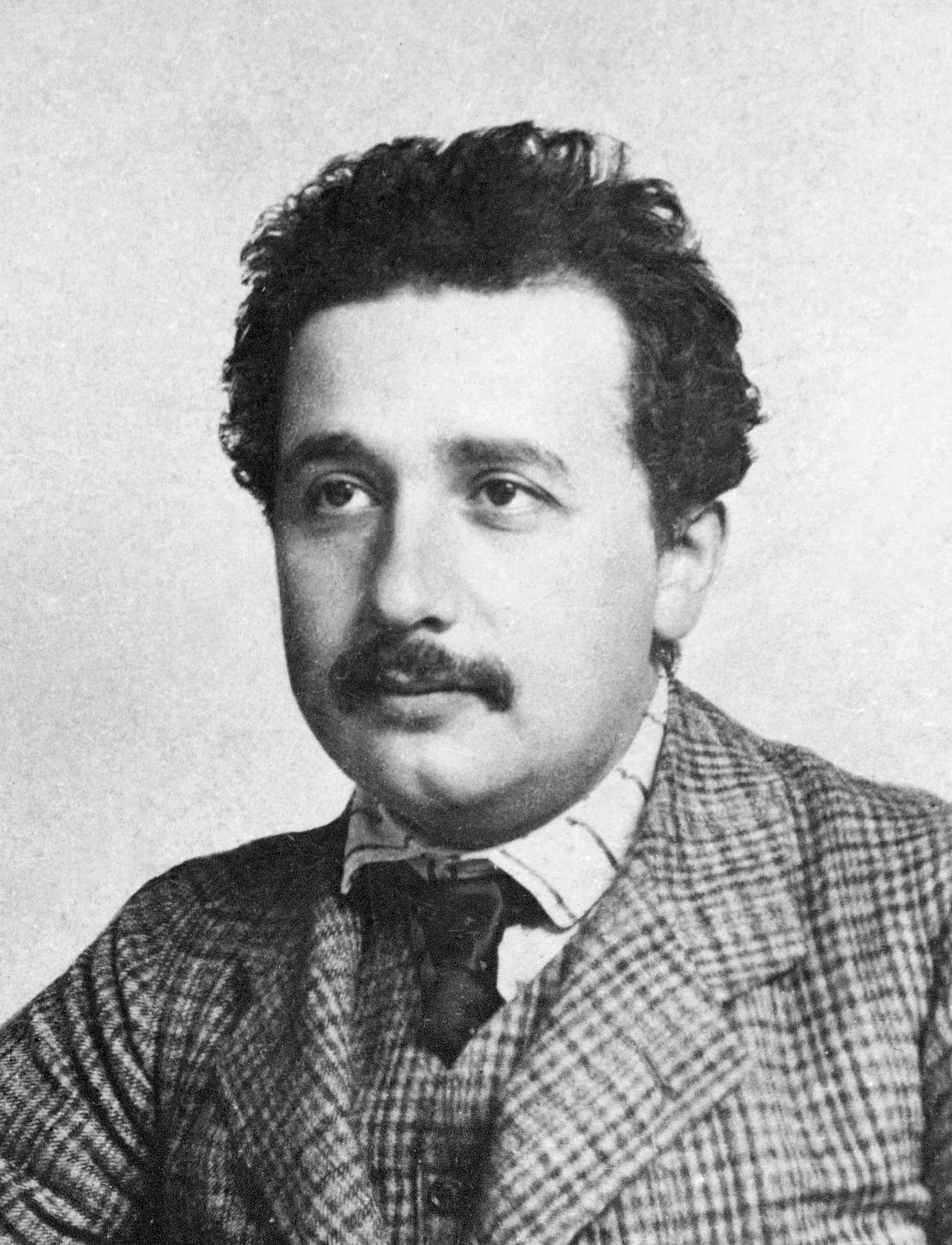
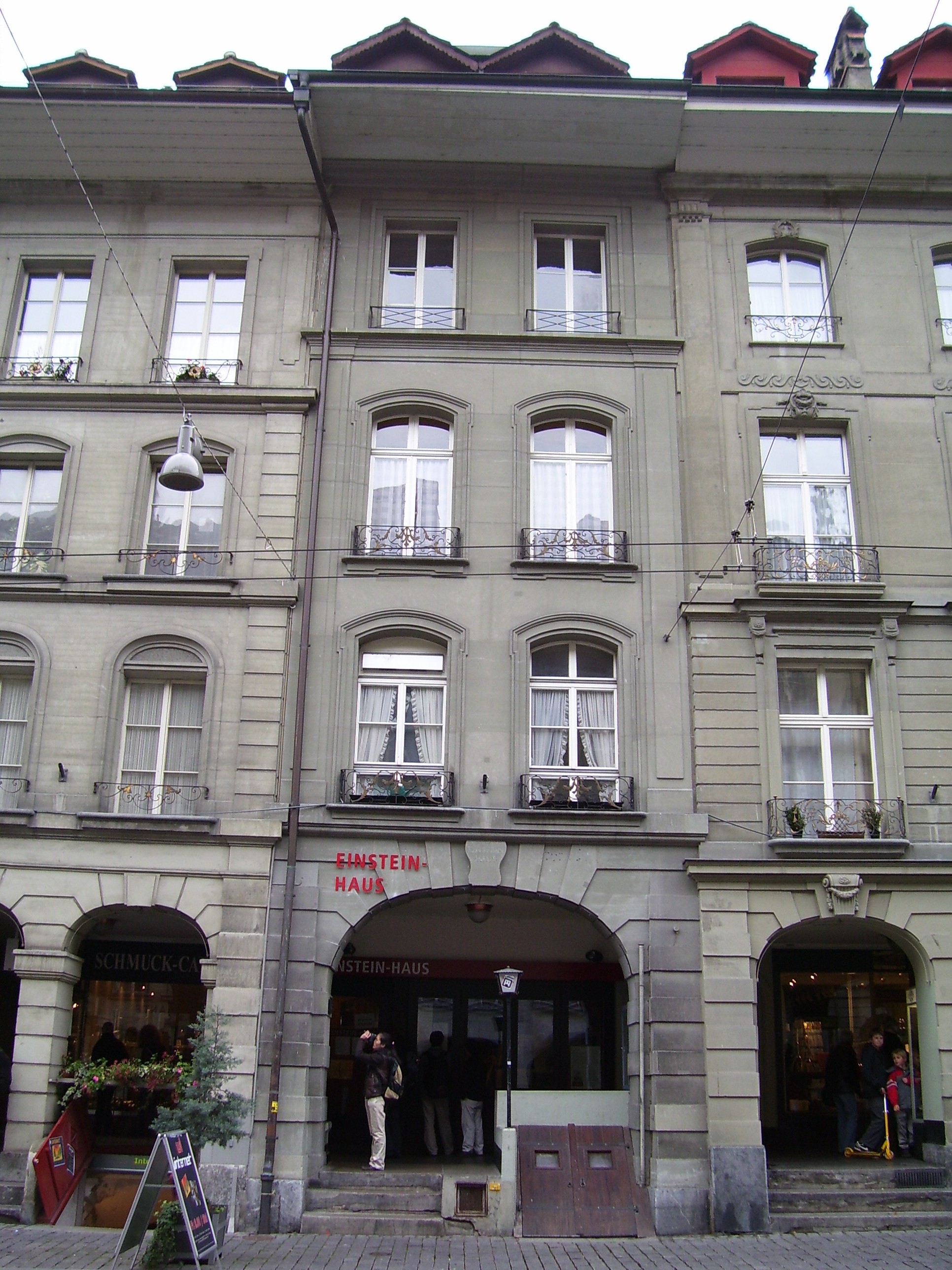
In the spring of 1905, in a small second-floor apartment at Kramgasse 49 in Bern's old town, a 26-year-old sat writing at his desk, cobblestones and arcades outside the window, a stack of manuscript pages on the table. By day he was a third-class technical expert at the patent office, examining other people's inventions; by night he was writing things that would rewrite physics within the year.[6]
That year, Newton's mechanics had ruled science for more than two hundred years. Time was absolute, space was absolute, light was a wave, and whether atoms even existed was still disputed — that was physics in 1905, seemingly unshakable. And the man writing its challenge taught at no university, had no laboratory, no students, not even a proper library to consult. What he had was a desk, a circle of friends, and a mind that refused to accept ready-made answers.
Chapter OneThe Outsider in the Patent Office
Albert Einstein was born on 14 March 1879 in Ulm, Germany, entered the Swiss Federal Polytechnic in Zurich in 1896, and graduated in 1900 with a teaching diploma in mathematics and physics.[6] After graduation he spent nearly two frustrating years looking for a teaching post, and found nothing — partly because his youthful brashness had irritated his professors, and partly because the universities of that era had no place kept for someone like him. In 1901 he became a Swiss citizen; in 1902, through the introduction of a classmate's father, he walked into the Federal Office for Intellectual Property in Bern and became a third-class technical examiner.[6][7]
The job looked like a dead end. The patent office stood in central Bern, and Einstein worked at a standing desk in room 86, on a 48-hour week, examining inventions that ranged from gravel sorters to electromagnetic devices.[7][8] Yet he later called the place "a worldly cloister" and said his most beautiful ideas were hatched there.[7] The remark deserves a slow reading: a job with nothing to do with academia gave him precisely what academia could not — a steady income, undisturbed time, and above all, freedom from having to please any academic authority.
People inside the system spend their days producing results inside the existing framework — promotions, publications, grants — every step measured against the expectations of their predecessors. Einstein, outside the system, had no promotion to chase, no school to serve, and no one who would dock his pay for doubting Newton. The patent work also gave him an unexpected training: judging day after day whether an invention was genuinely new and genuinely workable was daily practice in one skill — seeing the assumption hidden behind an idea. That habit would become his sharpest weapon.
Nor was he thinking alone. Every noon he walked the streets with his colleague Michele Besso, arguing through whatever problem would not yield; in the evening he returned to the Kramgasse apartment, where his wife Mileva Marić — herself trained in physics — was his first reader. He married Mileva in 1903 and moved to Kramgasse 49; in 1904 their elder son Hans Albert was born.[8] A cramped apartment, a crying infant, a 48-hour week — the miracle year was written inside exactly that life. Years later, at the end of his special relativity paper, Einstein thanked Besso by name, saying the paper could not have been written without him.[3] A young man outside the institutions relied not on an institution, but on a small human network.
Chapter TwoMarch: Light Comes in Grains
On 18 March 1905, the journal Annalen der Physik received Einstein's first paper of the year, "On a Heuristic Viewpoint Concerning the Production and Transformation of Light."[1] Its opening move was a provocation: it proposed treating light as arriving in discrete packets of energy — light quanta, later called photons.
The idea was near heresy at the time. Five years earlier, Max Planck had proposed that energy comes in discrete portions, but only to explain black-body radiation, and Planck himself treated it as a computational device rather than a fact about nature. Einstein went further: light itself, he said, is made of such portions, and when light strikes a metal surface, one portion hands its energy to one electron, which is then knocked free.[1] The strange facts of the photoelectric effect — stronger light knocks out more electrons, yet the energy of each electron depends only on the colour of the light — all fell into place at once.
The paper was published on 9 June.[1] Almost no one believed it. That light is a wave was one of the surest conclusions of nineteenth-century physics, proven by interference and diffraction; who would listen to a patent clerk saying light is a particle? But Einstein's paper had one decisive feature: it did not merely propose an idea, it gave an equation that could be tested. More than a decade later, the American physicist Robert Millikan confirmed the equation with precise experiments — although Millikan himself began by disbelieving the quantum account of light.[12] When the 1921 Nobel Prize in Physics finally came, it cited only this achievement, "for his discovery of the law of the photoelectric effect."[6] Relativity won no prize; the light quantum did. History has its own sense of humour.
Chapter ThreeMay and June: Atoms and Time
On 11 May, Annalen der Physik received the second paper, on Brownian motion — the ceaseless jitter of pollen grains suspended in water.[2] Whether atoms existed was still disputed among physicists. Einstein offered a way to settle it: if water is made of countless molecules, then the jitter is exactly what you would expect from molecules striking the grain from all sides — and he calculated how large the jitter should be, so that experiment could check him directly.[2] Within a few years, experiments confirmed his prediction, and the existence of atoms passed from philosophical argument to measured fact.
On 30 June, the third paper arrived at the journal: "On the Electrodynamics of Moving Bodies."[3] This was special relativity. Einstein began from a question that looks simple: if the speed of light is the same for everyone, what does "at the same time" mean? When two events happen simultaneously at the front and the back of a moving train, are they still simultaneous for someone standing on the platform? His answer was no. Time is not a river shared by everyone, and length is not a ruler valid everywhere; time and space change with motion, and only the speed of light stays the same.
The paper was published on 26 September,[3] but it caused no immediate sensation. Its mathematics was not especially difficult; what was difficult was what it asked the reader to give up — absolute time, which physicists had taken for granted for more than two hundred years. This was not a technical correction but a change of worldview. The paper cited no literature and thanked no professor; only Besso was acknowledged at the end.[3] A man with no laboratory rewrote time with thought experiments alone.
Chapter FourSeptember: A Three-Page Universe
On 27 September, the journal received the year's fourth paper, its title a question: "Does the Inertia of a Body Depend on Its Energy Content?"[4] The whole paper ran to just three pages. Starting from special relativity, Einstein derived a conclusion: when a body gives off energy, its mass decreases, by an amount equal to the energy given off divided by the square of the speed of light. Mass and energy, in other words, are two faces of the same thing.
The paper was published on 21 November.[4] It is worth noting that the world-famous formula E=mc² does not appear in it — the paper's conclusion states the change in mass as energy divided by the square of the speed of light, and the compact formula only took shape later.[4] But the conceptual revolution was complete: matter was no longer inert brick, energy no longer an abstract ledger; the two could turn into each other. Nuclear energy, nuclear weapons, and the explanation of why stars shine all trace back to these three pages.
In the same year Einstein also finished his doctoral dissertation, submitted to the University of Zurich on 30 April, on a new determination of molecular dimensions; he was awarded his doctorate in 1905.[5][6] Five works in all — four in Annalen der Physik and one dissertation. The "miracle year" is usually counted as four papers because those four rewrote physics, but the dissertation is a reminder that Einstein was not writing extracurricular essays that year; he was also completing the credential the system demanded of him.
Chapter FiveWhy Him
Why him? Why this 26-year-old with no teaching post, no laboratory, who spent his days examining patents? There is no simple answer, but there are clues worth following.
First, he stood at the edge of the system, not at its centre. People at the centre must defend the reigning paradigm, because their reputations and funding are tied to it; people at the edge have nothing to defend, and can see the cracks in the paradigm instead. Einstein had no professor to please and no school to serve; he only had to be honest with his own questions.
Second, his training was usefully misaligned. A patent examiner's daily work is judging whether an invention is genuinely new and genuinely workable — training in a single skill: looking past the packaging to the assumption. He took physical theories apart the same way. What does this theory assume? Has that assumption ever been tested? Newton assumed absolute time, and no one had ever tested it — so test it.
Third, he had a mind unafraid of solitude. None of the four papers of 1905 followed fashion. The light quantum defied the optical consensus of the day, Brownian motion challenged the opponents of atomism, relativity overthrew Newton, and mass–energy equivalence took even Einstein himself time to digest. What steadiness must a 26-year-old possess, to tell the whole of science four times in one year that its basic assumptions were wrong?
EpilogueEclipse, Laurels, and Late Understanding
After the miracle year, Einstein spent ten years generalising special relativity into general relativity, presenting its final form to the Prussian Academy of Sciences on 25 November 1915.[9] General relativity predicted that starlight passing near the Sun would bend by 1.75 arcseconds.[10] On 29 May 1919, the British astronomer Arthur Eddington led teams at Principe Island and Sobral to photograph the stars at the Sun's edge during a total eclipse; on 6 November that year the results were announced in London — the deflection of starlight matched Einstein's prediction.[9][10] Overnight, the patent clerk became a world celebrity.
The Nobel Prize came later still, and more cautiously. The 1921 Prize in Physics was awarded to Einstein and formally presented in 1922, citing only the photoelectric effect and saying nothing of relativity.[6] The committee was evidently not yet ready to vouch for relativity — or, to put it another way, not yet ready to admit that a man who had written the answer in 1905 waited 16 years for the prize.
The true lesson of 1905 may lie outside physics, in the realm of institutions. A man the system did not recognise rewrote a science in four papers; a man with no laboratory saw what others could not, with thought experiments alone. Institutions have their uses — they train people, allocate resources, keep order — but their blind spot is built in: they reward work that meets expectations, and struggle to reward work that challenges them. Einstein's miracle year reminds us that the important breakthroughs often happen at the edge, in the hands of people who owe the system nothing. And each of us might ask: is there an assumption I take for granted, one worth stopping to doubt, seriously, the way the Einstein of 1905 did?