PrologueThe Last Week of Trust
In the early hours of 11 November 2022, the cryptocurrency exchange FTX filed for bankruptcy protection in Delaware. Nine days earlier it had been a company valued at $32 billion. Nine days later, its books showed a hole of roughly $8 billion, and more than 100 affiliated companies went down with it.[1]
Financial history has seen bigger frauds, and slower collapses, but rarely anything this fast. Nine days, from one news article to a bankruptcy filing. It was not hacked, and it was not destroyed by the market. It fell in a more unsettling way: the money was supposed to be there, until people went to collect it and discovered it had been gone for a long time.
This book is not about the technology of cryptocurrency. It is about something older: how trust is manufactured, and how it can evaporate overnight.
Chapter 1The Genius in Shorts
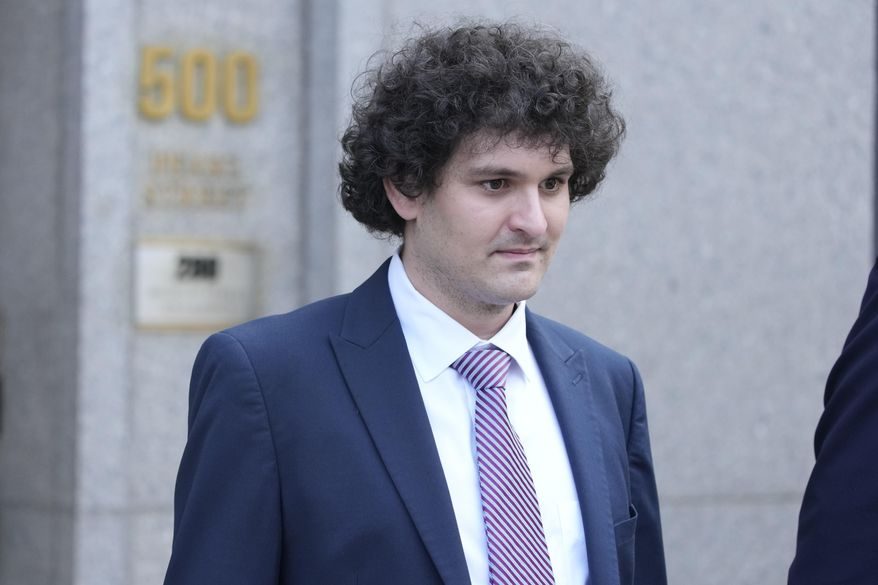
Sam Bankman-Fried, known as SBF, was the financial world's favourite story in 2022. Born in 1992 and educated at MIT, he founded the trading firm Alameda Research in 2017 and the exchange FTX in 2019.[1] He did not wear suits. He attended meetings in shorts and a T-shirt, slept on a beanbag in the office, and played video games during interviews. The image was not an accident; it was an entire narrative: a real genius does not need to look like a banker.
He also had a more moving story to tell: effective altruism. He said publicly that he made money in order to give it away and save the world. In an era deeply suspicious of Wall Street, that sentence worked like a talisman.
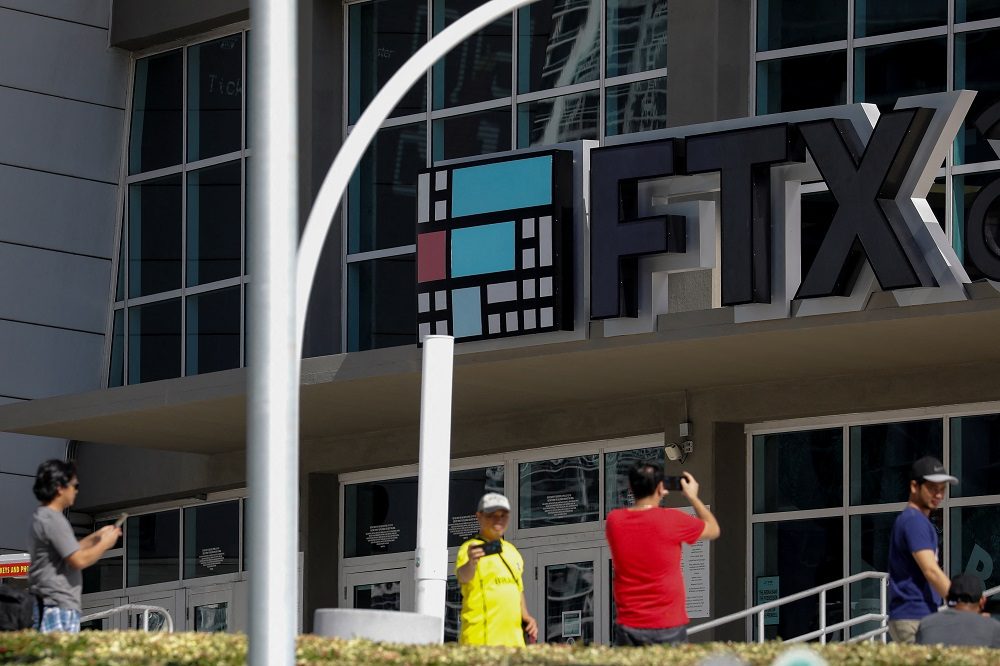
The market bought it. In early 2022, FTX was valued at $32 billion, with Sequoia Capital, Temasek and SoftBank among its investors.[3] Tom Brady endorsed it, Larry David starred in a Super Bowl advertisement, and the Miami arena was renamed FTX Arena under a $135 million, 19-year naming-rights deal.[7] Bankman-Fried's own fortune was at one point estimated at $16 billion; he appeared on magazine covers and testified before Congress.[1] He lobbied in Washington on regulation, acting as the industry's spokesman.
Looking back, all of it had one thing in common: nobody actually looked at the books. The valuation, the endorsements, the charitable pledges — layer upon layer, they formed what psychologists call social proof. So many clever people, so many celebrities, so much money believed in it. What was left to doubt? That is how trust gets manufactured: not by verification, but by watching everyone else believe.
Chapter 2Money Printed Out of Thin Air
On the surface, FTX's business was simple: run a platform for trading cryptocurrency and collect fees. But it did one thing an exchange should never do: it issued its own token, FTT. FTT was printed by FTX itself, priced by FTX itself, and given its uses by FTX itself. Holders could use it to discount trading fees, as if it were a share, and as if it were a currency.
The problem sat in another company. Alameda Research was nominally an independent trading firm, but in practice it was controlled by the same man who controlled FTX. On 2 November 2022, CoinDesk reporter Ian Allison obtained a copy of Alameda's balance sheet, dated 30 June of that year. It showed total assets of $14.6 billion, of which the single largest item was $3.66 billion in "unlocked FTT". Counting locked and collateralised FTT as well, the total came to about $5.8 billion — nearly 40 percent of the firm's assets consisted of a token printed by FTX itself.[2]
It was a circular argument: FTT was valuable because FTX was valuable, and FTX was valuable partly because Alameda held so much FTT. The two companies vouched for each other like two mirrors facing one another, reflecting an image far larger than the real thing.
And the cracks had appeared earlier. After the Terra/LUNA collapse in May 2022, Alameda suffered heavy losses, and FTX lent it more than half of its customer funds to cover them. People familiar with the matter told the Wall Street Journal that Bankman-Fried described the decision as a "poor judgment call". The move was explicitly forbidden by FTX's own terms of service, and the company used software to conceal the diversion of customer funds.[1] In other words, the customers' money was already gone before the article was published. The article simply made everyone see it at the same time.
Chapter 3Nine Days
On 2 November, the CoinDesk article appeared. The market was quiet for a few days, as if everyone was waiting for someone else to move first. Then, on 6 November, Changpeng Zhao, chief executive of Binance, announced on Twitter that Binance would liquidate all of its FTT. The tokens were part of roughly $2.1 billion in assets Binance had received in 2021 when FTX bought back its equity stake; at the time, Binance held about 23 million FTT, worth around $529 million.[1]
Caroline Ellison, chief executive of Alameda, replied immediately on Twitter, offering to buy all of Binance's FTT at $22 per token. The message was meant to steady nerves. It had the opposite effect: it amounted to a public admission that Alameda's survival depended on the price of FTT. The market understood. The run began. Within 72 hours, customers withdrew roughly $6 billion from FTX.[1]
On 8 November, FTX halted most withdrawals. The same day, Binance announced it had signed a non-binding letter of intent to acquire FTX and help it through a "liquidity crunch". FTT fell 80 percent that day.[1] The hope lasted one day. On 9 November, after looking at the books, Binance walked away, citing FTX's reported mishandling of customer funds and pending regulatory investigations. That day, FTX's website said withdrawals were no longer being processed.
On 10 November, Bankman-Fried admitted failure, sought $10 billion in emergency financing, and announced that Alameda would cease trading and wind down. People familiar with the matter told the Wall Street Journal that Alameda owed FTX about $10 billion.[1] On 11 November, FTX, FTX US, Alameda and more than 100 affiliates filed for Chapter 11 bankruptcy. Bankman-Fried resigned as chief executive and was replaced by John J. Ray III, the restructuring specialist who had overseen the Enron bankruptcy.[1] Late that same night, about $473 million left FTX in what the company called "unauthorized transactions".[1]
From the article to the filing: nine days exactly. A company valued at $32 billion, gone in nine days. The speed itself is evidence. Only a company held up by confidence falls to zero the moment confidence disappears.
Chapter 4What Wasn't in the Books
What the bankruptcy administrators found was bleaker than the public had imagined. On 17 November 2022, John J. Ray III submitted his first declaration to the court, containing a sentence that has been quoted ever since: "Never in my career have I seen such a complete failure of corporate controls and such a complete absence of trustworthy financial information as occurred here."[4] The words came from a man who had cleaned up after Enron.
The declaration read less like a company valued at $32 billion than like an unguarded warehouse. Many subsidiaries had never held a board meeting. The company could not produce a complete list of its employees or its bank accounts. Requests to disburse money were approved in a chat application with emojis. Alameda enjoyed a secret exemption from FTX's automatic liquidation mechanism. Control was concentrated in the hands of a very small group of inexperienced people.[1][4]
In June 2023, an investigative report by the new management went further: FTX had commingled customer and corporate funds from its very inception, and had lied to banks about the practice as early as 2020.[6] This was not a momentary lapse. From the beginning, there was no separation. Customers believed they were depositing money in a vault. In reality, the money went into one large pool with no partitions, and anyone could reach in and take it.
There is a question worth pausing on: why did so many professional investors, lawyers, accountants and regulators fail to notice? The answer is not complicated. FTX was headquartered in the Bahamas, a jurisdiction chosen for its light-touch regulation. The corporate structure was a tangle of more than a hundred entities, so complex that even insiders could not describe it.
Chapter 5Why Everyone Believed
The most instructive part of the FTX story is not Bankman-Fried alone, but the ring of clever people around him. Sequoia Capital later wrote its investment down to zero and published a famous letter of apology. Temasek also took the loss. These institutions were not incapable of due diligence. Their diligence was overwhelmed by a stronger force: the fear of missing out.
Psychology has a name for one part of it: the halo effect. When someone excels in one area, we automatically assume they excel in all of them. Bankman-Fried could write code, do mathematics and talk about charity, so people automatically assumed he could also run a company and obey the law. Effective altruism played a decisive role here. It was not just a philosophy; it was a moral passport. A man who claimed he would give all his wealth away seemed to have passed a character test in advance.
The other side of crowd psychology is the diffusion of responsibility. Everyone assumed someone else had checked: retail investors believed the venture capitalists had checked; the venture capitalists believed the auditors had checked; the auditors believed the regulators had checked; the regulators believed the market had checked. In the end, nobody had actually checked. Trust had been subcontracted so many times that no one was left holding it.
And Bankman-Fried himself was perhaps the system's most astute exploiter. He did not need to forge clever accounts; he only needed everyone to believe that questioning him was unnecessary. Celebrity endorsements, a stadium naming deal, lobbying in Congress, charitable pledges — each one answered the same question: "Why should you trust me?" The answer was never a number. It was an entire scene that looked flawless.
That is why FTX is the newest template for financial fraud. It invented no new trick. It took the oldest trick — diverting customer funds — and wrapped it in the newest narrative: cryptocurrency, effective altruism, the boy genius.
Chapter 6The Trial and the Aftermath
In December 2022, Bankman-Fried was arrested in the Bahamas and extradited to the United States. His three closest lieutenants — Alameda chief executive Caroline Ellison, FTX co-founder Gary Wang, and engineering chief Nishad Singh — pleaded guilty one by one, and testified at the trial in October 2023 that the diversion of customer funds had been ordered by Bankman-Fried himself.[1]
On 2 November 2023, a jury found Bankman-Fried guilty on all seven counts of fraud and conspiracy. On 28 March 2024, the judge sentenced him to 25 years in prison and ordered the forfeiture of about $11 billion. The judge found that FTX customers had lost $8 billion, investors $1.7 billion, and Alameda's lenders $1.3 billion.[5][7]
But the story did not end at the prison gate. On 7 October 2024, the bankruptcy court confirmed FTX's reorganisation plan: 98 percent of creditors would recover about 119 percent of their claims, calculated at the prices on the bankruptcy filing date.[7] It is a bitter paradox. In dollars, creditors were made almost whole. In cryptocurrency, they will never recover the gains that came after November 2022. Bankruptcy counts money; what customers lost was time and opportunity.
Bankman-Fried appealed. In June 2026, the US Court of Appeals for the Second Circuit upheld the conviction and sentence. On 10 September 2026, he petitioned the US Supreme Court for review; as of November 2026, the Court had not decided whether to hear the case.[7] Meanwhile, the bankruptcy estate has recovered billions through asset sales, settlements and clawbacks — yet never enough to recover the trust that evaporated in those nine days.
EpilogueTrust Cannot Be Outsourced
Four years after the collapse of FTX, the cryptocurrency market has come back. Bitcoin has set new highs, and new exchanges, new tokens and new geniuses keep appearing.
The lesson of FTX is not "stay away from cryptocurrency". It is "do not outsource trust". Wherever your money sits, look at the books yourself: are customer funds segregated, is the audit genuinely independent, can the founder's claims be verified? A promise that cannot be verified, however beautifully packaged, is only a sentence.
Trust is the only real currency of the financial world. An exchange does not sell tokens; it sells trust. A bank does not sell interest; it sells trust. The entire financial system, from beginning to end, rests on one belief: "I trust you to return my money." FTX proved in nine days that trust can be manufactured, marketed and hyped — but it cannot be printed out of thin air.
Next time a genius in shorts appears, and another crowd of clever people tells you "this time is different", remember those nine days in November 2022. Not out of fear, but to hold on to a simple test: if someone asks you to trust him rather than to verify him, you may not be looking at the next era. You may be looking at an old story in a new costume.