PrologueA Store About to Die
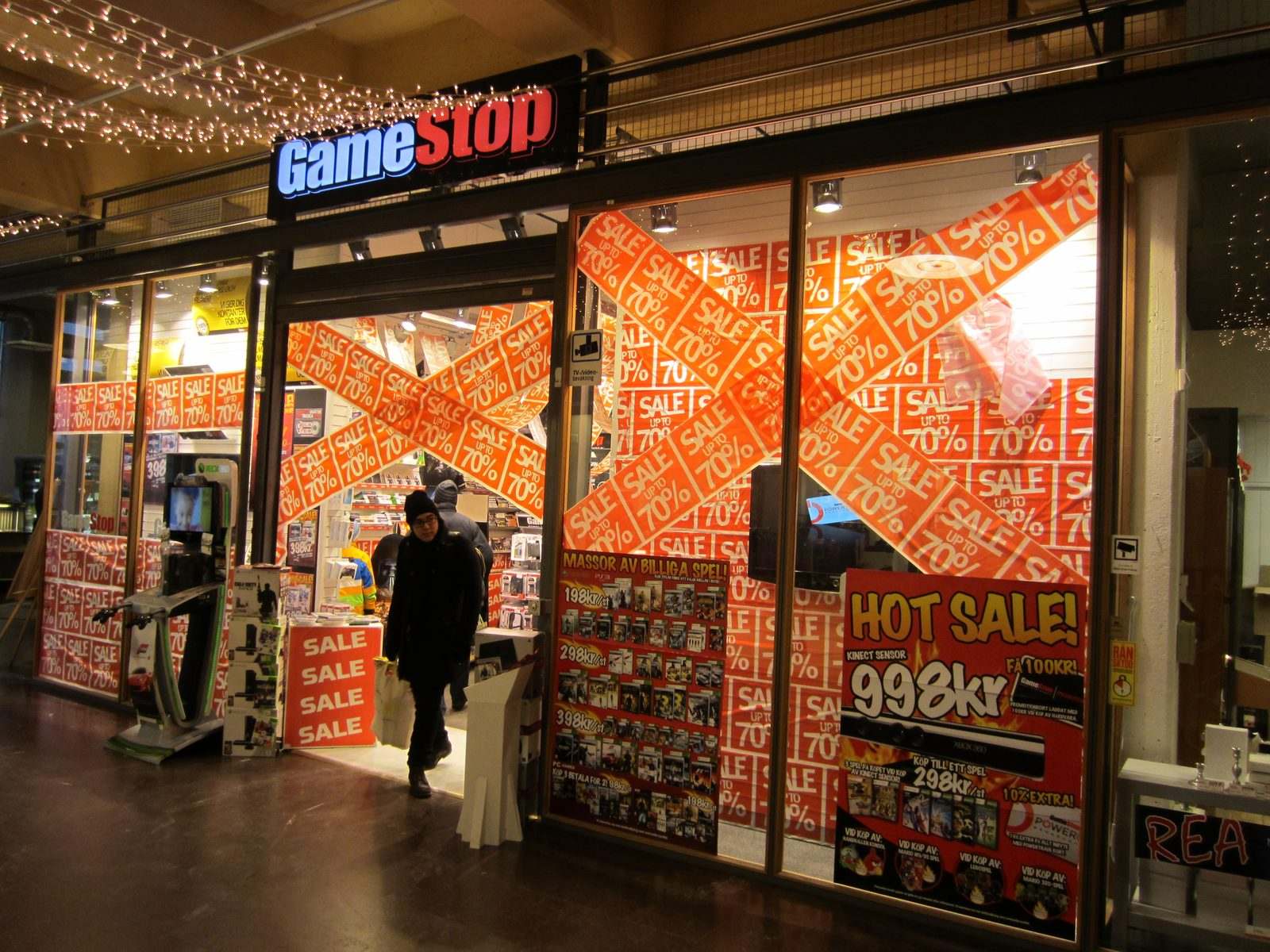
On the morning of January 28, 2021, before the American stock market had even opened, a chain that sells video game discs saw its share price surge past $500. A month earlier, it had traded at $17.25. Later that day, millions of retail traders opened their brokerage apps and discovered that the buy button was gone — they could sell, but they could not buy. A siege conducted entirely on phone screens had entered financial history.
GameStop was not a great company. Quite the opposite: it was a company sentenced to death by its era — physical game retail, storefronts in shopping malls, a business being eaten away, bit by bit, by digital downloads. The cleverest people on Wall Street had seen it long ago. They borrowed shares and sold them, betting the price would slide to the bottom. By January 22, 2021, the number of shares sold short had reached about 140% of the public float — more shares had been sold than actually circulated in the market.
Then a crowd of retail traders gathered on an internet forum and decided not to let it fall. This is not a book about how to buy stocks. It is about how a group of people found the cracks in the entire financial system inside a dying store — and decided to pry them open.
Chapter 1A Company Sentenced to Death
To understand this war, first understand the city under siege. GameStop sold physical games: discs, consoles, second-hand trade-ins. For a decade, the ground beneath that business had been sinking — players moved to downloading games online, publishers sold directly to players, and foot traffic in malls thinned year by year. The company lost money in each of the two fiscal years before 2021.
The logic of short selling is not wrong in itself. If you believe a company is doomed, you borrow its shares, sell them, and buy them back cheaper later; the difference is your profit. Short sellers see themselves as the market's street cleaners, dragging overvalued things back to earth. On paper, Wall Street's verdict on GameStop was almost flawless: a sunset industry, a loss-making company, a stock headed for zero.
The problem was scale. The number of shares sold short can exceed the number of shares in circulation, because the same shares are lent out and sold again and again. On January 22, 2021, GameStop's short interest reached about 140% of the public float — the only stock the U.S. Securities and Exchange Commission saw with short interest above shares outstanding. That meant every share in circulation had, on average, been sold 1.4 times. The selling pressure circulating in the market was greater than the stock that existed.
When a stock is shorted to that degree, it stops being a question of valuing a company. It becomes a match: light it, and everyone who borrowed and sold must rush back to buy at the same time, while there are simply not enough shares to buy. The match was laid out. All it needed was someone to strike it.
Chapter 2The Man Who Liked the Stock
The person who struck it was an ordinary 34-year-old. Keith Gill spent his days writing financial education materials at the insurer MassMutual, and his evenings posting on Reddit as DeepFuckingValue and streaming on YouTube as Roaring Kitty, arguing one thing: GameStop was undervalued.
He had not appeared out of nowhere in January 2021. People on Reddit had been discussing GameStop since 2019, and Gill had been posting his position and his reasoning every month for more than a year. His argument was not mysterious: the company had cash on hand, management was changing, the stores still had value, and the short interest was absurdly high — itself an opportunity. His position began at $53,000. By January 27, 2021, its paper value had reached $48 million.
Gill's power lay not in what he said, but in how long he stayed. He issued no buy calls and promised no returns — only a brokerage statement, posted on schedule, month after month. In a forum full of anonymity and boasting, a record that was consistent, transparent, and backed by his own money was trust itself. On January 27, 2021, his forum, r/wallstreetbets, received 73 million page views in 24 hours. One person's persistence had grown into a crowd's consensus.
The crowd had no headquarters, no leader, no trading floor. It had only a shared discovery: the cleverest people on Wall Street had all placed the same bet, in the same direction, on the same stock — and they had bet so big that they could not turn around.
Chapter 3The Squeeze
On January 22, 2021, GameStop closed at $65.01. Over the next three trading days the price ran wild, closing at $347.51 on January 27 and valuing a loss-making retailer at roughly $24 billion.
The mechanics of a squeeze are cruel and simple. As the price rises, the losses on short positions rise with it; when the losses exceed what margin can bear, the short seller must buy shares back to close out — and that buying pushes the price higher still, breaking the next short seller in line. Buying of call options added fuel: market makers who had sold those calls had to buy shares to hedge, so the rally fed on itself. In pre-market trading on January 28, the price briefly topped $500; its intraday high reached $483.
This was not fundamentals. It was a game of who blinks first. The shorts were betting the company would die; the longs were betting the shorts would die first. Price was no longer a measure of the company — it was a mirror, showing whose money ran out first and whose conviction broke first.
On January 27, Melvin Capital and Citron closed out their bearish positions at catastrophic losses. But the story did not end there. What turned this squeeze into a historical event happened the next morning.
Chapter 4The Day the Buy Button Vanished
In the early morning of January 28, 2021, the National Securities Clearing Corporation (NSCC) sent Robinhood a notice: the clearing collateral Robinhood had to post had jumped overnight from $124 million on January 25 to $3.7 billion. This was not a fine. It was the ordinary plumbing of market settlement — the more trading volume and the wilder the volatility, the more collateral the clearinghouse demands. Only this time, the number was more than Robinhood could pay.
That day, Robinhood restricted buying in 13 stocks, including GameStop. Customers could sell, but not buy. GameStop fell 44% that day, closing at $193.60. Robinhood then raised $3.4 billion in emergency capital: $1 billion on January 29, and another $2.4 billion by February 1.
The anger was not about losing money. It was about rules that seemed to change midway through the game. Robinhood said the restrictions were needed to meet clearinghouse deposit requirements, not to favour anyone; its chief executive, Vlad Tenev, repeated the point in testimony to Congress. But what retail traders saw was simple: the sell button still worked, and the buy button did not. And the side that had vanished was their side.
The real damage that day was not a price level. It was a suspicion. Millions of people saw, for the first time, that the freedom of the free market has a switch — and the switch is not in their hands.
Chapter 5The Cat in Congress
On February 18, 2021, the U.S. House Committee on Financial Services held a hearing titled "Game Stopped? Who Wins and Loses When Short Sellers, Social Media, and Retail Investors Collide." Five people sat in the witness seats: Robinhood chief executive Vlad Tenev, Citadel chief executive Ken Griffin, Melvin Capital chief executive Gabe Plotkin, Reddit chief executive Steve Huffman — and a 34-year-old retail trader testifying by video from his own room, wearing a red headband.
Keith Gill's opening statement became the most quoted passage of the hearing: "A few things I am not: I am not a cat. I am not an institutional investor. Nor am I a hedge fund." He was nodding to a video that had gone viral days earlier, in which a lawyer accidentally appeared in a virtual court hearing with a cat filter on. And he closed with something plainer: "In short, I like the stock."
The numbers were on the table. Melvin Capital had lost 53% in January 2021; Citadel injected $2 billion and Point72 injected $750 million — $2.75 billion in total — to pull the fund back from the edge. Every witness denied any collusion between them, and denied that anyone had pressured brokers to restrict trading. The hearing changed no structure and passed no law.
But it gave the conflict a face. On one side, chief executives in suits. On the other, a young man in a headband with a poster on the wall behind him. For the first time in financial history, a debate about the rules of the market starred not an institution, but a retail trader whose online name contains an expletive.
Chapter 6The Other Frenzy of the Same Year
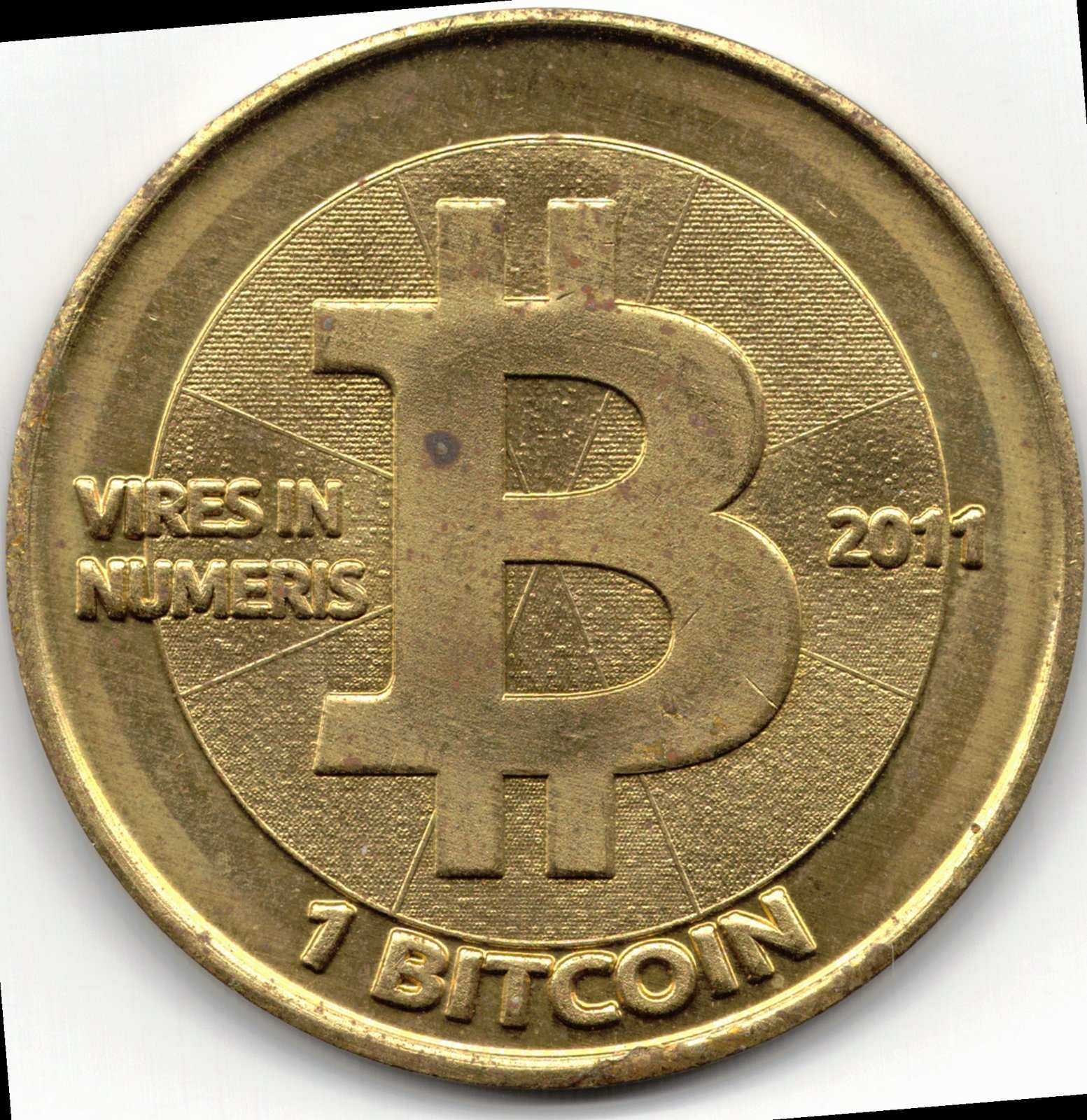
GameStop was not the only frenzy of 2021. On November 10 of that year, Bitcoin climbed to an all-time high of about $69,000. Earlier in the same year, on March 11, the digital artist Beeple's NFT "Everydays: The First 5,000 Days" sold at Christie's for $69.3 million, then the most expensive NFT ever sold.
Seen together, the three episodes share one climate. The pandemic had shut millions of people at home, stimulus money had landed in their accounts, and zero-commission trading apps sat in their phones, with time to kill. The Securities and Exchange Commission's own report noted a sharp increase in retail participation during the pandemic. When money is cheap, boredom is abundant, and institutions look invulnerable, people stop buying cash flows and start buying stories — stories about getting even, about payback, about this time being different.
Meme stocks, cryptocurrencies, NFTs: different costumes, the same play. All of them rest on one belief — that the old ways of valuing things no longer apply, and that value is now decided by the attention of the crowd. Attention is the easiest fuel of this era to ignite, and the hardest to control.
Crowd psychology showed both of its faces here. One face is power: scattered individuals could, within days, assemble buying pressure large enough to shake Wall Street. The other is fragility: attention arrives fast and leaves fast, and prices must eventually return to where someone is willing to hold them.
EpilogueThe Winners, and Those Who Were Not
On October 14, 2021, the U.S. Securities and Exchange Commission published its staff report on the episode. Its conclusions satisfied neither side. Short covering had indeed pushed the price up, but it was only a small fraction of overall buying; what sustained the weeks-long rise was the positive sentiment of retail traders themselves, not shorts being forced to cover. The report also found no evidence of naked shorting, and judged the market's basic plumbing "sound."
Put differently, the squeeze lit the fire, but the crowd kept it burning. That conclusion is more unsettling than any conspiracy theory: no hidden hand, no rigged switch — only a crowd believing the same thing at the same time, and belief alone was enough to send a price into the sky.
The ledger's ending is cold. Melvin Capital finished 2021 down 39%, announced its closure on May 18, 2022, and returned cash to investors by June. GameStop's share price was back to $40.59 by February 19, 2021, down 88.3% from its January 27 close. Retail traders who arrived late mostly left their money at the top. The system did move: the SEC voted to shorten the settlement cycle, and T+1 settlement took effect on May 28, 2024.
This war had no winner. The market learned one thing: a crowd holding phones is itself a market force, no longer background noise. The crowd learned one thing too: a moment is not a movement. It took three weeks to climb to $483, and three weeks to fall back to $40.
What truly changed in January 2021 was not the price of a stock, but the way a question is now asked. Whose market is it? There is no longer a single answer. And no one has yet been able to answer it for everyone.