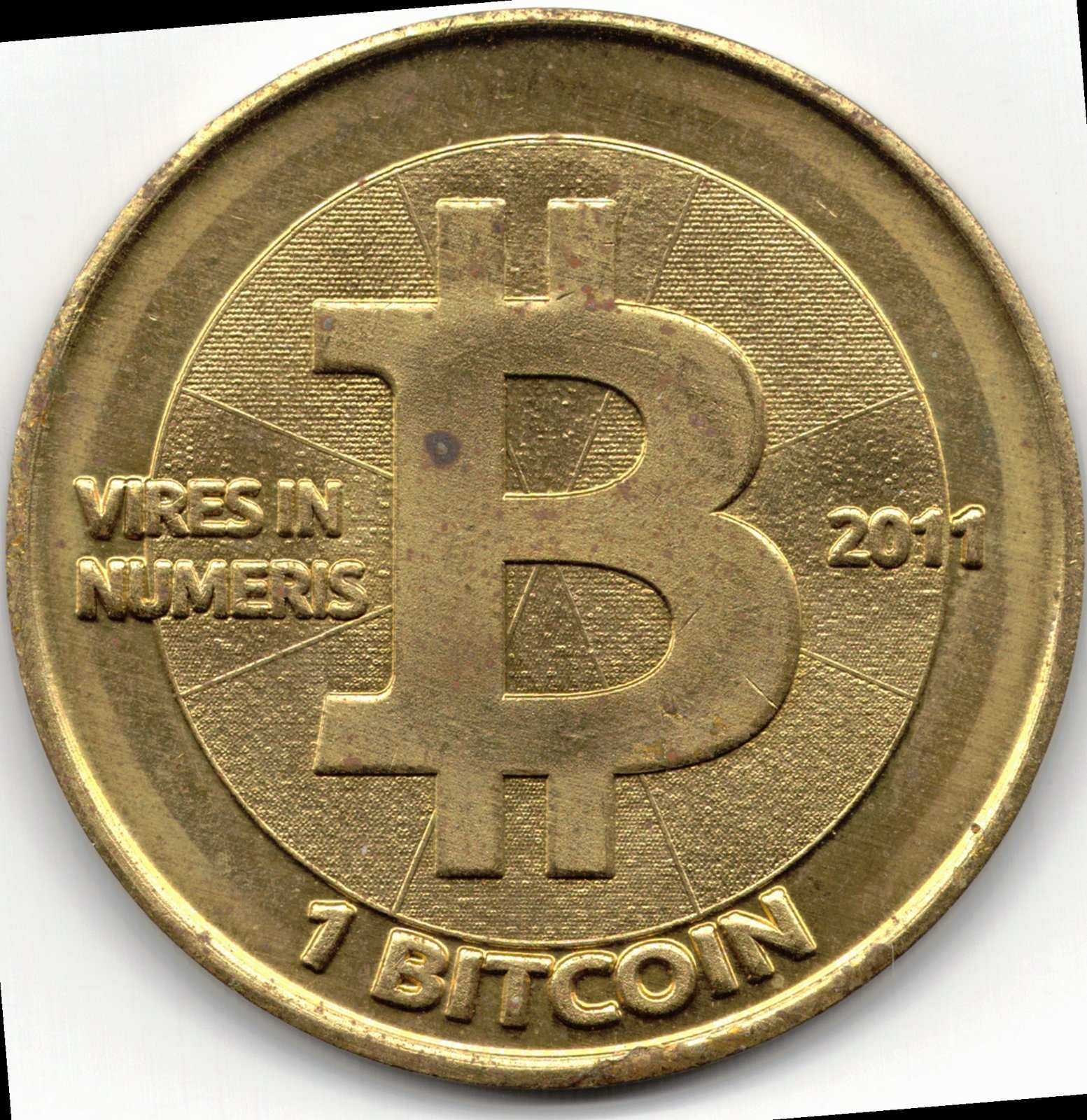
PrologueGold in 2026
On January 29, 2026, gold closed at $5,318.40 an ounce, an all-time high.[12][13] Less than ten months later, on November 3, it closed at $3,930.33, down about 26% from the peak.[12] On that same day, the World Gold Council reported numbers moving in the opposite direction: central banks had bought a net 675 tonnes of gold in the first nine months of 2026, 6% more than a year earlier.[2]
The price fell by about a quarter, and the believers did not leave. That is the hardest thing to explain about gold, and the most worth writing about. It pays no interest and no dividend; in your hand it is only a heavy lump of metal. Yet for 5,000 years, humanity has kept coming back to it, the way people keep coming back to an old well. The water rises and falls; the well stays.
This book will not ask whether the gold price will rise or fall — nobody knows, and anyone who claims to know will not tell you. It asks a different question: why gold? Why not copper, or iron, or any metal more useful? The answer is not in geology. It is in human nature.
Chapter 1The First Gold
In October 1972, at Varna on Bulgaria's Black Sea coast, a bulldozer operator cut into the ground and uncovered the oldest gold treasure known to humanity: 294 graves, about 3,000 gold artefacts, weighing roughly 6 kilograms in total, dated to between 4600 and 4200 BC.[8]
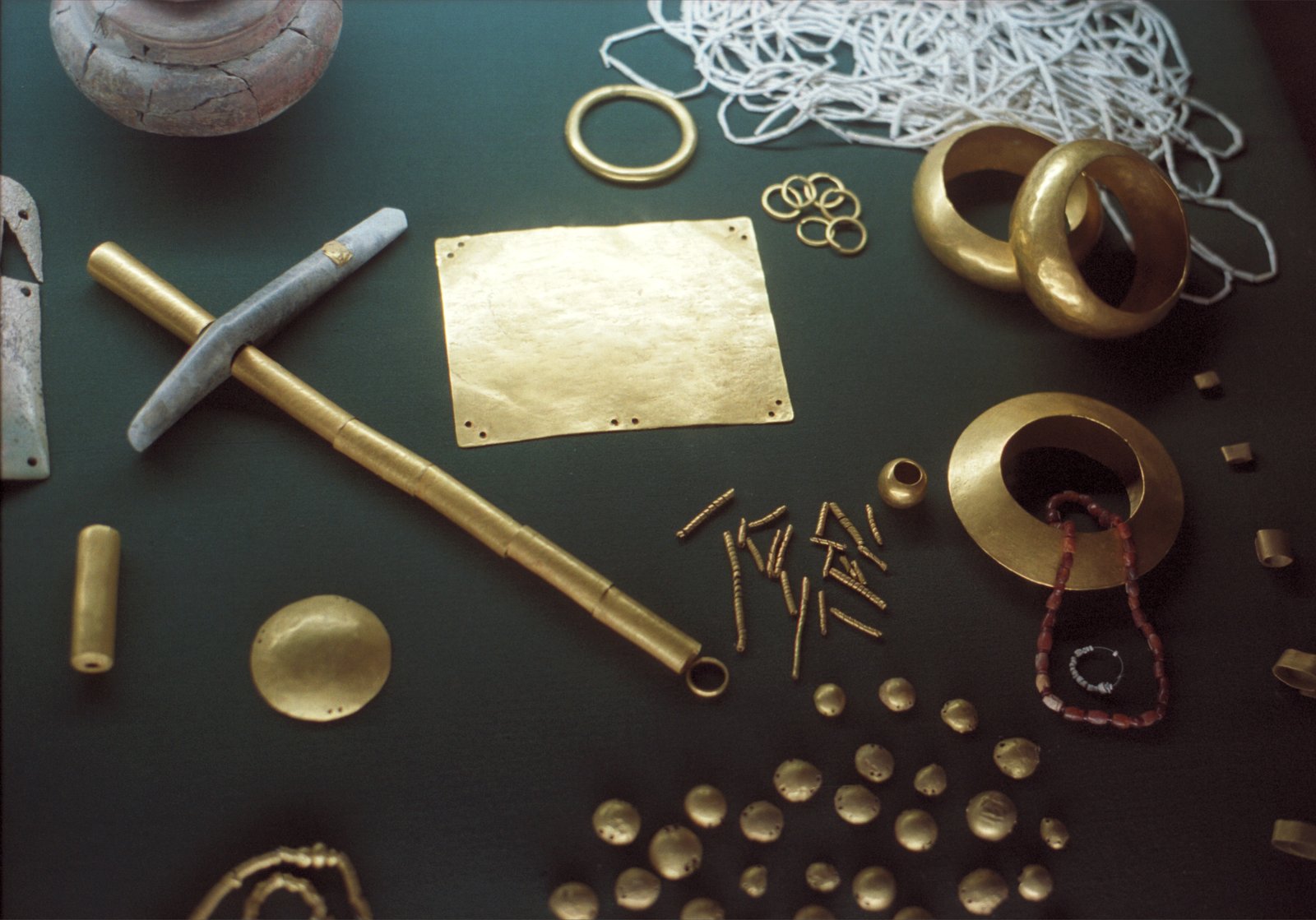
The most startling of them is Grave 43. Beside a man in his forties lay more than 1.5 kilograms of gold ornaments — more gold than has been found from that entire era across the rest of the world combined.[8] He was not a king, at least not a king in any sense we would recognise. Writing had not been invented, empires did not exist, and money was still thousands of years away. Yet some 6,600 years ago, someone already knew how to use gold to set one person apart from everyone else.
That is worth pausing over. The first time gold was taken seriously, it was not for buying things. It was for burial. Its first use was not trade but status; not circulation but eternity. A dead man needs no food — bread rots, cloth decays, wood turns to soil — but gold keeps its shine. To a society that had only just learned to work metal, that was not decoration. It was a miracle.
From that moment, the logic of gold was set: it is valuable not because it is useful, but because it does not change.
Chapter 2The Flesh of the Gods
The ancient Egyptians believed that the flesh of the gods was gold, their bones silver, their hair lapis lazuli. The pharaoh was a god made flesh, so a pharaoh's funeral was a ritual for turning a man back into a god.
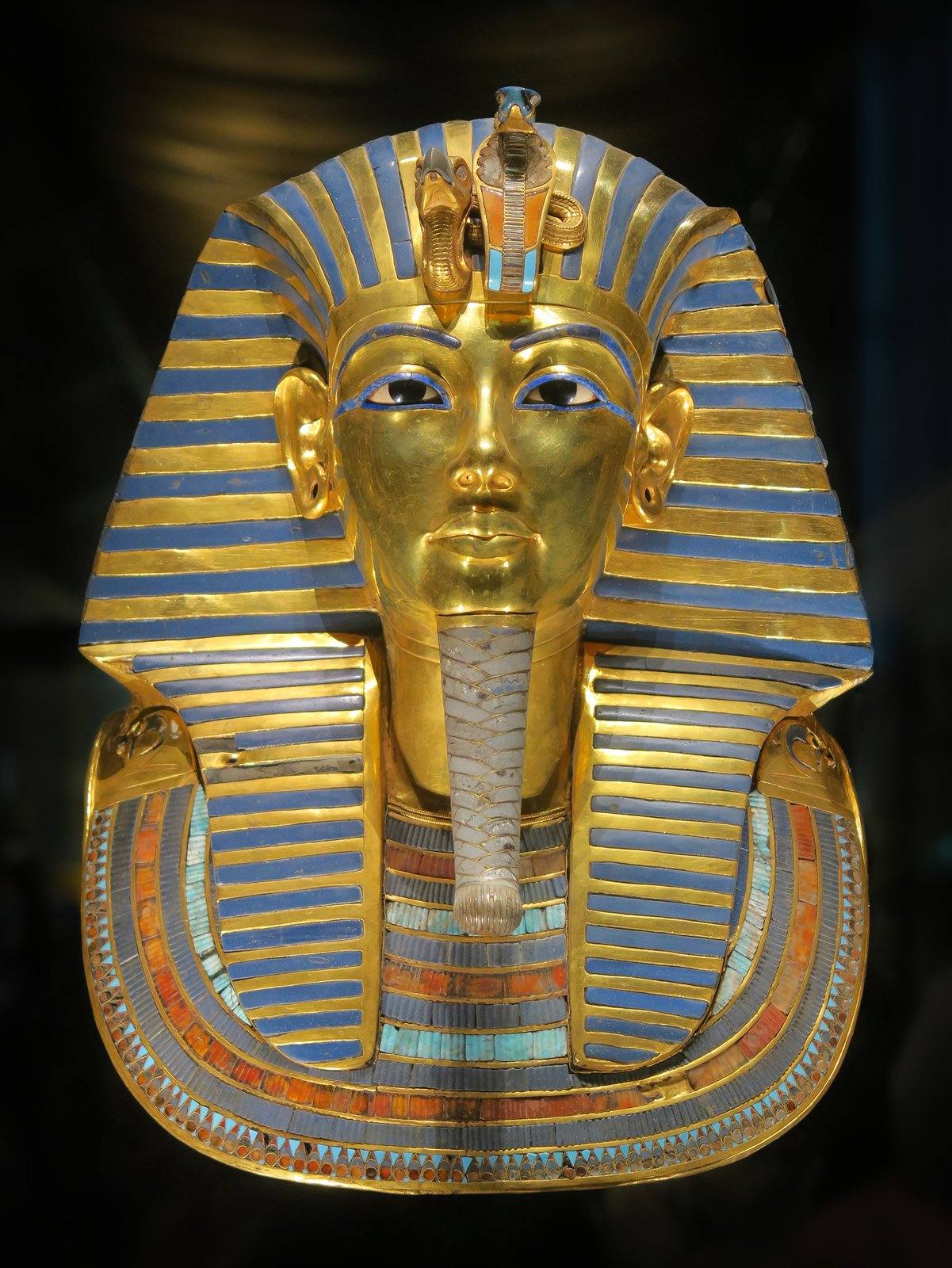
Tutankhamun reigned from about 1332 to 1323 BC and died at nineteen. His gold mask stands 54 centimetres tall, weighs 10.23 kilograms, and is made of 23-karat gold inlaid with lapis lazuli, turquoise and coloured glass.[9] When Howard Carter opened the tomb in 1922, the mask lay over the mummy's face, untouched for more than 3,000 years. Today it stands in the Grand Egyptian Museum, still the most recognisable object of the ancient world.[9]
The Egyptians did not prize gold because they lacked other metals. The Nile valley had copper and stone in abundance. They chose gold for its temperament: it does not rust, it does not corrode, and after 3,000 years in the ground it comes out the same colour it went in. For a civilisation that believed in a second life after death, and believed the body had to arrive there intact, no material was more fitting.
Here gold shows its double face for the first time: one side is wealth, the other is faith. And the faith side usually outlasts the wealth side. Empires fall, currencies are debased, but the gold on the mask has not lost a glimmer of its light.
Chapter 3Trust, Stamped
Around 600 BC, the kingdom of Lydia on the western coast of Asia Minor did something that looked small and turned out to be world-changing: it cast lumps of electrum, a natural alloy of gold and silver, to a fixed weight, stamped them with an official mark, and declared that this was money.[6]
Humanity had used gold for thousands of years before that, but always by weight: cut a piece, weigh it, haggle. Lydia's invention was to hand the weighing over to the state. The stamp meant: this piece's weight and fineness, I guarantee. By the middle of the sixth century BC, King Croesus went further, striking coins of pure gold — the famous Croeseid.[6] "Rich as Croesus" has been a byword ever since.
The invention of coinage was not the invention of metal. It was the invention of trust. A gold coin circulated in the marketplace not because buyer and seller both understood metallurgy, but because both believed the stamp. Once trust was established, gold stopped being merely gold; it became a carrier of promises. Lydia itself later fell to Persia, but what it invented stayed: for the next 2,600 years, every kind of money in the world has been a variation on the same trick.
Chapter 4The Dream of Three Hundred Thousand
On the morning of January 24, 1848, James Marshall, a carpenter at John Sutter's sawmill in Coloma, California, was inspecting the millrace when he picked up a few flakes of metal shining in the water. He tapped them against a rock: gold is soft, it bends, it does not shatter.[4][5]
He and Sutter swore each other to secrecy, but the secret lasted only months. On December 5, 1848, President James K. Polk confirmed the discovery to Congress, and the news travelled around the world.[4] Over the next few years, about 300,000 people poured into California — from the American East, from China, from Chile, from Australia — by ship, on horseback, on foot, across a continent.[18] In the year of the discovery, California's non-Indian population numbered only about 14,000.[5] During the gold rush, miners extracted more than 750,000 pounds of gold.[17]
But the man who found the gold did not get rich. Marshall died in poverty in 1885;[18] Sutter's agricultural empire was wrecked by the flood of prospectors.[4] The people who made money were often the ones who never held a pan: merchants like Samuel Brannan, who opened a store near the diggings and sold the prospectors shovels, pans and flour.[4]
A gold rush is a mirror held up to humanity at the sight of overnight fortune. The gold itself never changed; what changed was the way people looked at it. It went from the eternal substance of temples to something anyone could stoop and pick up. From that moment, gold stopped belonging only to kings and gods; it became the ordinary person's dream of escape. And a dream does not need to come true to keep spreading.
Chapter 5The Marriage of Paper and Gold
At 11 a.m. on September 12, 1919, five London bullion dealers gathered in the offices of N. M. Rothschild & Sons and set the first public price for gold: £4 18s 9d an ounce, or $19.39.[11] From that day on, gold had a daily official price. It was no longer only a treasure; it was a number.
Four years later, in December 1923, John Maynard Keynes published A Tract on Monetary Reform and wrote the famous line: "In truth, the gold standard is already a barbarous relic."[7] He was right, at least in theory: tying a nation's money to a metal whose supply no one controls means the economy must bend to the price of gold. But theory is one thing and the world another. Ten years later, President Franklin D. Roosevelt proved it — not by showing gold unimportant, but by showing it so important that the state had to seize it itself.
On April 5, 1933, Roosevelt signed Executive Order 6102, ordering Americans to deliver their gold coins, bullion and certificates to a Federal Reserve Bank by May 1, at $20.67 an ounce; anyone keeping more than $100 in gold faced a fine of up to $10,000 or ten years in prison.[10] Less than a year later, the Gold Reserve Act of 1934 revalued the metal at $35 an ounce — gold the government had taken in at $20.67 was suddenly worth $35.[10] The ban on private gold ownership lasted 41 years, until December 31, 1974.[10]
In July 1944, with the war still raging, delegates from 44 nations met at Bretton Woods, New Hampshire, to design the postwar monetary order: every currency would be pegged to the dollar, and the dollar would be convertible into gold at $35 an ounce. The International Monetary Fund and the World Bank were born in the same breath.[3] Gold walked out of the temple into the vault, and out of the vault into international law, becoming the ballast of world peace.
But even ballast can fail. After the war, America's spending abroad kept growing, the dollars in foreign hands kept multiplying, and the gold in Fort Knox kept shrinking: from a postwar peak of roughly 20,000 tonnes to fewer than 10,000 tonnes by 1971.[16] On August 11, 1971, even Britain, America's closest monetary ally, asked for $3 billion to be converted into gold.[16] Four days later, on Sunday evening, August 15, Richard Nixon went on television and announced that the United States would "temporarily" suspend the convertibility of the dollar into gold — along with a 90-day freeze on wages and prices and a 10% surcharge on imports.[15]
That "temporary" measure never ended. Gold climbed from $35 an ounce to a peak of $850 on January 21, 1980.[16] The Bretton Woods system unravelled within two years, and the world entered the age of floating exchange rates. Keynes had called the gold standard a barbarous relic; Nixon swept the relic into history's warehouse with a single television address. But the curious thing is that gold itself did not disappear. It simply changed its job — from the anchor of money to a vote of no confidence in money.
Chapter 6The Faith in the Vault
In the third quarter of 2026, central banks bought a net 321.2 tonnes of gold, 42% more than a year earlier, bringing the first nine months to 675 tonnes.[2] What is striking is that about 63% of that buying was never publicly reported — central banks are buying gold while preferring that no one knows they are buying it.[2] Of the reported purchases, China's central bank declared 63 tonnes and Poland's 40 tonnes.[2] In the same quarter, gold ETF holdings reached a record 4,256 tonnes.[2]
The United States is still the world's largest official holder of gold, with 8,133.46 tonnes — more than twice as much as second-placed Germany — most of it locked in vaults at Fort Knox, West Point and Denver.[14] The figure has barely moved in decades. America neither buys nor sells. It simply keeps watch.
Step back further: humanity has mined about 224,200 tonnes of gold in all of history (as of the end of the third quarter of 2026), worth roughly $30 trillion — and about two-thirds of it has come out of the ground since 1950.[1] In other words, most of the gold story was written in the last seventy-odd years. And it was written by the people least given to stories: central bankers.
Why would a central bank still buy a metal that pays no interest? The answer is plain: gold is the only reserve asset that requires no one's trust. Foreign exchange is a debt another country owes you; a government bond is a promise another government makes. Gold is nothing — it owes no one, and no one has to make good on it. That "nothing" looks like a defect in calm times. In a storm, it is the only virtue that matters.
EpilogueBelief Itself Is the Value
From the graves of Varna to the conference tables of Bretton Woods to the vaults of today's central banks, gold has never changed. We have. We invented coins, paper money, electronic payments, cryptocurrencies — each time convinced that this time we could finally say goodbye to that yellow metal; each time, after a while, quietly inviting it back.
Gold's secret is simple. It promises nothing, so it never breaks a promise. It pays no interest — and that is precisely its honesty. Everything that promises interest needs someone to keep the promise in the end, and the promise itself is where the risk lives.
Keynes called it a barbarous relic. Nixon said the suspension was only temporary. The prospectors said it could make a person rich overnight. The pharaohs said it was the flesh of the gods. These accounts contradict one another, yet they share one thing: in every age, people have seen in gold what they most wanted — and most feared.
Five thousand years on, humanity has changed its money countless times. Only gold has never needed to reintroduce itself. It needs no white paper, no launch event, no one to vouch for it. It just lies there, shining with exactly the same light it shone 6,600 years ago, waiting for the next person who believes in it to walk by.
And the next person always comes.