PrologueTwo Volumes in a London Bookshop, March 9, 1776
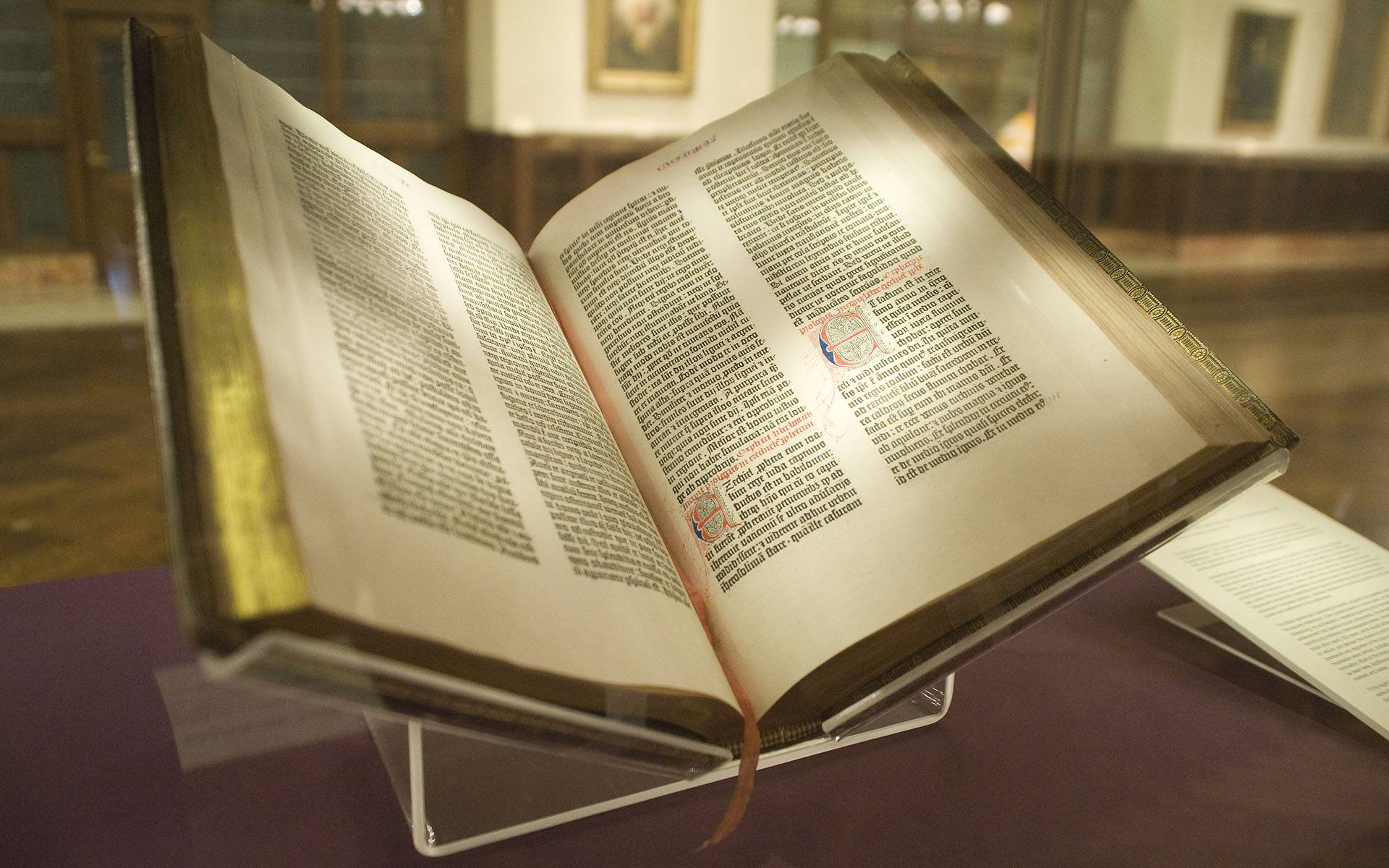
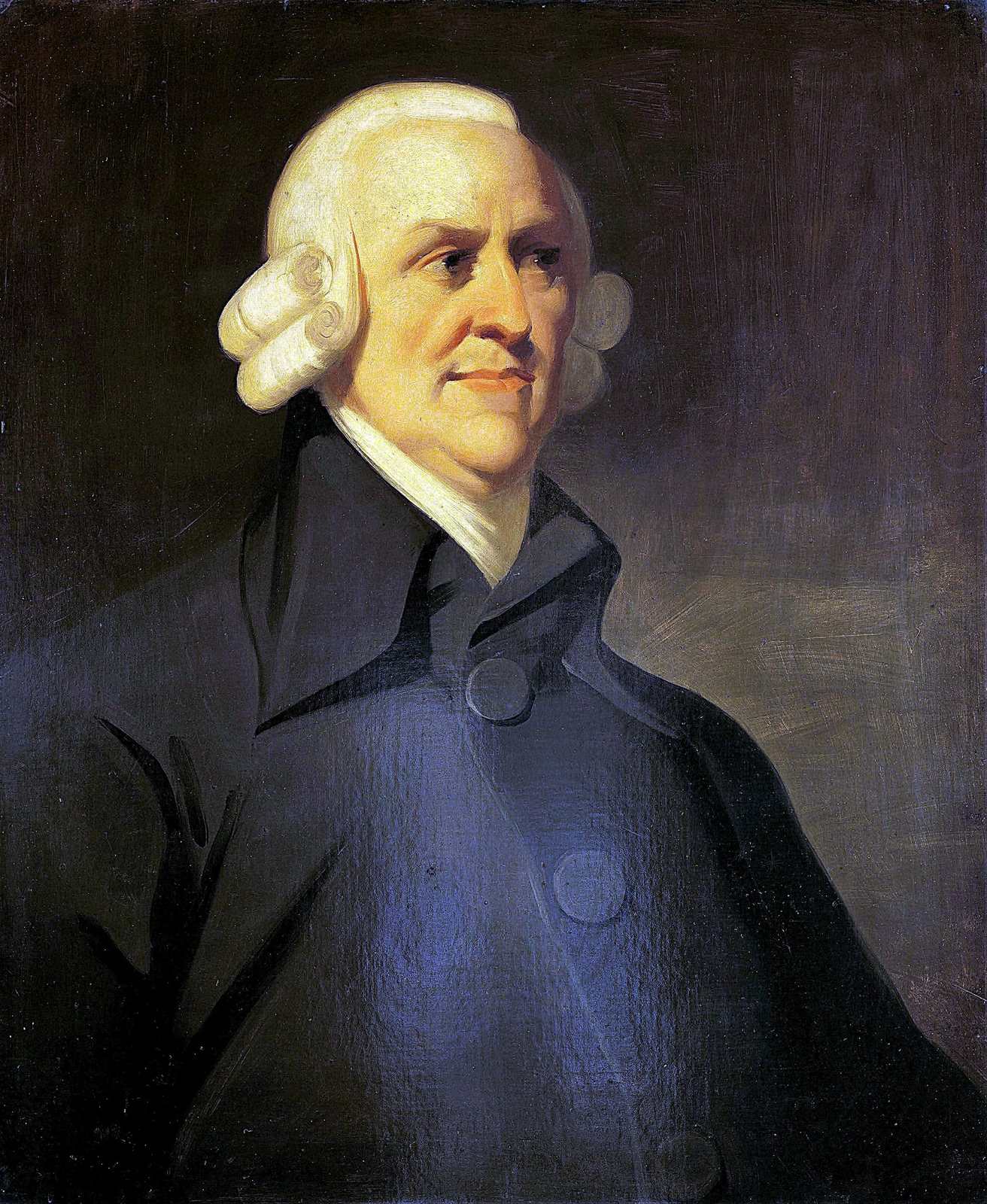
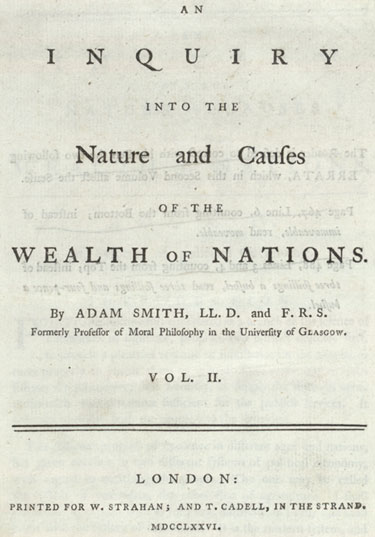
On March 9, 1776, a two-volume book went on sale in the bookshops of the Strand in London. It cost £1 16s, ran to nearly a thousand pages, and was as thick as two bricks. Within six months, the first edition had sold out.[2][4] Its author was a 52-year-old Scotsman, Adam Smith, formerly Professor of Moral Philosophy at the University of Glasgow. He had spent the previous 12 years pouring almost everything he had into this book, whose title reads like a declaration: An Inquiry into the Nature and Causes of the Wealth of Nations.[4]
That year, thirteen colonies across the Atlantic were on their way to independence, and on March 8 of the same year, the first commercial Watt steam engine had just begun turning in a coal mine.[9] The world was standing on a threshold, and this book asked a question that sounded simple and had never really been answered: what makes a nation rich?
The conventional answer of the day was almost self-evident: gold. A nation was as rich as the gold and silver it held. So governments busied themselves hoarding bullion, rewarding exports and punishing imports, as if wealth were a zero-sum game — one more gold coin in your pocket meant one fewer in mine. Smith overturned that answer on the first page. Wealth, he said, is not the metal in the vault but "the annual produce of the land and labour" — what a nation produces each year and what its people can consume. Gold is only the yardstick of wealth, not wealth itself. Mistaking the yardstick for wealth is like mistaking the thermometer for health.
This essay is not about economics. It is about how one book changed the way human beings see themselves. Smith invented nothing new: division of labour, self-interest, markets — he wrote about things people did every day. What he did was fit those small facts into a single picture, letting readers see for the first time that their ordinary lives contained an order that needed no commander, yet could leave everyone better off.
Chapter OneEighteen Steps to Make a Pin
The book opens with no theory, only a small factory. Smith walks the reader into a pin workshop and counts: making a single pin takes 18 distinct operations — drawing the wire, straightening it, cutting it, pointing it, grinding the head, fitting the eye, polishing it, putting it on a paper card. One workman doing everything from start to finish could scarcely make 20 pins in a day.[1]
Then he changes the arithmetic: split the 18 operations among 10 people, each doing one or two of them. The result is 48,000 pins a day from those 10 workers — 4,800 pins each. That is 240 times as many.[1]
The number is not rhetoric; it is the starting point of the whole book. Smith asks why, and gives 3 answers. First, dexterity: repeat one motion thousands of times and the hand learns it, in a speed and precision no beginner can match. Second, time saved: no switching back and forth between tasks, no putting down and picking up again — every switch steals time. Third, machines: cut the work fine enough, and someone can finally see which step a machine could do — division of labour is itself the mother of invention.[1]
But Smith immediately adds a limit, and the limit matters more than the discovery: the division of labour is limited by the extent of the market. A village that needs only a few thousand pins cannot support 10 full-time pin-makers; only when the market is large enough to absorb 48,000 pins does specialisation pay. The whole argument turns on its head: for a nation to grow rich, the point is not to produce more, but to make the market bigger — build roads, open ports, break down the barriers of guilds and tariffs, so that more people can buy and sell. The starting point of wealth is not a gold mine. It is how far a road reaches.
Chapter TwoThe Butcher, the Brewer, and the Baker
The most famous sentence in the book appears in Book I, Chapter II: "It is not from the benevolence of the butcher, the brewer, or the baker, that we expect our dinner, but from their regard to their own interest."[1][7]
The line is often quoted as a defence of selfishness. Smith, had he heard that, would probably have shaken his head. Seventeen years before writing it, he had published a very different book: The Theory of Moral Sentiments. That book argues almost the opposite — that human beings are born with "sympathy", feeling another person's pain as if it were their own, and that each of us carries an "impartial spectator" inside, scoring our own conduct. Smith was not a man who believed only in self-interest. He was a man who studied morality first, and markets second.[3][6]
His point is this: society does not need everyone to be a saint in order to work. The baker need not love you; he need only want to earn money, and he will have the bread baked before dawn. You need not be grateful; you need only pay. Two people, each with their own mind, make a bargain that leaves both slightly better off than before. This is neither praise of human nature nor condemnation of it, but a cool observation — that human beings have a propensity to "truck, barter, and exchange one thing for another", as basic as hunger. The market is not the product of moral decay. It is the institution that propensity grows into.
Smith himself was an ordinary man of that kind. He was baptised on June 5, 1723, in Kirkcaldy, Scotland; his father, a customs official, had died about six months before he was born. His mother raised him alone; he never married and lived with her into old age. He entered the University of Glasgow at 14, and in 1740 went to Balliol College, Oxford, on a scholarship. In 1751 he returned to Glasgow to teach logic, moving the next year to the chair of moral philosophy, which he held for 12 years. The Theory of Moral Sentiments appeared in 1759 and made his name across Europe. In 1764 he resigned his chair to accompany the young Duke of Buccleuch on an eighteen-month tour of France and Switzerland, at £300 a year plus a pension of £300 a year for life — an income any professor of the day would have envied. In Paris he met Quesnay and Turgot of the physiocratic school, saw a doctrine that traced all wealth to the land, and saw its limits.[3][5][6]
In other words, the author of The Wealth of Nations was no theorist hiding in a study. He taught, tutored, travelled with an aristocrat, argued in Parisian salons, and in later life served as Commissioner of Customs for Scotland and rector of the University of Glasgow. He wrote about markets because he had seen markets; he wrote about merchants because he knew merchants.
Chapter ThreeThe Hand That Appears Only Once
If you could remember only one phrase from The Wealth of Nations, most people would choose "the invisible hand". Yet few know that the phrase appears exactly once in the book's 900-odd pages, roughly 380,000 words.[10]
And where it appears is specific: Book IV, Chapter II, on restraints upon importation — the tariff chapter. Smith is writing about a merchant who invests his capital at home, not out of patriotism but because doing business at home is safer and easier to watch over. Thinking only of his own security and profit, he is "led by an invisible hand to promote an end which was no part of his intention."[1][10]
Notice how restrained Smith's wording is. He does not say the market is always right, or that government should vanish, or that self-interest automatically equals the public good. He describes a coincidence in one specific situation: a merchant minding his own convenience happens to help his country's industry along the way. The sentence was later blown up into the banner of the whole free-market cause — a banner far larger than the text it came from. Smith used the metaphor only 3 times in his life: once in The Wealth of Nations, once in The Theory of Moral Sentiments, and once in an essay on the history of astronomy, where it is "the invisible hand of Jupiter". An image he used casually 3 times became the totem of economics.[10]
That is the fate of this book: it is so famous that hardly anyone actually reads it. Smith's meaning was flattened into a slogan, and the slogan into a position. Anyone who reads the original finds a man far more cautious than his admirers, and far gentler than his critics.
Chapter FourWhen Men of the Same Trade Meet
Anyone who takes The Wealth of Nations for a defence of business will be doused with cold water at Book I, Chapter X. Smith writes: "People of the same trade seldom meet together, even for merriment and diversion, but the conversation ends in a conspiracy against the public, or in some contrivance to raise prices."[1][8]
He goes further: "To widen the market and to narrow the competition, is always the interest of the dealers." Any new law or regulation of commerce proposed by merchants, he says, "ought always to be listened to with great precaution", because it comes from an order of men "whose interest is never exactly the same with that of the public". And then: "I have never known much good done by those who affected to trade for the public good."[1]
This is the most overlooked side of The Wealth of Nations: Smith's sharpest sentences are aimed not at government, but at merchants asking for protection. He supported free markets precisely because he did not trust merchants — he trusted competition. Monopolies, charters, tariffs, guilds: in Smith's eyes these were all privileges rented from the state, letting a few earn money while everyone else paid the bill. The free market, as he designed it, was never "let businessmen do as they please"; it was "let no businessman escape competition".
The passage has lost none of its force today. Merchants no longer need to gather in a coffee house to conspire over prices — algorithms can watch one another's prices for them, and tacit agreement can be reached without a single word exchanged. Industrial lobbying no longer needs a back room either; a handsomely written "industrial policy proposal" can walk straight into parliament. What Smith warned about 250 years ago was not a particular trick but a structure: whenever a group's interests align and the people footing the bill are scattered, that group will find a way to pass the cost on to others. The remedy is not to ban their meetings — Smith said that was both impossible and inconsistent with liberty and justice — but to give them no privileges: no laws written for them, no walls built for them. Let competition do the work.[8]
Chapter FiveMercantilist Gold, and the Three Duties of the State
When Smith was writing, Europe lived by a doctrine called mercantilism: wealth was gold and silver, exports must earn gold, imports leaked gold away, and colonies were appendages of the gold mine. Governments handed out charters, raised tariffs, and nursed monopoly companies, as if a nation were a large trading firm and the more gold on its books, the stronger it was.
Smith spent the whole of Book IV taking that doctrine apart. His refutation is plain: you cannot eat gold or wear it; a nation with gold and no bread will still starve. Real wealth is what people can consume each year — grain, cloth, houses, tools. Exports matter only for what they bring back in return. A nation that exports desperately while suppressing imports is like a man who earns furiously and never spends, and still thinks himself richer by the day.
But Smith was no anarchist. In Book V he set down the three proper duties of government: first, defence — protecting society from foreign invasion; second, justice — protecting each person from injury by others; third, erecting and maintaining those public works which no private person would find profitable, yet which society cannot do without — roads, bridges, canals, and education. He even argued that government should pay for schooling, because a worker who repeats a single operation all day grows dull in mind, and a nation's long-run wealth rests on the minds of its people. Read this far, and Smith looks nothing like the "high priest of small government" of later imagination: what he opposed was government working for merchants, not government itself.[1]
The book went through 5 editions in Smith's lifetime — 1776, 1778, 1784, 1786, and 1789 — and he revised it for each one.[2] On July 17, 1790, he died in Edinburgh, aged 67, and was buried in the Canongate Kirkyard.[3] Shortly before his death, he instructed his executors to burn most of his unpublished manuscripts, as if unwilling to let posterity piece together words he had never finished saying.[3]
EpilogueThe Misread Prophet
Two hundred and fifty years on, The Wealth of Nations remains the most quoted — and most misquoted — book in the world. Some cite it to defend laissez-faire, others to defend intervention, and both sides have read only half of it. What Smith truly left behind is not a policy list but a way of seeing the world: whenever you meet an institution, ask who gains and who pays; whenever you hear a fine-sounding reason, ask where the speaker stands.
His first lesson to the world is that wealth is not seized: division of labour turned one pin into 48,000, not because someone took from someone else, but because the way of doing things changed. His second is that the market is not magic: it can turn self-interest into public benefit, but only while competition survives and privilege does not; once someone can dodge competition, the market becomes their private cash machine. His third is that human nature is not one colour: the same person who haggles over dinner can also be moved by a stranger's suffering. A good system must make room for both kinds of human nature, not pretend one of them does not exist.
A year before he died, the French Revolution broke out; a hundred years after his death, the Industrial Revolution had turned the world upside down; 250 years on, we are still arguing over the questions he raised: how far the market should reach, how far the state should retreat, how much of a merchant's word to believe. There are no standard answers — but Smith left us a yardstick: wealth is not the gold in the vault, but the sum of countless ordinary people doing things a little better each day. Whether a nation is rich is not measured by how much gold it has hoarded, but by whether its people can make one more pin than yesterday, read one more book, and walk one more road to the market.