PrologueIt Was Not One Fire
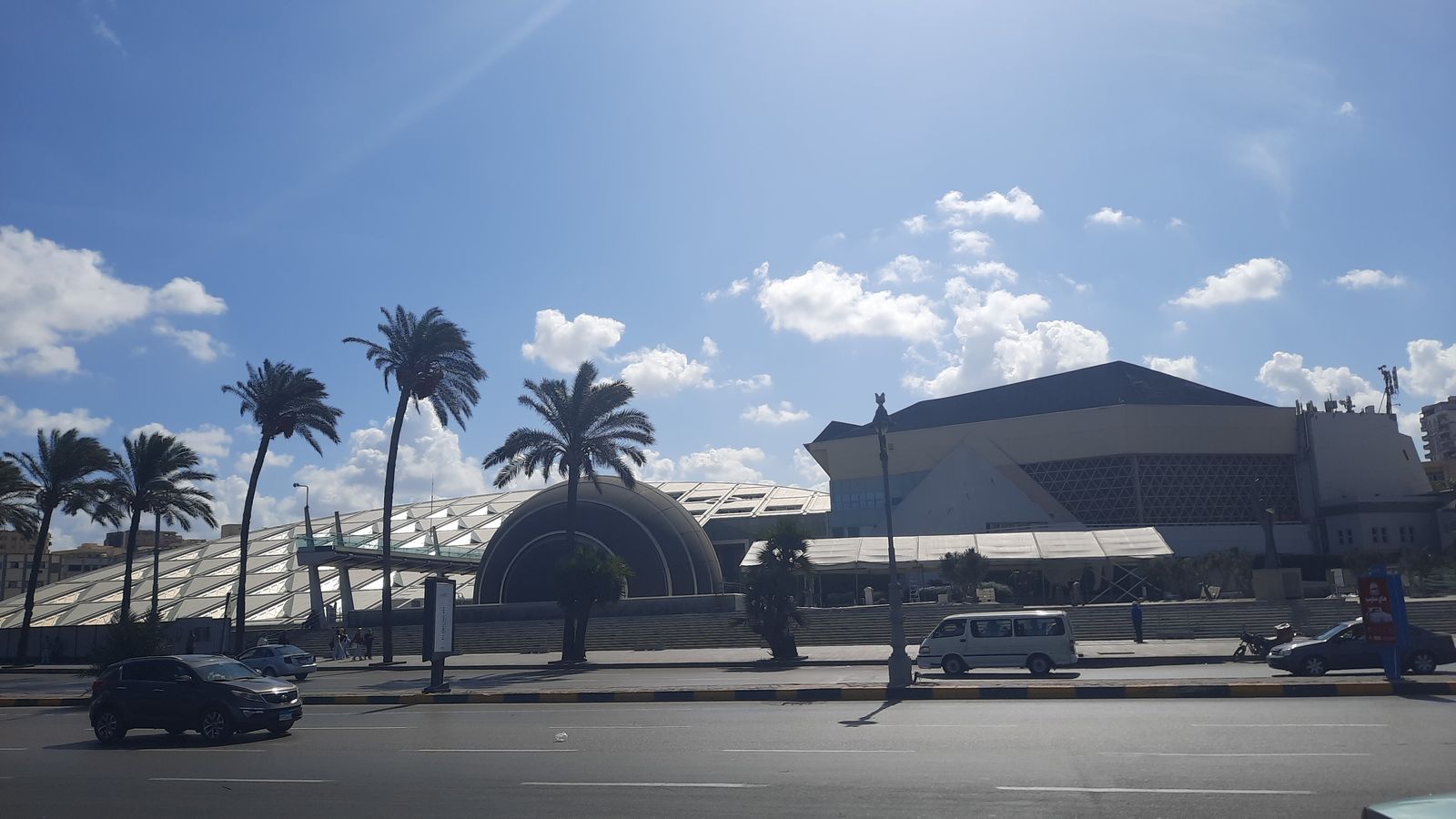
On 16 October 2002, on the shore of the Mediterranean at Alexandria, a tilted disc of a building opened to applause. Its granite wall is carved with scripts from around the world, and sunlight falls through a slanted roof into a reading room of 20,000 square metres. On this same stretch of coast, 2,300 years earlier, another library stood — the first in history that tried to bring every book in the world under one roof.
The story everyone knows about that library fits in a single sentence: it burned down. The story is too clean, too dramatic, and that is why everyone believes it. The truth is more uncomfortable, and more worth remembering: the Library of Alexandria never disappeared in a single day. It took nearly 600 years to die — of defunding, war, purges and neglect. There was no single arsonist, only generation after generation of people who stopped paying, stopped copying, stopped caring.
This is not the story of a fire. It is the story of a quieter kind of loss — and of why, 2,300 years later, humanity returned to the same shore and built a library again.
Chapter OneMoving the Whole World into One Building
In 331 BC, Alexander the Great founded a new city at the mouth of the Nile and named it after himself. Eight years later he was dead, and his empire was divided among his generals. Ptolemy I, a Macedonian general, took Egypt and made Alexandria his capital. A new dynasty needed more than armies and taxes. It needed something harder to obtain: legitimacy.
According to tradition, Demetrius of Phalerum, an Athenian statesman exiled to Alexandria, proposed a plan to Ptolemy I: build a library to hold every book in the world, on a scale to surpass Aristotle's Lyceum in Athens. The plan may have come from Ptolemy I, but the library itself probably took shape under his son, Ptolemy II, who reigned from about 285 to 246 BC.
The library was part of the Mouseion, a shrine to the Muses, the nine goddesses of the arts. The Mouseion gave scholars housing, meals and salaries so they could study and write — in modern terms, the world's first research university, with the library as its heart. The English word "museum" descends from the name of this shrine.
The Ptolemies' ambition was startlingly plain: bring everything humanity had written into a single building. A dynasty would prove it was the centre of civilisation with bookshelves — the bookcase as another form of power.
Chapter TwoCopying, Buying, Seizing
Ambition needs methods. Seen from today, the Ptolemies collected books the way a national library would — and the way pirates would.
They sent agents across the Greek world with heavy purses to buy manuscripts at any price. According to the later physician Galen, Ptolemy III issued an order: every ship entering the harbour of Alexandria had to surrender its books; official scribes copied them, the originals went into the library, and the owners got the copies back. Borrow your book, return a photocopy — the original belongs to the king.
The most famous acquisition happened at a translator's desk. According to the Letter of Aristeas, Ptolemy II gathered 72 Jewish scholars to translate the Hebrew Bible into Greek — the Septuagint. A people's scripture became a book the whole Mediterranean could read. The library did not merely collect; it decided which words could cross languages and borders.
How large was the collection? Estimates run from 40,000 to 700,000 scrolls, perhaps the equivalent of about 100,000 modern books.[1] The range is so wide not because scholars are lazy, but because an ancient "scroll" cannot be converted into a modern "book"; even the people of the time probably could not have said how much sat on the shelves. The exact number is unknowable. What matters is the attitude behind it: a dynasty that believed knowledge could be collected in full.
At its height, the Mouseion supported more than 100 scholars.[1] The collection the library prized most was the many copies of the Homeric poems — the foundation of Greek education, the text a whole civilisation memorised together. Whoever controlled the correct text of Homer controlled the very idea of "Greece".
Chapter ThreeA Catalogue Is a Library's Soul
Books piled high are only a warehouse. What made Alexandria a library was the catalogue.
The first head librarian was Zenodotus of Ephesus, whose work was to establish the correct text of Homer, line by line. After him came the poet and scholar Callimachus. He may never have held the post of head librarian, but he did something with a longer afterlife: he compiled the Pinakes, a catalogue of Greek literature in 120 volumes.[6]
The Pinakes arranged authors by genre — epic, tragedy, comedy, lyric poetry, philosophy, oratory, history, medicine — with a short biography and a list of works under each name. It was the first systematic bibliography in human history. Before Callimachus, no one had ever drawn a map of all the books there were.
The point of a catalogue hides in a simple truth: without one, 700,000 scrolls are a warehouse; with one, knowledge has an address, and those who come later can find their way. Callimachus did not invent a book. He invented an order — the first time humanity believed that knowledge was not a heap but something that could be organised, searched and inherited.
The librarian's chair passed down the generations: Eratosthenes, Aristophanes of Byzantium, Aristarchus of Samothrace. Each was, in turn, among the finest scholars of the age. Library and scholars made each other: the books raised the scholars, and the scholars gave the books new meaning.
Chapter FourMeasuring the Earth with a Shadow
Around 253 BC, Eratosthenes of Cyrene became head librarian. This scholar went on to do something that left the ancient world staring: he measured the size of the Earth with a shadow.
He had heard that at noon on the summer solstice, sunlight shone straight down a deep well at Syene (modern Aswan), casting no shadow at all — while at the same moment in Alexandria, a shadow fell at an angle of about 7.2 degrees, exactly 1/50 of a circle. The two cities stood 5,000 stadia apart. Multiply by 50, and the circumference of the Earth came out at about 250,000 stadia.[1]
In modern units, his figure works out to roughly 39,000 kilometres, against the Earth's actual circumference of about 40,000 — an error of less than 2%. He never left Egypt. He had no satellite, no precision instruments — only a well, a stick, and the geometry he had read in the library. In the same city, Euclid wrote the Elements, giving all of this its mathematical language.
That was the library's real product: not the books themselves, but the collisions between people who would never otherwise have met. Astronomers read the poets' stars; geographers borrowed the mathematicians' circles; translators turned foreign scriptures into everyone's reading. Knowledge is not something stored away. It is something struck out of encounters.
Chapter FiveSix Centuries of Slow Bleeding
And then it began to die. Not in a collapse, but in a slow bleed.
The first cut came from the palace itself. In 145 BC, Ptolemy VIII purged the city's intellectuals during a struggle over the succession; the head librarian Aristarchus fled into exile in Cyprus, and scholars scattered to other cities. A library that loses its people has lost its soul.
The second cut was war. In 48 BC, Julius Caesar, besieged in the harbour of Alexandria, set fire to enemy ships; the flames spread to the dockside warehouses. Seneca, quoting Livy, says 40,000 scrolls were lost.[2] But those were probably goods awaiting shipment, not the collection itself — the geographer Strabo visited the Mouseion around 20 BC and found it still working, scholars still coming and going.
What killed it was long neglect. Under Roman rule, no royal house would pay for Greek scholars any more; acquisitions stopped, repairs went unmade. Between 270 and 275 AD, the Palmyrene invasion and Emperor Aurelian's counter-attack levelled the royal quarter; in 391 AD the Serapeum — home of the daughter library — was ordered demolished. By the early fifth century AD, the library had, in substance, ceased to exist.
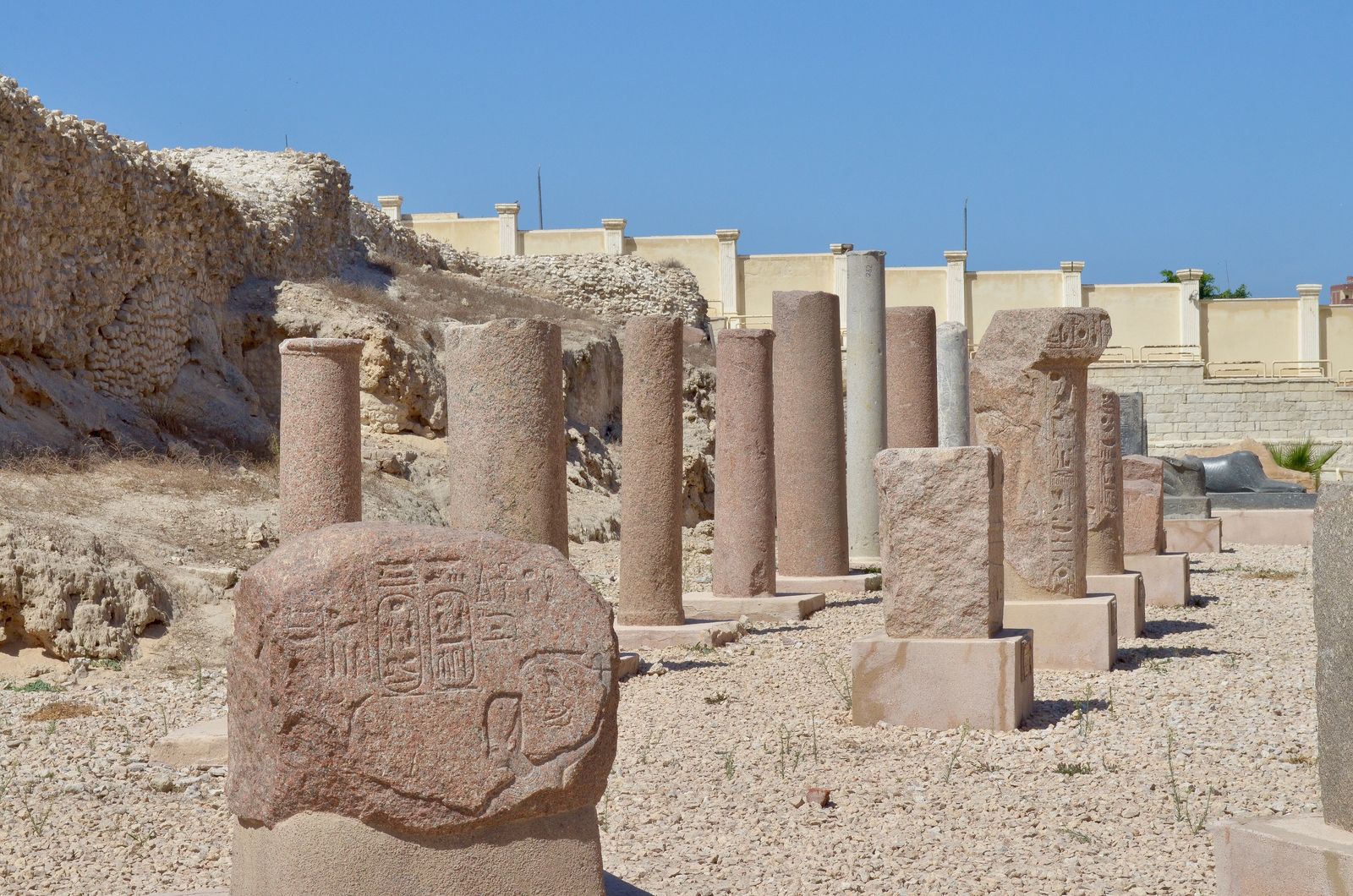
As for the most famous story of all — that in 642 AD, after conquering Alexandria, the Arabs ordered the library burned — modern scholars have shown it to be a medieval invention. John of Nikiu, the chronicler of the conquest, describes it in exhaustive detail and never mentions a library. The reason is simple: by then, there was no library left to burn.[2]
So who destroyed the Library of Alexandria? The answer disappoints: no one. It died because, year after year, no one paid for it, no one copied its books, no one cared. Fire can burn a building, but it cannot burn an institution. What killed it was six hundred years of "never mind".
EpilogueIn 2002, the Disc Rose Again
In 1974, Alexandria University chose a plot of land to bring the library back. Construction began in 1995; after some US$220 million had been spent, the new Bibliotheca Alexandrina was inaugurated on 16 October 2002.[7]
The Norwegian firm Snøhetta designed a tilted disc about 160 metres across, like a sun rising out of the sea. Its granite wall is carved with scripts from around the world. The main reading room covers 20,000 square metres; the shelves hold eight million books.[7]
But the new building is not a reconstruction. No one knows exactly where the old library stood, and the new one makes no attempt to imitate it. What it revives is not a house but an idea: that knowledge deserves a home.
Today's knowledge no longer fears fire. It fears a different kind of disappearance: dead links, obsolete formats, servers no one maintains, algorithms deciding what you never see. We imagine that putting things in the cloud means preserving them; in truth, it only gives the bleeding a new name.
The lesson of Alexandria was never "guard against fire". It is this: knowledge does not keep itself alive. Someone has to keep paying the price — in money, in time, in attention — to keep it. Two thousand three hundred years ago, a king paid it. Today, it is our turn to decide whether to keep paying.