PROLOGUEHow a Misunderstanding Is Made
Walk to the business shelf of almost any Chinese-language bookshop and you will find it: a volume in deep blue or dark gold, "Talmud" in the title, promising the thousand-year secret of Jewish wealth. Its story is confident — Jewish children grow up with the Talmud in their arms, apply its laws to business, and so a tiny people takes home an outsized share of the world's riches and honours. It has everything a good story needs: a classic text, a people, a cause. Its only problem is that almost every link in the chain fails inspection.
Start with the book itself. Popular Chinese "Talmud" titles claim the work was "three thousand three hundred years in the writing" — in fact, from the Mishnah's redaction around 200 CE to the Gemara's completion around 500 CE spans roughly three centuries. They say it "combines the Mishnah, the Gemara and the Midrash" — but Midrash is a separate genre of biblical interpretation; the Talmud quotes it without ever absorbing it. The catchy "laws of wealth" inside, such as the so-called "22:78 rule," appear nowhere in any Talmudic text; the line "money has no smell," credited to the Talmud, belongs to the Roman emperor Vespasian, joking about his tax on public toilets. And the oft-repeated claim that "the Rothschilds read the Talmud every weekend" has no primary source at all.
There is a simple test for any "Talmud saying": every genuine line has an address — a tractate and a page, such as "Bava Metzia 61b" — and can be looked up in a public library of the original text like Sefaria. A book that only ever says "the Talmud teaches," without addresses, is almost certainly quoting its own inventions. This essay follows the addresses back, one by one, to see what the book really says, who really reads it, and where Jewish achievement actually comes from.
CHAPTER ONESixteen Million People
First, the people themselves. At the start of 2025 the world's core Jewish population numbered about 15.8 million — 0.2 percent of humanity. Set that beside 1939, when the figure stood at about 16.6 million: after the Holocaust and nearly eighty years of growth, the number has still not climbed back to where it was before the war. Roughly 45 percent live in Israel and 40 percent in the United States, the rest scattered across about ten countries; outside Israel, Jews make up more than 2 percent of the population nowhere on earth.
That 0.2 percent has produced at least 220 of the 965 individual Nobel laureates between 1901 and 2025 — about 22 percent. The figure needs its footnote: the Nobel Foundation records no one's ethnicity, and these lists are compiled afterwards from biographies under a generous definition — one Jewish parent is enough, including laureates who never practised Judaism. Twenty-two percent is the broad-definition number, not a "rate among the devout." In wealth, Forbes Israel's 2026 list counts 319 Jewish billionaires out of some 3,428 worldwide — about 9.3 percent, roughly one in ten, not "the majority," and nothing like "controlling 70 percent of the world's wealth." In education, 65 percent of American Jewish adults hold a bachelor's degree or higher, against a national average of 35 percent — though in the same Pew study, Hindus, at 70 percent, rank higher still. Keep that detail in mind; it will matter later.
So the phenomenon is real: a very small people casts a very long shadow across scholarship, wealth and culture. The question is only the explanation — and the most popular one, "they read the Talmud from childhood," is the first to collapse.
CHAPTER TWOWho Actually Reads the Talmud
The claim "Jews read the Talmud from childhood" does have one genuine source. Mishnah Avot 5:21 preserves a famous ladder of ages: at five, Scripture; at ten, Mishnah; at thirteen, the commandments; at fifteen, Talmud; at eighteen, marriage; at twenty, earning a living. Neat, memorable — and an idealized maxim, not a census. It describes the path a boy was supposed to follow; and it is, notably, only about boys.
Modern reality looks different. Pew's 2020 survey of more than 4,700 American Jewish adults found 37 percent Reform, 17 percent Conservative, just 9 percent Orthodox, and 32 percent with no particular denomination. Systematic Talmud study lives almost entirely inside that Orthodox 9 percent — above all among Haredi, strictly Orthodox, men. The Reform movement, when it arose in the nineteenth century, defined its break with the old world precisely by distancing itself from the Talmud, and many modern Jews came to regard the book as a medieval relic. A 2023 community study of New York's eight counties puts numbers on the gap: about 95 percent of Orthodox Jewish children attend Jewish day schools, against about 22 percent of Conservative children and under 10 percent of Reform children. The Talmud as a daily school subject exists only in a small slice of that smallest slice.
One honesty is required here: no representative survey has ever simply asked Jews, "Have you read the Talmud in your lifetime?" So both "most have" and "most haven't" lack direct proof. But lay the denominational structure, the day-school rates, and the traditional exemption of women from the study obligation side by side, and the picture of every Jewish child growing up with a Talmud in his arms becomes very hard to sustain. As for "starting at age three" — three is when some Haredi boys get their first haircut and begin learning the Hebrew alphabet, a long way from the Talmud.

CHAPTER THREEWhat This Book Actually Is
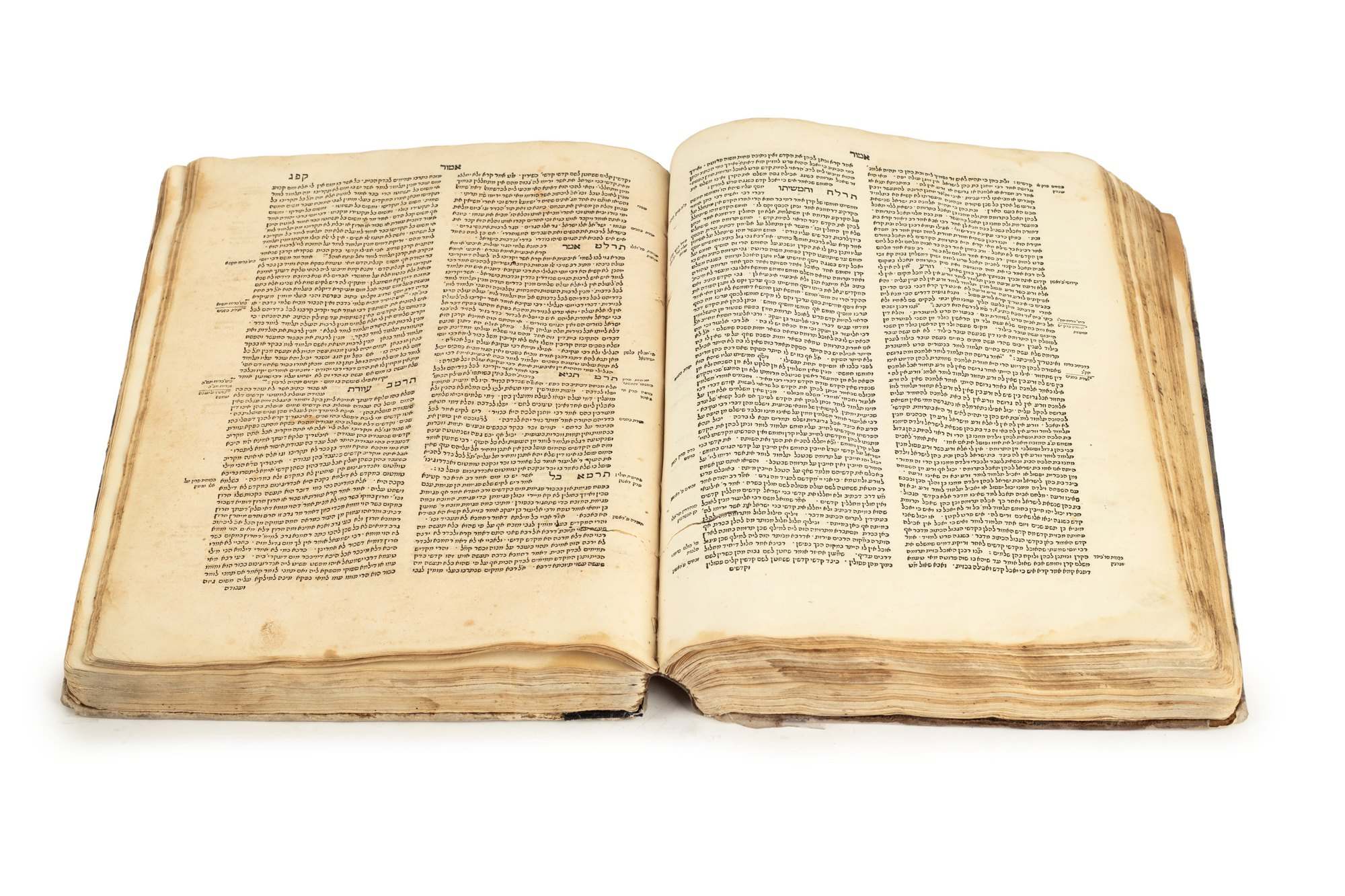
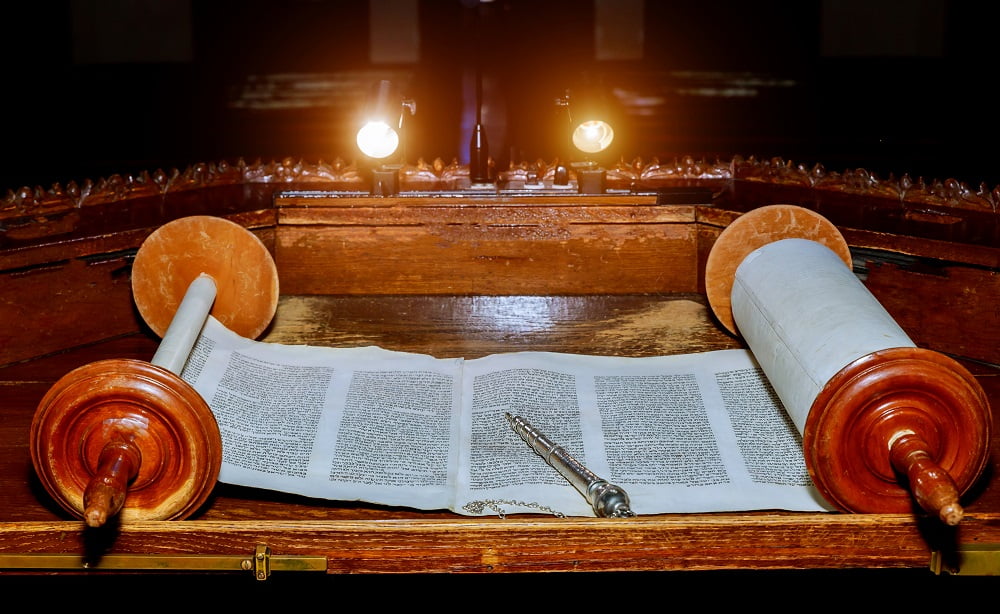
"Talmud" is simply the Hebrew word for "study." The book has two layers. Below lies the Mishnah, redacted by Judah the Prince around 200 CE — the oral law written down for the first time: six orders, sixty-three tractates, running from agriculture and festivals through family and civil law to sacred things and purity. Above it lies the Gemara, three centuries of rabbis arguing over the Mishnah line by line — citing, digressing, telling stories — in Aramaic. Together they are the Talmud, and there are two of them: the Jerusalem Talmud, compiled in Galilee around 400 CE, earlier and briefer, covering thirty-nine tractates; and the Babylonian Talmud, completed around 500 CE, larger and denser, covering thirty-seven — the one meant, ever since, when people say "the Talmud" without qualification. The standard Vilna edition runs to 5,894 folio pages; the Daf Yomi cycle, founded in 1923, reads one page a day and takes seven and a half years to finish — 2,711 pages, no days off.
The Encyclopaedia Britannica defines its character plainly: the Talmud is, first of all, a legal compilation. Its relation to the Bible is that of commentary to text. Jewish tradition distinguishes the Written Torah — the Five Books of Moses — from the Oral Torah, said to have been given alongside it at Sinai and transmitted by word of mouth until, after the Second Temple fell in 70 CE, it was gradually written down; the Mishnah and Gemara are its vessels. Orthodoxy holds the two Torahs equally sacred; modern scholarship reads the Oral Torah as a rabbinic construction of its own era. Both views can be stated without confusion. Nor has the book ever lacked internal opponents: from the eighth century, the Karaites accepted the Written Torah alone and denounced the Talmud as a rabbinic fabrication. A book its own people argued about for a thousand years is poorly described as the whole nation's shared childhood textbook.
CHAPTER FOURThe First Question at the Judgment
So when the Talmud does talk about money, what does it talk about? Rules — fussy, specific, unforgiving rules.
Tractate Shabbat, page 31a, preserves a famous saying of Rava: when a person is brought to judgment after death, the first question asked is not "How much did you make?" but "Did you conduct your business honestly?" Only the second question concerns fixed times for Torah study. The order is the value system: honesty before scholarship. Popular wealth books quote this passage, and for once the quotation is genuine — what they add is a promise the text never makes. The passage is about the ethics of a final judgment, not a formula that converts honesty into income.
The details show the book's character even better. Leviticus demands honest weights and measures; Bava Metzia 61b presses the point to near-severity: to hide a weight in salt so it slowly grows lighter is a transgression from the moment of hiding, before a single customer is cheated; a rope used to measure land stretches differently in summer and winter, so two parties may not measure with different ropes. Overcharging has a precise threshold — one-sixth above the market price: at exactly one-sixth the difference is refunded, beyond it the sale can be voided. Even a spoken promise has a name for its breaker: mechusar amanah, one who lacks faithfulness. This is not success literature. It is civil law — a community spending a millennium writing "do not cheat" down to one decimal place.
The first question at the judgment is not "How much did you make?"
It is "Did you deal honestly?"
CHAPTER FIVETeach Him a Trade
Education does carry astonishing weight in this book. Tractate Peah opens by declaring that Torah study "has no measure" and equals all other commandments combined. But pressed against that exaltation sits a very practical list. Kiddushin 29a sets out a father's obligations to his son: circumcision, redemption of the firstborn, teaching Torah, finding him a wife — and teaching him a trade. Rabbi Yehuda puts it brutally: a father who does not teach his son a trade teaches him, in effect, to be a robber, for a man with no way to earn a living may end by stealing. Characteristically, the same page preserves the opposite voice: Rabbi Nehorai declares that he sets aside every trade and teaches his son Torah alone. The Talmud files both opinions side by side and declines to rule. That is its deepest difference from a book of maxims: a maxim gives you one sentence; the Talmud gives you an argument that never adjourns.
Avot strikes the balance explicitly: Torah study joined with a worldly occupation is beautiful, for the labour of both makes sin forgotten. And money's proper exit has a harder name than charity — tzedakah, from tzedek, justice. It is not generosity from surplus; it is a debt owed to the world. Bava Batra 9a says giving equals all the other commandments together, and Maimonides later arranged giving into eight levels, the highest of which is not a gift at all but independence: a job, a partnership, a loan to start a business. "Lending is better than charity, and partnership best of all," says Shabbat 63a. Put together, this is not a technique for getting rich. It is a community's ethical operating system: learn a trade, deal honestly, and when you can, pull someone else up.
CHAPTER SIXThe Interest That May Not Be Charged
If the Talmud were a manual for making money with money, its treatment of interest would be inexplicable. Exodus, Leviticus and Deuteronomy repeat the rule: lend to your fellow and charge no interest. The Talmud devotes a whole chapter to the grey zones — is lending a measure of wheat to be repaid in wheat, with prices moving in between, a form of interest? The great Hillel held that even lending a loaf of bread without first fixing its value might breach the ban. To this day, an Orthodox business loan is restructured through a contract called heter iska, which recasts the loan as a partnership investment, precisely to get around a two-thousand-year-old prohibition. A book that must be engineered around in order to lend at interest is no lender's bible; from the beginning, it restrained lending. The Jewish presence in European finance has other causes — and those belong to the next chapters.

CHAPTER SEVENThe Price of Literacy
The weightiest scholarly explanation comes not from the Talmud at all but from one step earlier. In The Chosen Few (2012), economic historians Maristella Botticini and Zvi Eckstein argue from the Torah: after the Second Temple fell in 70 CE, Judaism transformed from a religion of sacrifice into a religion of reading. Every father was obliged to teach his son to read the Torah; every community had to maintain teachers. In an ancient world of near-universal illiteracy, that rule was expensive — schooling a child meant forgoing his labour and paying fees, while literacy earned a farmer almost nothing. Many families quietly left the community altogether; those who remained were an unusually literate minority. Centuries later, under the Islamic empires, cities and commerce expanded, and literacy and numeracy suddenly paid — in trade, lending, crafts and medicine. The seemingly unprofitable educational investment began to return, with interest.
The hypothesis is elegant, and its critics must be given their seat at the table. Reviewers note that it reads rabbinic texts as if they were historical records, on thin evidence; how many ancient Jewish farm children actually attended school is close to unknowable; and a theory of "all Jews" fits the Ashkenazi communities, whose modern prominence it best explains, better than the others. The fair verdict: one of economic history's most influential hypotheses, not a settled conclusion. But it points the right way — the key variable may be literacy itself, something more basic than any single book. And note: its subject is reading the Torah, not the Talmud. Confusing the two is the popular literature's favourite sleight of hand.
CHAPTER EIGHTWealth You Can Carry
The remaining explanations are pieces of the same picture. In medieval Europe, Jews were often barred from owning farmland and shut out of the craft guilds, while the Church forbade Christians to lend at interest — and so finance and trade were left open. Scholars add the corrective: Jews moved into urban occupations before the harshest exclusions, and in places like Spain they held extensive land; "completely barred" is an exaggeration. Avner Greif of Stanford studied the eleventh-century Maghribi traders, Jewish merchants of North Africa who ran long-distance trade on a coalition of reputation: cheat once, and word travelled the whole network, followed by collective boycott — in a world without international courts, trust itself was infrastructure. Later scholars have pushed back, showing the merchants also used courts and bilateral reputation; the argument continues.
Persecution taught its own finance lesson. Repeated expulsions and confiscations made land a dangerous asset, so families stored wealth in what could be carried: literacy, skills, languages, networks — what economists now call human capital. Finally, migration selected: the Jews who reached twentieth-century America came largely from cities, intending to build businesses. And remember the footnote from Chapter One — America's most educated religious group is actually Hindus, largely an artefact of skilled-worker visa selection, with no scripture involved. Layer these mechanisms across different centuries, and "success" no longer needs a secret manual to explain it.
CHAPTER NINEThe Most Devoted Readers Are the Poorest
The most direct test of a causal claim is to look at the group with the highest dose. If reading the Talmud made people rich, then Haredi men — who study it six to eight hours a day at school and often continue full-time after marriage — should be the richest Jews alive. The opposite is true. A 2025 report by the Israel Democracy Institute puts Haredi male employment at about 53 to 54 percent, their average salary at roughly half that of non-Haredi Jewish men, and 33 percent of Haredi families below the poverty line, against 14 percent of other Jewish families. Education inverts the same way: only 37 percent of Orthodox American Jews hold a college degree, against 64 percent of Reform Jews. The heaviest readers have the least worldly success — not because the Talmud impoverishes anyone, but because crediting worldly success to it was always the wrong ledger. By secular measures the Haredi world is "poor"; by its own measure — study as an end in itself — that is a collective choice, and the two yardsticks should not be confused, or used to insult each other.
CHAPTER TENThe Missing Half
Finally, there is a group missing entirely from every "secret of success" narrative: women. Traditionally, the commandment to study Torah fell on men alone. Kiddushin derives a father's duty to teach his son from Scripture, and the same derivation exempts women; Sotah preserves the ancient rabbis' argument over whether a daughter should be taught at all. So a Haredi girl's timetable contains no Gemara. She studies the Pentateuch, the Prophets, law and Jewish history — and, strikingly, her secular schooling is more complete than her brother's, because the family expects her to work, earning the money that supports her husband's study. In the most "traditional" world of all, the people who actually go out and keep the household are often the half excluded from the classic text. Modern Orthodoxy broke that wall: in 1977 Rabbi Soloveitchik opened a Talmud class for women at Stern College in New York, a recognised milestone. Any version of the story that turns Jewish success into a tale of universal childhood study automatically erases this half — their absence, and their labour. And in historical narrative, the erased parts are usually the ones most worth seeing.
EPILOGUENot a Manual, a Tradition
After the long way round, the conclusion can be stated calmly. Judaism really does hold a tradition that prizes learning above wealth; the Talmud really is that tradition's greatest vessel; honesty, a trade, giving, and argument really are written in it, addresses and all. But the popular formula — "they read the Talmud from childhood, therefore they succeeded" — makes three mistakes at once: it misreads correlation as causation, the experience of a small Orthodox minority as that of all Jews, and maxims invented by modern editors as the words of an ancient book.
The truer sentence is longer. A religious tradition that prized literacy and study met, across the centuries, urbanization, commerce and the expansion of modern higher education — and was converted, in that meeting, into human capital and communal networks. The Talmud's role in that story is real but indirect: a contributing cause, a carrier, the surviving record of a two-thousand-year argument and the habits of mind it trained. It is not a book most Jews have ever studied from childhood, and it is not a manual for getting rich. The story of sixteen million people was never held up by a secret. It was held up by countless ordinary families making the same decision, over nineteen centuries, in good times and in terrible ones: however poor we are, the children will learn to read. That needs no mythologizing. It is moving enough as it stands.
Questions That Remain Open
In honesty, the following three things cannot currently be verified, and this essay does not pretend otherwise:
- No representative survey has ever asked whether most Jews have read the Talmud in their lifetime; this essay's judgment is an inference from denominational and schooling data.
- The share of Chinese "Talmud wealth" books that genuinely comes from the original text cannot be given as an exact percentage, because most such books cite no tractate or page, leaving nothing to check line by line; qualitatively, most of their maxims are later inventions or rewrites.
- There is no authoritative statistic, compiled under one consistent definition, for the exact Jewish share of senior roles in Hollywood, media or academia; the familiar "half" figures are impressionistic estimates.