PrologueA Booth, a Company
On Thursday, November 12, 2026, before the American stock market opened, Nvidia's board issued a one-page statement: founder Jensen Huang had resigned as president, chief executive officer and director, effective immediately.[1] He had been at the company for 33 years, its chief executive from the first day. After the open, Nvidia's shares fell as much as 13%, closed down 4.34%, and fell another 2.01% the next day, taking the company's market value below $4 trillion.[6] This book is not about one day's share price. It is about a question: when a company is equal to one person, what is left when that person leaves?
The question does not belong to Nvidia alone. Every time a founder stamps his name on a company, writes his judgment into its products and turns himself into its brand, the market buys two things at once: the company's future, and one person's judgment. Jensen Huang's story is the most extreme version of that sentence: from a diner booth, he built a graphics-chip company that nearly died into the most valuable enterprise on earth — and then, on a Thursday morning, handed it all away.
Chapter OneThe Nine-Year-Old Who Crossed the Pacific
Jensen Huang was born in Taiwan on February 17, 1963, spent part of his childhood in Tainan, and moved with his family to Thailand at the age of five.[10] At nine, his parents put him and his older brother on a plane to the United States — first to live with an uncle in Tacoma, Washington, then to a boarding school in Kentucky. About two years later his parents joined them, and the family settled in the suburbs of Portland, Oregon. A nine-year-old who barely spoke English, growing up across three countries.[12]
He studied electrical engineering at Oregon State University and graduated in 1984 with highest honors; in Silicon Valley he designed microprocessors at AMD for about a year, then moved to LSI Logic and rose to run a division — while taking night classes at Stanford, where he earned a master's degree in electrical engineering in 1992.[10] At 30, he decided to stop working for other people.
That record is the one most often quoted about him, but the degree is not the point. What he learned was something else: how to get things done in a strange place, with no one to lean on. For the next 33 years, he repeated that lesson almost every day.
Chapter TwoThe Gamble at Denny's
In late 1992, Huang sat with two engineer friends — Chris Malachowsky from Sun Microsystems, and Curtis Priem, who had designed graphics chips at IBM and Sun — in a corner booth at a Denny's on Berryessa Road in San Jose, and agreed to start a company. On April 5, 1993, Nvidia was formally founded, registered in Sunnyvale, California; the name came from NV, for "next version," plus the Latin invidia, meaning envy.[11] The three put up $40,000 of their own money to start; Sequoia Capital and Sutter Hill Ventures later invested about $20 million in venture capital.
The company's first chip, the NV1, arrived in 1995 and bet on the wrong technology: it drew 3D worlds out of curved patches, while the whole industry went with triangles. Huang would later say the company was 30 days from going out of business in those early years. It was not an exaggeration — for a startup with the wrong product, the money in the bank is measured in days.
The turn came in 1999. On January 22, Nvidia went public at $12 a share; in August it launched the GeForce 256, billed as the world's first GPU, moving the geometry math of 3D scenes onto the hardware itself.[9] Games kept Nvidia alive for nearly 20 years. But Huang was never thinking only about games.
Chapter ThreeThe Bet on a Market That Did Not Exist
In November 2006, Nvidia released CUDA, a platform that let ordinary programmers — scientists, engineers, anyone — run their own code on a graphics chip instead of just drawing games with it. The work was led by Ian Buck, a Stanford researcher who had joined in 2004. Huang then made the expensive part permanent: every chip Nvidia sold from then on would support CUDA, whether or not the buyer ever used it. Between 2006 and 2017, Nvidia spent nearly $12 billion on research and development, most of it on CUDA and the software around it.[9]
Wall Street could not see the point of the money: the market for GPU computing did not exist. Huang later described it as a bet on a zero-billion-dollar market. In 2008, Nvidia's shares lost about three-quarters of their value, and a $196 million charge for defective laptop chips made things worse.
The answer arrived in 2012. Students at the University of Toronto trained AlexNet, a neural network that crushed its rivals at image recognition, on two Nvidia gaming cards. In April 2016, Nvidia launched the DGX-1, a $129,000 supercomputer built specifically for deep learning.[9] On November 30, 2022, OpenAI's conversational AI service went live, running on a supercomputer Microsoft had built with 10,000 Nvidia V100 chips. Sixteen years after the bet, the table was finally set.
Chapter FourThe Most Valuable Company on Earth
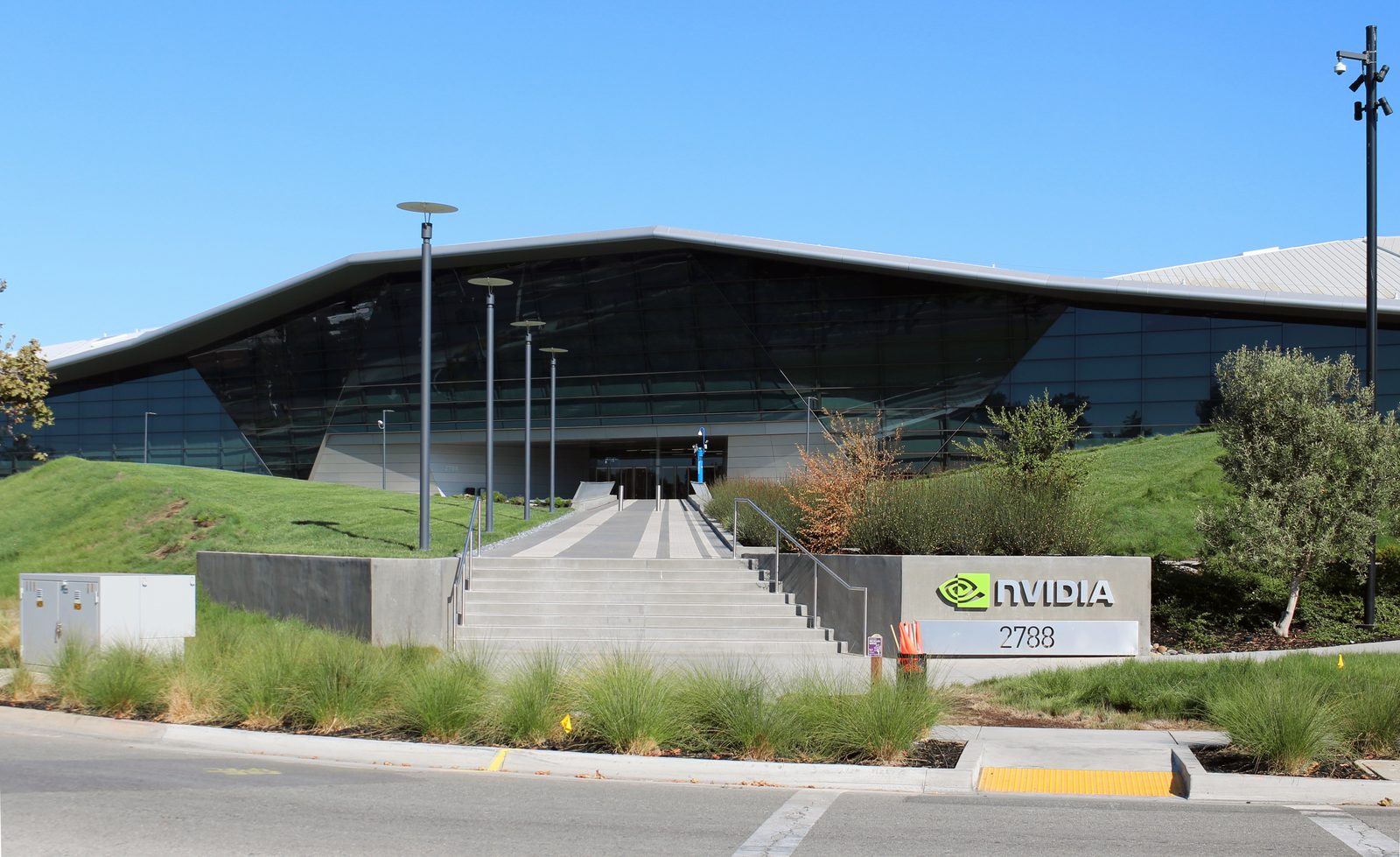
In May 2023, Nvidia's market value first passed $1 trillion. In June 2024, at $3.3 trillion, it passed Microsoft and Apple to become the most valuable publicly traded company in the world. On July 9, 2025, it became the first company ever worth $4 trillion; on October 29 of the same year, it became the first to pass $5 trillion.[9][13] Forbes estimated Huang's fortune at more than $200 billion, making him the seventh-richest person on earth.[12]
Behind the numbers, the structure had flipped. In fiscal 2026, the year ended January 2026, Nvidia earned $215.9 billion in revenue, of which $193.7 billion — about 90% — came from data centers, and only $16.0 billion from gaming.[13] In the second quarter of fiscal 2027, ended July 26, revenue reached $96.2 billion, up 105.8% from a year earlier, with data centers at $89.0 billion, up 117%.[6] A company built on games had become, completely, a company that sells AI computing.
But the air is thin at the top. On January 27, 2025, the Chinese lab DeepSeek showed off a powerful model trained with far less computing, and Nvidia's shares fell about 17% in a day, erasing roughly $589 billion of market value.[13] For the first time, the market seriously asked whether demand for AI computing might be smaller than imagined. The question came back in the autumn of 2026 — and the slide began before the resignation was announced. On November 5, after the midterm elections, the shares fell 9.26% in a day to $181.60, the worst single day since January 2025; on November 6 they closed at $186.64, down 22% from the record close of $239.24 on October 6.[7]
Chapter FiveNovember 12
What set it off was not an earnings report but a run of news stories. On October 29, the New York Times reported that an executive connected to Nvidia was said to be under surveillance; on November 8, the board opened a review into whether Huang had been the target of a foreign intelligence operation.[6] That same Sunday, Huang admitted he had been unfaithful to his wife and apologized to his family and to Nvidia's employees.[2] On November 11, another report said he had had an extramarital affair with a direct report. None of these allegations has been independently established; the Associated Press said it could not independently confirm them, and Nvidia's board said it had no reason to believe national security or company secrets had been compromised.[2]
On the evening of November 11, the board met and accepted Huang's resignation. Early on November 12, the company announced it: Huang had resigned as president, chief executive officer and director, effective immediately, ending a 33-year tenure as chief executive. Chief Financial Officer Colette Kress became interim chief executive while keeping her finance job; she has run Nvidia's finances since September 2013, 13 years. The board also named Harvey C. Jones as its first-ever chairman, and began a search for a permanent chief executive, considering internal and external candidates, with no timetable announced. The statement gave no reason for the departure.[1][3]
The market's reaction was fast and brutal. On November 12, Nvidia opened at $151.01, down 13.08%, touched about $148.80 during the session, and closed at $166.19, down 4.34%. On November 13 it fell another 2.01% to $162.85, and its market value of $3.93 trillion slipped below $4 trillion for the first time since July 2025. From the record close of $239.24 on October 6, the shares were down about 32%; the week fell 12.75%, the sixth straight weekly decline and the longest losing streak since 2012; $573 billion of market value had been erased in five sessions.[6] Five brokerages cut their price targets by 24% to 60%, yet 61 analysts still held a buy consensus, with an average target of $279.63, far above the share price. Huang himself retained a 3.5% voting stake.[6]
The same week, rival AMD rose 44.7% from November 5 to 12, closing at $585.30; the 53.2-percentage-point gap between the two stocks over five sessions was the largest since Nvidia went public in January 1999.[8] Names began to circulate for the succession: according to Semafor, Apple's hardware chief Johny Srouji and Nvidia's chief technology officer Michael Kagan were among them, while President Donald Trump publicly suggested former Apple chief executive Tim Cook.[4] On November 17, Nvidia will report third-quarter fiscal 2027 results as scheduled, at about 1:20 p.m. Pacific time, with an earnings call at 2 p.m. — Kress's first time facing the market as interim chief executive.[3]
Chapter SixIs the Founder the Company?
Wall Street has a name for what happened: the founder discount. When the market believes a company's value is tied to one person, that person's departure gets priced as a loss of value. In five sessions, Nvidia lost more market value than most listed companies are worth in total — while analysts' estimates of the company's earnings barely moved.[6] What was repriced was not the business. It was trust.
There is no standard answer to this question. What a founder brings — a sense of direction, speed, the nerve to bet on a market worth zero — cannot be written into a handover document. A successor inherits the product lines, the customer list and the order book, but not 33 years of judgments about when to hold on for another 30 days. Yet the other side is equally true: a company that can only live on one person was never a mature company. The CUDA moat, the Blackwell order book, $89.0 billion of quarterly data-center revenue — none of that disappears because one man leaves his office.
The real test is not November 12. It is every quarter after it. Nvidia must now prove that the vision sketched at Denny's has grown into a company that can run without Jensen Huang. Or prove the opposite: that some companies run on their founder the way a computer runs on its operating system, and that changing the person means rewriting the whole thing.
EpilogueThe Jacket Remains; the Man Is Gone
In September 2023, Denny's installed a plaque beside the corner booth in its East San Jose restaurant, marking it as the birthplace of a $1 trillion company. In 2026, the plaque was taken down.[11] Plaques can be removed; the story cannot: a deal struck by three engineers in a chain restaurant became, 33 years later, the most valuable company on earth — and on a Thursday morning, lost its founder.
Huang's black leather jacket became a Silicon Valley symbol, almost as famous as the man himself. The jacket remains; the man is gone. The market will keep asking: how much is Nvidia worth without Jensen Huang? The answer is not in the share price of November 12. It is in every earnings report Nvidia files in the years to come.